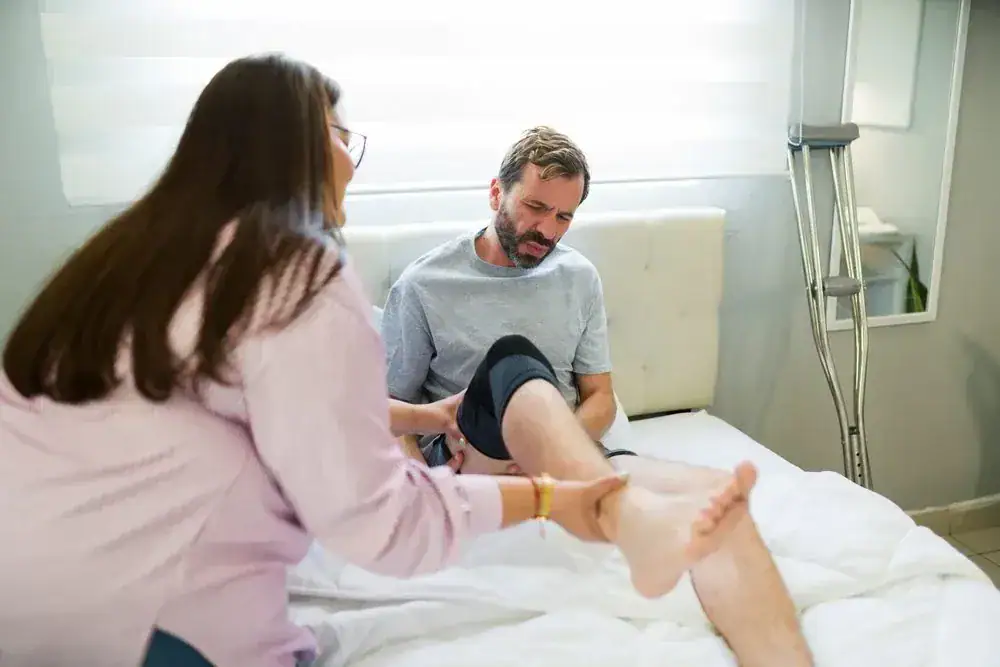
In-home therapy brings licensed physical and occupational therapists to your door, helping seniors in Suffolk and Nassau County recover safely without clinic visits.

In-home physical therapy brings a licensed physical therapist directly to your home on a schedule that works for you. Your first visit typically lasts about an hour and includes a comprehensive evaluation—your therapist will ask about your medical history, current medications, pain levels, and what you’re hoping to accomplish. They’ll assess your strength, balance, range of motion, and how you’re currently moving around your home.
From there, they create a personalized treatment plan. This isn’t a one-size-fits-all approach. Your therapist designs exercises and activities specifically for your condition, your goals, and your home environment. If you’re recovering from a hip replacement, they’ll help you practice the stairs in your actual house. If balance is an issue, they’ll identify hazards in your bathroom or kitchen that increase your fall risk. For individuals returning to work after an injury, occupational rehabilitation may also be incorporated to improve functional abilities needed for daily job tasks.
Sessions typically happen two to three times per week, with each visit lasting 45 minutes to an hour. Between visits, you’ll have exercises to do on your own—your therapist will teach you exactly how to perform them safely. As you progress, your treatment plan adjusts. The goal is always to help you regain independence, reduce pain, and get back to doing the things that matter to you.
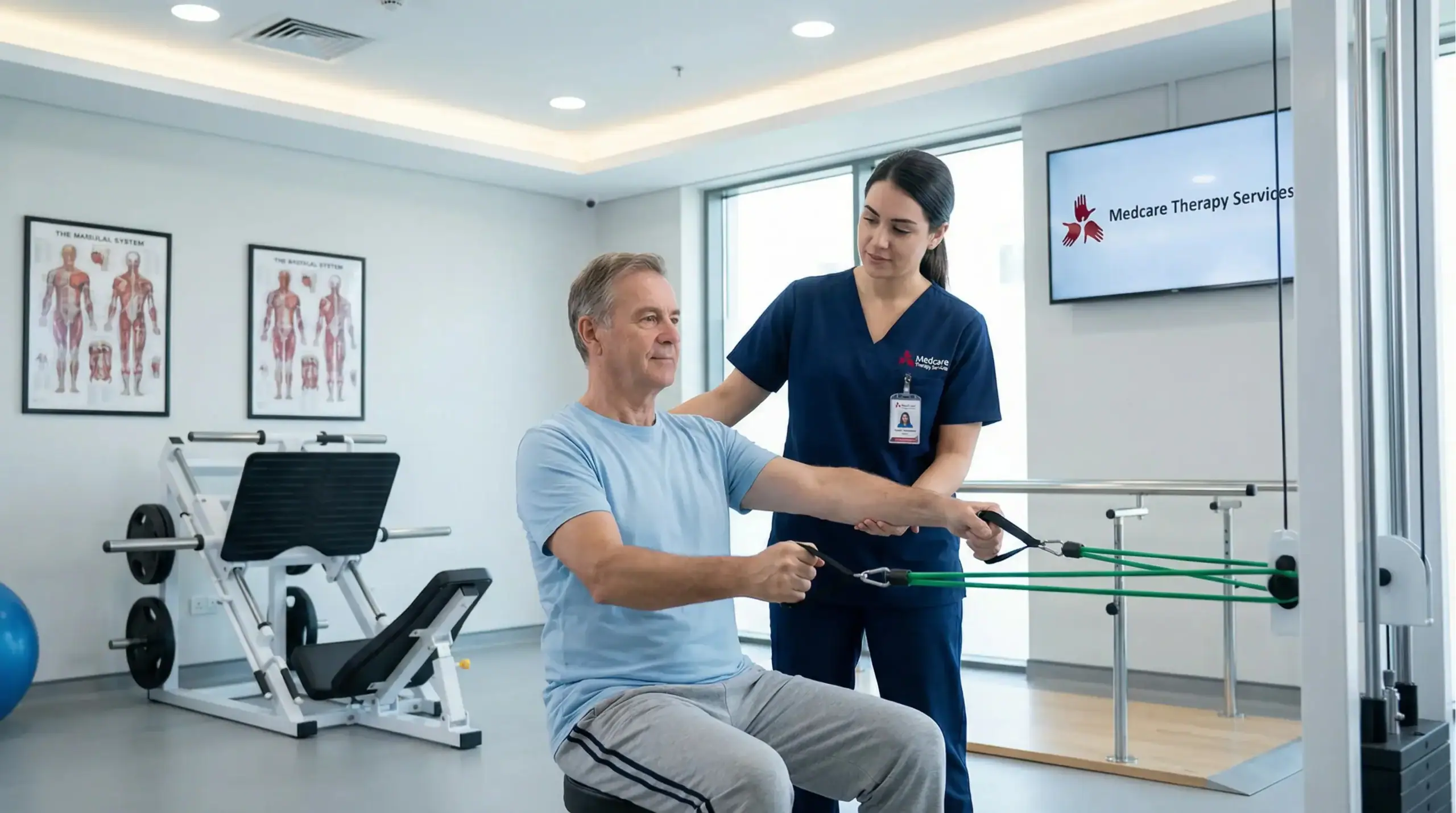
Home physical therapy isn’t limited to one type of condition. It’s designed for anyone who needs skilled rehabilitation but finds it difficult or unsafe to leave home regularly.
Post-surgical recovery is one of the most common reasons people choose in-home therapy. If you’ve had a joint replacement—hip, knee, or shoulder—your therapist will guide you through the movements and exercises needed to regain strength and mobility. The same applies to fractures, spinal surgery, or any procedure that temporarily limits your ability to move safely.
Chronic conditions also respond well to home-based care. Arthritis, COPD, heart failure, Parkinson’s disease, multiple sclerosis, and stroke recovery all benefit from ongoing physical therapy. Your therapist can help you manage symptoms, maintain function, and prevent decline without the physical strain of traveling to appointments.
Balance disorders and fall prevention are critical areas where home therapy makes a measurable difference. More than one in four older adults falls each year, and falling once doubles your chances of falling again. Your therapist will assess your home for hazards—loose rugs, poor lighting, lack of grab bars—and work with you on exercises that improve stability and coordination.
Mobility limitations from any cause can improve with the right intervention. Whether you’re dealing with muscle weakness, joint stiffness, or difficulty walking, a physical therapist can create a program that rebuilds strength, increases flexibility, and restores confidence in your ability to move safely.
The key difference between home therapy and clinic-based care is context. Your therapist sees exactly how you move in your own space. They can spot problems you might not mention in a clinic setting and adjust your treatment to address real obstacles you face every day.
Occupational therapy focuses on a different set of challenges—specifically, your ability to perform daily activities that keep you independent. While physical therapy addresses movement, strength, and mobility, occupational therapy helps you relearn or adapt the tasks you need to do every day.
That includes getting dressed, bathing, grooming, preparing meals, managing medications, and moving safely around your home. If a recent illness, injury, or surgery has made these tasks difficult or impossible, an occupational therapist can help you regain those skills.
Occupational therapy at home has a distinct advantage. Your therapist works with you in your actual kitchen, bathroom, and bedroom. They can recommend specific modifications—like installing grab bars in your shower, raising your toilet seat, or reorganizing your kitchen so you don’t have to reach or bend as much. They’ll also teach you techniques that make daily tasks easier and safer.
For someone recovering from a stroke, occupational therapy might focus on retraining fine motor skills so you can button a shirt, use utensils, or write. For someone with arthritis, it might involve teaching joint protection techniques and recommending adaptive equipment that reduces strain.
Occupational therapists also assess cognitive function. If memory, attention, or problem-solving has been affected by illness or injury, they can help you develop strategies to manage medications, pay bills, and keep track of appointments.
The goal is always the same: to help you do the things you need and want to do, as independently as possible, in the place you call home. When therapy happens in your own environment, progress is more practical and more sustainable. You’re not just practicing skills in a clinic—you’re building them into your actual routine.
Want live answers?
Connect with a Medcare Therapy Services expert for fast, friendly support.
One of the most common questions about in-home therapy is whether Medicare will cover it. The short answer: yes, if you meet specific eligibility requirements.
Medicare Part B covers home health services, including physical therapy, occupational therapy, and speech therapy, when your doctor certifies that you’re homebound and need skilled care. Homebound doesn’t mean you can never leave your house—it means that leaving requires considerable effort or assistance from another person. You can still attend medical appointments or occasional outings like religious services.
For covered services, you pay nothing. No copayment, no coinsurance. The only exception is durable medical equipment—walkers, canes, wheelchairs—where you’ll pay 20% of the Medicare-approved amount after meeting your Part B deductible.
To qualify for Medicare home health coverage, several conditions must be met. First, your doctor must order the care and certify that you need skilled services. This means the care requires the expertise of a licensed professional—exercises you could safely do on your own without supervision don’t qualify.
Second, you must be homebound. Medicare defines this as a condition where leaving home takes considerable and taxing effort, or where your doctor advises you not to leave home for medical reasons. If you need help from another person or a mobility aid to leave your house, you likely meet this requirement.
Third, you must receive care from a Medicare-certified home health agency. Not all providers are certified, so it’s important to verify before services begin. Your doctor should provide a list of certified agencies in your area.
Fourth, you must have had a face-to-face visit with your doctor within 90 days before starting home health care, or within 30 days of your first day of care. This can be an in-person office visit or a video appointment.
Medicare covers part-time or intermittent skilled care. In most cases, that means up to eight hours per day of combined skilled nursing and home health aide services, for a maximum of 28 hours per week. You may receive more frequent care for a short period if your doctor determines it’s medically necessary.
It’s also important to understand what Medicare doesn’t cover. Around-the-clock care, meal delivery, and custodial care—like help with laundry or housekeeping—aren’t covered unless they’re performed as part of a skilled nursing or therapy visit. If your primary need is daily assistance rather than skilled medical treatment, Medicare won’t provide payment.
The good news is that when you do qualify, Medicare home health coverage is one of the lowest out-of-pocket benefits available. You’re not paying for each visit, and there’s no limit on the number of therapy sessions you can receive as long as your doctor continues to certify that you need skilled care.
Choosing between in-home therapy and outpatient clinic therapy depends on your specific situation. Both settings offer skilled care from licensed professionals, but they serve different needs.
In-home therapy is often the better choice if you’re recovering from a recent hospitalization, have significant mobility limitations, or are at high risk for falls. It eliminates the physical strain and safety risks associated with traveling to appointments. You receive one-on-one attention in a familiar environment, which can reduce stress and improve outcomes.
Home therapy also allows your therapist to assess and address your actual living space. They can identify fall hazards, recommend modifications, and tailor exercises to the real challenges you face—like navigating your stairs, getting in and out of your bathtub, or reaching items in your kitchen. This context-specific approach often leads to faster, more practical progress.
Outpatient clinic therapy may be more appropriate if you’re already fairly mobile, motivated by routine and structure, or need access to specialized equipment that can’t be transported to your home. Some people also benefit from the social aspect of a clinic setting—being around other patients can provide motivation and a sense of community.
Cost and coverage also play a role. Medicare covers both home health and outpatient therapy, but the eligibility requirements differ. For home health, you must be homebound. For outpatient therapy, you don’t need to meet that standard, but you may have copayments depending on your plan.
The key isn’t choosing one over the other based on assumptions—it’s making sure you have structured support after hospitalization or during recovery. Studies show that patients recovering at home often progress more smoothly when therapy is integrated into their real environment. Early mobility reduces weakness, shortens recovery time, and lowers complication rates.
If you’re unsure which setting is right for you, talk to your doctor. They can assess your condition, your home situation, and your goals to determine the most effective approach. In some cases, you might start with home therapy to regain basic mobility and strength, then transition to outpatient care once you’re able to travel safely.
What matters most is that you receive the care you need, when you need it, in a way that supports your recovery and respects your preferences.
If you’re dealing with mobility challenges, recovering from surgery, or finding it difficult to manage daily activities, in-home physical and occupational therapy can make a real difference. You don’t have to choose between getting the care you need and staying safe and comfortable at home.
The process starts with a conversation with your doctor. If they determine that you’re homebound and need skilled therapy, they’ll provide a referral to a Medicare-certified home health agency. From there, a licensed therapist will schedule an initial evaluation at your home, assess your needs, and create a personalized treatment plan.
You’ll work together on exercises and activities designed to improve your strength, balance, mobility, and independence. Your therapist will also educate your family on how to support your recovery and make your home environment safer.
We’ve been providing professional in-home physical and occupational therapy across Long Island since 2010. If you’re in Suffolk County, NY or Nassau County, NY and want to learn more about how in-home therapy can support your recovery, reach out to discuss your options.
Summary:


Article details:
Share: