A fall prevention event in Smithtown built for Long Island seniors who want real answers — not generic advice — about staying steady and staying home.
If you’ve been a little unsteady lately — or someone you love has — you already know that the fear of falling can be just as limiting as a fall itself. It changes how you move through your own home. It changes what you’re willing to do. And most people don’t talk about it, even with their doctor.
That’s exactly why we’re hosting this event. We’ve been part of the Smithtown community for over 25 years, and we’ve seen firsthand what happens when fall risk goes unaddressed. We’ve also seen what happens when it doesn’t. Come find out what’s actually driving your risk — and what you can do about it.
Here’s something most people in Nassau and Suffolk counties don’t know: Nassau ranks 4th in New York State for fall prevalence among older adults, and Suffolk ranks 5th. In Nassau County specifically, 88% of all injury hospitalizations for adults over 65 are caused by falls — not car accidents, not other medical events. Falls.
Nationally, one in four Americans over 65 falls each year. Fall-related deaths among older adults have increased by 51% over the past decade. These aren’t distant statistics — they describe what’s happening in communities like Smithtown, Hauppauge, Kings Park, and Commack right now. Suffolk County has over 250,000 residents aged 65 and older, and the 85-plus population has grown by 56% since 2007. Long Island is aging, and fall prevention is not keeping pace.
The most common misconception we hear is that falling is just part of getting older. It isn’t. Falls happen because of specific, identifiable, and treatable factors — and understanding that distinction is the first step toward doing something about it.
Muscle weakness is one of the most common culprits, particularly in the legs, hips, and core. When those muscles can’t respond quickly enough to a misstep, a stumble becomes a fall. Balance deficits are closely related — the body’s ability to sense its position in space, called proprioception, often declines with age and can be meaningfully improved with the right training. Gait changes — the way you walk, your stride length, how high you lift your feet — are another major factor that a trained physical therapist can identify and correct.
Medication side effects are frequently overlooked. Many common medications for blood pressure, anxiety, and sleep can cause dizziness or affect reaction time, and a good fall risk assessment accounts for this. Vision changes, inner ear issues, and neurological conditions all contribute as well.
Then there’s the home itself. Long Island’s suburban housing stock — multi-story homes, steep driveways, narrow bathrooms, kitchens with hard floors — creates a physical environment that wasn’t designed with aging in mind. Loose rugs, poor lighting on staircases, and bathrooms without grab bars are among the most common hazards we find when we assess a patient’s home. These aren’t embarrassing oversights — they’re just realities that most homes on Long Island share, and they’re fixable.
The reason “just be careful” doesn’t work is that it puts the entire burden on the person who is already at risk, without addressing any of the underlying causes. Careful doesn’t strengthen your legs. Careful doesn’t improve your balance. Careful doesn’t fix the lighting at the top of your stairs.
A fall prevention physical therapy program is not the same as the PT you might have done after a knee replacement or a rotator cuff injury. It’s a specialized process, and it starts with a comprehensive assessment — not a quick screen, but a real evaluation of your strength, balance, gait, coordination, and the environment where you spend most of your time.
From there, we build a treatment plan around what we actually find. If your hip flexors are weak, that’s addressed directly. If your balance is compromised because of an inner ear issue or a neurological factor, the exercises look different than they would for someone whose primary risk is environmental. This is the difference between a personalized program and a generic handout of exercises you found online.
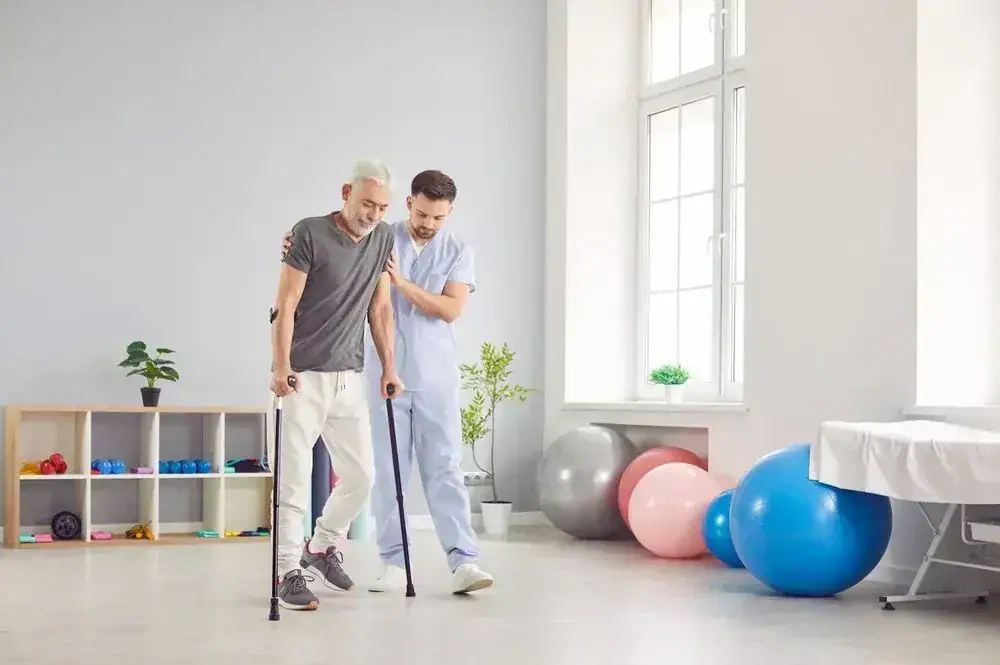
The core components of an evidence-based fall prevention program include balance training — both static (standing still) and dynamic (moving while maintaining control) — lower-body and core strengthening, gait training to improve how you walk and how quickly you can correct a stumble, and coordination drills that train your body to respond to unexpected shifts in balance. One component that often surprises people is dual-task training: practicing balance while doing something else at the same time, like talking or carrying something. The inability to safely multitask is a documented fall risk factor, and it’s trainable.
Our therapists at Physical Therapy Associates of Smithtown are trained in the Otago Exercise Program, one of the most extensively researched fall prevention interventions in the world, with multiple randomized controlled trials behind it. Research consistently shows that starting physical therapy within three months of noticing balance changes can lower fall risk by as much as 86%. That number is worth sitting with. The sooner you act, the better the outcome — and waiting for a serious fall to happen first is the most expensive approach you can take, in every sense of the word.
Want live answers?
Connect with a Medcare Therapy Services expert for fast, friendly support.
The event is at Physical Therapy Associates of Smithtown, 100 Maple Avenue, Smithtown, NY — just south of Main Street, with ample parking, which we know matters. This is not a sales presentation. It’s a genuine opportunity to meet our team, learn where you actually stand with your fall risk, ask questions, and decide whether a full program makes sense for you — without any pressure or obligation.
We’ve been at this address since 2000. The people who walk through our door aren’t strangers — they’re neighbors, and in many cases they’ve been referred by other neighbors. That kind of community trust takes a long time to build, and we don’t take it lightly.

This is one of the most common questions we get, and the answer is yes — Medicare covers fall prevention physical therapy when it’s medically indicated, and our therapists are Medicare-certified. For the large population of Long Island seniors on fixed incomes, that matters enormously. Cost should not be the reason someone delays care that could prevent a hip fracture, a hospitalization, or a move out of their home.
We also accept most major insurance plans. If you’re unsure about your specific coverage, our team can help you sort that out before you commit to anything. Transparency about what’s covered is something we take seriously — you shouldn’t have to guess.
What we’ve found over the years is that many people in Suffolk and Nassau counties assume that fall prevention is either not covered or not worth pursuing because they haven’t fallen yet. Both assumptions are costly. Medicare doesn’t require that you’ve already been injured to cover preventive physical therapy — it requires that there’s a clinical reason to treat, and declining balance, documented fall risk, or a history of near-falls all qualify. If you’ve been noticing changes and wondering whether it’s “bad enough” to do something about, it almost certainly is.
Every session at our Smithtown clinic is one-on-one with a licensed physical therapist — not a technician, not an aide, not a group class. Your therapist knows your case, tracks your progress, and adjusts your plan as you improve. That level of individualized attention is what produces results, and it’s not something we’re willing to compromise on regardless of how busy the schedule gets.
Both situations are exactly what our program is designed for, and we want to be direct about that. Whether you’ve already fallen and are terrified it’s going to happen again, or you’ve had a few close calls and are starting to take them seriously, or you’ve watched a friend or family member go through a serious fall injury and you’re determined to get ahead of it — all of those are valid, urgent reasons to come in.
After a first fall, many people restrict their activity so severely that they actually become more deconditioned over time. Less movement leads to weaker muscles and worse balance, which increases the risk of a second fall. It’s a cycle that’s very real and very common, and physical therapy is one of the most effective ways to break it. Rebuilding confidence alongside physical capacity is part of what our therapists do — it’s not just about the exercises.
For people who haven’t fallen yet but are noticing changes, the research is unambiguous: early intervention produces dramatically better outcomes than waiting.
We also want to speak to the adult children and family members who are reading this on behalf of a parent. You may have noticed your mother holding the wall when she walks to the kitchen, or your father taking the stairs more slowly than he used to. You may have asked about it and been told it’s fine. It may not be fine, and your instinct to look into it is worth following. Our team communicates directly with referring physicians and family members when appropriate, and we take the caregiver’s perspective seriously — because the person most likely to notice early warning signs is often the person who sees them every day.
Long Island’s housing stock means that most seniors are aging in place in homes that were built decades ago, without accessibility in mind. That’s not a criticism — it’s just the reality of living in communities like St. James, Nesconset, Commack, or Setauket, where people put down roots and stayed. We can help make those homes safer while building the physical resilience to navigate them confidently.
Falls are not inevitable. They are caused by specific factors that a trained physical therapist can identify and address — and the sooner that process starts, the better the outcome. For Long Island seniors and their families, the data on Nassau and Suffolk counties makes the urgency real. This is not a generic health concern. It is a documented, local crisis that is affecting people in your community right now.
Our fall prevention event at Physical Therapy Associates of Smithtown is a no-pressure starting point. Come meet the team. Get a real sense of where you stand. Ask the questions you’ve been sitting on. If a full program makes sense, we’ll tell you honestly — and if it doesn’t, we’ll tell you that too.
We’ve been part of Long Island for over 25 years. Reach out to us directly to reserve your spot or to ask any questions before you come in. We’re here, we’re local, and we’re ready to help.
Summary:
Article details:
Share: