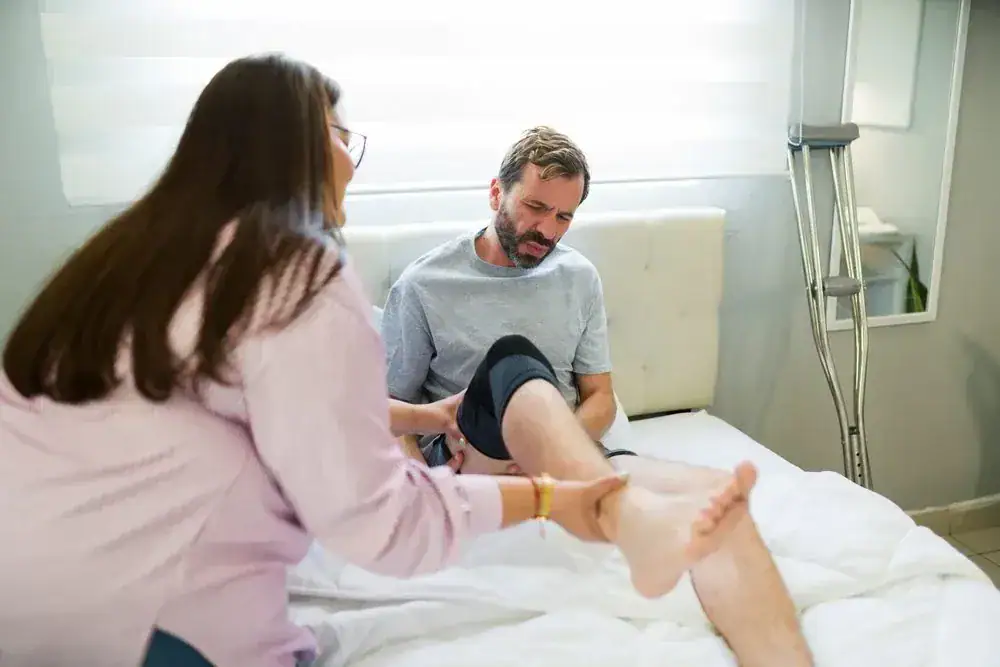
Waking up stiff and achy? A professional physical therapist reveals the 10-minute morning stretching routine that eliminates pain and gets you moving comfortably.

You wake up. Your back feels tight. Your hips are cranky. Those first few steps out of bed aren’t graceful. Maybe you shuffle to the bathroom feeling twenty years older than you actually are. If this sounds familiar, you’re not alone. Morning stiffness is normal for most people over 30, but that doesn’t mean you have to accept it. The right movements in the first 10 to 15 minutes after waking can take you from “everything hurts” to “I can actually function” pretty reliably. Here’s what we as professional physical therapists recommend, why it works, and when morning stiffness might mean something more serious.
Your body has been in roughly the same position for six to eight hours. During sleep, most of your muscles stay in fixed positions, and blood flow to them is limited for a good part of the night. Your joints aren’t getting much movement either, and movement is what helps lubricate them.
This combination creates that tight, hard-to-move feeling when you first get up. It’s not because you’re “getting old” or because something is necessarily wrong. It’s a normal response to prolonged stillness. In some cases, supportive treatments like Kinesio taping can also help reduce muscle tension and provide added support as you regain comfortable movement.
The morning stiffness you feel is your body’s way of saying it needs to restore the movement it’s been missing. For most people, this improves once you start moving around. But targeted stretches can speed up that process significantly and help you feel comfortable much faster. If stiffness persists or is related to an injury, Kinesio taping may be incorporated into your rehabilitation plan to support muscles and joints while allowing natural movement.
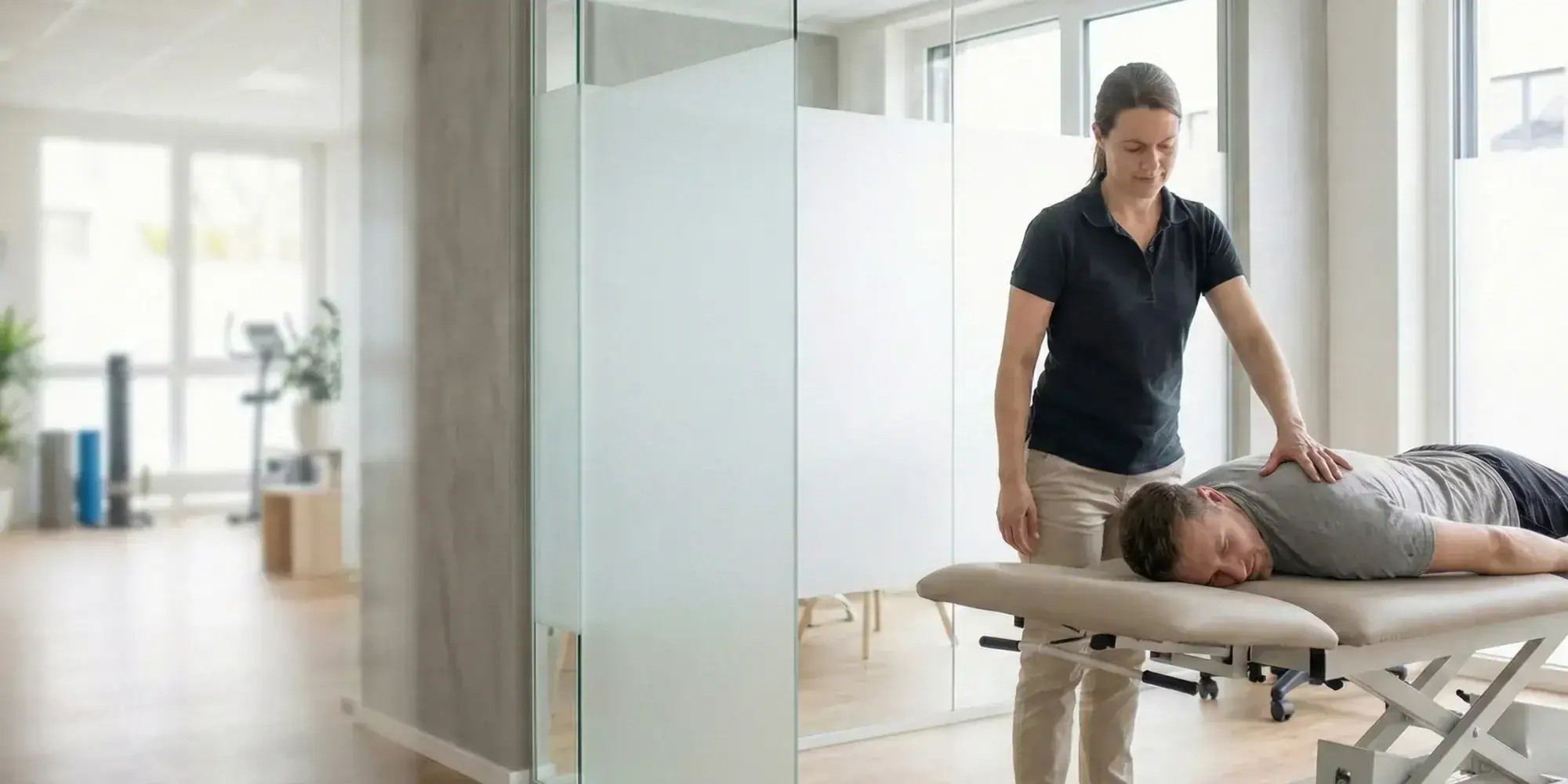
Here’s something important: if your morning stiffness lasts more than an hour, especially if it’s getting progressively worse, you need to get evaluated. That can be a sign of inflammatory arthritis like rheumatoid arthritis or ankylosing spondylitis, rather than normal mechanical stiffness.
For most people, a few minutes of stiffness is very common. Up to 20 or 30 minutes can also be typical, especially if you have osteoarthritis or had a physically demanding day before. But stiffness that consistently extends beyond 60 minutes is worth discussing with a healthcare provider.
Duration matters because it hints at what’s driving the stiffness. Simple “warm-up” tightness responds well to movement and stretching. Ongoing inflammation requires a different approach entirely.
Pay attention to the pattern. If you notice your joints are hot, red, or very swollen, especially with fever, that’s not something to ignore. If you have sudden severe pain after an injury or can’t bear weight, seek medical attention right away. Morning stiffness is common, but certain symptoms should not wait.
The good news is that for the vast majority of people dealing with normal morning stiffness, a simple routine can make a real difference. You don’t need an hour-long yoga session or a complicated program. Just consistent, targeted movement in those first few minutes after waking.
We see this every day. Patients come in describing that familiar morning shuffle, the lower back tightness, the stiff neck, the hips that don’t want to cooperate. And our advice is usually the same: gentle, deliberate movement as soon as you wake up.
You don’t need to do a formal stretching routine every single morning. Most days, just getting up and moving around naturally while you make coffee is enough. But on days when you’re particularly stiff, maybe after sleeping in an awkward position or following a long day of physical activity, spending five to ten minutes on basic movements helps tremendously.
The key is understanding which movements actually address the areas that get stiff overnight. Your lower back, hips, neck, and shoulders are the usual culprits. These areas benefit most from stretches that restore range of motion and get blood flowing to muscles that have been inactive for hours.
A consistent morning stretch routine can lead to healthy posture, reduced risk of injury, and improved overall physical well-being. Even just five minutes can have enormous benefits. You’re not trying to become a contortionist. You’re simply helping your body transition from rest to activity in a way that feels better.
Stretching in the morning also activates your nervous system by waking up your muscles, joints, and the brain-body connection. This can boost your energy naturally, without relying solely on caffeine. It offers you individual time to take care of your body before you start spending energy on work and those around you.
The physical benefits are absolutely worth it. But there’s also something calming about starting your day with intentional movement. It sets a tone. You’re telling yourself that your well-being matters, and you’re making healthier daily choices from the moment you wake up.
Want live answers?
Connect with a Medcare Therapy Services expert for fast, friendly support.
This routine doesn’t require equipment, a yoga mat, or even getting out of bed right away. You can do the first few movements while you’re still lying down, then transition to standing stretches while your coffee brews.
The goal is to move through your body systematically, addressing the major areas that get tight overnight. You’ll focus on your lower back, hips, spine, neck, and shoulders. Each movement should feel like a gentle pull, not pain. If something hurts, back off. Stretching should never be painful.
Start slow, especially first thing in the morning. Your muscles need time to warm up. Listen to your body and adjust based on how you feel that particular day.

Begin with some gentle knee-to-chest movements. Lie on your back with your knees bent and feet flat. Use both hands to pull one knee toward your chest while keeping the other foot flat. Hold for 15 to 20 seconds, then switch legs. Finally, bring both knees to your chest at once. This simple movement relieves lower back tension without requiring you to actually get up yet.
Next, try some spinal rotation. Keep your knees bent and feet flat, then let both knees drop to one side while keeping your shoulders down on the mattress. You should feel a gentle twist through your spine. Hold for 10 to 15 seconds, then rotate to the other side. This helps loosen up your lower back and improve spinal mobility.
Another effective move is the pelvic tilt. Still lying on your back with knees bent, tighten your abdominal muscles to flatten your lower back toward the mattress. Hold for five seconds, then relax and allow your lower back to arch slightly away from the bed. Repeat this five to ten times. It’s a subtle movement, but it wakes up your core and helps your spine transition from sleeping position to upright posture.
You can also do an elbow squeeze while lying down. Fold your arms across your stomach, with one hand holding your opposite elbow from the bottom. Push that elbow with your hand up and across your body toward your opposite shoulder. This stretches the back of your shoulders and your shoulder blades. Hold for 10 seconds, then switch sides.
These bed-based stretches take maybe five minutes total. They’re gentle enough that you can do them even when you’re still half asleep, but effective enough that you’ll notice a difference when you do stand up. Your lower back will feel looser, your hips will move more easily, and those first steps won’t feel quite so creaky.
Once you’re up, continue with some standing movements. Start with gentle neck rolls. Stand with your feet shoulder-width apart and arms loose. Dip your chin slightly toward your chest, then gently roll your head in a clockwise motion for one full rotation, taking about seven seconds. Rest for five seconds, then roll counterclockwise. Repeat three times. This reduces stiffness in your neck and helps restore comfortable movement.
For your shoulders, try some simple shoulder rolls. Without bending your arms, slowly raise your shoulders and roll them back in a circular motion. Roll backward five times, then reverse and roll forward. Repeat the sequence twice. This releases tension in your upper back and shoulder area.
A standing quad stretch loosens your quads and hip flexors, which get tight from being curled up all night. Stand near a wall for balance if needed. Bend one knee and bring your foot toward your buttocks, holding your ankle with your hand. You should feel a stretch down the front of your thigh. Hold for 20 to 30 seconds, then switch legs.
Don’t forget your calves. Put your hands against a wall with one foot in front of the other. Keeping your back leg straight, lean forward into the wall until you feel a stretch in your back calf. Hold for 20 to 30 seconds, then switch sides. This simple stretch helps with ankle mobility and prevents that stiff-legged walk many people experience first thing in the morning.
Finally, do some gentle side bends. Stand with feet hip-width apart. Reach one arm overhead and lean gently to the opposite side, feeling a stretch along your side body. Hold for 10 to 15 seconds, then switch sides. This opens up your torso and helps with breathing and posture throughout the day.
The entire standing sequence takes another five minutes. Combined with the bed stretches, you’ve spent about ten minutes total, and your body feels significantly different than it did when you first woke up. You’re moving more freely, breathing more deeply, and ready to actually start your day instead of just surviving it.
Consistency matters more than perfection. You don’t need to do every single stretch every single morning. Even just a few minutes of intentional movement makes a difference. The key is making it a habit, something you do as naturally as brushing your teeth or making coffee.
Morning stiffness is normal, but it doesn’t have to control your day. The right stretches at the right time can take you from uncomfortable to functional in about ten minutes. You’ll move better, feel better, and start your day with confidence instead of pain.
If you’re dealing with persistent morning stiffness that doesn’t improve with stretching, or if you have other concerns about mobility, balance, or pain, working with a licensed physical therapist can help. For residents in Suffolk County, NY and Nassau County, NY, we bring professional physical therapy directly to your home, eliminating the stress of travel and providing personalized one-on-one care in your own environment.
Summary:


Article details:
Share: