In-home occupational therapy helps you regain independence with daily activities after injury, surgery, or illness—right in your own home across Long Island.

Occupational therapy isn’t about getting you back to work, despite what the name suggests. It’s about helping you perform the “occupations” of daily life—the essential activities that allow you to live independently. These are called activities of daily living, or ADLs.
ADLs include basic self-care tasks like dressing, bathing, eating, grooming, toileting, and moving around your home safely. When injury, illness, or surgery affects your physical or cognitive abilities, these tasks become difficult or even dangerous to perform alone.
That’s where occupational therapy comes in. Our occupational therapists assess your current abilities, identify what’s holding you back, and create a personalized plan to help you regain function. The goal isn’t just to make you stronger—it’s to help you actually do the things that matter in your daily routine.

Occupational therapy takes a practical, hands-on approach. Your therapist doesn’t just give you exercises to do—they work with you on the actual tasks you’re struggling with, in the environment where you’ll be doing them.
If getting dressed is a challenge because of limited shoulder mobility after surgery, your therapist will practice dressing techniques with you, recommend adaptive tools like button hooks or dressing sticks, and teach you strategies to work around physical limitations. If cooking has become unsafe because of balance issues or weak grip strength, they’ll assess your kitchen setup, suggest modifications like reorganizing cabinets or using lightweight cookware, and practice meal preparation tasks with you until you feel confident.
The beauty of occupational therapy is that it’s entirely personalized. Your therapist focuses on your specific goals. Maybe you want to be able to shower independently again. Maybe you need to manage medications safely. Maybe you just want to make a cup of coffee without help. Whatever matters most to you becomes the focus of your treatment plan.
This approach works because it addresses real-world function, not just isolated movements. Research shows that task-specific practice—actually doing the activity you’re trying to relearn—is one of the most effective ways to restore independence after injury. Your brain rewires itself based on repetition and meaningful practice, a process called neuroplasticity.
Beyond physical practice, our occupational therapists also recommend adaptive equipment and assistive devices that make daily tasks more manageable. Grab bars in the bathroom, raised toilet seats, shower chairs, reachers, adaptive utensils—these tools aren’t signs of giving up. They’re practical solutions that help you do things safely and independently while you continue to build strength and coordination.
Your therapist will also assess your home environment for safety risks. They’ll identify fall hazards, recommend lighting improvements, suggest furniture rearrangements, and help create a living space that supports your independence rather than working against it.
Occupational therapy starts with a comprehensive evaluation. Your therapist will ask about your medical history, current challenges, and personal goals. They’ll observe how you perform various tasks, assess your strength, coordination, balance, and cognitive function, and identify specific barriers preventing you from doing things independently.
Based on this evaluation, your therapist develops a personalized treatment plan. This plan outlines measurable goals—things like “independently dress upper body within two weeks” or “safely prepare a simple meal without assistance.” These goals give you something concrete to work toward and help track your progress.
Therapy sessions typically last 45 to 60 minutes and focus on practicing real activities. You might work on getting in and out of the shower safely, practice cooking techniques, or learn strategies for managing buttons and zippers with one hand. Your therapist will break complex tasks into smaller, manageable steps, gradually increasing difficulty as you improve.
Between sessions, your therapist will give you exercises and activities to practice on your own. Consistent practice is critical for making progress. The more you work on these skills, the faster your brain rewires and the more confident you become.
Your therapist will also educate family members or caregivers. They’ll teach safe transfer techniques, explain how to assist without taking over, and help your support system understand how to encourage your independence rather than accidentally undermining it.
Progress is regularly reassessed. Your therapist will adjust your treatment plan based on what’s working and what needs more attention. If you’re making faster progress than expected, goals get updated. If something isn’t clicking, the approach changes. The plan evolves with you.
Occupational therapy isn’t a quick fix. Depending on your condition and goals, you might need therapy for a few weeks or several months. What matters is that you’re consistently moving toward greater independence and better quality of life.
Want live answers?
Connect with a Medcare Therapy Services expert for fast, friendly support.
Getting occupational therapy at home rather than in a clinic changes everything. When your therapist comes to you, they see exactly what you’re dealing with—the narrow bathroom doorway, the high cabinet shelves, the uneven flooring, the stairs you need to navigate.
They’re not simulating your kitchen in a clinical setting. They’re working in your actual kitchen, with your appliances, your layout, your limitations. This makes therapy more practical and effective. You’re not learning skills in a sterile environment and hoping they transfer to real life. You’re practicing in real life from day one.
For many people recovering from surgery, stroke, or managing chronic conditions, getting to outpatient appointments is a significant barrier. Transportation is expensive or unavailable. The physical effort of traveling is exhausting. The stress of navigating parking, waiting rooms, and unfamiliar spaces takes energy you need for recovery. Home therapy eliminates all of that.
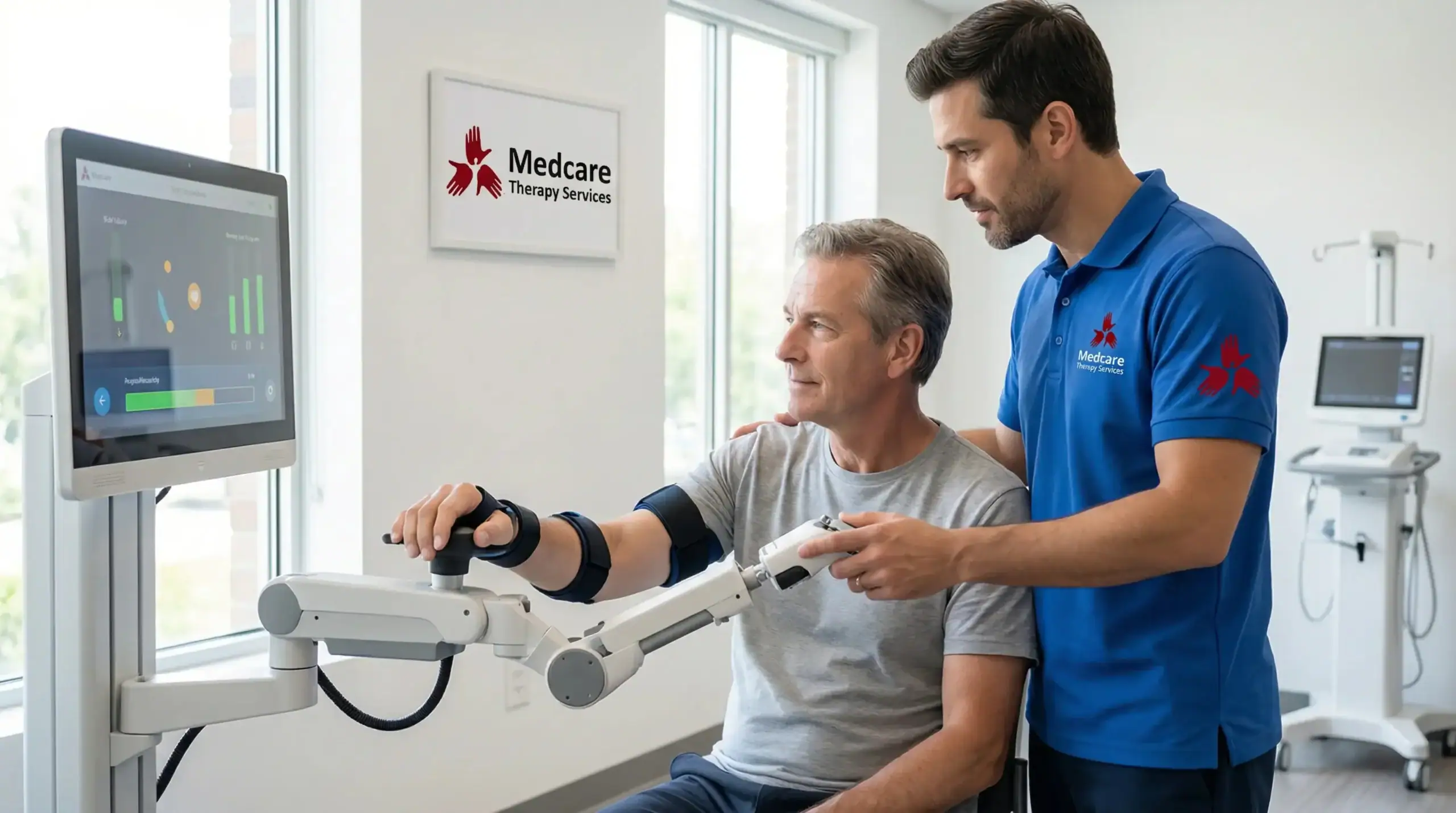
Medicare Part B covers medically necessary occupational therapy when prescribed by a physician and delivered by a licensed therapist. If you’re homebound—meaning leaving home requires considerable effort due to illness or injury—and you need skilled therapy services, you likely qualify for coverage.
After you meet your Part B deductible, Medicare pays 80% of the approved amount for each therapy session. You’re responsible for the remaining 20% coinsurance. There’s no annual cap on the number of therapy sessions Medicare will cover, as long as the therapy remains medically necessary and shows continued progress or prevents decline.
Your doctor must certify that you need occupational therapy, and your therapist must document your progress and ongoing need for services. This documentation is reviewed periodically to ensure therapy is still appropriate.
It’s important to understand that Medicare covers therapy aimed at improving function or maintaining current abilities and preventing decline. You don’t have to be getting better to qualify—therapy that helps you stay at your current level of independence rather than deteriorating also meets medical necessity requirements.
If you have a Medicare Advantage plan, coverage works similarly, though specific costs and requirements may vary by plan. Many Advantage plans offer additional benefits beyond Original Medicare, such as expanded therapy visits or coverage for services like transportation.
Working with us as your therapy provider means we handle the Medicare paperwork, coordinate with your physician, and ensure proper documentation so you can focus on your recovery rather than administrative hassles.
Occupational therapy helps people recovering from a wide range of medical events and managing various chronic conditions. Stroke survivors often need extensive ADL retraining because stroke can affect movement, coordination, sensation, and cognitive function. Simple tasks like buttoning a shirt or using utensils become complex challenges requiring new strategies and adaptive techniques. Research shows that 35-40% of stroke survivors experience limitations in basic activities of daily living six months after the event, making occupational therapy critical for recovery.
Post-surgical patients, especially those recovering from joint replacements, cardiac surgery, or orthopedic procedures, benefit from occupational therapy to safely resume daily activities while following medical precautions. Your therapist ensures you’re not putting unnecessary strain on healing tissues while still working toward independence.
People with arthritis struggle with joint pain, stiffness, and reduced range of motion that make everyday tasks difficult. Occupational therapy teaches joint protection techniques, recommends adaptive equipment, and helps you find less painful ways to accomplish necessary activities.
Neurological conditions like Parkinson’s disease, multiple sclerosis, or traumatic brain injury affect movement, coordination, balance, and sometimes cognitive function. Occupational therapy addresses these challenges through targeted exercises, environmental modifications, and compensatory strategies that help you maintain independence as long as possible.
Older adults experiencing age-related decline in strength, balance, and endurance benefit from occupational therapy focused on fall prevention, safe mobility, and maintaining the ability to live independently at home. Therapy might address getting in and out of the bathtub safely, managing medications, or preparing meals without fatigue becoming a safety issue. Studies show that 21% of adults over 85 require assistance with daily tasks, but early intervention with occupational therapy can help maintain independence longer.
The common thread across all these conditions is functional limitation—difficulty doing the things you need or want to do. Occupational therapy meets you where you are and helps you work toward where you want to be, whether that’s full independence or simply doing more with less assistance.
Regaining your independence after injury, surgery, or illness doesn’t happen overnight, but it does happen with the right support. Occupational therapy gives you practical tools, personalized strategies, and hands-on practice to rebuild the skills that matter most in your daily life.
When therapy comes to your home, you’re working in your actual environment with your real challenges, making progress more practical and less stressful. You’re not just getting stronger in isolation—you’re learning to function better in the space where you actually live.
If you’re in Suffolk County, NY or Nassau County, NY and struggling with daily activities, we provide in-home occupational therapy with licensed therapists who understand Medicare requirements and focus on your personal goals. The path back to independence starts with a single step—reaching out to explore whether occupational therapy is right for you.
Summary:
Article details:
Share: