Medical massage sounds clinical, but what actually sets it apart? Here's a plain-English look at how it works and what Suffolk County and Nassau County patients should ask first.
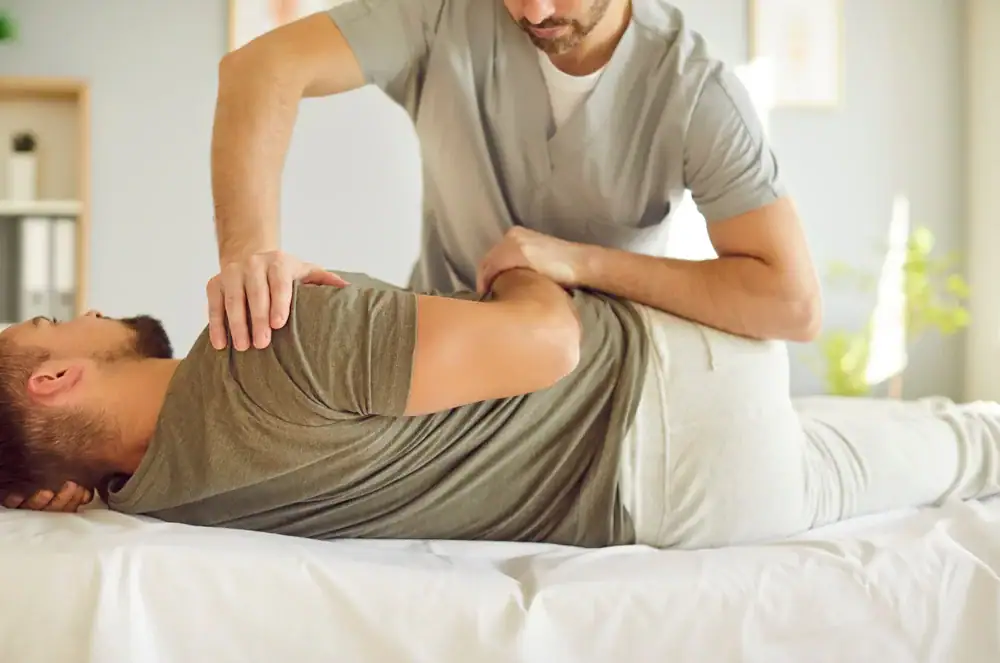
You booked a massage for your lower back, felt great for a day, and woke up that weekend with the same ache. Or your doctor mentioned a “medical massage” and now you’re wondering whether that’s a real thing or a nicer name for the same hour on the table. Plenty of people across Suffolk County and Nassau County end up right here, and most pages online skip the honest answer. We’re Medcare Therapy Services, a licensed physical and occupational therapy practice serving Suffolk County and parts of Nassau County from Holbrook and Smithtown. Here’s what a medical massage really is, what to ask before you book, and where it fits in a recovery plan.
A Medical massage is massage with a medical job to do. A therapist starts by asking about your history and what’s bothering you, works toward a specific goal, and checks along the way whether things are improving. The VA describes it as soft-tissue treatment by a trained, licensed therapist, aimed at easing pain, swelling, and muscle spasm and improving how well you move.
Here’s the part many pages leave out: it isn’t a single technique, and it isn’t a special license. Even within the massage profession, people argue about what the term should cover. What separates a medical massage from the spa version is its purpose and process, something you can judge for yourself before you book.

Swedish, deep tissue, and sports massage are techniques. Medical massage is a reason for using them. That’s why the labels blur together so fast.
Swedish massage uses light to moderate pressure and long, flowing strokes, and it’s the one most people think of as relaxing. It can still do clinical work. A Yale-led study reported by NBC in 2007 found that Swedish massage may be a safe, effective way to reduce pain and improve function in adults with knee osteoarthritis, and the benefits were still there eight weeks after the four-month study ended.
Deep tissue massage is slower and firmer, working on the deeper layers of muscle, and it’s the technique most often used in a medical massage. Sports massage focuses on athletic performance and recovery, and it overlaps with medical work when the goal is bouncing back from an injury.
So how do you tell which one you’re getting? Pay attention to the first five minutes. A spa session usually opens with “anywhere you want me to focus?” and ends when the hour does. A medical session opens with questions about when the pain started, what makes it worse, and what you can’t do anymore that you used to do without thinking.
Say you pulled something shoveling the driveway last winter and it never settled. A medical approach asks what’s tight, what’s weak, what a good result would look like, and how many visits it should take to find out. Same hands, different questions driving the session.
A good session has a shape to it. It starts with an intake covering your history, past injuries, surgeries, medications, and what you want to be able to do again. Next comes an assessment, where the therapist looks at how you move and finds where things are tight or tender.
From there you agree on a goal and a rough plan, and the hands-on work begins. During the work itself, pressure should respond to you. Firm doesn’t have to mean painful, and “more pressure heals faster” is a myth worth dropping. If you’re bracing, holding your breath, or tensing against the pressure, say so, a good therapist will adjust.
The plan should change as you improve, too. If every visit is the same routine with no stated goal and no notes, you’re probably getting a regular massage with a medical label on it. The VA notes that results tend to be best when massage is paired with self-care, exercises, and pain education between visits, so expect some homework.
Medical massage is commonly used for low back pain, headaches, joint pain, myofascial pain, and scar tissue. That’s a list of what it’s used for, not a promise of a cure.
One more thing worth saying out loud: check with your doctor or physical therapist first if you take blood thinners, had recent surgery, have a history of blood clots, or have fragile skin or osteoporosis. A good provider will ask about all of that before touching you.
Want live answers?
Connect with a Medcare Therapy Services expert for fast, friendly support.
Start with the license. New York licenses massage therapists through the State Education Department’s Office of the Professions, and getting one takes 1,000 hours of training at an approved program plus a state exam. That’s the credential that counts.
Notice what isn’t on that list: a state “medical massage” license. There isn’t a separate one, so be skeptical of any provider who presents it as a state credential. Ask whether the therapist is licensed in New York, then look the name up on the Office of the Professions’ license lookup yourself. It takes a couple of minutes.
With as many options as Long Island has, from Smithtown out to Sayville and over to Bellmore, it’s the quickest way to cut through the marketing.
Sometimes. Coverage depends on your plan, on whether the care is considered medically necessary, and on how it’s documented. Anyone who tells you it’s always covered, or never covered, is guessing.
Long Island has its own version of this question. Browse local massage practices across Suffolk County and Nassau County and you’ll see them advertising that they accept NYSHIP, the Empire Plan for New York public employees, and no-fault auto insurance for accident recovery. That tells you plenty of your neighbors are asking the same thing. If you work for a school district or municipality, or you’re recovering from a car accident, those are the first plans to call about.
Before you book, ask your plan a few things: Do you need a prescription or referral first? Is massage covered at all, and under what circumstances? Are there per-visit limits or a deductible? Does the provider have to be in network?
If you’re paying on your own, ask whether your HSA or FSA will reimburse you with a prescription or a letter of medical necessity, since some plans will. If you’re on Medicare, don’t assume either way. What we can tell you is that we accept Medicare and nearly all commercial insurances for physical and occupational therapy, and our team can walk you through how that works.
If you’re not sure whether you need massage, physical therapy, or something else, you’re in good company. It’s one of the most common places people get stuck.
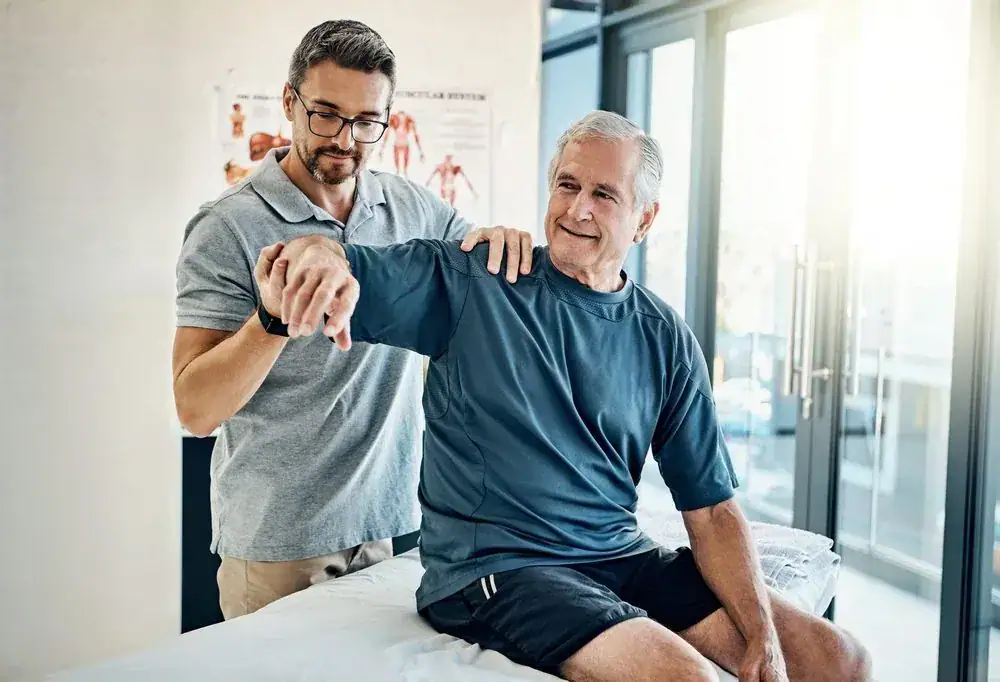
Medical massage works on soft tissue: muscles, scar tissue, the tightness around a sore joint. Physical therapy does hands-on work too, and adds what massage alone doesn’t: like testing strength and balance, building an exercise plan, and figuring out why the problem keeps coming back. They usually complement each other, and neither should be sold as a replacement for the other.
New York also makes the first step easier than most people expect. You can see a physical therapist without a prescription, and one is only required after 30 days or 10 visits. Our initial evaluation runs 45 to 60 minutes, which is long enough to look at the whole picture.
Here’s where we differ from most practices you’ll find around here. Many massage providers across Suffolk County and Nassau County are come-to-us clinics. Our licensed therapists come to you, treating patients at home across Suffolk County and parts of Nassau County, and we also have an office in Smithtown for one-on-one care. If you’re recovering from surgery or you’re an adult child looking for help for a parent who can’t easily get out, that matters.
Bring your massage questions to the evaluation. We’ll tell you straight whether hands-on soft-tissue work fits your recovery, or whether another provider makes more sense.
A Medical massage comes down to purpose and process: an assessment, a goal, a plan, and a way to measure progress. Whether the technique is Swedish, deep tissue, or sports matters less than whether someone is asking the right questions.
Confirm the New York license, get clear answers from your insurance before you book, and check with your doctor if you have a condition or medication that calls for it.
If you’re still not sure where to start, we’re glad to help you sort it out. Medcare Therapy Services provides physical and occupational therapy at home across Suffolk County and parts of Nassau County, and at our Smithtown office. Reach out, tell us what’s going on, and we’ll help you figure out the next step.
Summary:
Article details:
Share: