Two programs, very different purposes. Here's what separates OTAGO from SilverSneakers — and how to know which one your parent actually needs.
Your parent has SilverSneakers through their Medicare plan. They’ve been going to a class here and there, staying active, staying social. And then they had a fall — or came close to one — and suddenly you’re wondering whether what they’ve been doing is actually enough.
It’s one of the most common questions families on Long Island ask us. The honest answer is: it depends entirely on which program you’re talking about, and what your parent actually needs. OTAGO and SilverSneakers are both described as fall prevention options, but they were built for different purposes, different risk levels, and different stages of care. Once you understand the distinction, the right path forward becomes a lot clearer.
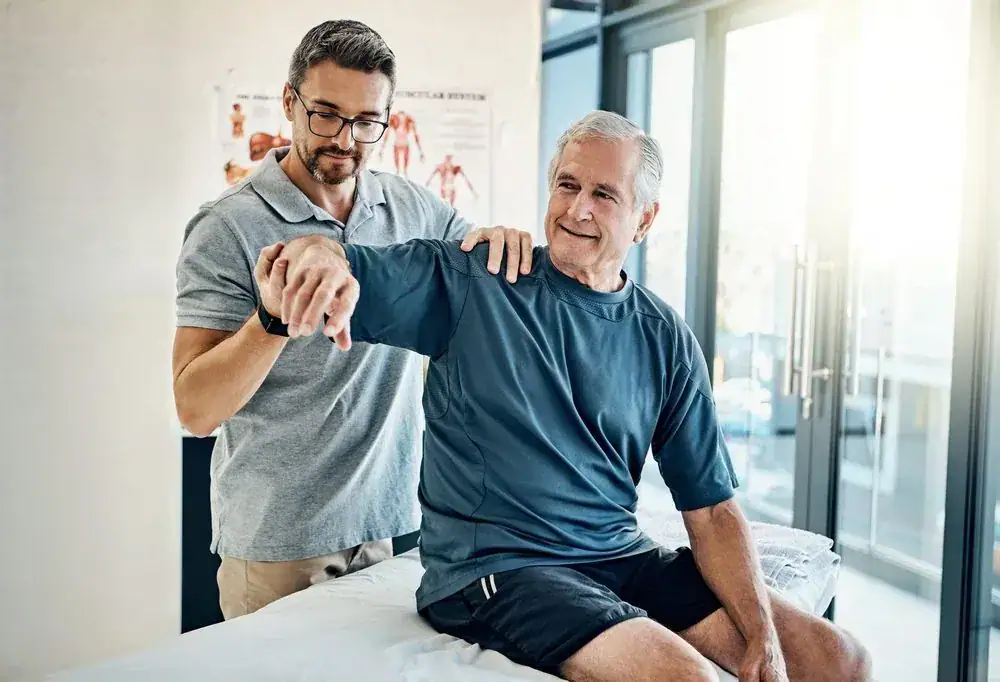
The Otago Exercise Program was developed in New Zealand specifically for older adults at high fall risk — people over 80, or anyone who has already experienced a fall. It consists of 17 targeted strength and balance exercises plus a structured walking program, delivered three times a week by a licensed physical therapist in the patient’s home. This isn’t a general fitness routine. It’s a medically prescribed protocol, individually tailored to each patient after a thorough PT assessment.
The evidence behind it is substantial. Randomized controlled trials show that Otago participants experience a 35 to 40 percent reduction in falls. The program has been validated across 29 countries and is listed by the National Council on Aging as an evidence-based falls prevention intervention. Those numbers don’t come from a fitness class — they come from clinical research.

Otago was built for older adults who are at genuine, documented fall risk — not just people who want to stay active. The program was specifically tested on adults over 80 and those who had already experienced a fall within the past year. If your parent has had a fall, has been told by their doctor that they’re at risk, struggles with balance or gait, or has become fearful of moving around their own home, Otago is the level of intervention they need.
What makes Otago different from other exercise programs isn’t just the exercises themselves — it’s the delivery. A licensed physical therapist conducts an initial assessment, identifies the specific deficits driving the fall risk (whether that’s lower limb weakness, medication effects, poor gait mechanics, or something else entirely), and then builds a program around those findings. The therapist typically sees the patient for approximately four visits over the first eight weeks, with follow-up phone check-ins and in-person visits at six, nine, and twelve months. It’s structured, monitored, and adjusted over time — not a class you attend and hope for the best.
Fear of falling is itself a fall risk. When older adults become afraid, they move less. When they move less, they decondition. When they decondition, they fall more. Otago directly addresses that cycle — not just the physical mechanics, but the confidence piece that so often gets left out of generic fitness programs. Families frequently tell us that the shift in their parent’s confidence is what they notice first, before any formal measurement of balance improvement.
On Long Island, where Nassau County ranks fourth in New York State for fall prevalence among older adults, this level of clinical intervention isn’t a luxury. It’s often exactly what the situation calls for.
This is usually the first practical question families ask, and the answer is yes — with the standard Medicare conditions that apply to any physical therapy service. When Otago is delivered in the home by a licensed physical therapist and is deemed medically necessary, it may be covered under Medicare Part A. When delivered in an outpatient setting, it falls under Medicare Part B, which kicks in after the annual Part B deductible and then covers 80 percent of the Medicare-approved amount — leaving the patient responsible for the remaining 20 percent.
The key phrase is “medically necessary.” Medicare doesn’t cover exercise for its own sake, but it does cover physical therapy when there’s a documented clinical need — and a patient with a fall history, balance deficits, or physician-identified fall risk typically meets that standard. The 2024 Medicare cap for physical therapy and speech-language pathology combined is $2,330, though exceptions exist for patients with ongoing medical necessity beyond that threshold.
We’re Medicare-certified and Otago-trained, and we help families navigate the coverage question from the very first call. If you’re not sure whether your parent qualifies, the best starting point is a conversation — not an assumption that it won’t be covered. One thing worth knowing: Otago is not something that starts on day one of a PT episode. The therapist conducts a proper assessment first, establishes the program based on what they find, and then builds the protocol from there. That clinical foundation is part of what makes it effective — and part of what distinguishes it from simply doing balance exercises at home on your own.
Want live answers?
Connect with a Medcare Therapy Services expert for fast, friendly support.
SilverSneakers is a fitness and wellness benefit offered at no additional cost to seniors 65 and older on eligible Medicare Advantage plans. It provides access to roughly 14,000 recreation centers, community locations, and fitness facilities across the country — including locations here on Long Island. Members can attend group fitness classes, use gym equipment, and participate in social activities designed for older adults.
The research on SilverSneakers is genuinely positive. Studies show that participation is associated with fewer hospital admissions and lower healthcare costs over time. Members report improved physical activity levels, better self-rated health, and reduced social isolation. These are real benefits — and for an active senior who wants to maintain their fitness, stay connected, and take advantage of a benefit they’re already paying for through their plan, SilverSneakers is a smart choice.
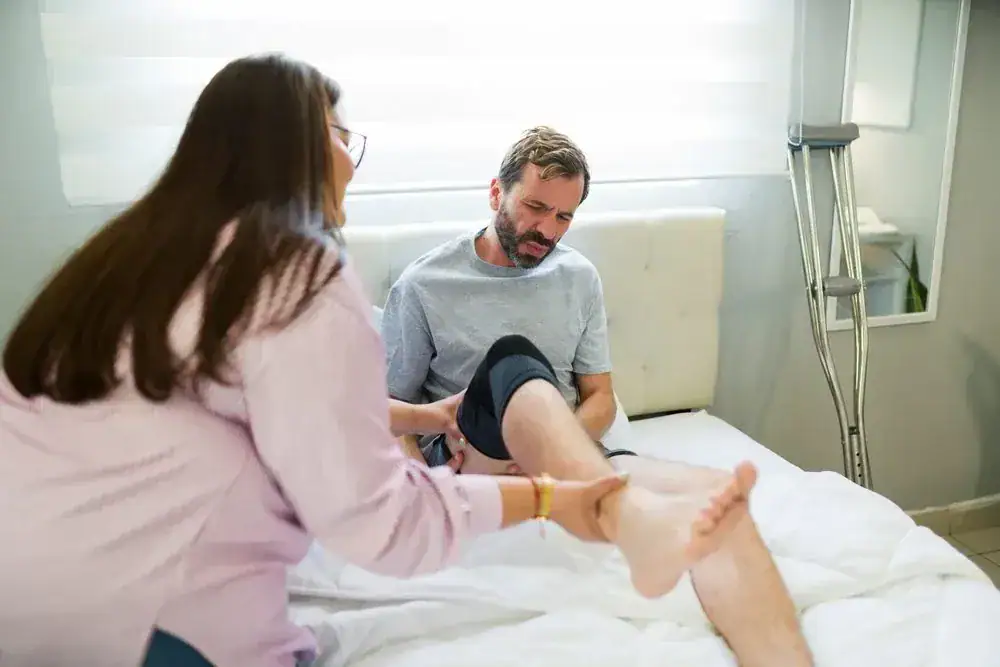
This is where the honest answer matters most, and it’s the question that drives most of the searches that lead families to a comparison like this one. If your parent has had a fall, is afraid of falling, has been flagged by their doctor as high-risk, or has noticeable balance or gait problems, SilverSneakers alone is not the right tool for the job. That’s not a knock on the program — it’s just a description of what it was designed to do.
SilverSneakers classes are led by instructors with specialized senior fitness training, and they serve many participants at once. The classes are designed to be accessible and encouraging for a broad group of older adults. What they are not designed to do is assess an individual’s specific fall risk factors, identify the underlying deficits driving that risk, and build a monitored, medically prescribed program around those findings. That’s clinical work, and it requires a licensed physical therapist.
The distinction matters because a lot of families discover SilverSneakers as a free benefit in their parent’s Medicare Advantage plan and reasonably assume it covers their fall prevention needs. It doesn’t — not in the clinical sense. SilverSneakers is a fitness benefit. Otago is a medical intervention. When your parent’s situation calls for the latter, a group fitness class isn’t a substitute, regardless of how good the class is.
Long Island’s car-dependent infrastructure means many seniors who can no longer drive have limited access to gym-based programs in the first place. A SilverSneakers membership is only as useful as your parent’s ability to get there. In-home Otago therapy removes that barrier entirely — the therapist comes to your parent’s house, works in the actual environment where falls happen, and assesses the specific hazards in that home.
Yes — and for many seniors, the ideal path actually involves both programs in sequence. Otago addresses the clinical phase. It’s the right intervention when fall risk is active, documented, and needs a medical response. Once a patient has completed the Otago protocol, improved their strength and balance, and regained confidence in their movement, SilverSneakers becomes an excellent tool for long-term maintenance and ongoing social engagement.
Think of it as a continuum rather than a competition. Otago gets your parent to a stable, safer baseline. SilverSneakers helps them stay there — while also giving them access to a community of peers, which has its own documented health benefits. The two programs aren’t in conflict; they just serve different stages of care.
We deliver the Otago Exercise Program through our licensed, Otago-trained physical therapists across Suffolk County and Nassau County, including from our clinic locations in Smithtown and Speonk. We know when a patient is ready to transition from clinical PT to a maintenance program, and we can help families understand what that transition looks like. For Long Island families navigating this decision, the starting point is almost always a clinical assessment — not to sell anyone on a program, but to actually understand where your parent’s fall risk stands right now.
If your parent is active, relatively low-risk, and looking to maintain their fitness and stay social, SilverSneakers is a genuinely good benefit — and if it’s already included in their Medicare Advantage plan, there’s no reason not to use it. But if they’ve fallen, they’re afraid of falling, their doctor has flagged a concern, or you’ve noticed real changes in how they move, they need something more targeted than a group fitness class.
The Otago Exercise Program exists specifically for that second situation. It’s not a harder version of SilverSneakers — it’s a different category of care entirely, with clinical evidence behind it and a licensed physical therapist driving it.
If you’re not sure which situation describes your parent, that’s exactly what a fall risk assessment is for. We’ve been delivering Medicare-covered, in-home fall prevention therapy across Long Island for over 14 years — and we’re happy to help you figure out the right next step. Call us at 631-866-6507 and we’ll take it from there.
Summary:
Article details:
Share: