Most people picture a few balance exercises. A real fall prevention program is a lot more specific — and a lot more effective — than that.

Most people assume a fall prevention program means a few balance exercises and some advice about wearing better shoes. That’s understandable — but it’s also why so many seniors end up doing the wrong things, or nothing at all, while their actual risk quietly climbs.
Falls aren’t random. They happen for specific, identifiable reasons. And that means they can be addressed with a specific, structured plan — not generic caution. If you’re trying to understand what a real program looks like, what it involves week to week, and whether it’s actually worth doing, this is the place to start.
The word “accident” implies there was nothing to be done. But the research tells a different story. Falls in older adults almost always trace back to a combination of factors — muscle weakness, declining balance, reduced reaction time, vestibular changes, medication side effects, and home hazards that have been there for years without incident. Each one is identifiable. Most are treatable.
One in four Americans aged 65 and older falls each year. Here on Long Island, fall-related hospitalizations occur at a rate nearly 30 percent higher than the New York State average — more than 280 hospitalizations per 10,000 adults over 65 in Suffolk County. Those aren’t abstract statistics. They reflect what’s happening in real homes across Nassau County and Suffolk County, in communities where aging in place is the goal and a single fall can change everything.
The good news is that a structured fall prevention program for seniors, delivered by a licensed physical therapist, can reduce fall risk by 35 to 40 percent. That kind of outcome doesn’t come from being more careful. It comes from targeted, progressive work on the exact deficits driving the risk.

When most people picture fall prevention therapy, they imagine standing on one foot or walking heel-to-toe down a hallway. Those things may be part of it — but they’re a small slice of what a well-designed program actually delivers.
A quality program begins before any exercise happens. The therapist conducts a comprehensive fall risk assessment using validated clinical tools — the Berg Balance Scale and the Timed Up and Go test are two of the most widely used. These aren’t subjective impressions. They’re standardized measures that produce a baseline score, identify specific deficits, and allow the therapist to track real progress over time.
Gait analysis — watching how you walk, how you shift your weight, how you recover from a stumble — is part of this too. So is a review of medications, vision, and any sensory changes that affect proprioception, which is your body’s sense of where it is in space.
From there, we build a plan around what we actually found. If the issue is hip and ankle weakness, the program targets those muscle groups with progressive resistance exercises. If the vestibular system is involved — which it often is — exercises that challenge the inner ear’s ability to maintain stability are incorporated. If reaction time is the limiting factor, dynamic movement drills that train faster responses get added. The work is progressive, meaning it gets harder as you get stronger, which is exactly what produces lasting change.
We use the Otago Exercise Program as part of our approach — a series of 17 strength and balance exercises developed in New Zealand and now recognized by the CDC and the National Council on Aging as one of the most effective evidence-based fall prevention tools available. Studies show it reduces falls in high-risk older adults by 35 to 46 percent. It’s not a generic routine. It’s a clinically validated system, delivered one-on-one by a licensed therapist who adjusts it to the individual patient.
Sessions typically run across a four to eight week period, with most patients seen two to three times per week depending on where they’re starting. The goal isn’t just to improve during sessions — it’s to build the kind of strength and stability that holds up in real daily life.
What happens between appointments is just as important as what happens during them. A therapist who hands you a printed sheet of exercises on day one and calls it a home program isn’t giving you much. A good program builds a home exercise component that’s specific to your deficits, appropriate for your current level, and taught well enough that you can actually do it correctly on your own.
Balance is a system — it draws on strength, coordination, vision, the vestibular system, and the nervous system’s ability to process sensory input quickly. Generic exercises can’t account for which part of that system is underperforming in your specific case. Done incorrectly, they can even introduce new risks.
The home exercise program we design for patients is built around what the assessment revealed. If someone has particular weakness on one side, the exercises address that asymmetry. If a patient struggles most with transitions — getting up from a chair, stepping over a threshold, navigating stairs — the home exercises mirror those functional movements. We demonstrate each exercise, watch you perform it, and correct form before we leave. That’s the difference between a piece of paper and an actual home program.
For Long Island seniors who spend significant time at home — many of whom live in older single-family houses with split-level layouts, narrow bathrooms, and front steps that see ice from November through March — this home-based component isn’t supplementary. It’s central to the whole program. The goal is that the work continues every day, not just on the days a therapist visits.
We also address the home environment directly. A physical therapist who comes to your house can see the loose rug in the hallway, the dim light over the stairs, the bathroom without grab bars. That’s not something a clinic-based program can replicate. We identify hazards, make specific recommendations, and in many cases can coordinate with occupational therapy for modifications that go beyond exercise.
Want live answers?
Connect with a Medcare Therapy Services expert for fast, friendly support.
There’s a pattern that shows up constantly in seniors who haven’t yet sought help. They have a close call — or they hear about a friend’s fall — and they start pulling back. They stop walking to the mailbox alone. They skip the grocery store. They sit more, move less, and tell themselves they’re being careful.
The problem is that this caution is physically counterproductive. Reduced activity leads to muscle loss. Muscle loss accelerates balance decline. And declining balance means the next close call is more likely to become an actual fall. The fear of falling, left unaddressed, creates the very outcome it’s trying to prevent.
This cycle is clinically documented, and it’s one of the most important reasons to start a structured fall prevention program before a fall happens — not after.
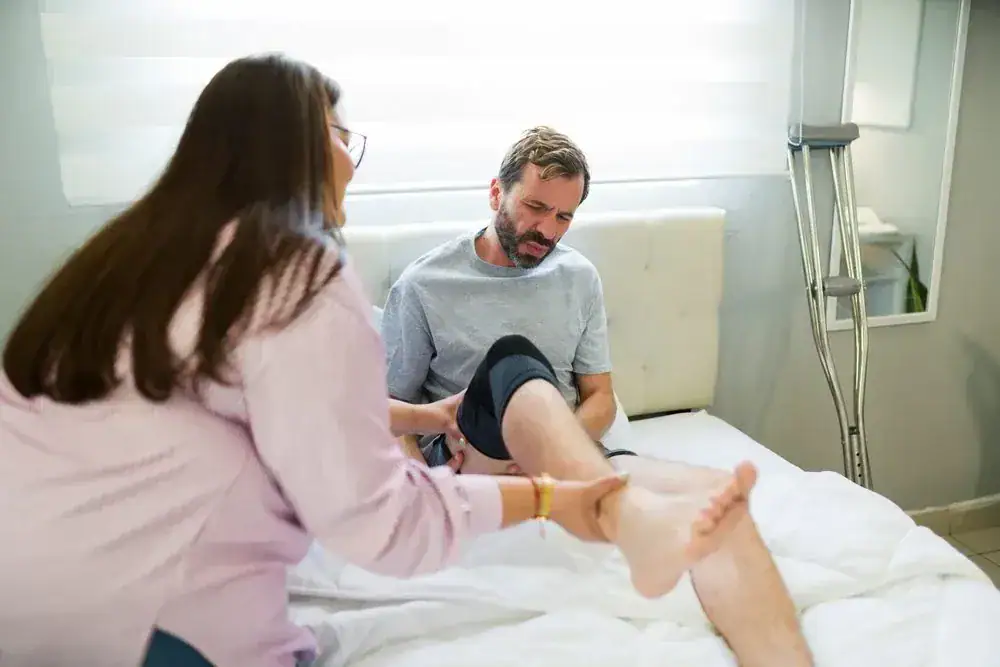
The most common trigger for starting a fall prevention program is a fall that already happened. That’s understandable — a fall is a wake-up call, and it tends to move everyone to action quickly. But waiting for a fall to occur means the program is reactive rather than preventive, and a first fall significantly increases the risk of a second one.
The better question isn’t “has my parent fallen?” It’s “are there signs that the risk is building?” A physician who notices balance issues during an annual wellness visit, a family member who observes that a parent is moving more cautiously, a senior who’s quietly stopped doing things they used to do without thinking — these are all signals worth acting on.
Medicare’s Annual Wellness Visit actually includes a fall risk screening, which means a physician referral for fall prevention therapy can come out of a routine appointment. When that referral exists, fall prevention physical therapy is typically covered under Medicare Part B — which removes the financial barrier that holds many Long Island families back from getting started.
We work with Medicare and nearly all commercial insurances, and we handle the coordination on our end. The goal is to make the process as straightforward as possible so that the decision to start doesn’t get delayed by paperwork or confusion about coverage.
For families in Nassau County and Suffolk County, in-home therapy also solves the transportation problem that stops many seniors from following through on a clinic-based referral. There’s no drive, no waiting room, no logistics to figure out. A licensed therapist comes to the home — which, as noted, is where roughly 50 percent of falls actually happen.
In most cases, the person doing the research isn’t the patient — it’s an adult child or a spouse who has noticed something and is trying to figure out what to do. If that’s you, a few things are worth knowing before you make the call.
First, resistance from the senior is normal. Many older adults don’t want to admit that their balance has changed, and some have had prior experiences with physical therapy that felt generic or unhelpful. The distinction between a structured, individualized program and a printed handout matters here — and it’s worth explaining to a resistant parent that this isn’t the same as what they may have tried before.
Second, caregiver education is part of what we do. We teach the people who live with or assist a patient how to help safely — how to support someone during a transfer, what to watch for, and what not to do in ways that inadvertently increase risk. That knowledge extends the value of the program beyond the patient to the whole household.
Third, the first appointment is an assessment, not a workout. We aren’t going to walk in and immediately put your parent through exercises. We’re going to spend time evaluating — asking questions, observing movement, using standardized tools to understand exactly what’s going on. That thoroughness is the foundation for everything that follows. It’s not a quick checklist.
The strength and balance exercises for seniors that make up the core of the program come after that foundation is built. And because the program is one-on-one — not a group class, not a rotating cast of aides — the therapist who does the assessment is the same person who delivers the care. That consistency matters, especially for older adults who need time to build trust with a provider.
A fall prevention program for seniors, done properly, is one of the most evidence-backed interventions available for aging adults. It’s not a wellness class or a precautionary measure — it’s a clinical process that addresses real, identifiable deficits with a structured plan and measurable outcomes.
The right time to start is before something goes wrong. The risk factors that lead to falls don’t announce themselves loudly. They build gradually, and by the time a fall happens, the window for easy intervention has already passed.
If you’re on Long Island — whether you’re in Suffolk County, Nassau County, or one of the 200-plus communities we serve — and you’re trying to figure out whether a structured program makes sense for yourself or someone you care about, Medcare Therapy Services is a good place to start that conversation. Call us at 631-866-6507 and we’ll help you understand what the right next step looks like.
Summary:


Article details:
Share: