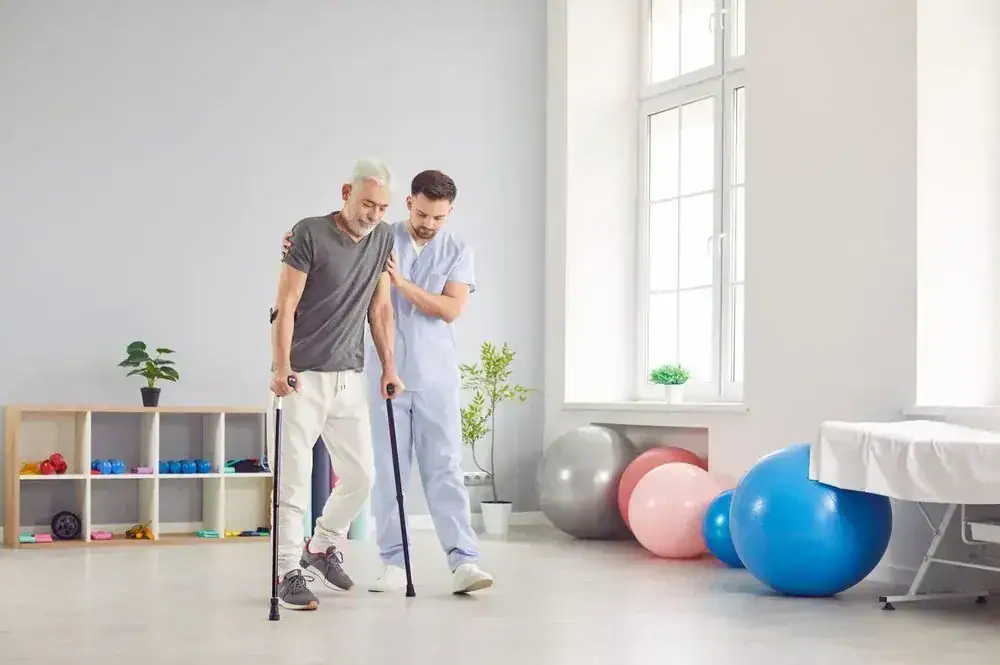
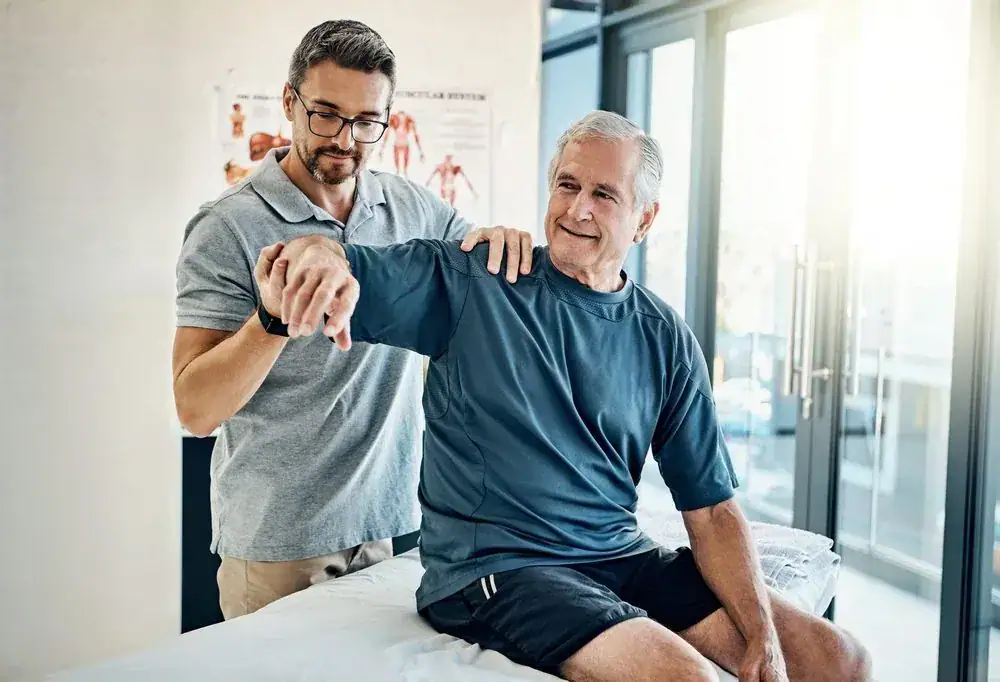
If chronic neck, back, or shoulder pain has followed you through every commute and every failed remedy, cupping therapy at a physical therapy clinic might be the piece you've been missing.
If you’ve been managing back pain, neck stiffness, or shoulder tension for longer than you care to admit, you’ve probably tried a few things that didn’t stick. Maybe medication took the edge off but never really solved it. Maybe a previous round of physical therapy helped for a while. Maybe you’ve heard about cupping and wondered if it’s legitimate or just something athletes post about on social media.
It’s a fair question. And the honest answer is more useful than most of what’s out there on this topic. Here is what cupping therapy is, how it works when it’s done right, and why it looks very different inside a licensed physical therapy practice than it does at a wellness spa.
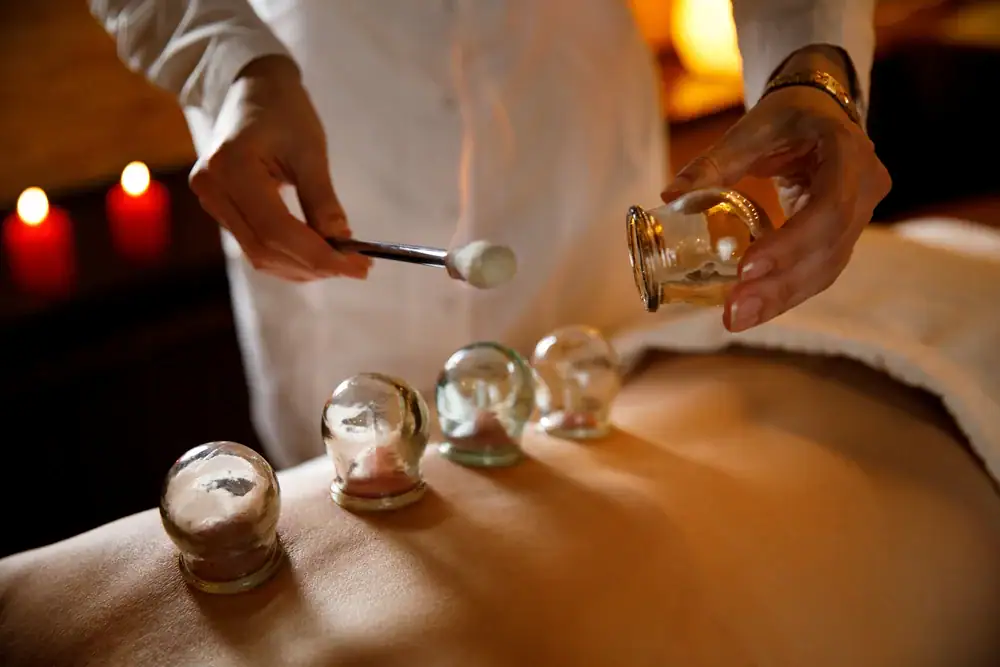
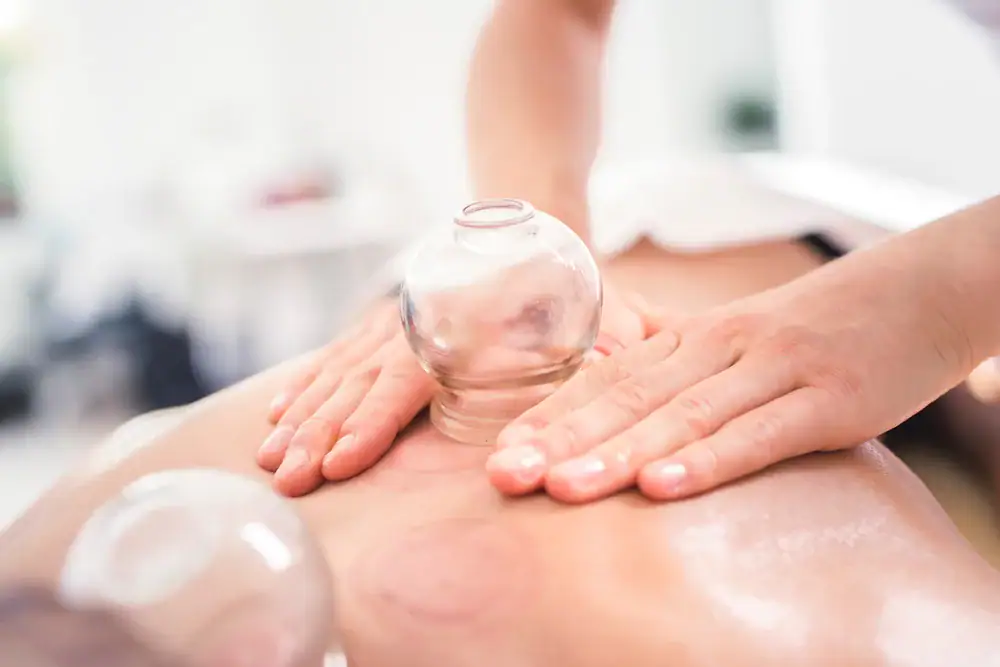
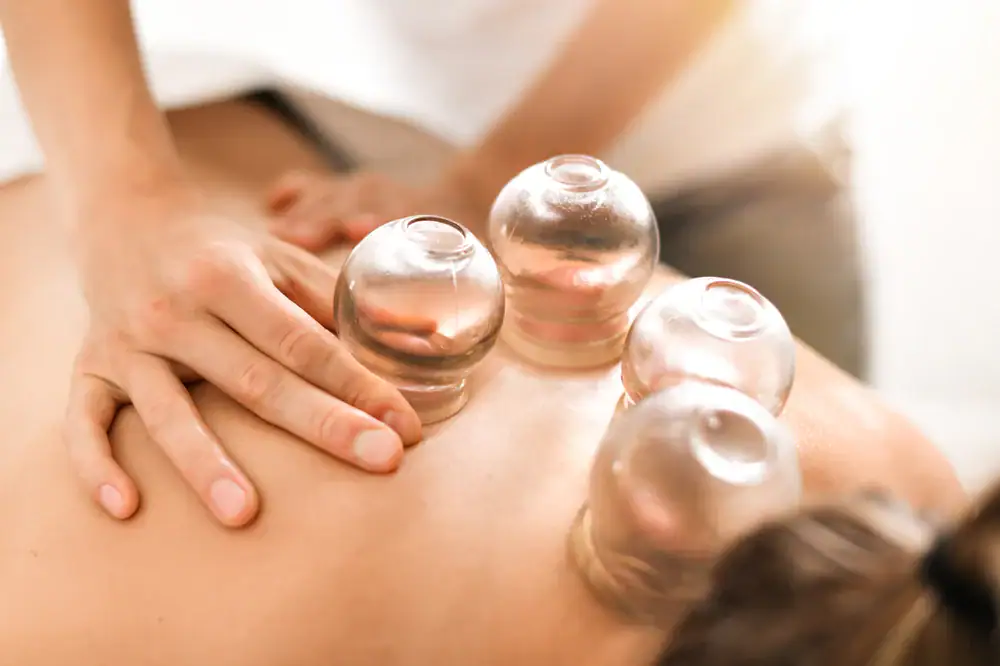
Cupping therapy uses suction, created by cups placed on the skin, to pull the underlying tissue upward. That negative pressure increases blood flow to tight, restricted areas and helps release the kind of deep muscular tension that regular massage or exercise often can’t reach on its own. It’s particularly effective on the thick connective tissue around the spine, shoulders, and hips.
The marks it leaves, those circular discolorations you’ve probably seen, are a normal response to increased circulation in the area. They’re not bruises in the traditional sense, they’re not painful, and they fade within a few days. It’s one of the most common concerns people bring up before their first session, and it’s worth knowing upfront so it doesn’t catch you off guard.
The skepticism is understandable. Cupping got a lot of mainstream attention after the 2016 Summer Olympics, and since then it has shown up on spa menus and wellness Instagram feeds in ways that don’t exactly scream clinical credibility. But the research tells a different story.
A 2025 systematic review and meta-analysis published in BMJ Open found a statistically significant reduction in pain intensity across cupping therapy studies, graded as moderate-quality evidence. A separate 2024 meta-analysis focused specifically on low back pain found high-quality evidence that cupping significantly improves pain outcomes at two to eight weeks. These aren’t fringe studies. They’re peer-reviewed, published in respected journals, and consistent with a growing body of clinical literature that has been building for over a decade.
What the research also shows is that cupping outperforms passive treatments like heat therapy, conventional medications, and standard rest for musculoskeletal pain. That matters for patients in Suffolk County who have already cycled through those options without lasting relief. If you’ve been told to take anti-inflammatories and wait it out, and it hasn’t worked, that’s not a personal failure. It’s a sign that the approach may need to change.
The mechanism isn’t mysterious. Cupping creates decompression in the soft tissue, which improves circulation, loosens myofascial restrictions, and helps break up trigger points: the knotted, hypersensitive spots in muscle tissue that refer pain to other areas of the body. When those restrictions release, range of motion improves and pain decreases. The effect isn’t instantaneous for everyone, but for the right patient with the right condition, it can shift things that haven’t moved in months.
The key phrase there is “the right patient with the right condition.” Cupping isn’t a universal fix. It works best when it’s part of a broader treatment plan, not a one-off session, and not something applied without a proper evaluation first.
This is the distinction most people don’t know to ask about, and it’s probably the most important thing on this page.
When cupping is offered at a spa or wellness studio, it’s typically a relaxation service. The person applying the cups may be a massage therapist or an aesthetician. The session stands alone. There’s no clinical evaluation beforehand, no diagnosis guiding the treatment, and no follow-up plan. You feel good for a day or two, and then the same pain comes back because nothing about the underlying condition has changed.
When cupping is performed by a licensed physical therapist, it’s a different situation entirely. In New York State, physical therapists hold doctoral-level degrees from accredited programs and are licensed through the New York State Education Department. We’re treating diagnosed medical conditions, not providing a wellness experience. Every session is accountable to a clinical standard of care.
At Medcare Therapy Services, the first visit starts with a thorough evaluation. We need to understand what’s causing your pain: how long you’ve had it, what makes it worse, what you’ve already tried, and if cupping is even the right tool for your specific situation. If it is, it gets integrated into a treatment plan alongside therapeutic exercise, manual therapy, and whatever else your condition calls for. If it isn’t, we’ll tell you that too.
That integration is what produces lasting outcomes. Cupping can release tissue restrictions that are limiting your movement and driving your pain, but if the muscles around that area aren’t being strengthened and retrained, the restriction tends to come back. The combination of myofascial decompression and progressive therapeutic exercise is what moves patients from temporary relief to complete recovery.
We’re not a spa. We’re a clinical practice where cupping is one tool among many, used when it makes sense for your specific condition, not applied by default because you asked for it.
Want live answers?
Connect with a Medcare Therapy Services expert for fast, friendly support.
Smithtown has a median age of 47, about 20% higher than the New York State median. A significant portion of the community is managing the kind of chronic, accumulated pain that comes with decades of physical activity, desk work, and the particular strain of commuting on Long Island. The average Smithtown resident spends over 33 minutes each way in transit, often seated in a car or on the LIRR’s Port Jefferson Branch. That’s a lot of hours in a position that loads the lower back, compresses the cervical spine, and shortens the hip flexors.
Add in the seasonal demands of homeownership in a Suffolk County suburb, including spring yard work, summer projects, and fall cleanup, and you have a community with a high and consistent need for effective musculoskeletal care. We’ve been serving Smithtown and the surrounding areas since 2000. That’s 25 years of treating the specific conditions that affect people who live and work here.
This is one of the first questions people ask, and it’s the right one to ask. The answer depends on how the service is billed, and that’s where the clinical versus spa distinction becomes financially relevant, not just philosophically.
When cupping is performed at a spa or standalone wellness studio, it’s typically billed as an alternative medicine service. Most health insurance plans don’t cover that. You pay out of pocket, per session, indefinitely.
When cupping is performed by a licensed physical therapist as part of a physical therapy session, it’s billed as a manual therapy technique under your PT benefits. That’s a meaningful difference. For the 97.9% of Smithtown residents who carry health insurance, and the 13.7% who are on Medicare, this means cupping may already be covered under benefits you’re paying for.
We are Medicare certified, which matters for a significant portion of the Suffolk County population. Medicare covers physical therapy services when they’re medically necessary and provided by a licensed, credentialed practice. Because we integrate cupping into medically indicated treatment plans rather than offering it as a standalone wellness service, it falls within that framework.
We verify insurance benefits before your first visit so there are no surprises. If you’re unsure if your plan covers physical therapy, the fastest way to find out is to call us directly. We’ll walk you through it.
For a lot of people in this area, the barrier to getting care isn’t finding a good provider; it’s getting there. If you’re managing significant pain, recovering from surgery, or dealing with mobility limitations, adding a clinic commute to your week can feel like more than the treatment is worth. That’s a real obstacle, and it keeps people from getting help they need.
We offer in-home physical therapy across Suffolk and Nassau counties, and that includes cupping-integrated treatment. A licensed physical therapist comes to you: your home, your schedule, your terms. The clinical standard doesn’t change. The evaluation, the treatment plan, the hands-on care, all of it happens in your space instead of ours.
This is particularly relevant for older adults in Smithtown and the surrounding communities of Kings Park, Hauppauge, St. James, Commack, and Nesconset. With 19% of the Smithtown population aged 65 or older, and a significant Medicare-enrolled population across Suffolk County, in-home physical therapy isn’t a convenience feature; it’s a genuine access solution. Post-surgical patients discharged from nearby facilities who need follow-up care but can’t yet manage the logistics of clinic visits are exactly the kind of patient this service was built for.
Nassau County residents aren’t left out either. Our network extends westward across Long Island, and in-home care is available throughout Nassau County for patients who need clinical-quality physical therapy, including cupping, without the travel. If you’re in a western Nassau suburb or further east in central Suffolk, the same standard of personalized, one-on-one care applies.
No other provider in this market offers cupping as part of a home-based physical therapy program. If getting to a clinic has been the thing standing between you and care, that obstacle no longer exists.
Cupping therapy works when it’s performed by a licensed physical therapist, integrated into a real treatment plan, and matched to what is causing your pain. The research supports it. The clinical framework matters. And the distinction between a spa session and a PT-delivered treatment isn’t a technicality; it’s the difference between temporary relief and a path toward lasting recovery.
If you’ve been dealing with chronic back, neck, or shoulder pain and you’re ready to try something that addresses the root cause rather than masking the symptoms, we’re here to help. Medcare Therapy Services has been part of the Smithtown community for over 25 years, we’re Medicare certified, and we bring care directly to patients who can’t easily make it to a clinic.
Call Medcare Therapy Services today to verify your insurance benefits and schedule your one-on-one evaluation to find out if cupping therapy is the right solution for your pain relief.
Summary:
Article details:
Share: