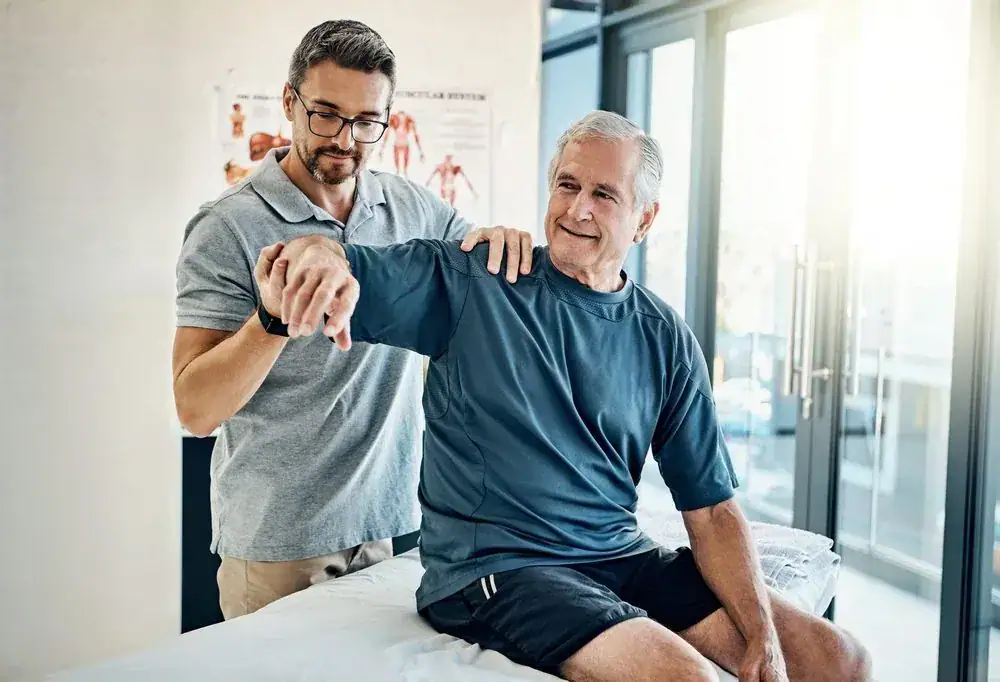
Swedish or deep tissue? Here's how the two differ, why deep doesn't mean painful, and who should check with a clinician before booking either one.
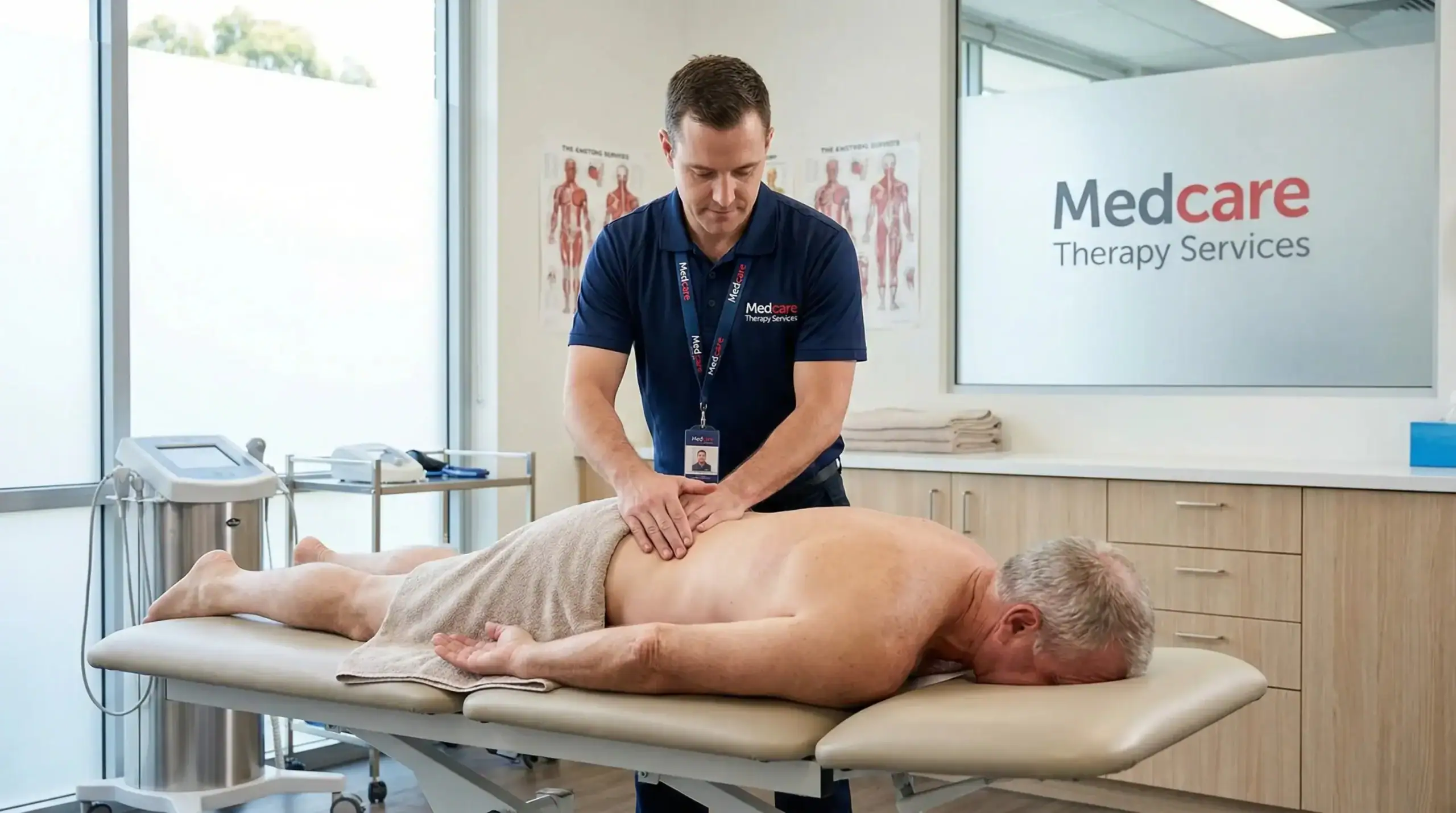
You’ve got a tight neck, a back that won’t quit, or a shoulder that locks up every time you reach for something. A friend says to get a massage. Then you open a booking page and see Swedish, deep tissue, sports, and medical, with no clue which one you’d want. Pick wrong and you either pay for a pleasant hour that never touches the problem, or you brace for pain you didn’t need.
If you’re in Suffolk County or Nassau County, you’re probably juggling a long commute, a physical job, or both. That’s where the confusion matters most. Here’s a plain-English way to sort it out, starting with what separates the two big styles.
A Swedish massage uses long, gliding strokes, kneading, and light to medium pressure. It works mostly on the surface layers of muscle, and it’s the one to pick when you’re wound up, run down, or just want to feel looser overall.
A deep tissue uses slower strokes and more sustained pressure to reach the deeper muscle and the connective tissue around it. People reach for it when they have a specific spot, like a knot between the shoulder blades or a hip that’s been tight since an injury.
Here’s the part that surprises people. According to the AMTA’s 2026 industry fact sheet, 49% of people who get a massage go for soreness, stiffness, or spasm, a little ahead of the 43% who go for relaxation and stress. Most of you are solving a problem, not treating yourself, so the style you choose matters.
No, and this is the biggest misunderstanding we hear. Deep describes where the work happens, not how much it should hurt. A good therapist starts with lighter pressure to warm the tissue, then works down gradually and checks in with you along the way.
Think of it as a scale. Firm pressure that feels like a “good hurt” (the kind where you can still breathe slowly and your muscles stay soft) is normal. If you’re holding your breath, clenching your jaw, or tensing against the pressure, that’s too much. Your body tightens up to protect itself, which defeats the whole purpose. Speak up the moment it crosses that line. Any provider worth booking will adjust without making you feel awkward about it.
Soreness afterward is a different story. A day or more of achiness is common after deep work, similar to how you feel after a hard workout. That’s delayed onset muscle soreness, and it comes from working tissue that was tense, inflamed, or unused to the pressure.
What isn’t normal is sharp pain, new numbness, swelling, or heavy bruising. If a therapist tells you “no pain, no gain,” treat that as a red flag. Deep tissue done well should leave you feeling worked, not wrecked.
It depends on what’s behind the pain. If your back is tight from sitting, driving, or a physical job (common complaints we hear from people across Smithtown, Hempstead, and the surrounding areas) either style can help. Deep tissue tends to do more for stubborn spots that keep coming back. If you mostly feel worn down and stiff all over, Swedish may be all you need.
But some back pain isn’t a muscle problem, and no massage will fix it. Numbness or tingling, weakness in a leg, pain that started after a fall or surgery, or pain that’s lingered for months with no clear cause all call for an evaluation first. That’s where we come in as a physical therapy practice.
We look at how you move, figure out what’s driving the pain, and use hands-on soft tissue work as one piece of a plan, alongside exercises and guidance you can use at home. Our hands-on work is aimed at the deeper layers where chronic pain and restriction live, and the plan adjusts as you improve.
We’ve been serving Long Island since 2010, with offices in Smithtown and Speonk. Our therapists also visit patients at home across Suffolk County and Nassau County when getting to a clinic is part of the problem. We’ve heard the same story from patients in places like Massapequa and East Atlantic Beach: the back pain builds slowly, then one day it won’t let up.
Want live answers?
Connect with a Medcare Therapy Services expert for fast, friendly support.
Once you’ve sorted out Swedish and deep tissue, two more names show up on most menus. Sports massage uses many of the same techniques as deep tissue, but it’s timed around training or events. Before, it’s lighter and meant to get you warm and moving. Afterward, it’s aimed at recovery and keeping your range of motion. It’s useful for runners, golfers, and weekend athletes, but you don’t have to be one.
Medical massage is the least clearly defined term of the four. It generally means massage aimed at a specific condition, often after an injury or surgery, and tied to a plan from a doctor or therapist. Insurance coverage for massage varies a lot from plan to plan, so check with yours before you book anything and don’t assume.
Deep pressure isn’t right for everyone, and this is the section most massage pages tuck away at the bottom. You should talk with your doctor first if you’ve ever had a blood clot or a clotting disorder, take blood thinners, have a bleeding disorder, are being treated for cancer, or have osteoporosis. In each case, firm pressure can carry real risk, and a therapist working from a short intake form may never know to ask.
Age matters here too. According to AMTA’s 2024 report, adults 65 and older averaged 5.4 massages in 2023, more than any other age group. That’s a lot of people with more medications, more health history, and more reasons to screen carefully before anyone leans into their muscles.
This is also why we pay attention to how people come home from a hospital stay. We work with local physicians, hospitals, and rehab facilities, including helping patients move smoothly from Stony Brook back to their own living rooms. Someone in that spot might be sore, stiff, and eager for a massage. Often the better first step is a licensed therapist who already knows their surgery, their medications, and their limits.
If you’re caring for a parent in Massapequa, East Atlantic Beach, or anywhere else we visit in Suffolk County or Nassau County, you’re probably asking whether this is safe for them. Ask. A good provider will welcome the question, and so will we.
For most people, soreness after deep tissue peaks within a day and fades within a couple of days. Drink water, move gently, and don’t schedule a session right before a beach day, a big trip, or a tough workout. If the soreness is sharp, getting worse, or comes with numbness or swelling, call your provider or your doctor.
Before you book any massage, ask a few simple questions. Does the therapist hold a New York State license? New York requires 1,000 hours of education and a state exam, so that’s a fair thing to confirm. Will there be an intake about your health history and goals? Will they check in on pressure during the session? If the answers are vague, keep looking.
Some of you will ask whether you can get this kind of care at home on Long Island. If getting to an appointment is half the battle, we can help. Our therapists provide physical and occupational therapy visits at home across Suffolk County and Nassau County, and we’ll talk through what hands-on work makes sense for you. For those who prefer to come in, our offices in Smithtown and Speonk are open for in-person care, with the East End location serving the Hamptons area.
Swedish is for unwinding and general tension. Deep tissue is for specific, stubborn problem areas, and it shouldn’t be painful. Sports and medical massages are variations built around goals and conditions. And if you have numbness, a recent fall or surgery, or a health condition like blood thinners or osteoporosis, an evaluation should come before any firm pressure.
If you’re dealing with pain and can’t tell whether you need a massage or a different kind of help, reach out to Medcare Therapy Services. We’ll listen, explain what we’re seeing in plain terms, and tell you honestly what makes sense, whether that’s a visit at our Smithtown or Speonk office or a therapist who comes to you in Suffolk County or Nassau County.
Summary:
Article details:
Share: