Your parent's doctor mentioned both OT and PT. Here's what that actually means, why both matter, and how in-home care changes everything.
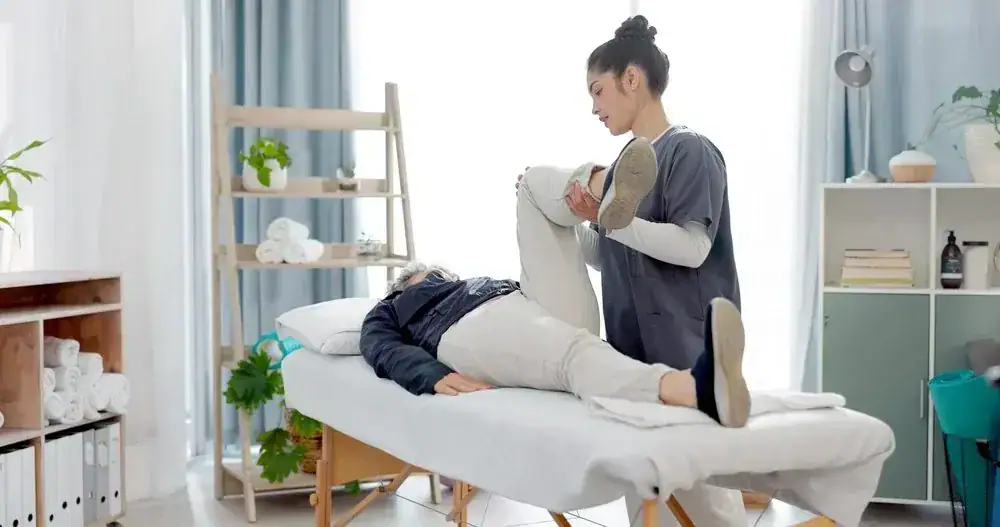
If your parent’s doctor handed you a discharge summary that mentioned both physical therapy and occupational therapy, you’re not alone in feeling like you need a translator. Most families leave the hospital nodding — and then spend the drive home wondering what the difference actually is, whether they need both, and how they’re supposed to coordinate any of it.
It’s a genuinely confusing distinction, and the stakes feel high. So here’s a clear, honest breakdown of what senior OT actually involves, how it differs from physical therapy, and why the answer to “do they need both?” is more often yes than most people expect.
The simplest way to think about it: physical therapy focuses on how your parent moves, and occupational therapy focuses on what they can do with that movement. PT rebuilds the engine. OT teaches them to drive again — with whatever adaptations they now need.
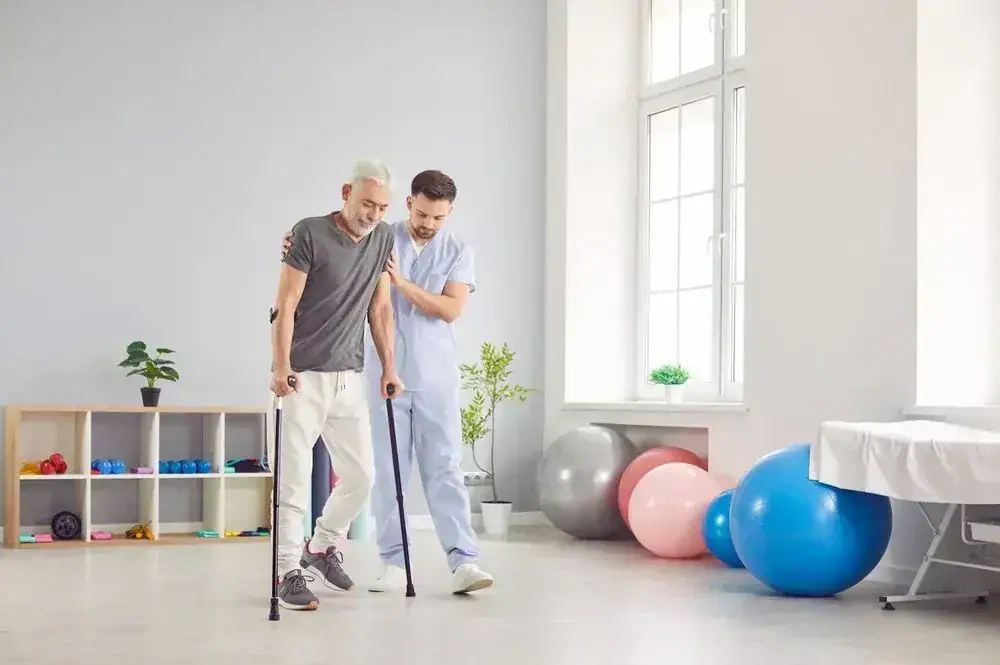
Physical therapy works on strength, balance, mobility, and pain. After a hip replacement or a fall, a physical therapist helps your parent walk safely, regain range of motion, and build the stability to move through their day without constant risk of going down again.
Occupational therapy picks up where that leaves off. It focuses on the daily tasks that actually define independence — getting dressed, preparing a meal, showering safely, writing a check, buttoning a shirt. These are the things that tell your parent whether they’re really back to living their life or just getting through it.
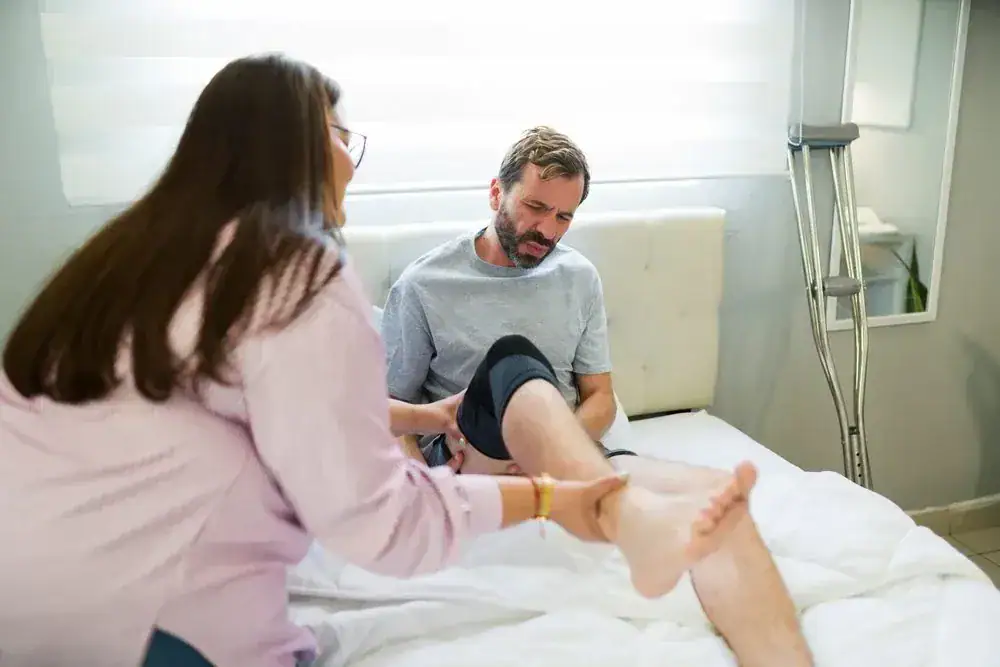
A lot of people assume occupational therapy is about job skills or vocational training. The word “occupation” in OT doesn’t mean employment — it means any meaningful activity that fills a person’s day. For a senior on Long Island, that might be making coffee in the morning, getting in and out of the tub safely, or walking to the mailbox and back without holding the fence.
During an in-home visit, an occupational therapist does something a clinic simply can’t replicate: we look at the actual environment your parent lives in. We see the real bathroom layout, the actual kitchen counter height, the staircase with the worn carpet runner, the lighting in the hallway at 6 a.m. From that assessment, we can recommend specific modifications — a grab bar positioned for how your parent actually moves, a lever-style door handle that works with arthritic hands, a shower chair sized for that particular tub.
These aren’t generic suggestions pulled from a checklist. They’re based on what we observe in real time, in the real space.
OT also addresses fine motor skills — the smaller, more precise movements that PT doesn’t specifically target. Gripping a fork, holding a pen, buttoning clothing, using a phone. After a stroke or neurological event, these functions can be significantly impaired even when gross motor strength is improving.
An occupational therapist works on the cognitive and physical dimensions of daily tasks together, which is why OT is frequently prescribed alongside PT after a stroke — not instead of it. For seniors dealing with arthritis, dementia, or the general functional decline that comes with aging, OT creates strategies and adaptations that reduce frustration and restore a sense of control.
The goal isn’t just safety. It’s dignity. It’s your parent being able to do things for themselves again, even if the method looks a little different than it used to.
The honest answer is that many seniors benefit from both — and the reason doctors order them together isn’t redundancy, it’s because they address different dimensions of recovery that don’t overlap as much as people assume.
If your parent had a knee replacement, PT helps them walk again. But if they’re struggling to get in and out of the shower safely, or can’t manage the stairs to their bedroom, or can’t prepare a simple meal because of how their mobility has changed — that’s where OT comes in. PT restored the physical capacity. OT makes that capacity usable in the context of real daily life.
After a stroke, the case for both is even clearer. Physical therapy addresses the motor recovery on the affected side — relearning to walk, improving balance, rebuilding strength. Occupational therapy addresses the functional consequences of that same neurological event — using the affected arm to eat, dress, or write; compensating for any cognitive changes; adapting the home environment to match the patient’s current abilities rather than the ones they had before.
One therapist working on one dimension of recovery is not the same as two therapists working in coordination on the full picture. The concern we hear from families most often is about coordination — if you’re managing two separate providers, two separate schedules, two separate sets of paperwork, it becomes a logistical burden on top of an already stressful situation.
That’s one of the practical reasons having both PT and OT available through a single provider matters. It removes the friction of coordinating between organizations that don’t communicate with each other, and it means the people working with your parent are actually aware of what the other is doing.
Nearly 40% of adults over 65 fall each year, and falls are the leading cause of injury-related death in that age group. When someone has already fallen once, the risk of falling again is significantly elevated — and that’s a situation where both PT and OT have a clear, documented role. PT addresses the strength and balance deficits. OT addresses the environmental hazards and daily routine modifications that reduce the likelihood of it happening again.
Want live answers?
Connect with a Medcare Therapy Services expert for fast, friendly support.
Mobility isn’t just about being able to walk from one room to another. For an elderly person living independently, mobility means being able to safely navigate their specific home, manage their specific daily routine, and do so with enough confidence that they’re not living in fear of the next fall or the next bad day.
Physical therapy builds the physical foundation — strength, balance, coordination, endurance. Occupational therapy translates that foundation into functional mobility within the actual environment the person lives in. Together, they address the full picture of what it means for an older adult to move safely and independently through their life.
This is the question families ask most often, and the answer surprises a lot of people: yes, Medicare covers occupational therapy, and there is no annual cap on the number of sessions covered — as long as the therapy is medically necessary.
Under Medicare Part B, OT is covered as an outpatient service. After you meet the Part B deductible, Medicare pays 80% of the Medicare-approved amount, and you’re responsible for the remaining 20%. For seniors who qualify as homebound — meaning that leaving home requires a considerable effort due to illness, injury, or a condition that makes travel difficult — Medicare’s home health benefit can cover in-home OT visits as well.
The homebound classification is more common than many families realize, and it applies to a significant portion of the seniors we work with across Long Island. If your parent’s doctor ordered OT, and the sessions are being delivered by a licensed occupational therapist, Medicare coverage applies. This removes what is often the biggest financial objection families have before making the call to schedule.
For families navigating the cost of care on Long Island — where assisted living and nursing home costs rank among the highest in New York State — in-home OT covered by Medicare is not just a clinical option. It’s a financially meaningful alternative to institutional care, one that also happens to align with what most seniors actually want: to stay in their own home, in their own community, on their own terms.
Long Island’s geography creates a specific problem for seniors who need regular therapy. Outside of the LIRR corridor, public transportation is limited. Most seniors in Suffolk County and Nassau County live in single-family homes they’ve owned for decades — homes built in the 1950s, 60s, and 70s, before accessibility was a design consideration.
Split-level layouts, narrow bathrooms, steep driveways, and staircases without handrails are common. For a senior who no longer drives, getting to a clinic twice a week is not a minor inconvenience. It’s a genuine barrier that causes people to skip appointments, fall behind on their recovery, and ultimately not get the care they need.
In-home therapy removes that barrier entirely. But the benefit goes beyond convenience. When an occupational therapist works with your parent inside their actual home, the assessment is categorically more accurate than anything possible in a clinic setting. A clinic therapist works in a standardized environment and makes educated guesses about what the patient’s home looks like. An in-home therapist sees the real thing — and builds the treatment plan around it.
We’ve been delivering in-home physical and occupational therapy across Long Island since 2010, serving communities throughout Suffolk County and Nassau County from our locations in Smithtown and Speonk. The Smithtown clinic serves as our flagship facility, and our Speonk location extends that same care to the East End and the Hamptons area. But the majority of what we do happens in patients’ homes — because that’s where the real work of aging in place gets done.
Our approach includes evidence-based programs like OTAGO, a fall prevention protocol endorsed by the CDC’s STEADI initiative, and SilverSneakers, a nationally recognized fitness program for Medicare-eligible adults. These aren’t generic offerings — they’re structured, validated programs with documented outcomes. And they’re delivered by the same licensed therapist, visit after visit, so your parent isn’t starting over from scratch every time a new face walks through the door.
Therapist continuity matters more than most people realize. When a senior sees the same therapist consistently, that therapist knows their history, their home, their habits, and their goals. That relationship is where real progress happens.
If your parent’s doctor mentioned occupational therapy, physical therapy, or both — that recommendation exists for a reason. The distinction between the two matters, and so does finding a provider who actually specializes in senior care rather than a general clinic that occasionally sees older adults.
The most important things to look for are simple: licensed therapists (not aides), Medicare acceptance, experience with geriatric patients, and the ability to deliver care at home if transportation is a barrier. Having both OT and PT available through one provider is a meaningful practical advantage — it means less coordination, better communication between disciplines, and a more coherent plan for your parent’s recovery.
If you’re ready to talk through what your parent needs and whether in-home therapy is the right fit, we’re here to help. We’ve been working with Long Island families in exactly this situation for over 15 years, and we’re happy to answer questions before you commit to anything.
Summary:


Article details:
Share: