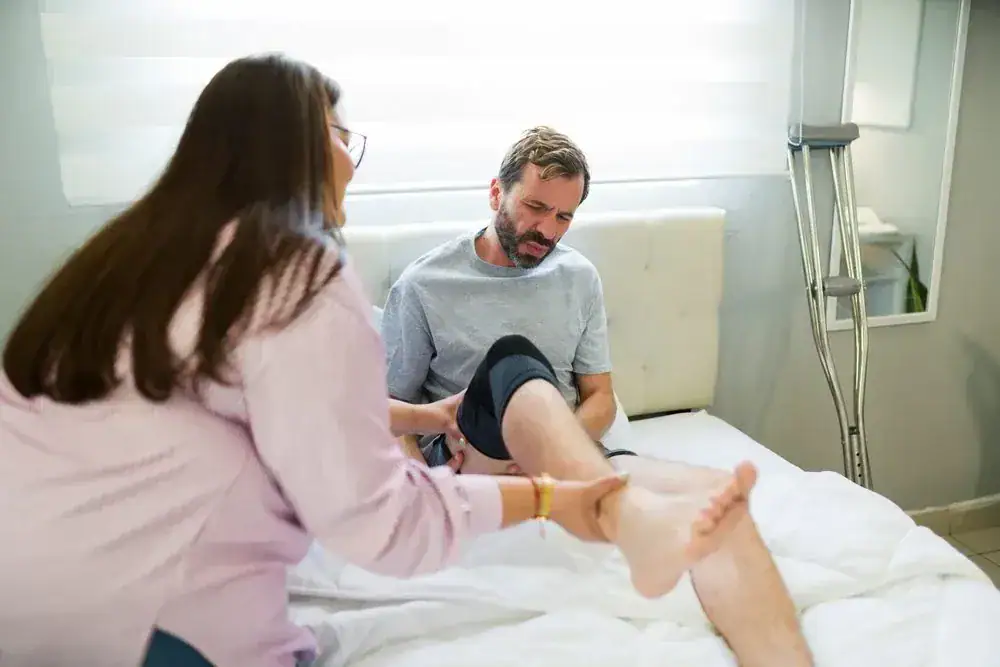
Your doctor said "start therapy." But which kind? Here's a plain-English breakdown of PT vs. OT — and how to figure out which one fits your situation.

You leave a doctor’s appointment with one simple instruction: start therapy. Then the immediate question hits — which kind? Physical therapy and occupational therapy sound like they might be the same thing, or at least close enough that it doesn’t matter. But it does matter, and the confusion is completely understandable. These two disciplines share a lot of common ground, and yet they focus on very different parts of your recovery. This guide will walk you through the real difference between PT and OT, who typically needs each one, and why — for many Long Island residents — the answer turns out to be both.
The simplest way to think about it: physical therapy focuses on how your body moves, and occupational therapy focuses on what your body can do in daily life. A physical therapist works to restore strength, range of motion, balance, and mobility — helping you walk steadily, recover after surgery, or manage chronic pain. An occupational therapist works on the functional tasks that matter to your independence — getting dressed, preparing a meal, bathing safely, or navigating the stairs in your own home.
Both disciplines care about your quality of life. Both involve hands-on, personalized care. But the clinical focus is genuinely different, and that difference shapes the kind of treatment you receive.

A physical therapist is focused on your body’s mechanics — how you move, where you’re weak, what’s causing pain, and how to fix it. If you’ve had a hip replacement, a knee surgery, a fall, or a stroke that’s affected your ability to walk, a PT is the clinician who rebuilds the physical foundation. They use manual therapy, targeted exercises, balance training, and movement-based techniques to help you recover strength and mobility.
On Long Island, where so many residents are aging in single-family homes with stairs, uneven driveways, and traditional bathtubs, physical therapy often becomes essential after even a minor injury. A fall that might seem minor at 45 can seriously limit independence at 75. PT addresses the underlying physical vulnerability — weak hips, poor balance, reduced leg strength — that makes those falls more likely in the first place.
Physical therapy is also where you’d typically land after a referral from an orthopedic surgeon, a cardiologist managing post-cardiac rehab, or a neurologist overseeing stroke recovery. The work is progressive — sessions build on each other, and the goal is measurable improvement in how your body moves and functions over time.
When you work with a licensed physical therapist, you’re getting a professional trained specifically in movement science — not a general wellness program.
Here’s where most people get tripped up: the word “occupational” has nothing to do with your job. It refers to any meaningful activity — the daily tasks that make up a normal life. Bathing, dressing, cooking, managing medications, using the phone, getting in and out of a chair. These are occupations in the clinical sense, and when illness, injury, or aging makes them difficult, that’s where an occupational therapist steps in.
An OT evaluates not just your physical ability but the environment around you. When therapy happens in your home — which is how we deliver care across Suffolk County and Nassau County — we can see exactly what’s making daily life harder. Is the bathroom layout creating a fall risk? Are the grab bars in the right place? Is the kitchen organized in a way that’s safe for someone with limited grip strength or reduced vision? These are questions a clinic-based evaluation simply can’t answer the same way.
Occupational therapy is also broader in scope than many people realize. OTs work with patients who have cognitive impairments, neurological conditions like Parkinson’s or post-stroke deficits, and developmental challenges that affect their ability to function independently. It’s not just about physical recovery — it’s about rebuilding the routines and capabilities that define someone’s day.
For seniors on Long Island, this often means working through the aftermath of a stroke, managing the functional decline that comes with conditions like arthritis or COPD, or simply learning to navigate a home that was built for a more mobile version of themselves. The goal of OT isn’t just safety — it’s dignity. The ability to do things for yourself, in your own space, on your own terms.
Want live answers?
Connect with a Medcare Therapy Services expert for fast, friendly support.
For older adults, occupational therapy often becomes one of the most important parts of recovery — and one of the most overlooked. When a senior comes home from the hospital after a hip fracture, a stroke, or a serious illness, the immediate concern is usually physical: can they walk, can they stand, can they manage stairs. But the harder question often surfaces a few weeks later: can they actually live independently?
That’s the question occupational therapy is designed to answer. And for Long Island’s large senior population — many of whom are aging in place in homes they’ve lived in for decades — it’s a question that comes up more often than most families expect.

Activities of daily living — ADLs, in clinical shorthand — are the basic self-care tasks that most of us do without thinking. Getting out of bed, using the bathroom, getting dressed, making breakfast. When these become difficult, it’s often the first sign that a senior’s independence is at risk.
Occupational therapy addresses ADLs directly. An OT will assess where the breakdown is happening — whether it’s strength, coordination, cognition, pain, or environmental barriers — and build a plan to close the gap. That might include exercises to improve fine motor skills, strategies for conserving energy during daily tasks, recommendations for adaptive equipment, or modifications to the home layout that reduce fall risk.
For seniors in Suffolk County and Nassau County, the in-home setting makes this work especially effective. Long Island’s housing stock is largely older single-family homes — many with narrow bathrooms, steep staircases, and no first-floor bedroom option. An OT working inside that environment can make specific, practical recommendations that a clinic evaluation simply can’t replicate. It’s the difference between general advice and a plan that actually fits the home your parent has lived in for 40 years.
We also offer specialized programs designed specifically for older adults, including OTAGO — a clinically validated fall prevention protocol — as well as SilverSneakers and Senior Personal Training. These aren’t generic exercise routines. They’re structured programs with a real evidence base, delivered by licensed therapists who understand the specific challenges that come with aging on Long Island.
This is one of the most common questions we hear — and one of the most important, because the answer affects whether families move forward with care or put it off. The short answer is yes, Medicare does cover occupational therapy. But the details matter, and a lot of people don’t know them.
Under Medicare Part B, occupational therapy is covered as a medically necessary outpatient service. After you meet the Part B deductible, Medicare pays 80% of the approved amount — you’re responsible for the remaining 20%. There is no annual dollar cap on medically necessary OT services under Medicare Part B. There is a threshold above which Medicare may conduct a review to confirm medical necessity, but if the services are clinically justified, coverage continues.
Medicare Part A covers occupational therapy as part of home health services, provided the patient meets the homebound criteria — meaning leaving home requires a considerable effort. This is a clinical determination that a physician documents, and it’s more common than many families realize. If your parent had a recent hospitalization and is recovering at home, there’s a good chance they qualify.
Physical therapy follows a similar structure under Medicare — Part B for outpatient, Part A for home health. The key point is that PT and OT are tracked separately under Medicare, which means a patient can receive both without one eating into the other’s coverage.
We accept Medicare and most major insurance plans. If you’re not sure whether a specific situation qualifies, the best first step is a phone call — we can walk you through it before any commitment is made. Reach us at 631-866-6507.
For a lot of patients — especially seniors recovering from a stroke, a fall, or a major surgery — the honest answer is both. PT rebuilds the physical capacity to move safely. OT rebuilds the ability to use that movement in real life. They work in the same direction, and receiving them from the same provider means your care is coordinated rather than fragmented.
That’s one of the things that sets us apart on Long Island. We offer both physical therapy and occupational therapy under one provider, delivered in-home across Suffolk County and Nassau County. You don’t have to manage two separate intake processes, two different schedules, or two providers who’ve never spoken to each other. One call starts the whole thing.
If you’re trying to figure out the right next step for yourself or someone you care for, Medcare Therapy Services is here to help you sort it out — no pressure, no confusion, just a straightforward conversation about what the situation calls for.
Summary:


Article details:
Share: