Trying to decide between in-home physical therapy and a clinic? Here's what the research says — and what most comparison guides leave out.
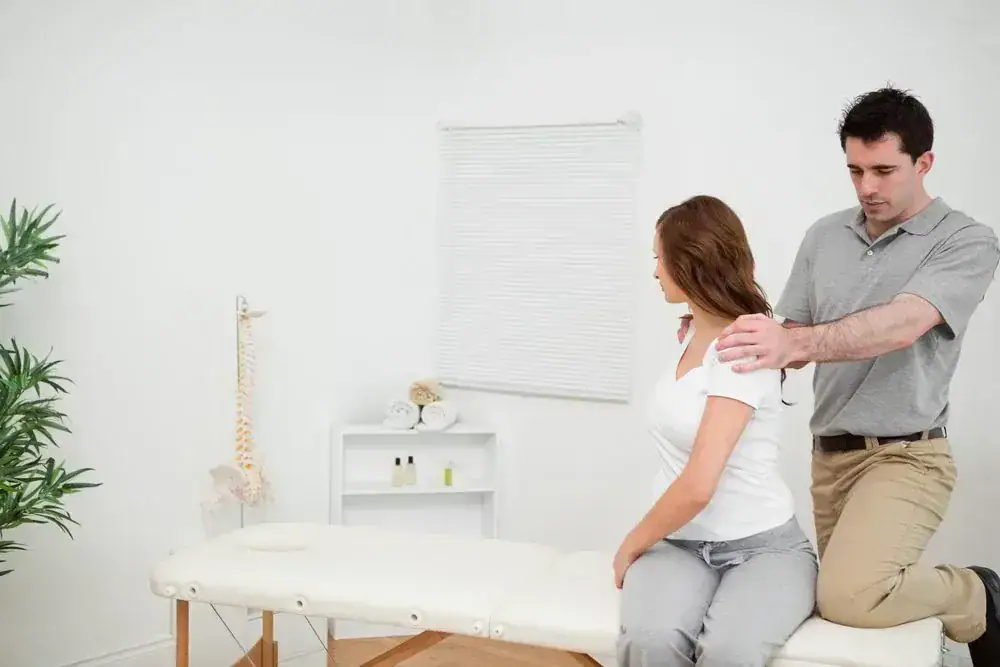
Most people assume the clinic is the “real” option and in-home physical therapy is just a backup for people who can’t get around. That assumption is worth questioning. The setting where you receive therapy affects how often you show up, how comfortable you feel, and whether the exercises you’re practicing actually translate to your daily life. Before you book an appointment somewhere simply because it’s the default, it’s worth understanding what each option actually involves — and what the research says about outcomes.
At the surface level, both settings involve a licensed physical therapist evaluating your condition, building a treatment plan, and guiding you through exercises and manual techniques. The difference is everything around that — where it happens, who’s in the room, and how consistently you actually get there.
In an outpatient clinic, you travel to a shared facility, often multiple times a week. You may work with different staff members across visits, and your therapist is frequently managing other patients at the same time. In-home physical therapy brings a licensed PT directly to you — your living room, your hallway, your actual stairs — and that shift in setting changes more than just the commute.

In-home physical therapy is appropriate in more situations than most people realize. The most common assumption is that it’s only for patients who are completely housebound — but that’s not the full picture.
Under Medicare’s home health benefit, coverage for in-home PT does require that a patient meet “homebound” criteria, meaning that leaving home requires a considerable and taxing effort due to illness or injury. That applies to a lot of people recovering from hip or knee replacement, stroke, a serious fall, or a cardiac event. But plenty of patients choose in-home PT for practical reasons even when they could technically make it to a clinic — and that’s a legitimate, clinically sound decision.
Post-surgical patients are a strong example. After a knee replacement, your surgeon sends you home to recover in your actual home — not a clinic. The exercises you practice in the first weeks of recovery need to work in your real environment: your specific staircase, your bathroom layout, the distance from your bed to your kitchen. A therapist working with you inside that environment can tailor every exercise to the space where you actually have to function.
Fall prevention is another clear case. Nearly 40% of adults over 65 fall each year, and falls are the leading cause of injury-related death in that age group. A therapist visiting your home can do something no clinic visit allows — walk through your space and identify the actual hazards putting you at risk. The loose rug. The dim hallway. The bathroom without grab bars. That kind of environmental assessment is built into in-home PT in a way that simply isn’t possible when you’re working on a clinic floor.
On Long Island, there’s an additional layer to consider. Suffolk County and Nassau County are car-dependent. There’s no transit grid that gets you across Smithtown or out to the East End without a car. For patients who can no longer drive safely, or whose family members can’t take time off work three days a week to provide rides, the transportation barrier isn’t a minor inconvenience — it’s the reason people stop going. And missed sessions extend recovery timelines and increase the risk of readmission.
This is the question most patients are actually asking when they search the comparison. The honest answer is yes — and in some cases, in-home PT produces better results, specifically because patients are more likely to complete their full course of treatment.
A 2016 study found no significant difference in functional outcomes for knee surgery recovery between supervised in-home physical therapy and outpatient clinic care. That reflects a broader pattern in the research showing that when in-home PT is properly delivered by a licensed therapist, outcomes are equivalent to clinic-based care.
Where in-home PT pulls ahead is adherence. In one clinical study, adherence rates for outpatient physical therapy referrals were only 48%. Nearly half of patients referred to a clinic don’t complete their treatment. Home-based programs consistently show higher adherence — and adherence is what drives recovery. A perfect treatment plan that a patient attends 60% of the time will produce worse results than a good plan they attend consistently.
There’s also the question of what “results” actually means for the patient. Clinic-based PT measures progress on clinic equipment, in a clinic environment. In-home PT measures progress in the patient’s actual daily life — can you get up the stairs safely, can you reach the cabinet, can you walk to the mailbox without pain. For patients whose primary goal is functional independence at home, that alignment between treatment setting and recovery goal matters.
The one area where clinic PT holds a genuine advantage is access to specialized equipment — aquatic therapy pools, isokinetic machines, and other tools that can’t travel. For patients who need that level of equipment, a clinic visit makes sense. That’s why a dual model — the ability to start at home and transition to a clinic as mobility improves — offers the most flexibility for patients at different stages of recovery.
Want live answers?
Connect with a Medcare Therapy Services expert for fast, friendly support.
The convenience argument gets made constantly — and it undersells what in-home PT actually offers. Yes, not having to travel three times a week is easier. But the more important advantages are clinical: therapist continuity, environmental alignment, and the ability to practice real-life movements in real-life spaces. These aren’t comfort features — they’re factors that directly influence how well and how quickly a patient recovers.
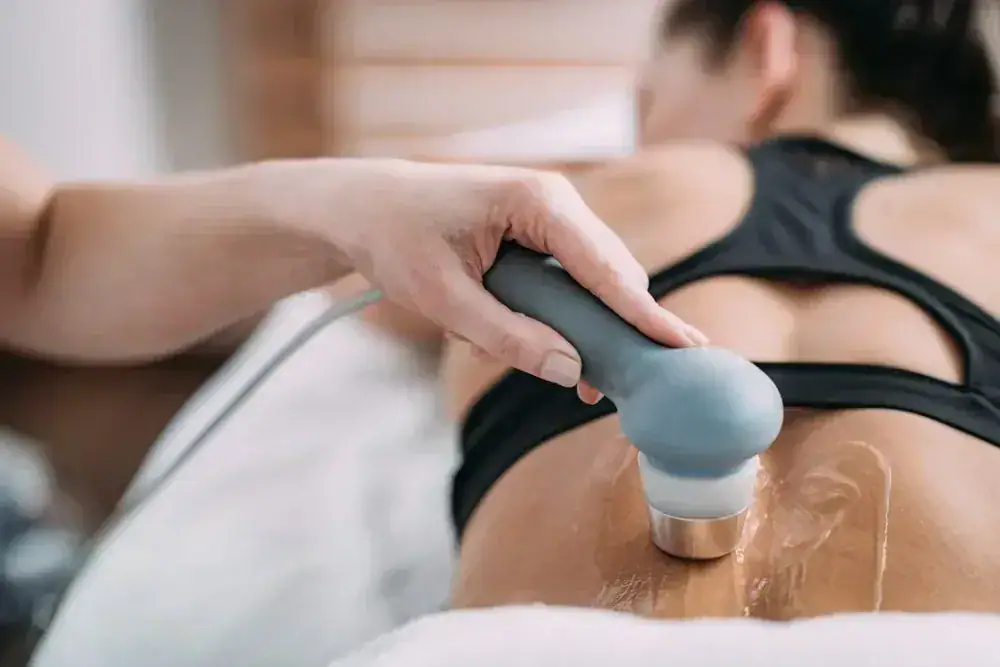
One of the most common complaints about high-volume outpatient clinics is that patients never see the same person twice. You meet with the PT for the initial evaluation, then you’re handed off to an aide or an assistant for the actual sessions. The licensed therapist checks in briefly while managing several other patients at once.
This isn’t a minor inconvenience. Therapist continuity is a clinical factor. A therapist who sees you week after week knows how you moved last Tuesday. They notice when something is off before you’ve even mentioned it. They adjust your plan based on accumulated knowledge of your progress — not just the notes in a chart. That relationship also affects how honest you are about pain levels, how hard you push during sessions, and whether you actually follow through with your home exercise program.
In-home PT, by its nature, tends to support stronger therapist continuity. When a therapist comes to your home, they’re working with you one-on-one for the full session. There’s no waiting room, no shared equipment, no divided attention. The entire visit is yours.
For seniors especially, this consistency matters beyond the clinical. Letting someone into your home requires trust. Building that trust with the same person over multiple visits — someone who learns your habits, knows your goals, and understands your living situation — creates a therapeutic relationship that’s harder to build in a rotating clinic environment. Patients who feel comfortable with their therapist are more likely to ask questions, report symptoms accurately, and stay engaged with their recovery. Those aren’t soft outcomes. They translate directly into better results.
Fall prevention is one of the clearest examples of where in-home physical therapy has a structural advantage that no clinic-based program can fully replicate.
Research shows that physical therapy can reduce fall incidents in seniors by up to 37%. The Otago Exercise Program — a specific, evidence-based protocol delivered by a physical therapist — reduces falls between 35% and 40% for frail older adults. In a 12-month randomized controlled trial of 344 adults aged 70 and older, participants in the Otago group had a fall rate of 1.4 per person-year compared to 2.0 in the control group. Those numbers represent real people staying on their feet.
But here’s what the statistics don’t capture: a clinic-based fall prevention program teaches you balance exercises in a clinic. An in-home program does that and also puts a trained therapist inside your actual home, where they can see the specific conditions that put you at risk. That’s a fundamentally different level of intervention.
On Long Island, where the housing stock skews heavily toward single-family homes built in the 1950s through 1970s, this matters in concrete ways. Many of these homes have narrow hallways, multiple levels, steep staircases, and bathrooms that were never designed with aging in mind. A therapist working in that environment doesn’t have to imagine what challenges you face at home — they’re standing in the middle of them.
We offer the Otago Exercise Program as part of our specialized care for Long Island seniors, along with dedicated Fall Prevention programming, SilverSneakers, and Senior Personal Training. These aren’t generic exercise classes — they’re evidence-based interventions designed for the specific physical realities of aging adults. And when they’re delivered in the home where the fall risk actually exists, they’re as targeted as fall prevention gets.
The honest answer is that it depends on where you are in your recovery, what your daily life actually looks like, and what barriers stand between you and completing your full course of treatment. For many patients — particularly seniors, post-surgical patients, and anyone navigating Long Island’s transportation realities — in-home physical therapy isn’t the fallback option. It’s the better one.
If you need specialized equipment or you’re at a stage in recovery where clinic-based care makes sense, that’s a legitimate reason to go that route. The best scenario is having access to both — the flexibility to receive care at home when you need it, and the option to transition to a clinic setting as your mobility improves.
If you’re trying to figure out which direction makes sense for your situation, Medcare Therapy Services is a good place to start that conversation. We serve patients across Suffolk County and Nassau County, accept Medicare and most commercial insurances, and can walk you through what your options actually look like.
Summary:
Article details:
Share: