Not sure if you qualify for in-home physical therapy or if Medicare covers it? Here's what Long Island patients need to know before making a decision.
If you’ve been putting off physical therapy because getting to a clinic feels like a major production, or because you’re not sure your insurance will cover someone coming to you, you’re not alone. That hesitation is one of the most common things we hear from patients across Smithtown, Suffolk County, and Nassau County. The good news is that most of what’s stopping people turns out not to be true. Medicare covers more than most people realize, the eligibility bar is lower than you’d expect, and for the right patient, therapy at home isn’t a compromise. It is often the better clinical choice.
Here’s the misconception that causes the most problems: people assume in-home physical therapy is reserved for patients who are completely homebound, unable to leave the house under any circumstances. That’s not how Medicare defines it, and it’s not how we work.
Medicare Part B covers in-home physical therapy for patients who find leaving home difficult: not impossible, just genuinely difficult. If getting to a clinic requires significant effort, coordination, or assistance, you may already qualify. That covers a wide range of situations: recovering from a hip or knee replacement, managing a neurological condition, dealing with serious balance issues, or simply no longer driving safely.

The word “homebound” throws people off. It sounds like it means you never leave the house, but Medicare’s standard is more nuanced than that. If leaving home requires considerable effort, such as a walker, a wheelchair, another person’s help, or just the kind of exhaustion that makes a routine errand feel like a major undertaking, you may meet the homebound criteria under Medicare Part A.
Under Part A, in-home physical therapy is covered as part of the home health benefit, typically with no copayment, as long as a physician certifies your homebound status and orders the care. That physician order requirement isn’t a barrier; it’s a built-in layer of medical oversight that works in your favor, because it means your doctor is involved in your care plan from the start.
Here is what a lot of people don’t know: even if you don’t meet the Part A homebound standard, Medicare Part B may still cover in-home physical therapy. Part B covers outpatient PT services provided in the home when the care is medically necessary and a physician has prescribed it. Under Part B, patients typically pay 20% of the Medicare-approved amount after meeting their deductible, but the coverage is dependable, and it applies to patients who can technically leave home yet face genuine difficulty doing so.
This distinction matters enormously for Smithtown and across Suffolk County specifically. Our region is car-dependent. There’s no meaningful public transit for most residents, and the average household owns two cars. When an older adult loses the ability to drive safely, be it from a fall, surgery, vision changes, or a neurological event, the entire transportation infrastructure that the rest of the community takes for granted stops working for them. In-home physical therapy isn’t a luxury in that context. It’s often the only realistic path to consistent, ongoing care.
We verify Medicare coverage before the first visit. You won’t get a bill you weren’t expecting, and you won’t need to navigate the insurance process on your own.
This is a fair question, and it deserves a straight answer. For some patients and conditions, a fully equipped clinic is the right setting. But for a specific and very common patient profile, such as older adults managing fall risk, patients recovering from orthopedic surgery, or anyone dealing with a neurological condition, in-home physical therapy isn’t a step down from clinic care. It is clinically the better option.
When a physical therapist works with you in your own home, they’re not training you in a generic gym environment; they’re working with you on your stairs, in your bathroom, and navigating your kitchen. That specificity matters. The goal of physical therapy isn’t to perform well in a clinic. It’s to move safely and confidently in your own life. Practicing in the environment where you live accelerates that process in a way that clinic-based therapy simply can’t replicate.
This is especially true for fall prevention. Nassau County ranks 4th in New York State for fall prevalence among older adults, and Suffolk County ranks 5th. These aren’t national averages applied loosely to Long Island; they describe this specific community. In addition, 88% of injury hospitalizations for adults over 65 in Nassau County are caused by falls, not car accidents or other medical events. Falls.
A physical therapist who can walk through your home, identify hazards on your specific staircase, assess the lighting in your hallway, and build a balance and strength program around your real environment is doing something fundamentally different from what happens in a clinic. Fall-related deaths among older adults have increased 51% over the past decade nationally. That trend isn’t slowing down. But falls are not inevitable, and in-home physical therapy is one of the most direct, evidence-based responses to that risk.
Smithtown’s median age is 47, which is measurably older than the national and state averages, meaning this isn’t a distant concern for this community. It’s an immediate one.
Want live answers?
Connect with a Medcare Therapy Services expert for fast, friendly support.
A lot of people have never experienced in-home physical therapy, so the process itself feels uncertain. What happens on the first visit? Who comes to the house? How long does it last? These are reasonable questions, and the answers are simpler than most people expect.
When you contact us, the first step is a conversation about what’s going on, what you’re hoping to recover or maintain, and if in-home therapy is the right fit. We handle Medicare verification before anything else, so you know what your coverage looks like before we schedule anything. A physician’s order is required for Medicare-covered care, and we can help coordinate that if it hasn’t been arranged yet.
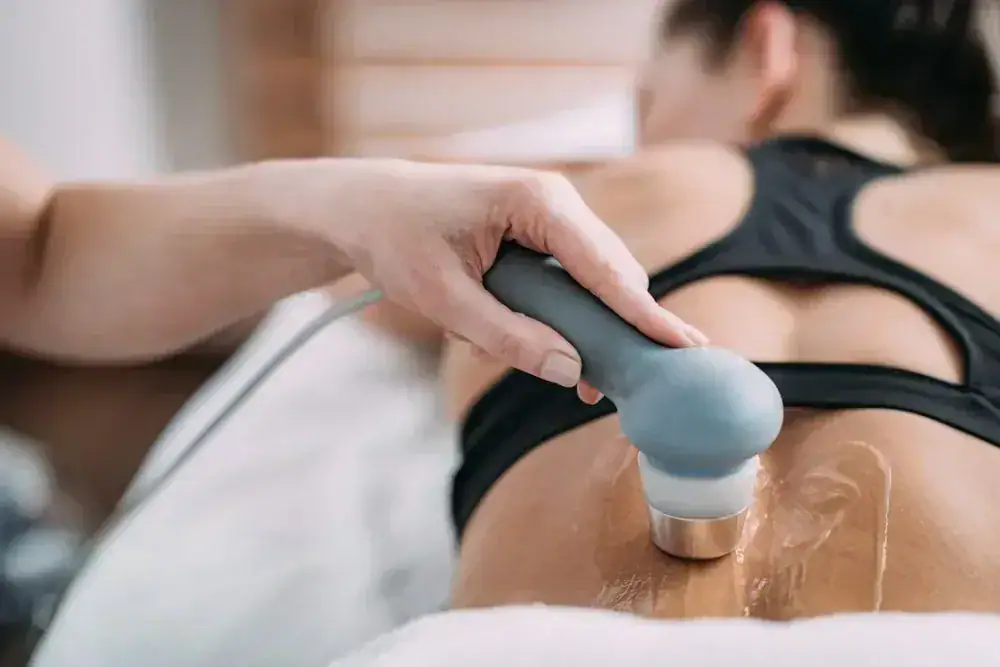
The first visit is an evaluation. Your physical therapist, a licensed professional, not an aide or an assistant, will assess your current mobility, strength, balance, and functional limitations. For patients with fall risk, this includes a home safety walkthrough: identifying trip hazards, assessing if assistive devices are needed, and noting anything in the environment that could be modified to reduce risk. That’s not something a clinic can do for you.
From there, a personalized treatment plan is developed based on your specific goals. Not a protocol pulled off a shelf, but a plan that reflects what you are trying to get back to, like walking to the mailbox without holding onto something, climbing the stairs without fear, or getting back to the garden. Your goals drive the plan.
Every visit is one-on-one with the same licensed physical therapist. This is worth saying plainly because it’s not universal in this industry. Rotating therapists, where you see someone different each session and spend half the visit re-explaining your history, is a real and documented frustration among PT patients. We don’t work that way. Continuity matters for outcomes, and it matters for trust. Your physical therapist knows your progress, adjusts the plan as you improve, and communicates with your physician throughout the process.
Visits are scheduled flexibly, with senior care coordination built into the scheduling process for patients who need additional support. For families managing a parent’s care from a distance, which is common across Nassau and Suffolk counties, we coordinate directly with family members and keep everyone informed.
Some patients ask about cupping therapy, particularly those dealing with chronic pain, muscle tightness, or soft tissue restrictions that haven’t responded well to other approaches. It’s worth addressing directly, because there’s a meaningful difference between cupping delivered in a clinical context and the kind offered at a spa or wellness center.
When we incorporate dry cupping into a treatment plan, it’s administered by licensed physical therapy professionals, not standalone cupping practitioners, and not as an isolated service. It’s integrated into a broader treatment plan alongside manual therapy, therapeutic exercise, and whatever other modalities are appropriate for your specific condition. The goal is the same as every other tool in a physical therapist’s kit: restore function, reduce pain, and help you move better.
Dry cupping works by creating suction on the skin and underlying tissue, which can help release myofascial restrictions, improve local circulation, and reduce muscle tension in ways that direct pressure sometimes can’t. For patients managing chronic neck or back pain, post-surgical scar tissue, or persistent soft tissue tightness, it can be a useful addition to a comprehensive plan, not a replacement for it.
The distinction between clinically integrated cupping and spa cupping matters for a straightforward reason: context and training determine if a technique is therapeutic or just relaxing. A licensed physical therapist brings diagnostic reasoning to every session. They’re not applying cupping because it’s a trend; they’re applying it because your presentation warrants it and it fits within a coordinated plan. That’s a different thing entirely, and it’s what patients across Long Island should be asking about when they explore this option.
For patients in Smithtown and across Suffolk County who are curious if cupping therapy might be appropriate as part of your physical therapy plan, the conversation starts with an evaluation, not an assumption.
The right provider for in-home physical therapy isn’t just the closest one or the one with the most ads. It’s the one that sends a licensed physical therapist, keeps that same therapist with you throughout your care, verifies your Medicare coverage upfront, and understands the community you live in.
We’ve been serving Smithtown and the surrounding communities of Suffolk and Nassau counties since 2000: 25 years of knowing this area, its residents, and what people here are dealing with. That’s not a marketing line. It’s the reason patients and families trust us when they’re navigating one of the more stressful moments of their lives.
If you or someone in your family is ready to explore in-home physical therapy, Medcare Therapy Services is a straightforward call away. We’ll answer your questions honestly, check your coverage before anything else, and help you figure out if this is the right next step. Contact Medcare Therapy Services today to check your Medicare eligibility and schedule your first in-home evaluation.
Summary:

Article details:
Share: