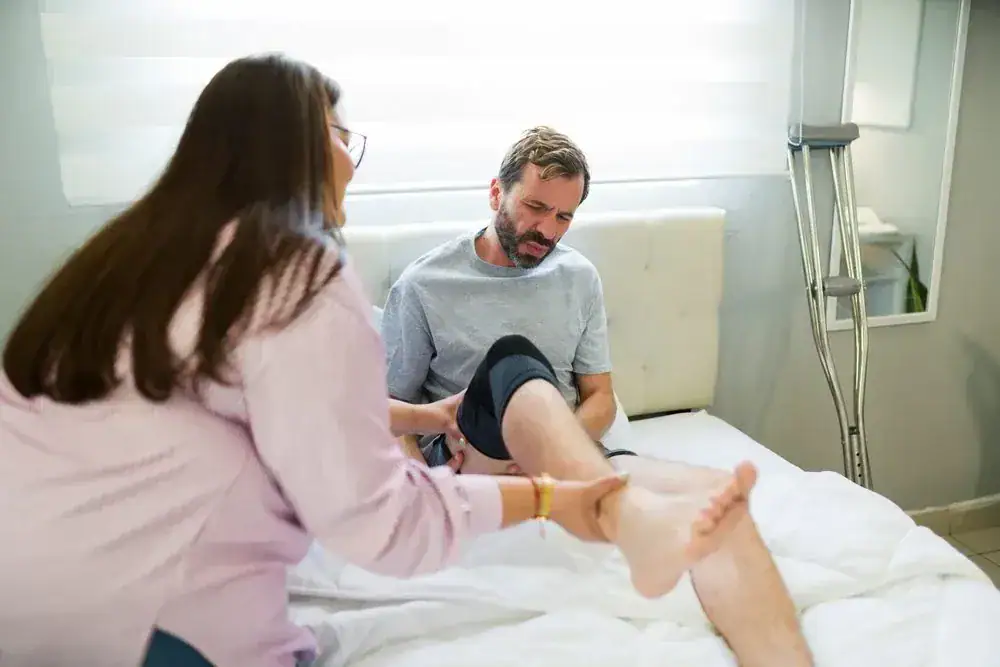
Unsteady on your feet? These gentle exercises explain what gait and balance training really involves — and why where you train matters more than you think.
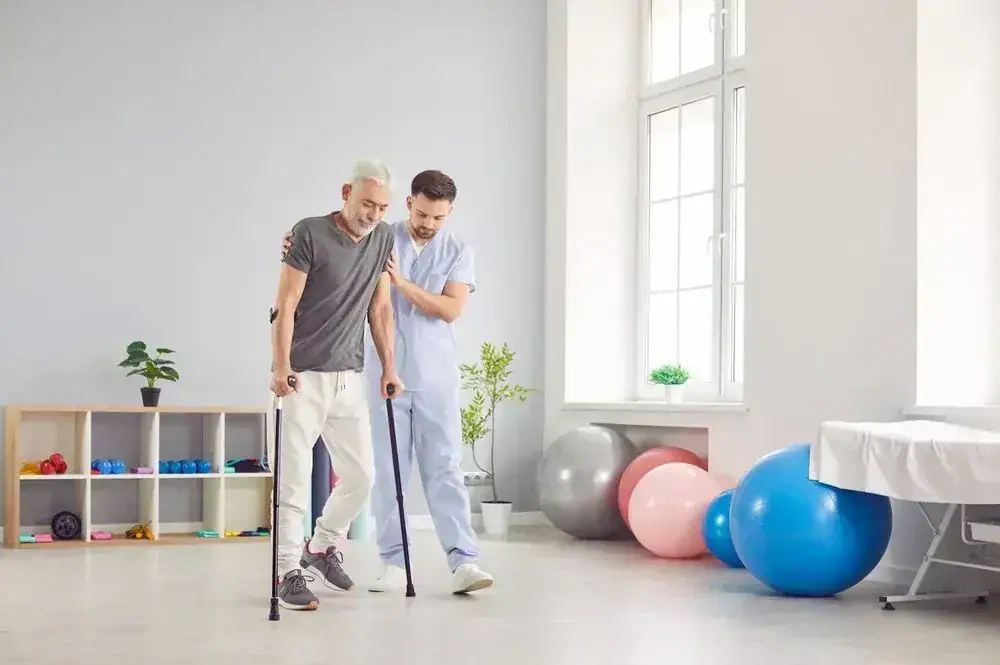
If you’ve had a fall — or noticed that your footing just isn’t what it used to be — you’ve probably already started wondering what you can actually do about it. Not in a vague “be more careful” way. In a real, practical way.
The good news is that balance and gait problems in older adults are not a fixed destination. They’re a starting point. And with the right exercises, done consistently and correctly, most people see meaningful improvement within a matter of weeks.
This page breaks down what gait and balance training involves, which exercises are worth your time, and why the setting in which you do them matters more than most people expect.
Gait training is exactly what it sounds like — working on the mechanics of how you walk. Stride length, foot clearance, arm swing, posture, how you shift your weight from one foot to the other. These things tend to degrade gradually, which is why so many people don’t notice the change until something goes wrong.
The exercises themselves aren’t dramatic. Tandem walking — placing one foot directly in front of the other, heel to toe — challenges your balance in a controlled, low-risk way. Marching in place builds hip flexor strength and trains your brain to coordinate leg movement without the added variable of forward momentum. Side-stepping strengthens the muscles along the outer hip that stabilize you when you change direction suddenly.
What makes these exercises effective isn’t complexity. It’s consistency and correct progression. Starting with chair support and gradually reducing it as your stability improves is the difference between an exercise that helps and one that puts you at risk.
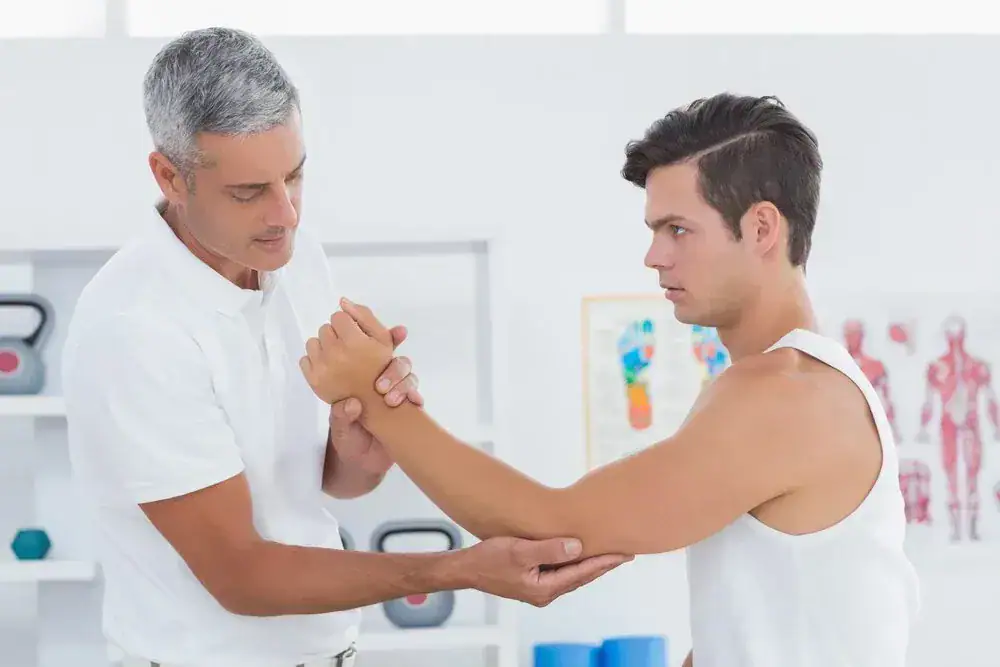
One of the most common reasons people put off balance training is the assumption that it requires a significant time commitment or a level of fitness they don’t currently have. Neither is true. A focused 10-minute routine, done consistently, is a legitimate starting point — and for many older adults, it’s exactly the right place to begin.
Here’s what a simple 10-minute balance workout for seniors might look like. Start with two minutes of standing behind a sturdy chair, shifting your weight slowly from one foot to the other. This wakes up the stabilizing muscles in your ankles and hips without demanding anything dramatic.
From there, move into two minutes of heel-to-toe walking along a wall or hallway, keeping one hand lightly touching the wall if needed. Next, try single-leg stance — standing on one foot for 20 to 30 seconds at a time, switching sides, for about two minutes. Follow that with two minutes of sit-to-stand repetitions from a firm chair, which builds the leg strength that makes rising from a seated position safer and easier. Close with two minutes of slow, deliberate marching in place, lifting each knee to a comfortable height.
That’s it. Ten minutes, five movements, no equipment beyond a chair and a wall.
The reason this works isn’t magic — it’s repetition and specificity. Your balance system learns from being challenged in small, safe increments. Each time you practice single-leg stance, your brain and body are negotiating with each other about where you are in space, what’s stable, and how to correct when you drift. Over time, those negotiations get faster and more automatic. That’s what keeps you upright when you step off a curb or reach for something on a high shelf.
That said, there’s an important caveat. A generic routine is a starting point, not a prescription. Without knowing which specific systems are contributing to your unsteadiness — whether it’s muscle weakness, inner ear involvement, proprioceptive decline, or something else entirely — you’re essentially guessing. A licensed physical therapist can assess exactly where your balance is breaking down and build a program that targets those gaps directly. The 10 minutes above can get you moving. A proper evaluation tells you what you actually need.
Here’s something most exercise articles don’t tell you: the environment where you train matters enormously. A clinic floor is smooth, uncluttered, well-lit, and completely unlike the places where falls actually happen. Your kitchen has a threshold between the tile and the hardwood. Your bathroom has a small rug that shifts slightly when you step on it. Your front steps have a railing on one side and nothing on the other. These are the surfaces that catch people off guard — and they’re the surfaces a clinic will never replicate.
When a physical therapist works with you in your own home, every exercise happens in the context of your real life. Tandem walking down your actual hallway. Sit-to-stand practice from your actual couch. Balance work in your actual bathroom, where the lighting is what it is and the floor is what it is. The skills you build in that environment transfer directly to the moments that matter.
This is the core reason in-home gait and balance training tends to produce outcomes that stick. It’s not that the exercises are different — it’s that the training ground is real. Your body learns to be stable in the spaces where instability is actually a risk.
There’s also a practical dimension that matters just as much. For many seniors across Long Island — particularly in the more spread-out communities of Suffolk County, where getting anywhere without a car is genuinely difficult — traveling to a clinic two or three times a week isn’t realistic. It’s not a matter of motivation. It’s logistics. In-home therapy removes that barrier entirely. We come to you, on your schedule, and the session happens in the space where you spend your life.
We’ve been providing in-home physical therapy across Suffolk County and Nassau County since 2010. Our affiliated clinic, Physical Therapy Associates of Smithtown, has been serving Long Island since 2000. We know this region, we know the communities, and we understand that for a lot of the people we work with, getting to a clinic isn’t just inconvenient — it’s a genuine obstacle to care. That’s exactly why we built the model we did.
Want live answers?
Connect with a Medcare Therapy Services expert for fast, friendly support.
Balance isn’t just a muscle problem. It’s a communication problem. Your brain is constantly receiving signals from three sources — your eyes, your inner ear, and the nerve endings in your feet and joints — and it’s synthesizing all of that information in real time to keep you upright. When any one of those systems starts to lag, the whole system gets less reliable.
Coordination exercises for seniors are designed to train that communication loop, not just the muscles themselves. They challenge your body to process position and movement information more accurately and respond to it more quickly. The result is a nervous system that’s better at catching you before a stumble becomes a fall.

Proprioception is the body’s sense of where it is in space. It’s what lets you walk in the dark without looking at your feet, or catch yourself when you step on an uneven surface. It’s largely automatic — until it isn’t. As we age, proprioceptive signals slow down, and the lag between “something is off” and “I should correct for that” widens. That lag is often the difference between a stumble and a fall.
Proprioceptive training — which is just a way of saying exercises that challenge your body’s position sense — can meaningfully reverse this. Standing on a folded towel or a slightly uneven surface forces your ankle and hip stabilizers to work harder and respond faster. Alternating arm and leg movements, like reaching forward with one arm while lifting the opposite knee, train the brain to coordinate multiple body segments simultaneously. Eye-tracking exercises, where you follow a moving target while keeping your head still, strengthen the connection between your visual system and your balance response.
None of these are complicated. Most can be done with a chair nearby for support. But they require attention — you can’t do them on autopilot, which is precisely what makes them effective. The cognitive engagement is part of the training.
In a supervised setting, these exercises are progressed carefully. Your therapist watches how you respond, adjusts the difficulty, and makes sure the challenge stays in the productive zone — enough to push the system, not enough to put you at risk. That calibration is something a YouTube video can’t offer, and it’s the reason supervised therapy produces better outcomes than self-directed exercise for most people dealing with real balance deficits.
We use these approaches as part of the Otago Exercise Program, an evidence-based protocol our therapists are specifically trained in. Research has shown the Otago program reduces falls in older adults by 35 to 40 percent. That’s not a marketing claim — it’s a documented outcome from clinical trials, and it’s the reason we built our fall prevention programming around it.
You can have excellent proprioception and still fall if your legs don’t have the strength to act on what your nervous system is telling them. Lower-body strength is the physical foundation of balance — without it, even good coordination can’t keep you upright when something unexpected happens.
The best leg strength exercises for seniors don’t require a gym or special equipment. Sit-to-stand, sometimes called chair rises, is one of the most functional and effective exercises available. You sit in a firm chair, cross your arms over your chest, and stand up under control — then lower yourself back down slowly. That slow descent is where a lot of the strength-building happens. The eccentric phase, the lowering, is harder than the standing, and it’s what builds the quad and glute strength that makes stairs, curbs, and uneven ground manageable.
Heel raises — standing behind a chair and rising onto your toes, then lowering slowly — strengthen the calf muscles that push you forward when you walk and absorb impact when you land. Side leg lifts, done standing with one hand on a chair for support, target the hip abductors, the muscles along the outer hip that stabilize your pelvis when you’re on one leg, which is every single step you take. Mini-squats, a shallow bend of the knees while holding a chair, build quad strength without the knee stress of a full squat.
What all of these have in common is that they’re functional. They mimic the movements of real life — getting up from a chair, climbing a step, changing direction while walking. That’s intentional. The goal of leg strength training for fall prevention isn’t to build impressive muscles. It’s to make the ordinary demands of daily movement feel easy and automatic again.
Research shows that targeted strength and balance programs can reduce fall rates by 20 to 45 percent, with some multimodal approaches showing even stronger results. The key is consistency and appropriate progression — starting where you are, not where you used to be, and building from there in a way that’s sustainable.
If you’re unsure where your strength currently stands, a physical therapy evaluation will give you a clear baseline. From there, we can build a plan that matches your current capacity and moves you forward at a pace that’s challenging without being discouraging.
The most important thing to understand about gait and balance training is that waiting makes it harder. Fear of falling causes people to move less. Moving less causes muscles to weaken. Weaker muscles make falls more likely. It’s a cycle — and the earlier you interrupt it, the less ground you have to recover.
You don’t need to be in crisis to start. You don’t need to have already fallen. If you’ve noticed you’re less steady than you were, or if someone who knows you well has said something, that’s enough reason to get an evaluation.
Medicare Part B covers outpatient physical therapy, including gait and balance training and fall prevention programs, when it’s medically necessary and prescribed by a physician. For most Medicare-eligible patients, that means the primary cost is your deductible and 20 percent coinsurance — no surprises.
If you’re on Long Island and want to understand what your options look like, we’re here to help. You can reach us at 631-866-6507. We’ll come to you.
Summary:

Article details:
Share: