


You stop wondering if today’s the day you lose your balance getting out of the shower. You start walking to the mailbox without that sharp pull in your knee. The stairs don’t feel like a negotiation anymore.
That’s what physical therapy does when it’s done right. Not just exercises on a printout—actual hands-on work that addresses why you’re hurting, why you’re unsteady, or why you’re not healing the way you should be after surgery.
Most people in Village of the Branch who need therapy face the same problem: getting to appointments is half the battle. You’re already dealing with pain or limited mobility. Adding a 20-minute drive and a waiting room doesn’t help. That’s why in-home therapy makes sense for so many people here. You get the same licensed care, the same evidence-based treatment, just without the logistics working against you.
Whether it’s gait training after a stroke, fall prevention work because you’ve had a close call, or joint pain treatment that’s keeping you from doing what you used to—therapy works when it’s consistent, personalized, and actually accessible.
Medcare Therapy Services works with affiliated centers across Long Island that have been treating patients for over two decades. Physical Therapy Associates of Smithtown opened in 2000. Speonk Physical Therapy has been around since 2004. That’s not a new clinic trying to figure things out—that’s years of treating real people with real problems.
We’re not the flashiest option. We’re the one that shows up, does the work, and doesn’t overcomplicate things. All of our therapists are licensed. All of our services are Medicare-covered. And every profile, every patient record, every piece of access is managed with the kind of security and verification most places skip.
Village of the Branch is a small community—1,721 people as of 2024. You probably know someone who’s worked with us, or you’ve heard the name. We’re local, we’re established, and we’re not going anywhere.

First, we talk. You tell us what’s going on—what hurts, what’s hard, what you’re trying to get back to. If you’ve had surgery, a fall, a stroke, or you’re just noticing things aren’t working like they used to, we need to know.
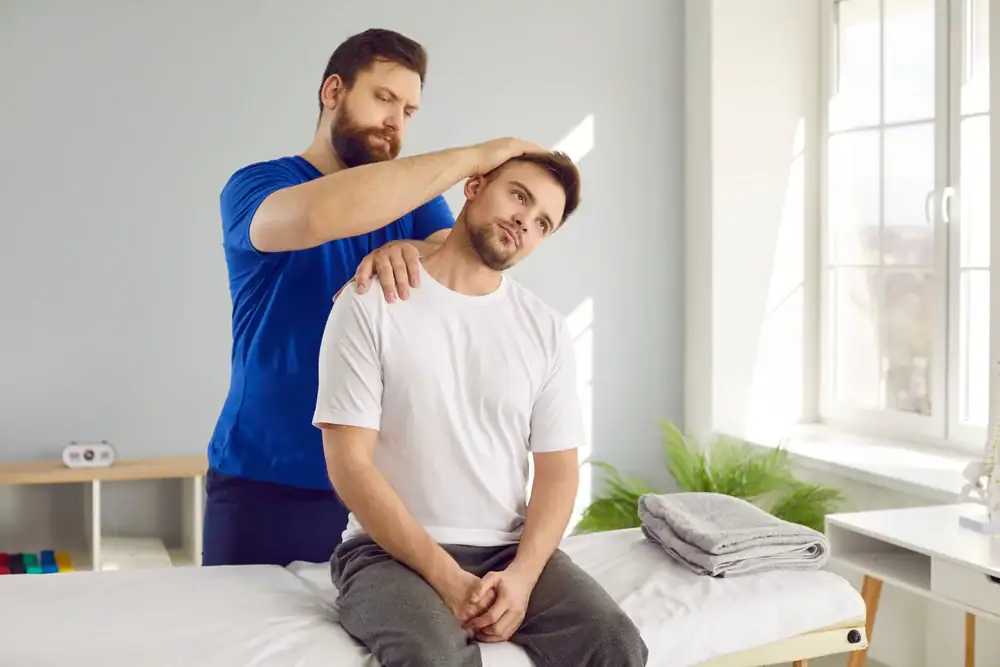
Then we evaluate. A licensed physical therapist comes to your home or you come to one of our locations, depending on what makes sense for your situation. We assess your range of motion, your strength, your balance, your gait. We figure out what’s limiting you and why.
From there, we build a plan. Not a generic one—yours. If you need fall prevention training because you’ve already had a scare, that’s what we focus on. If it’s stroke rehabilitation and you’re relearning how to walk or use your arm, we work on neuromuscular re-education and therapeutic exercise. If you’re recovering from knee surgery and need strength training to get stable again, that’s the priority.
Sessions are scheduled around your life. You’re not driving across town twice a week hoping you don’t miss an appointment. You’re getting consistent care that actually fits your routine. And we track progress the whole way—not just how you feel, but measurable improvements in mobility, strength, and function.

Ready to get started?
Every plan is different, but most include some combination of therapeutic exercise, manual therapy, and functional training. If balance is the issue, we do proprioceptive training—exercises that retrain your body’s sense of position and movement. If you’re at risk for falls, we use Otago fall prevention protocols, which are proven to reduce fall rates in older adults.
Gait training is common for stroke patients or anyone recovering from a neurological event. We work on restoring a normal walking pattern, improving coordination, and rebuilding confidence in movement. For joint pain—whether it’s your knee, hip, shoulder, or back—we combine hands-on treatment with resistance and strength training to stabilize the area and reduce pain over time.
Post-surgery rehabilitation is one of the most common reasons people call. You’ve had the procedure. Now you need to rebuild strength, restore range of motion, and get back to normal activity without re-injuring yourself. We also handle pre-surgery rehab, which can actually improve outcomes and speed up recovery after the operation.
If you’ve had a stroke or you’re dealing with Parkinson’s, MS, or another neurological condition, we offer occupational therapy and neurological rehabilitation. That means working on fine motor skills, daily living tasks, and movement strategies that help you stay independent.
For people in Village of the Branch and the surrounding Long Island area, the aging population means these services are more relevant than ever. By 2030, every baby boomer will be over 65. The demand for physical therapy is growing faster than the number of therapists available. Right now, there’s a national shortage of about 5% fewer therapists than needed. That’s why it matters that you’re working with a team that’s established, experienced, and not stretched too thin to give you real attention.
Yes. Medicare Part B covers outpatient physical therapy, including in-home sessions, as long as the service is medically necessary and provided by a licensed therapist. That means if your doctor orders therapy after surgery, a fall, a stroke, or for a chronic condition that’s affecting your mobility, Medicare typically covers it.
You’ll still have a copay—usually 20% of the Medicare-approved amount after you’ve met your deductible. But the session itself, the evaluation, and the treatment plan are all covered services. We handle the billing and work directly with Medicare, so you’re not stuck figuring out codes and claims on your own.
One thing to note: Medicare does have caps and limits depending on the type of therapy and how much you’ve used in a calendar year. But for most people recovering from surgery or managing a chronic condition, those limits don’t become an issue. If you’re not sure about your specific coverage, we can walk through it with you before we start.
It depends on what you’re treating and how consistent you are with the program. If you’re recovering from a knee replacement, you’re looking at 6 to 12 weeks of regular sessions to regain strength and range of motion. If it’s a stroke and you’re relearning how to walk or use your arm, recovery can take months—but you’ll see progress in smaller milestones along the way.
For something like lower back pain or joint pain, some people feel relief within a few weeks. Others need a longer course of treatment, especially if the issue is chronic or related to muscle imbalances that have been building for years. The key is showing up and doing the work between sessions. Therapy isn’t a passive fix—it’s active recovery.
We track your progress with measurable goals. That might be increasing your walking distance, improving your balance score, or being able to lift your arm overhead without pain. You’re not guessing whether it’s working. You’re seeing it in real time.
Physical therapy focuses on movement—your ability to walk, balance, stand, climb stairs, and use your body without pain or limitation. Occupational therapy focuses on function—your ability to do daily tasks like getting dressed, cooking, bathing, or using your hands for fine motor activities.
There’s overlap, especially in stroke rehabilitation or neurological conditions. You might need both. Physical therapy helps you regain strength and mobility. Occupational therapy helps you apply that mobility to real-life tasks so you can stay independent.
For example, if you’ve had a stroke, a physical therapist works on gait training and balance so you can walk safely. An occupational therapist works on things like gripping a fork, buttoning a shirt, or getting in and out of the shower. Both are covered by Medicare when medically necessary, and both are part of what we offer depending on what your recovery plan requires.
It’s not marketing. Fall prevention programs—especially evidence-based ones like Otago—have been studied for years and consistently show a reduction in fall rates among older adults. About 36 million falls are reported each year in the U.S. among people over 65, and many of those falls lead to fractures, hospitalizations, or worse.
Physical therapy addresses the root causes: weak legs, poor balance, slow reaction time, and lack of coordination. We do exercises that improve proprioception, which is your body’s ability to sense where it is in space. We work on strength training so your legs can catch you if you stumble. We practice real-world scenarios—stepping over objects, turning quickly, recovering from a loss of balance.
It’s not a guarantee you’ll never fall. But it significantly lowers your risk, and for a lot of people, it restores the confidence to move around their own home without fear. That alone changes quality of life.
In New York, you can see a physical therapist without a referral for up to 10 visits or 30 days, whichever comes first. After that, you’ll need a physician’s order to continue treatment. Most people come to us with a referral already—either from their primary care doctor, their surgeon, or a specialist who’s managing their condition.
If you’re using Medicare, the referral process is a little more strict. Medicare typically requires a doctor’s order for therapy to be covered, so it’s best to check with your physician before your first visit. We can help coordinate that if needed.
Even if you don’t have a referral yet, you can still call us. We’ll walk you through what’s required based on your insurance and your situation. The goal is to get you started as quickly as possible, not to add more hoops.
Your first session is mostly evaluation. The therapist will ask about your medical history, your current symptoms, and what you’re hoping to accomplish. Then they’ll assess your movement—how you walk, how far you can bend or reach, where you feel pain, and what activities are limited right now.
This isn’t a full treatment session yet, but you might do some light exercises or stretches so the therapist can see how your body responds. The goal is to understand what’s going on and build a plan that’s specific to your needs. By the end of the session, you’ll know what the therapist thinks is causing the problem, what the treatment will involve, and how long it’s likely to take.
If you’re doing in-home therapy, the therapist will also assess your environment—looking for fall risks, checking if you have the right setup for exercises, and making recommendations if needed. You’ll leave the first session with a clear picture of what’s next, not more questions than you came with.
Other Services we provide in Village Of The Branch