


If getting to a clinic feels harder than the therapy itself, you’re not alone. Transportation is a real barrier, especially when you’re already dealing with pain, balance issues, or recovery from surgery.
That’s where in-home physical therapy changes everything. You get one-on-one attention in your own space, where your therapist can see exactly what’s making daily life difficult—your stairs, your bathroom setup, the chair you can’t get out of easily. Treatment becomes specific to your actual environment, not a generic clinic floor.
Falls are the leading cause of injury in adults over 65, and most happen at home. Balance training, gait training, and fall prevention exercises aren’t just checkboxes—they’re what keep you out of the hospital. When your physical therapist works with you at home, they can address the real risks in real time. You build strength, confidence, and safety where it matters most.
Whether you’re recovering from a stroke, managing joint pain, or rebuilding after surgery, the goal is the same: do more on your own, with less fear and less pain.
We’ve been providing physical therapy across Long Island since 2010. We work with patients in Valley Stream and throughout Nassau County who need care but can’t easily get to a clinic.
Our therapists are licensed, Medicare-certified, and trained in everything from stroke rehabilitation to neuromuscular re-education. We don’t rotate you through a lineup of assistants—you get consistent care from someone who knows your history, your goals, and your home setup.
Valley Stream has a large senior population, and many of our patients are managing arthritis, post-surgical recovery, or chronic conditions that make mobility a daily challenge. We show up ready to work, and we treat you like family—not a number on a schedule.

Your first session starts with a full evaluation. Your therapist will ask about your pain, your limitations, what you’re trying to get back to doing, and what’s been holding you back. They’ll assess your strength, balance, range of motion, and how you move through your home.
From there, we build a treatment plan. That might include therapeutic exercise, resistance and strength training, balance and proprioceptive training, or gait training depending on what you need. If you’re recovering from surgery or an injury, we’ll focus on rehabilitation exercises that restore function without pushing you into setback territory.
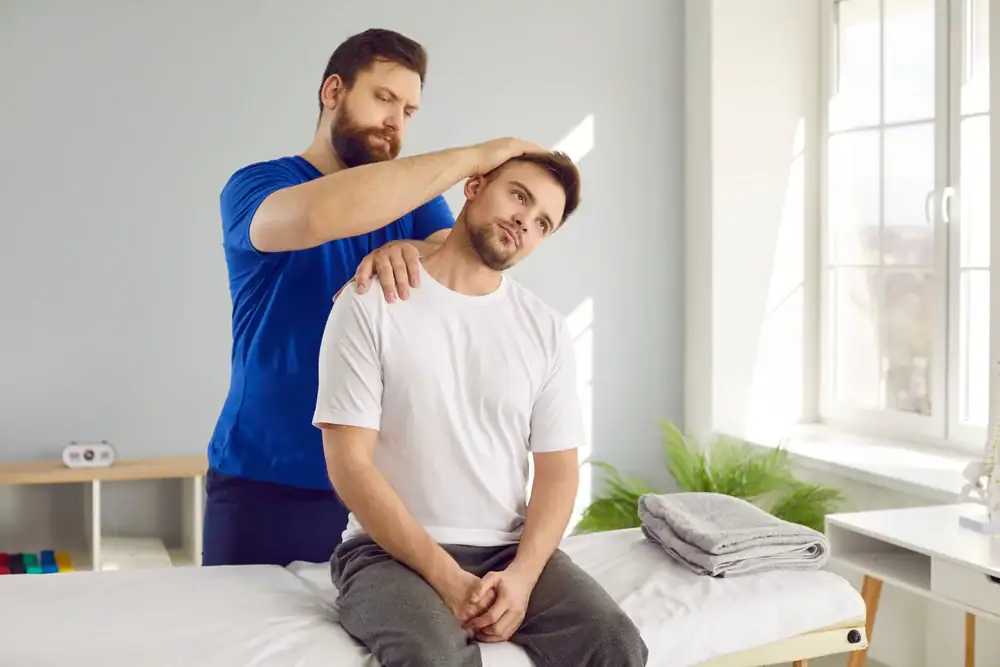
Sessions typically happen two to three times a week. Each one builds on the last. You’ll get hands-on therapy, guided exercises, and homework you can do between visits. We also work with your family or caregivers if that’s helpful—because recovery doesn’t happen in a vacuum.
As you improve, we adjust. The goal isn’t endless therapy. It’s getting you strong enough and stable enough to manage on your own, with the confidence that you’re not going to fall or reinjure yourself the moment we step back.

Ready to get started?
We treat a wide range of conditions, but the most common requests in Valley Stream are fall prevention, post-surgical rehab, stroke rehabilitation, and joint pain treatment. Falls account for a huge percentage of hospital admissions among older adults in New York, and many of those falls are preventable with the right training.
Our fall prevention program includes balance exercises, strength work for your legs and core, and modifications to your home environment that reduce risk. If you’ve already fallen, we help you rebuild confidence so fear doesn’t keep you from moving.
For stroke patients, we focus on neurological rehabilitation—retraining your brain and body to work together again. That includes gait training, neuromuscular re-education, and occupational therapy to help with daily tasks like dressing, cooking, and bathing. Progress takes time, but it’s real.
Joint pain from arthritis or injury responds well to therapeutic exercise and resistance training. We’re not just trying to make you feel better for a day—we’re building strength and mobility that lasts. Pre and post surgery rehabilitation follows the same principle: prepare your body before the procedure, then guide it carefully through recovery so you heal right the first time.
Yes. Medicare Part B covers outpatient physical therapy and occupational therapy when it’s provided by a licensed, Medicare-certified therapist—and that includes in-home care.
You’ll need a doctor’s referral and a treatment plan that shows the therapy is medically necessary. Most of our patients in Valley Stream qualify because they have mobility limitations, chronic conditions, or are recovering from surgery or injury. Medicare typically covers 80% of the approved amount after you meet your deductible, and you’re responsible for the remaining 20%.
If you have a Medicare Advantage plan, coverage works a little differently depending on your plan’s network and rules. We can help you figure out what applies to your situation before we start. The key thing is this: if leaving your home is difficult or unsafe, and therapy will help you function better, there’s a strong chance it’s covered.
It depends on what you’re treating and where you’re starting from. Some patients notice less pain and better movement within two to three weeks. Others—especially those recovering from stroke or major surgery—need a few months of consistent work.
What matters more than the timeline is whether you’re progressing. Your therapist will track measurable improvements: how far you can walk, how steady you are on your feet, how much pain you’re in during specific movements. If something isn’t working, we adjust the plan.
Most people see us two to three times a week at first, then taper down as they get stronger. The total length of treatment might be six weeks, twelve weeks, or longer depending on your condition and your goals. We’re not trying to keep you in therapy forever—we’re trying to get you functional and confident enough to manage on your own.
Physical therapy focuses on movement—strength, balance, mobility, pain reduction. If you’re having trouble walking, getting up from a chair, or moving without pain, that’s physical therapy.
Occupational therapy focuses on daily tasks—dressing, bathing, cooking, using the bathroom. If your limitations are keeping you from taking care of yourself or doing the things you need to do at home, that’s occupational therapy.
A lot of patients need both, especially after a stroke or surgery. Your physical therapist might work on getting you steady on your feet, while your occupational therapist works on getting you in and out of the shower safely. We coordinate care so you’re not getting conflicting advice or redundant exercises. Both types of therapy can be done at home, and both are covered by Medicare when medically necessary.
It’s not marketing—it’s one of the most evidence-backed things we do. Falls are the leading cause of injury and death in older adults, and the majority happen because of weak legs, poor balance, or environmental hazards at home.
Balance and proprioceptive training teaches your body to react when you start to lose stability. Gait training corrects how you walk so you’re not shuffling or favoring one side. Strength training builds up the muscles that keep you upright. All of that reduces fall risk significantly.
But here’s the other part: we also look at your home. Are your rugs a tripping hazard? Is your lighting bad? Do you have grab bars where you need them? A good fall prevention program addresses both your body and your environment. You can’t fix one without the other. We’ve worked with hundreds of patients in Valley Stream who were terrified of falling again, and most of them are moving with a lot more confidence now.
Wear something comfortable that lets you move—sweatpants, shorts, a t-shirt. You want your therapist to be able to see your joints and how you’re moving, so avoid anything too bulky or restrictive.
You don’t need to buy equipment before we start. Most of what we use for in-home therapy is simple: resistance bands, small weights, a sturdy chair, a wall for balance work. If you have stairs, we’ll use those. If you have a walker or cane, we’ll incorporate it into your training.
If we do recommend something specific—like a grab bar for your bathroom or a different type of walking aid—we’ll explain why and help you figure out what makes sense. The goal is to work with what you have and make smart, affordable changes that actually improve your safety and function.
If you’re dealing with pain, balance problems, weakness after surgery, or you’ve already fallen, you need a physical therapist. Exercising on your own without knowing what’s wrong or how to fix it usually makes things worse or just wastes time.
A physical therapist evaluates what’s actually causing your limitations—tight muscles, weak stabilizers, poor movement patterns, neurological issues—and builds a plan that addresses the root problem. You’re not guessing. You’re not following a generic YouTube video that may or may not apply to you.
That said, once you’ve completed therapy and you know what to do, exercising on your own is exactly what we want. The therapy is supposed to teach you how to manage your body so you don’t need us long-term. But if you’re currently struggling, in pain, or scared you’re going to fall, start with a professional evaluation. It’s covered by Medicare, and it gives you a clear path forward instead of hoping things get better on their own.
Other Services we provide in Valley Stream