
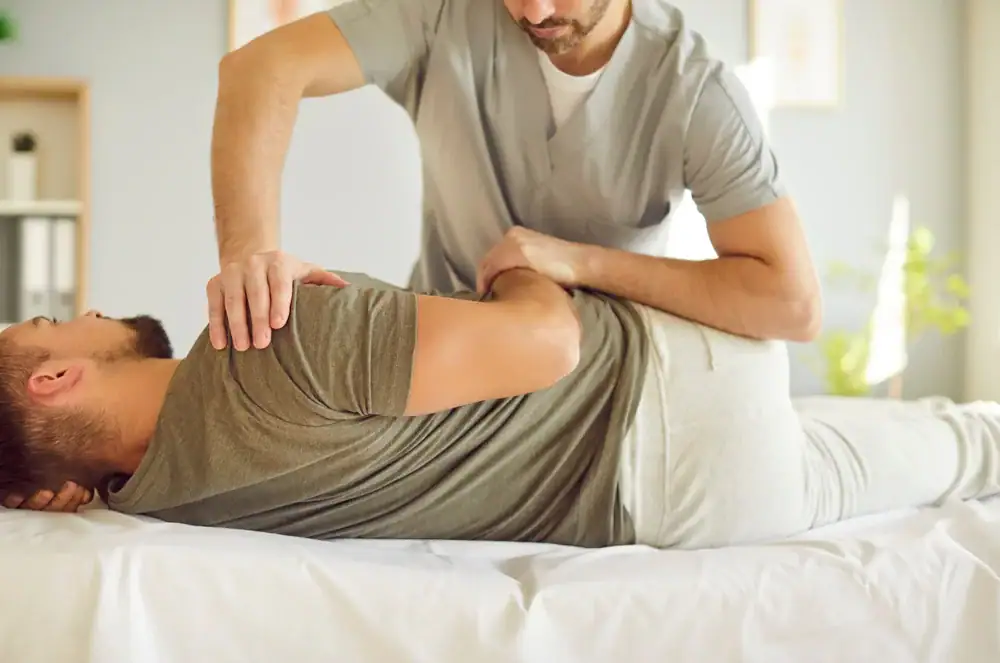
You’re not looking for a gym membership. You need to walk to your mailbox without worrying about balance. You want to get out of bed without pain shooting through your hip. You’re trying to avoid another fall, or recover from surgery without the stress of driving to appointments twice a week.
That’s what in-home physical therapy actually does. A licensed physical therapist comes to your home in Thomaston, assesses how you move in your actual environment, and builds a plan around your daily life—not generic exercises on a clinic floor.
Falls are the leading cause of injury for adults over 65, and most happen at home. Balance training and gait training reduce that risk significantly when done in the space where you actually live. You practice the stairs you use every day. You work on getting in and out of your own shower. The therapy fits your life, not the other way around.
We’ve been providing physical therapy and occupational therapy across Long Island since 2010. We’re not a franchise or a rotating door of therapists—we’re a local network with affiliated centers in Smithtown and Speonk, serving communities like Thomaston where the median age is 47 and over 22% of residents are on Medicare.
Our therapists are licensed, our services are Medicare-certified, and our focus is simple: help you recover, move safely, and stay in your home as long as possible. Thomaston’s population skews older and values quality care without unnecessary complications. That’s exactly what we provide.
We handle the insurance paperwork, verify coverage before we start, and communicate clearly about what’s covered and what’s not. No surprises.

First, we verify your Medicare coverage and confirm you qualify for in-home services. Medicare Part A covers therapy if you’re homebound. Part B covers outpatient therapy at home if it’s medically necessary. We check which applies to you before scheduling anything.
Next, a physical therapist visits your home for an initial evaluation. They assess your mobility, strength, balance, and pain levels. They also look at your living space—stairs, bathroom setup, furniture placement—to identify fall risks and movement barriers. This isn’t a clipboard checklist. It’s a real conversation about what’s hard for you right now.
Then we build a treatment plan based on your specific condition. Stroke rehabilitation looks different than post-surgery rehab. Joint pain treatment requires different exercises than neurological rehabilitation. You get a plan designed for your diagnosis, your goals, and your home environment.
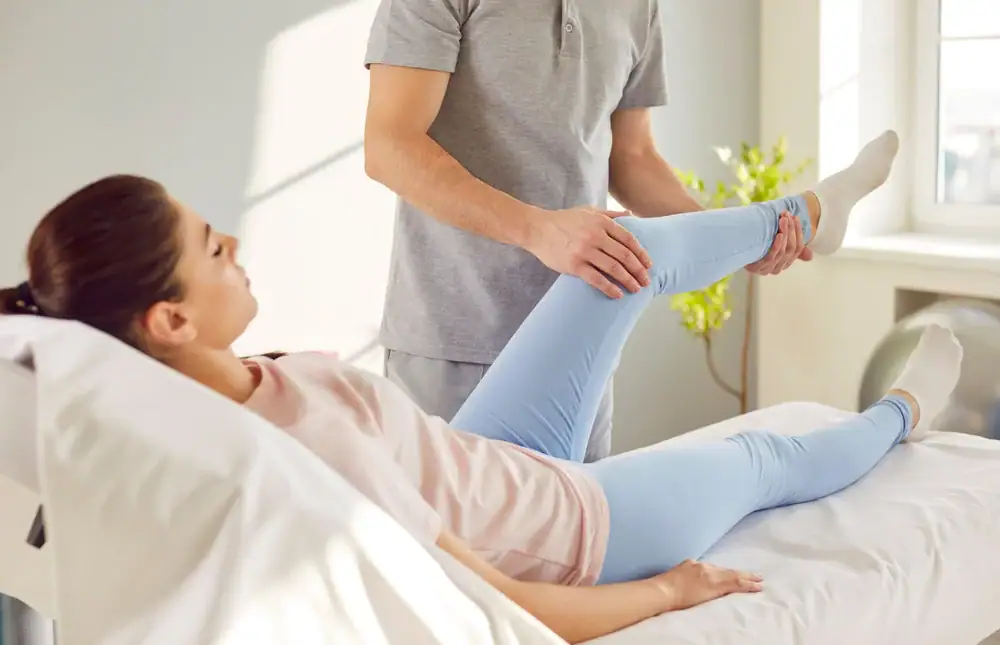
Sessions typically happen two to three times per week, depending on your needs and coverage. Your therapist guides you through therapeutic exercises, strength training, neuromuscular re-education, and functional movements. Everything is adjusted as you improve. Progress isn’t linear, and we adapt when needed.
Ready to get started?
You get one-on-one care focused entirely on you. No therapist juggling three other patients while you’re mid-exercise. That’s the advantage of home-based therapy—it’s just you and your therapist for the full session.
Fall prevention is a major focus for Thomaston residents, especially given the area’s aging population. We incorporate balance and proprioceptive training to improve stability, along with gait training to help you walk more confidently. These aren’t abstract drills—they’re practiced on your floors, your rugs, your actual stairs.
We also handle injury rehabilitation, pre and post surgery rehabilitation (especially for hip and knee replacements), and occupational rehabilitation to help you return to daily activities. If you’ve had a stroke, our stroke rehabilitation program focuses on regaining mobility and relearning movement patterns through repetition and neuromuscular re-education.
Resistance and strength training are built into most plans because strength directly impacts your independence. Weak legs make standing up harder. Weak core muscles affect balance. We target what matters most for your safety and function, not what looks good in a mirror.
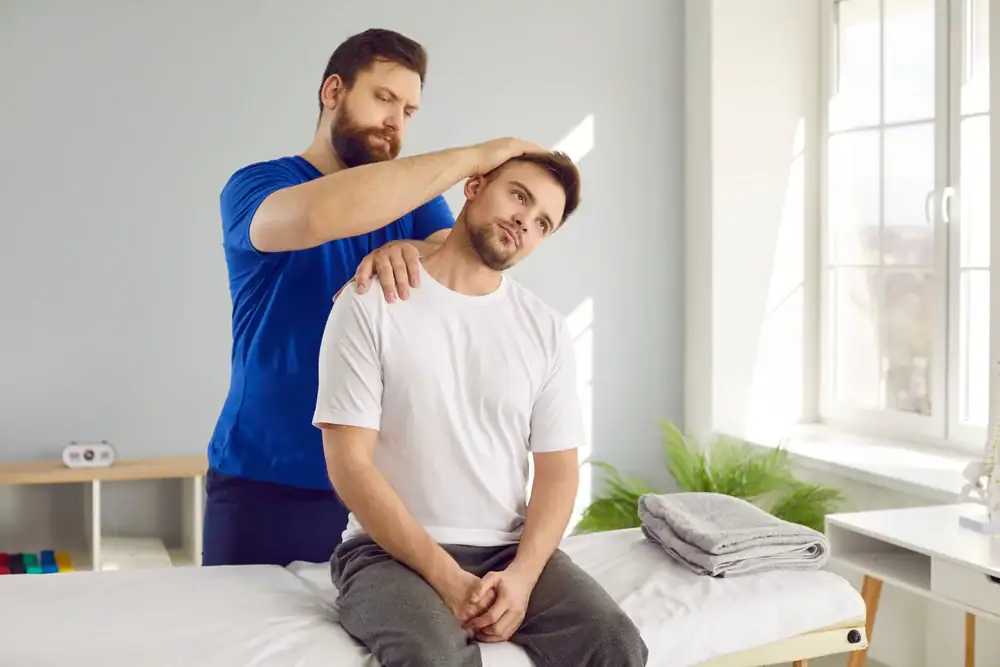
Yes, Medicare covers in-home physical therapy when it’s medically necessary. There are two main coverage paths depending on your situation.
Medicare Part A covers therapy if you’re homebound and receiving care under a home health plan. Homebound means leaving your home requires considerable effort due to illness, injury, or disability. Part A typically covers therapy without copays if you meet the homebound criteria and your doctor orders it.
Medicare Part B covers outpatient physical therapy at home even if you’re not homebound, as long as it’s medically necessary. You’ll pay 20% of the Medicare-approved amount after meeting your Part B deductible. Most plans also have an annual therapy cap, though exceptions exist for certain conditions. We verify your specific coverage before starting and explain any out-of-pocket costs upfront so there’s no confusion later.
We treat a wide range of conditions that affect mobility, strength, balance, and daily function. The most common include post-surgical recovery (especially after hip or knee replacement), stroke rehabilitation, and fall prevention for older adults at risk of injury.
We also work with patients managing chronic joint pain, arthritis, neurological conditions like Parkinson’s or multiple sclerosis, and those recovering from fractures or injuries. If you’ve had a recent hospitalization and need continued rehab at home, we handle that transition.
Each condition requires a different approach. Stroke rehab focuses heavily on neuromuscular re-education and relearning movement patterns. Post-surgery rehab emphasizes regaining range of motion and rebuilding strength safely. Fall prevention combines balance training, gait training, and home safety assessments. Your treatment plan is built around your diagnosis, your current abilities, and your specific goals—not a one-size-fits-all protocol.
The biggest difference is environment and attention. In a clinic, therapists often manage multiple patients at once. You do your exercises, they check in periodically, and you’re done. At home, it’s one-on-one for the full session. Your therapist isn’t splitting focus.
The second difference is relevance. Clinic therapy uses standard equipment and generic spaces. Home therapy uses your actual environment. You practice the movements that matter in your daily life—navigating your specific stairs, getting in and out of your own bed, moving safely in your bathroom. Your therapist also identifies hazards in your home (loose rugs, poor lighting, awkward furniture placement) and suggests modifications to reduce fall risk.
The third difference is convenience. No driving, no parking, no waiting room. For older adults in Thomaston dealing with limited mobility or transportation challenges, that’s not a small thing. It removes a real barrier to getting consistent care. You’re also more comfortable in your own space, which often leads to better engagement and faster progress.
It depends entirely on your condition, your progress, and your insurance coverage. Some patients need a few weeks of therapy after surgery. Others need several months for stroke recovery or chronic condition management.
Medicare doesn’t set a strict time limit, but they do require ongoing medical necessity. That means your therapist documents your progress and justifies continued treatment based on measurable improvement. If you’re progressing toward your goals, coverage typically continues. If you plateau or reach maximum improvement, therapy may be reduced or discharged.
Most plans involve two to three sessions per week initially, then taper down as you improve and gain independence. Your therapist will give you exercises to do between sessions, which speeds up recovery. The goal isn’t to keep you in therapy forever—it’s to get you strong and stable enough to maintain progress on your own. We’re clear about expectations from the start and adjust the plan as needed based on how you’re responding.
The first visit is an evaluation, not a full treatment session. Your physical therapist will spend about an hour assessing your current condition, mobility, strength, balance, and pain levels. They’ll ask about your medical history, recent surgeries or injuries, medications, and what activities are difficult for you right now.
They’ll also observe how you move in your home. Can you get up from your chair safely? How’s your balance when walking? Are stairs a problem? Do you use any assistive devices like a cane or walker? This isn’t a test you can fail—it’s information gathering so they can build an accurate treatment plan.
You’ll also discuss goals. Maybe you want to walk to the mailbox independently, or get back to gardening, or just feel steady enough to shower without fear of falling. Your therapist uses those goals to shape your plan. By the end of the first visit, you’ll know what the treatment will involve, how often you’ll have sessions, and what you’ll be working on. Some light exercises or movements may be introduced, but the heavy work starts in session two.
Yes, we provide both physical therapy and occupational therapy at home. While physical therapy focuses on movement, strength, and mobility, occupational therapy focuses on helping you perform daily activities—dressing, bathing, cooking, managing medications, using the bathroom safely.
Occupational therapy is especially helpful after a stroke, a serious injury, or for patients with neurological conditions affecting fine motor skills and cognitive function. An occupational therapist will assess what tasks are challenging for you and teach adaptive techniques or recommend equipment (like grab bars, shower chairs, or modified utensils) to make those tasks easier and safer.
Many patients benefit from both types of therapy, especially during recovery from major surgery or stroke. Medicare covers occupational therapy under the same guidelines as physical therapy—it must be medically necessary and ordered by your doctor. We coordinate between therapists when both services are needed so your care is consistent and nothing falls through the cracks. You don’t have to choose one or the other if you need both.
Other Services we provide in Thomaston