


You’re not looking for temporary relief. You want to walk without fear, move without pain, and get back to the activities that matter.
That’s what physical therapy does when it’s done right. Whether you’re recovering from surgery, managing chronic joint pain, or working to prevent falls, the goal is function—real, measurable improvement in how you move through your day.
Most patients in Syosset start noticing changes within four to six weeks. Balance improves. Strength comes back. Confidence builds. The difference isn’t just physical—it’s the freedom to live without constantly thinking about your body’s limitations.
Medcare Therapy Services has been treating patients across Long Island for over two decades. Our affiliated centers, including Physical Therapy Associates of Smithtown and Speonk, bring that same level of care to Syosset and the surrounding Nassau County communities.
We accept Medicare and nearly all commercial insurances. Our Google Business Profiles are verified and managed with the kind of attention that reflects how we treat patients—carefully, transparently, and without shortcuts.
You’ll work with licensed physical therapists who’ve seen thousands of cases like yours. That experience matters when you’re trying to recover from a stroke, prevent another fall, or get back to normal after surgery.

First, we evaluate where you are. That means testing your balance, strength, range of motion, and gait. We’re looking for the specific deficits that are holding you back—not just symptoms, but root causes.
Then we build a treatment plan. If you’re recovering from surgery, that might include neuromuscular re-education and therapeutic exercise to restore function. If falls are the concern, we focus on balance training and resistance work that directly reduces your risk. Every plan is different because every patient is different.
Sessions typically happen two to three times per week. You’ll do hands-on work with your therapist, practice exercises, and learn techniques you can use at home. Progress gets measured regularly—not with vague check-ins, but with objective tests that show whether you’re actually improving.
Most people see maximum benefit after eight to twelve weeks of consistent work. Some need more time. Some need less. We adjust based on how your body responds.

Ready to get started?
We offer both in-home physical therapy and clinic-based care. If getting to an appointment is difficult, we come to you. If you benefit from equipment and a clinical setting, we have fully equipped facilities.
Treatment options cover fall prevention, stroke rehabilitation, neurological rehabilitation, pre and post surgery rehabilitation, injury rehabilitation, joint pain treatment, gait training, and occupational therapy. You’re not limited to one approach—we use what works for your situation.
Falls are a major concern in Syosset and across Nassau County, affecting one in four adults over 65 each year. Our fall prevention programs combine balance and strength training, the two most effective interventions according to current research. These programs can reduce fall risk by 30 to 37 percent when done consistently.
For stroke survivors and patients with neurological conditions, we provide gait training, neuromuscular re-education, and proprioceptive work that helps rebuild the connection between your brain and body. Over 70 percent of stroke survivors deal with movement difficulties—this is exactly what physical therapists are trained to address.
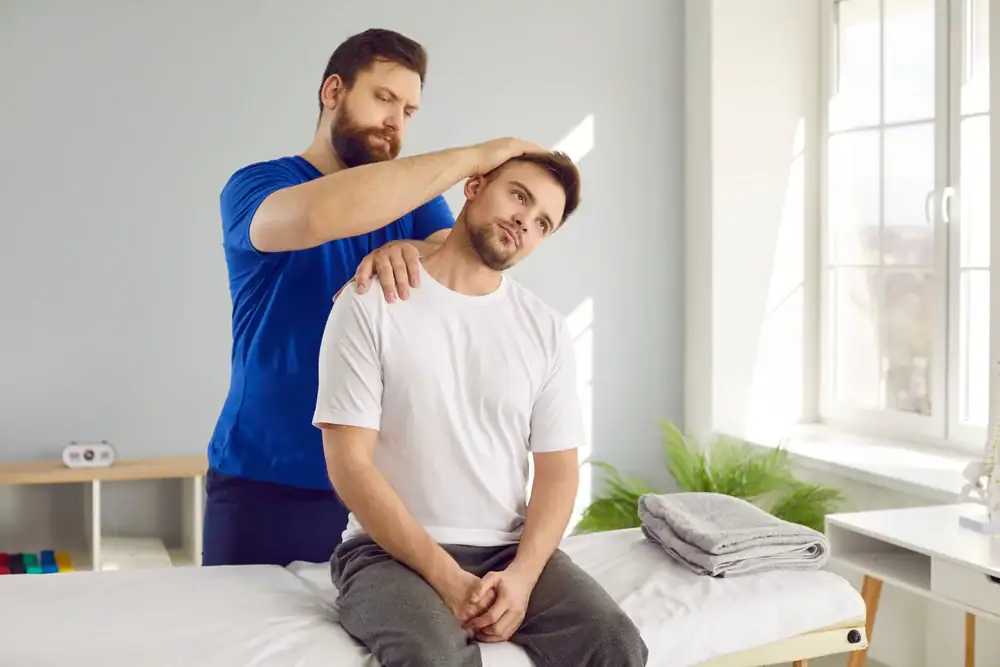
Most older adults start noticing improvements within four to six weeks of consistent physical therapy. That’s when balance starts to feel steadier and movements become more controlled.
Maximum benefits typically show up after eight to twelve weeks of regular participation. This timeline isn’t arbitrary—it’s based on how long it takes your neuromuscular system to adapt and your muscles to build functional strength.
The key word is consistent. Showing up twice a week and doing your home exercises makes the difference. Skipping sessions or only coming once a month won’t give your body enough stimulus to change. We design fall prevention programs around multicomponent exercise—balance work combined with resistance and strength training—because that’s what the research shows actually reduces fall risk by 30 to 35 percent.
Stroke rehabilitation focuses on rebuilding the movement and function you lost. That usually means gait training to help you walk safely again, neuromuscular re-education to retrain your brain’s connection to your muscles, and balance work to prevent falls.
Your therapist will assess which side of your body is affected and how severely. Then they’ll design exercises that challenge those specific deficits. You might work on reaching, stepping, weight shifting, or coordinating movements that used to be automatic.
Over 70 percent of stroke survivors experience difficulties with movement. Physical therapists are key members of the rehabilitation team because we’re experts in mobility. Progress varies depending on the severity of the stroke and how quickly you start therapy, but most patients see meaningful improvements when they commit to the process. Some regain full function. Others learn compensatory strategies that let them move safely and independently even if complete recovery isn’t possible.
Yes. In-home physical therapy is available for patients who have difficulty traveling to a clinic due to mobility limitations, pain, or transportation barriers.
A licensed physical therapist comes to your home and conducts the evaluation and treatment there. You won’t have access to all the equipment available in a clinic, but your therapist brings what’s needed and adapts exercises to your space.
In-home therapy works well for fall prevention, post-surgery recovery, and neurological rehabilitation—especially in the early stages when leaving the house feels overwhelming or risky. Many patients start with in-home sessions and transition to clinic-based care as they improve. Others continue at home for the entire course of treatment. It depends on your needs, your insurance coverage, and what makes sense for your recovery.
Your first appointment is an evaluation. The therapist will ask about your medical history, current symptoms, and what you’re hoping to achieve. Then they’ll test your movement—checking your balance, strength, flexibility, range of motion, and gait.
This isn’t a workout. It’s an assessment. The therapist is gathering information to understand what’s limiting you and why. Expect the session to last 45 minutes to an hour.
At the end, you’ll get a clear explanation of what we found and what the treatment plan will look like. That includes how often you’ll need to come in, what types of exercises or interventions you’ll do, and a realistic timeline for improvement. You should leave understanding what’s wrong and how physical therapy is going to address it. If something isn’t clear, ask. We’ll explain it in plain language until it makes sense.
Most insurance plans cover physical therapy when it’s medically necessary. That includes Medicare and nearly all commercial insurances, which we accept.
Coverage varies by plan. Some require a referral from your doctor. Others let you see a physical therapist directly. Most plans have a copay or coinsurance, and some limit the number of visits per year.
Before your first appointment, call your insurance company or ask our office to verify your benefits. You’ll want to know your copay amount, whether you’ve met your deductible, and if there’s a visit limit. Medicare typically covers physical therapy with a copay after you meet your Part B deductible. If you’re on a Medicare Advantage plan, the rules might be slightly different. Getting this information upfront prevents surprises and lets you focus on recovery instead of bills.
Physical therapy focuses on movement—walking, balance, strength, and mobility. Occupational therapy focuses on daily living skills—dressing, bathing, cooking, and other activities you need to live independently.
There’s overlap. Both work on function. Both help you recover after injury or surgery. But the emphasis is different. If you’re struggling to walk without falling, you need a physical therapist. If you’re struggling to button your shirt or use the bathroom safely, you need an occupational therapist.
Many patients benefit from both, especially after a stroke or major surgery. We offer both physical and occupational therapy, so you can get comprehensive care in one place. Your therapist will let you know if adding occupational therapy makes sense for your situation. The goal is always the same—get you back to living your life with as much independence and confidence as possible.
Other Services we provide in Syosset