


You’re not looking for temporary relief. You want to walk without worrying about balance, bend down without wincing, and get through your day without constantly managing pain.
That’s what physical therapy does when it’s done right. Most patients see significant pain reduction within the first few weeks. The ones who stick with their plan? They’re the ones who stop needing us.
Whether it’s joint pain that’s been nagging you for months, balance issues that make you second-guess every step, or recovery from surgery that’s taking longer than expected, the goal is the same. Get you stronger. Get you stable. Get you back to doing what you need to do without thinking about it.
Fall prevention alone can reduce your risk by 25%. That’s not a small number when you consider that one in four older adults falls each year, and many of those falls lead to serious injury. Balance training and gait work aren’t just exercises—they’re insurance against losing your independence.
You’ll notice the difference in how you move, how you feel getting out of bed, and how much less you’re relying on pain medication. Physical therapy has been shown to reduce opioid use by 87% in patients dealing with chronic pain. That’s a real outcome, not a marketing line.
We’ve been treating patients across Nassau County for years, including right here in Searingtown. We also operate Physical Therapy Associates of Smithtown and Speonk, so we’re not new to this.
What sets us apart isn’t flashy—it’s consistency. Every patient gets direct, 1-on-1 time with a licensed doctor of physical therapy. Not an aide. Not a rotating cast of therapists. One person who knows your case, tracks your progress, and adjusts your plan as you improve.
Searingtown has a median age of 50.8, and we see a lot of patients dealing with the same issues: chronic back pain from years of desk work, joint pain that limits mobility, balance concerns that make stairs feel risky. We also treat post-surgical patients who need structured rehabilitation and stroke survivors working through neurological recovery.
We accept most major insurance plans, and we’re upfront about costs before you start. Our Google Business Profiles are verified and secure, our patient data is managed with strict access controls, and our communication is direct. If something changes with your treatment or schedule, you’ll know.

First visit is an evaluation. We’ll ask about your pain, your limitations, your goals, and what’s not working. Then we assess your movement—how you walk, your range of motion, your strength, your balance. This isn’t a quick look. It’s a full picture of where you are and what needs to change.
From there, we build a treatment plan. That might include manual therapy to reduce pain and improve mobility, therapeutic exercise to rebuild strength, balance and proprioceptive training if falls are a concern, or gait training if your walking pattern is off. For stroke or neurological patients, we incorporate neuromuscular re-education to retrain movement patterns.
Sessions are scheduled based on your availability and treatment needs—usually two to three times per week to start. Each session is hands-on. We’re working with you the entire time, adjusting resistance, correcting form, and progressing exercises as you get stronger.
If getting to our clinic is difficult, we offer in-home physical therapy. Same quality care, just in your own space. This is especially helpful for patients recovering from surgery or those with limited mobility.
Progress is tracked at every visit. You’ll know what’s improving, what’s not, and what we’re changing to keep moving forward. Most patients see measurable improvement within four to six weeks, though timelines vary based on the condition and consistency with the program.

Ready to get started?
Your treatment plan is built around your specific condition, not a generic protocol. That said, here’s what most plans include.
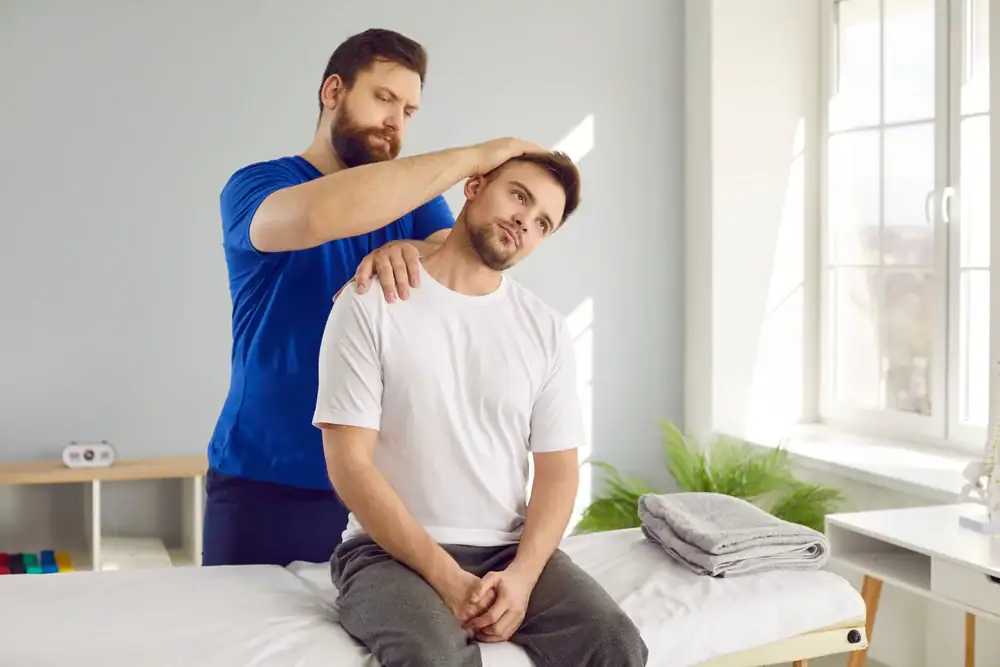
Manual therapy is hands-on work to reduce pain, improve joint mobility, and release tight tissue. This might be soft tissue mobilization, joint manipulation, or myofascial release depending on what your body needs.
Therapeutic exercise is the foundation of most plans. These are targeted movements designed to rebuild strength, improve flexibility, and restore function. Resistance and strength training get added as you progress to make sure gains stick.
If balance is an issue, proprioceptive training and gait training become central. These exercises retrain your body’s sense of position and movement, which is critical for fall prevention. Searingtown’s aging population makes this especially relevant—falls are the leading cause of injury for adults over 65, and the risk increases every year.
For stroke patients or those with neurological conditions, we use neuromuscular re-education to help the brain and muscles reconnect. This is slow, detailed work, but it’s what allows people to regain movement they thought was gone.
Pre and post surgery rehabilitation is another major focus. If you’re preparing for a procedure, we’ll work on strengthening the area beforehand to improve outcomes. After surgery, we guide the recovery process to restore range of motion, reduce scar tissue, and rebuild strength safely.
Injury rehabilitation covers everything from sports injuries to repetitive strain. The goal is always the same: get you back to full function without compensating in ways that cause new problems.
Most patients with joint pain start noticing improvement within two to three weeks if they’re consistent with treatment and home exercises. That doesn’t mean you’re done in three weeks—it means the pain starts to ease, movement gets a little easier, and you’re not as limited in daily activities.
Full recovery depends on the severity of the issue and how long you’ve been dealing with it. Chronic joint pain that’s been building for years won’t resolve as quickly as acute pain from a recent injury. On average, patients complete their treatment plan in six to eight weeks, though some need longer.
The key is consistency. Skipping sessions or not doing your home exercises will slow progress. Physical therapy works because it retrains movement patterns and rebuilds strength—that takes repetition. If you’re showing up and doing the work, you’ll see results.
Yes, we accept most major insurance plans, including Medicare. Coverage varies depending on your specific plan, so we recommend calling your insurance provider to confirm your physical therapy benefits before your first visit.
We’ll verify your insurance when you schedule, and we’ll let you know upfront what your copay or out-of-pocket cost will be. No surprises. If your plan requires a referral from your doctor, we’ll walk you through that process as well.
For patients without insurance or those with high deductibles, we offer transparent pricing and can discuss payment options. The goal is to make treatment accessible, not to create a financial barrier that keeps you from getting care.
The treatment quality is the same—you’re still getting 1-on-1 care with a licensed physical therapist. The difference is location and equipment availability.
In-home physical therapy makes sense if you have mobility limitations, you’re recovering from surgery and can’t easily travel, or you simply prefer the convenience of treatment at home. We bring the necessary equipment and adapt exercises to your space. This option is especially helpful for fall prevention work because we can assess your actual home environment and address specific hazards.
Clinic-based treatment gives us access to more equipment—resistance machines, balance tools, specialized rehab devices. If your treatment plan requires that level of equipment, the clinic is the better option. For many patients, though, in-home therapy is just as effective and far more convenient.
Some patients start with in-home therapy and transition to the clinic as they regain mobility. We’re flexible based on what works best for your situation.
Yes. Physical therapy can reduce fall risk by 25%, and that number goes up with consistent balance and strength training. Falls aren’t just about tripping—they’re usually the result of weak muscles, poor balance, slow reaction time, or a combination of all three.
Balance training retrains your body’s ability to catch itself when you lose stability. Gait training corrects walking patterns that increase fall risk, like shuffling or uneven weight distribution. Strength training in the legs and core gives you the power to recover when you stumble.
We also assess your home environment during in-home visits and point out hazards you might not notice—loose rugs, poor lighting, furniture placement. Small changes make a big difference.
One in four adults over 65 falls each year, and falls are the leading cause of injury in that age group. The earlier you start fall prevention work, the better. Waiting until after a fall means you’re already dealing with injury, fear, and often a longer recovery.
Your first visit is an evaluation, and it usually takes about an hour. We’ll start by talking through your medical history, your current pain or limitations, and what you’re hoping to achieve. Be specific—if your goal is to walk without a cane, play with your grandkids, or get back to tennis, say that.
Next is the physical assessment. We’ll watch how you move, test your range of motion, check your strength, and evaluate your balance if that’s relevant. This isn’t uncomfortable, but it is thorough. We need to see exactly where the limitations are so we can build an accurate treatment plan.
At the end of the evaluation, we’ll explain what we found, what we think is causing the issue, and what the treatment plan will look like. You’ll leave with a clear understanding of how many sessions you’ll likely need, what exercises you’ll be doing, and what kind of timeline to expect.
Some patients start treatment during that first visit if time allows. Others schedule their first full session for the next appointment. Either way, you’re not walking out with more questions than answers.
Physical therapy shouldn’t make your pain worse, but it’s not always comfortable. There’s a difference between discomfort and pain, and a good therapist knows how to work right at that edge without pushing you into injury.
Manual therapy can feel intense, especially if we’re working on tight or inflamed tissue. Stretching and strengthening exercises might cause temporary soreness, similar to what you’d feel after a workout. That’s normal and usually fades within a day or two.
If something hurts in a sharp, shooting, or worsening way, you tell us immediately and we adjust. The goal is to reduce pain over time, not create more of it. We’re constantly checking in during sessions to make sure you’re tolerating the work.
Some conditions, like post-surgical recovery or neurological rehabilitation, involve working through discomfort as part of the healing process. But that’s always explained upfront, and we move at a pace that’s appropriate for where you are in recovery. You’re never pushed beyond what’s safe or productive.
Other Services we provide in Searingtown