


You’re dealing with limited mobility, balance issues, or recovering from surgery or a stroke. Getting to a clinic feels like another obstacle when you’re already struggling to move safely around your own home.
Here’s what changes when therapy comes to you. You work with a licensed physical therapist in your actual environment—the stairs you need to climb, the bathroom you need to navigate, the kitchen where you need to stand and cook. That’s where real recovery happens, not on equipment that doesn’t match your daily life.
Falls are the leading cause of injury deaths for New York residents over 60, with more than 1,800 deaths in 2023 alone. Balance training, gait training, and fall prevention aren’t just therapy buzzwords. They’re the difference between staying in your home or ending up in a facility. You get exercises that address your specific risks, in the space where those risks actually exist.
Most of our Sayville patients see measurable improvements in strength, balance, and pain reduction within the first few weeks. You’re not just checking boxes for insurance. You’re building the capacity to keep doing what matters to you.
We’ve been providing in-home physical therapy and occupational therapy across Long Island for over a decade. We’re not a franchise or a rotating door of therapists who don’t know your name.
Our team includes licensed professionals trained in geriatric care, neurological rehabilitation, and post-surgical recovery. We accept Medicare and most major insurances, and we handle the paperwork so you don’t have to chase down referrals or approvals.
Sayville has one of the highest concentrations of residents over 65 on Long Island—over 20% of the population. We’ve built our practice around that reality. You’re not an inconvenience because you need someone to come to you. That’s exactly who we’re here for.

You call or someone calls on your behalf. We ask about your mobility limitations, what you’re recovering from, and what your goals are. If you’re homebound or have difficulty traveling, you’re likely a fit for in-home care.
We verify your insurance and schedule an initial evaluation at your home. A licensed physical therapist assesses your strength, balance, range of motion, and any pain or functional limitations. They also look at your home setup—stairs, furniture placement, bathroom access—to identify fall risks and mobility barriers.
From there, we build a treatment plan. That might include therapeutic exercise, resistance and strength training, balance and proprioceptive training, or neuromuscular re-education depending on your condition. Sessions typically happen two to three times per week, and each one is focused on measurable progress toward your specific goals.
You’re not left guessing between visits. We give you exercises to do on your own and adjust the plan as you improve. Most patients work with us for several weeks to a few months, depending on the severity of the injury or condition and how their body responds.

Ready to get started?
Every session is one-on-one with a licensed physical therapist. You’re not sharing time with other patients or working with an aide while the therapist supervises from across the room.
We treat joint pain, post-surgical rehabilitation, stroke recovery, neurological conditions, and injury rehabilitation. If you’ve had a hip or knee replacement, suffered a fall, or you’re managing arthritis or Parkinson’s, we have therapists trained in those areas.
For Sayville residents specifically, fall prevention and balance training are critical. With 20.7% of the local population over 65 and mobility limitations affecting one-third of people over 75, the risk is real. We incorporate gait training to improve how you walk, proprioceptive exercises to help you sense where your body is in space, and strength work to stabilize the muscles that keep you upright.
Occupational therapy is also available if you need help with daily tasks like dressing, bathing, or cooking. Some patients need both. We coordinate care so you’re not repeating the same information to different people.
Medicare covers in-home physical therapy when you’re homebound, and you don’t need a referral for most plans. We handle billing directly and keep you updated on your coverage.
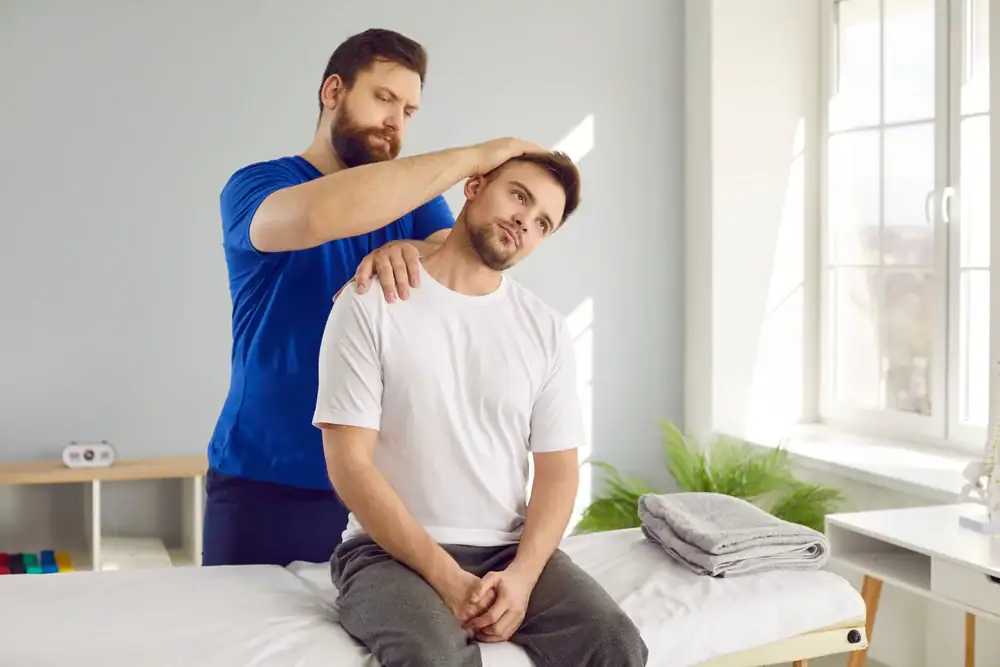
Most insurance plans, including Medicare, don’t require a referral for physical therapy. You can contact us directly and we’ll verify your coverage during that first call.
There’s a common misconception that you need a doctor’s order before starting therapy. That’s not true for the majority of patients. If your plan does require one, we’ll let you know and help coordinate with your physician.
The bigger qualifier for in-home therapy is whether you’re homebound or have significant difficulty leaving your home. Medicare defines homebound as needing considerable effort to leave, whether that’s due to mobility issues, medical restrictions, or safety concerns. If getting to a clinic means risking a fall or exhausting yourself before therapy even starts, you likely qualify.
Most patients notice improvements in pain, strength, or balance within three to four weeks of consistent treatment. That’s not a finish line, but it’s when you start feeling the difference in daily activities.
The full course of therapy depends on what you’re recovering from. A post-surgical knee replacement might take eight to twelve weeks. Stroke rehabilitation or neurological conditions often require longer timelines because you’re retraining the nervous system, not just rebuilding muscle.
Research shows that 79% of physical therapy patients report considerable pain reduction after treatment, and 86% found therapy helpful overall. Those numbers climb even higher for older adults who stick with the program. You’re not going to bounce back overnight, but you should see measurable progress if you’re doing the work between sessions.
Physical therapy focuses on mobility—how you move, walk, balance, and manage pain. Occupational therapy focuses on function—how you complete daily tasks like getting dressed, cooking, or bathing safely.
There’s overlap, and many patients benefit from both. If you’ve had a stroke, for example, a physical therapist works on your gait and strength so you can walk again. An occupational therapist works on fine motor skills so you can button a shirt or hold a fork.
For Sayville residents managing age-related decline, the combination addresses both mobility limitations and self-care difficulties. Ten percent of the local population has self-care limitations, and that number jumps to 25% for people over 85. You might need a physical therapist to help you get in and out of the shower safely, and an occupational therapist to help you actually bathe yourself once you’re in there. We coordinate both when needed.
Yes, Medicare Part B covers in-home physical therapy when you’re homebound and under the care of a licensed therapist. You’ll pay 20% of the Medicare-approved amount after you’ve met your deductible, and Medicare covers the rest.
Homebound doesn’t mean you’re bedridden. It means leaving home takes considerable effort due to illness, injury, or mobility limitations. If you need assistance from another person, a walker, or wheelchair to leave your house, or if your doctor advises against leaving due to your condition, you qualify.
We’re a Medicare-approved provider, so we bill directly and handle the documentation required to maintain your coverage. You don’t need to file claims or chase reimbursements. The key is consistency—Medicare expects you to show progress, which means attending scheduled sessions and doing your home exercises.
We treat post-surgical recovery, stroke rehabilitation, balance disorders, joint pain, arthritis, neurological conditions like Parkinson’s or MS, and injury rehabilitation from falls or fractures. If your mobility is limited and you’re struggling with daily activities, there’s a good chance we can help.
Fall prevention is one of our most common requests in Sayville, and for good reason. Falls caused over 78,000 hospitalizations in New York in 2023, and the fear of falling often leads people to move less, which makes them weaker and more likely to fall. We break that cycle with targeted balance training, strength work, and gait training.
We also see a lot of patients recovering from hip and knee replacements who can’t easily get to outpatient clinics during the early stages of healing. In-home therapy means you start rehab sooner, in a safer environment, with less risk of setbacks. The same goes for stroke survivors who need intensive neurological rehabilitation but aren’t stable enough for regular travel.
Most patients receive therapy two to three times per week, depending on their condition and what their insurance approves. Each session lasts about 45 minutes to an hour.
That frequency is based on what’s clinically effective, not arbitrary. Your body needs time to recover between sessions, but not so much time that you lose progress. For acute conditions like post-surgical recovery, you might start with three sessions per week and taper down as you improve. For chronic conditions or maintenance therapy, twice a week is common.
We also give you exercises to do between visits. Recovery doesn’t happen in three hours per week. It happens in the daily work you put in at home. Your therapist will adjust the plan based on how you’re responding, and we’ll communicate with your doctor if we think you need more or less frequent care.
Other Services we provide in Sayville