

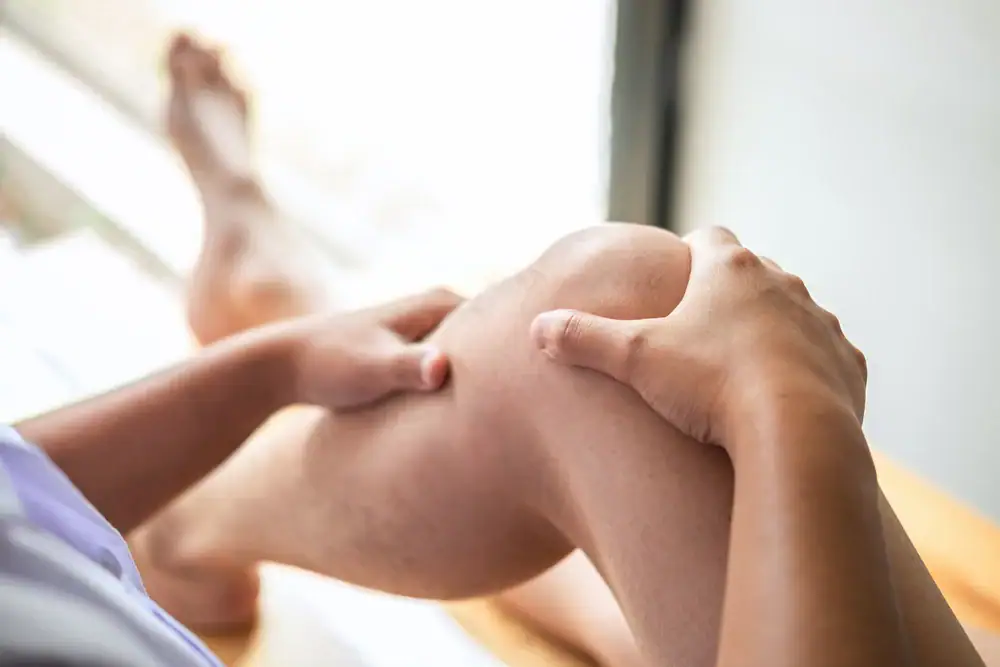
You stop planning your day around pain. That’s the real marker of progress—not just feeling better during a session, but actually doing the things you’ve been avoiding.
Maybe it’s walking to the mailbox without that nagging hip pain. Or getting up from a chair without bracing yourself. Or sleeping through the night because your shoulder finally stopped waking you up every time you roll over.
Good physical therapy doesn’t just treat symptoms. It rebuilds the strength, balance, and movement patterns that let you move through your day without constantly thinking about what hurts. You’re not managing limitations anymore—you’re expanding what’s possible again.
That’s what happens when treatment is built around your specific goals, not a generic protocol. When your physical therapist actually has time to work through what’s not moving right and why. When the focus is on lasting results, not just checking boxes for insurance.
We bring physical therapy directly to homes across Remsenburg-Speonk and the surrounding Hamptons communities. We’ve built our practice around one simple idea: recovery shouldn’t require you to drive 30 minutes when you can barely sit comfortably.
Our physical therapists work with the demographic reality of this area—a community where nearly half of residents are over 45, and many are managing post-surgical recovery, chronic joint pain, or balance concerns that make leaving home genuinely difficult. You’re not an appointment number here. You’re someone who deserves one-on-one attention from a licensed professional who understands exactly what you’re dealing with.
We handle the verification, the insurance coordination, and the scheduling complexity so you can focus on one thing: getting better. That’s it.

First, we talk. You tell us what’s going on—what hurts, what you can’t do anymore, what you’re trying to get back to. We review your medical history, any surgical notes or imaging, and what other providers have already tried. This isn’t a five-minute intake form. It’s a real conversation.
Then we evaluate. Your physical therapist comes to your home and assesses how you’re actually moving in your own environment. We look at strength, range of motion, balance, gait, and any compensations your body has developed. We’re identifying the root cause, not just where it hurts.
From there, we build your treatment plan. It’s specific to your condition, your goals, and your timeline. Maybe you need manual therapy to restore joint mobility. Maybe it’s therapeutic exercise to rebuild strength after surgery. Maybe it’s fall prevention work because you’ve had a close call and don’t want it to happen again.
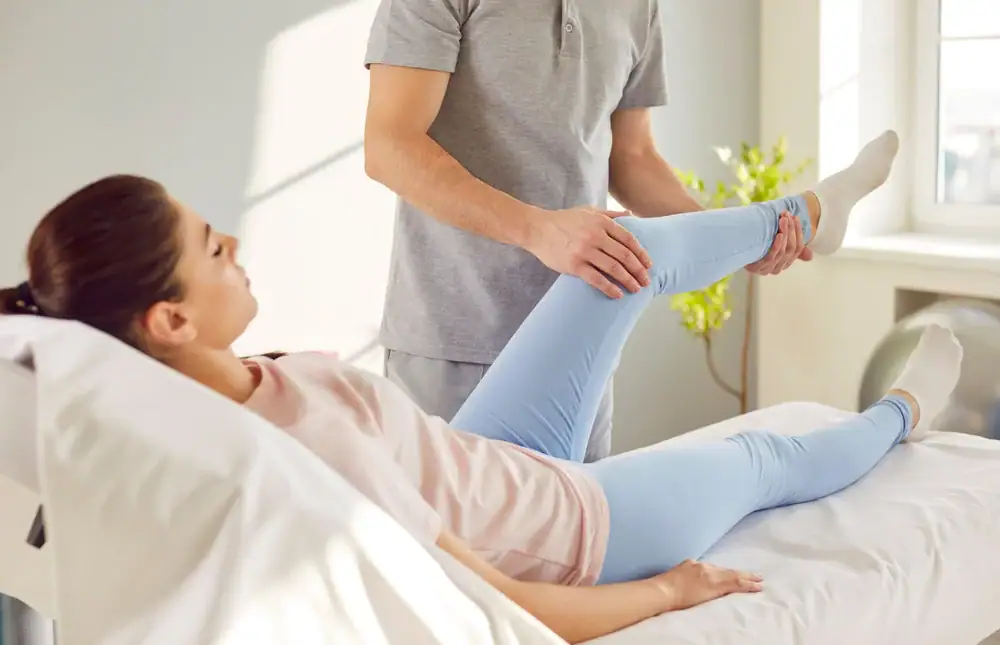
Each session builds on the last. We’re hands-on when it helps—joint mobilization, soft tissue work, myofascial release. We teach you exercises that actually work for your body. We adjust as you progress. And we keep going until you’re back to the life you want to be living.
Ready to get started?
Every session includes a licensed physical therapist working one-on-one with you for the full appointment. No assistants. No splitting time between three other patients. Just focused, hands-on care.
You’ll get manual therapy techniques when they’re needed—joint mobilization to restore movement, therapeutic massage for tight muscles, myofascial release to address restrictions in connective tissue. These aren’t extras. They’re part of how we treat.
You’ll also get a customized exercise program that evolves as you do. Therapeutic exercise for strength and flexibility. Resistance training to rebuild what surgery or inactivity took away. Balance and proprioceptive training if you’re unsteady. Gait training if your walking pattern needs correction. Neuromuscular re-education to retrain movement after a stroke or neurological condition.
For Remsenburg-Speonk residents dealing with the reality of an aging population—where 27% of your neighbors are over 65—we specialize in fall prevention and post-surgical rehabilitation. That includes pre and post surgery rehabilitation for joint replacements, injury rehabilitation for sprains and strains, and neurological rehabilitation for stroke or Parkinson’s. We also offer occupational therapy when you need help with daily tasks like dressing, cooking, or bathing.
Every session ends with a clear plan. You know what to work on before we see you again. You know what progress looks like. And you know we’re adjusting based on how your body responds, not sticking to a script.
It depends entirely on the surgery and your body’s healing timeline. For a total knee replacement, most people see meaningful progress in 6 to 12 weeks, but full recovery can take 3 to 6 months. Hip replacements often move faster—many patients are walking without assistance in 4 to 6 weeks.
The first few weeks focus on managing pain and swelling while restoring basic movement. You’re not pushing hard yet. You’re letting tissue heal while preventing stiffness from setting in. Then we start rebuilding strength, which is where the real work happens.
Here’s what slows people down: skipping exercises between sessions, pushing too hard too soon, or not addressing compensations that develop during recovery. Your body will try to protect the surgical site by shifting how you move. If we don’t correct that early, it becomes a habit that leads to pain somewhere else.
The timeline also depends on how much strength and mobility you had going into surgery. If you did pre-surgery rehabilitation, you’re starting from a better baseline. If you waited until you could barely walk, it takes longer to build back.
Your physical therapist shows up with everything needed—resistance bands, therapy balls, manual therapy tools, and any other equipment specific to your treatment plan. You don’t need a home gym. You just need enough space to move safely.
The session starts with a check-in. How did the last few days go? Any new pain or setbacks? What’s feeling better? Then we move into hands-on work—manual therapy if your joints or muscles need it, followed by guided exercises that match where you are in recovery.
Your therapist is watching how you move, correcting form, and adjusting resistance or difficulty in real time. If something doesn’t feel right, we change it. If you’re ready to progress, we push a little harder. It’s not a one-size-fits-all routine you could find on YouTube. It’s specific to your body and how it’s responding.
Sessions usually run 45 to 60 minutes, depending on your needs and insurance coverage. At the end, you’ll get a clear plan for what to practice before the next visit. Some exercises you’ll do daily. Others might be every other day. We’ll tell you exactly what matters most.
Most insurance plans cover in-home physical therapy if it’s medically necessary—meaning your doctor has referred you and there’s a documented reason you can’t travel to a clinic. Medicare covers it. Most private plans do too, though your copay and session limits vary.
We handle the verification process before your first session. That means checking your benefits, confirming coverage, and letting you know what your out-of-pocket cost will be. No surprises. If your plan has a deductible, you’ll pay that first. After that, it’s usually a copay per session.
Some plans limit how many sessions they’ll cover in a year—often 20 to 30 visits. If you need more than that, we’ll work with your doctor to request an extension based on your progress and continued need. Insurance companies want to see that treatment is working and that you’re not just maintaining.
If you don’t have insurance or your plan doesn’t cover in-home care, we can discuss private pay rates. Some people choose to pay out of pocket because it gives them more control over frequency and duration without waiting for insurance approval.
Yes, and it’s one of the most effective interventions for reducing fall risk—especially in older adults. Balance problems usually come from a combination of factors: muscle weakness, reduced proprioception (your body’s sense of where it is in space), inner ear issues, or neurological changes.
Physical therapy addresses the factors we can change. We start with a balance assessment to identify specific deficits—maybe you’re unstable when turning your head, or you can’t stand on one leg for more than a second, or you’re overrelying on vision instead of using your body’s natural balance systems.
Then we build a program around those gaps. Balance and proprioceptive training exercises that challenge your stability in controlled ways. Strength training for your hips, ankles, and core—the muscles that keep you upright. Gait training to improve how you walk and transition between surfaces. Neuromuscular re-education to retrain the communication between your brain and muscles.
For Remsenburg-Speonk residents, where nearly a third of the population is over 65, this isn’t theoretical. Falls are the leading cause of injury in older adults, and most happen at home. The goal isn’t just to make you steadier. It’s to rebuild the confidence that lets you move through your house, your yard, and your community without fear.
Physical therapy focuses on movement—rebuilding strength, flexibility, balance, and mobility so you can walk, climb stairs, exercise, and move without pain. Occupational therapy focuses on function—helping you perform daily tasks like dressing, cooking, bathing, and managing your home.
There’s overlap, especially after surgery or a neurological event like a stroke. You might need physical therapy to regain the ability to walk and climb stairs, and occupational therapy to relearn how to button a shirt or use kitchen tools safely.
We work on the mechanics of movement. If your shoulder doesn’t have enough range of motion to reach overhead, we restore that mobility through joint mobilization, stretching, and strengthening. Occupational therapists work on applying that movement to real tasks. Once your shoulder moves better, they help you figure out how to get dressed without pain or use adaptive techniques if full movement isn’t possible.
Some people need both. Some only need one. It depends on what’s limiting your independence. If you’re struggling with movement itself—pain, weakness, instability—physical therapy is the starting point. If you can move but can’t translate that into doing what you need to do at home, occupational therapy fills that gap.
For most surgeries, physical therapy starts within days—sometimes even the same day, depending on the procedure. Orthopedic surgeons typically want you moving as soon as it’s safe because early movement reduces stiffness, prevents scar tissue buildup, and speeds overall recovery.
After a joint replacement, you’ll usually start gentle range-of-motion exercises within 24 hours. After a rotator cuff repair, you might be in a sling for a few weeks, but we’re still working on pendulum exercises and passive movement to keep the joint from freezing up. After spinal surgery, it depends on the approach—some patients start walking the next day, others need more time.
The key is starting with the right intensity. Too much too soon can damage healing tissue. Too little, and you lose ground. That’s where pre and post surgery rehabilitation makes a difference. If you work with a physical therapist before surgery to strengthen surrounding muscles and improve mobility, you recover faster afterward.
Your surgeon will give clearance and any restrictions—no bending past 90 degrees, no weight-bearing on one side, no lifting over 10 pounds. We build your program around those rules. As you heal and restrictions lift, we progress the exercises. The goal is to get you back to full function, not just pain-free.
Other Services we provide in Remsenburg-Speonk