


You shouldn’t have to choose between getting the care you need and staying comfortable at home. That’s the trade-off most people face when they’re dealing with joint pain, balance issues, or recovering from surgery.
In-home physical therapy changes that. You get the same licensed, hands-on treatment you’d receive in a clinic—just without the drive, the waiting room, or the stress of getting there when movement already hurts.
The results speak clearly. Physical therapy can reduce your fall risk by up to 86% and cut actual falls by 25%. That’s not marketing language—that’s what happens when you work with a physical therapist who understands gait training, balance work, and how your body compensates when something’s off.
Most of our patients in Quogue are managing chronic pain, recovering from joint replacement, or working through neurological rehabilitation after a stroke. What they want isn’t complicated: less pain, more confidence, and the ability to move through their day without second-guessing every step.
You get a personalized treatment plan based on where you are now and where you want to be. Not a generic protocol. Not a one-size-fits-all approach. Just focused work on the movements and functions that matter most to your life.
We’ve been providing physical therapy across Long Island since 2010. We’re connected to Physical Therapy Associates of Smithtown and Speonk Physical Therapy—clinics with deep roots in the community and a track record that goes back even further.
What that means for you is simple: experience. We’ve treated thousands of patients dealing with the same issues you’re facing right now. Fall prevention, post-surgical rehab, stroke recovery, chronic back pain—we’ve seen it, treated it, and helped people get back to living without limitations.
Quogue has one of the oldest populations on Long Island, with a median age over 60. That’s not a problem—it’s why we’re here. You deserve care that understands the realities of aging, Medicare coverage, and what it takes to stay active in a community where independence matters.
We’re a Medicare-approved provider. Our staff is licensed and trained in neurological rehabilitation, therapeutic exercise, and injury recovery. And we handle the insurance side so you don’t have to guess what’s covered or worry about surprise bills.

It starts with a phone call. We talk about what’s going on—your pain, your limitations, your goals. If you’re a good fit for in-home therapy and your insurance covers it, we schedule your first session at a time that works for you.
Your physical therapist shows up at your door with everything needed for your evaluation. They’ll assess your movement, strength, balance, and any areas causing pain or instability. Then they’ll build a treatment plan specific to your situation—not a template, but a roadmap based on your body and your goals.
Each session after that builds on the last. You might work on gait training to improve how you walk. Resistance and strength training to rebuild muscle. Balance exercises to prevent falls. Neuromuscular re-education if you’re recovering from a stroke or neurological condition.
Sessions typically run 45 to 60 minutes. Frequency depends on your condition—some people need twice a week, others three times. Medicare covers 80% of medically necessary outpatient physical therapy, so most of the cost is handled if you’re eligible.
You’re not left guessing between visits. Your therapist will give you exercises to do on your own and adjust the plan as you improve. Recovery isn’t linear, and your treatment shouldn’t be either.

Ready to get started?
Fall prevention is one of the most requested services we provide in Quogue, and for good reason. More than one in four older adults falls each year, and falling once doubles your chance of falling again. We use balance training, proprioceptive exercises, and gait training to address the root causes—not just the symptoms.
Joint pain treatment is another focus. Whether it’s your knee, hip, shoulder, or back, chronic pain limits what you can do and how you feel every day. We use therapeutic exercise, manual therapy, and strength training to reduce pain and restore function.
Post-surgery rehabilitation is critical after joint replacement or other procedures. Your surgeon fixes the problem, but physical therapy gets you moving again. We guide you through each phase of recovery with pre and post surgery rehabilitation protocols designed to get you back to normal—or better.
Stroke rehabilitation and neurological rehabilitation require specialized knowledge. If you’ve had a stroke or deal with a neurological condition, your therapy needs to address coordination, muscle control, and retraining your nervous system. That’s not something every therapist is equipped to handle. We are.
Occupational therapy and injury rehabilitation round out what we offer. If you’re recovering from a fall, fracture, or overuse injury, we’ll work on the specific movements and tasks you need to get back to your daily routine.
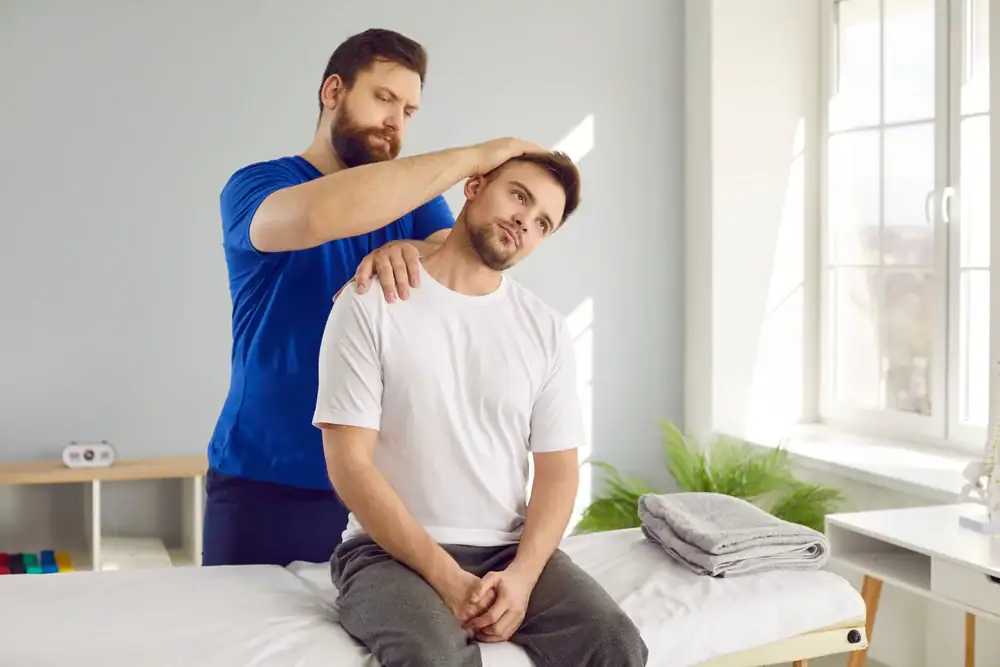
Yes. Medicare Part B covers 80% of medically necessary outpatient physical therapy when provided by a licensed, Medicare-approved therapist. We’re a certified Medicare provider, so if your doctor orders physical therapy and you meet the medical necessity criteria, your sessions are covered.
You’re responsible for the remaining 20% plus your Part B deductible if you haven’t met it yet. There’s no longer a hard cap on therapy services—Medicare removed the annual dollar limit—but they do review cases that go over certain thresholds to make sure treatment is still medically necessary.
In-home physical therapy is billed the same way as outpatient clinic visits. The difference is convenience. You don’t have to arrange transportation, sit in a waiting room, or navigate a clinic when you’re already in pain or dealing with mobility issues.
Most people see measurable improvement in balance and confidence within four to six weeks of consistent therapy. That’s not a guarantee—it depends on your starting point, how often you attend sessions, and whether you’re doing your home exercises between visits.
Fall prevention isn’t about one magic exercise. It’s about improving multiple systems: your balance, your leg strength, your reaction time, and your ability to recover when you start to stumble. We use proprioceptive training to help your body sense where it is in space, gait training to improve how you walk, and resistance training to build the muscle strength that keeps you stable.
The goal isn’t just to prevent falls—it’s to give you the confidence to move without fear. That takes time, but it’s time well spent when you consider that a single fall can lead to a fracture, hospitalization, or loss of independence.
Your first session is an evaluation. Your physical therapist will ask about your medical history, current symptoms, and what you’re hoping to achieve. Then they’ll assess your movement—how you walk, your range of motion, your strength, and any areas of pain or instability.
This isn’t a full treatment session yet. It’s about understanding what’s going on and building a plan that makes sense for your situation. You might do some light exercises or movements so the therapist can see how your body responds, but the heavy lifting comes in later sessions.
By the end of the evaluation, you’ll have a clear treatment plan. You’ll know how often you’ll meet, what you’ll be working on, and what kind of results you can expect. You’ll also get a few exercises to start doing on your own between sessions. The evaluation usually takes about an hour.
Yes, and it’s one of the most common reasons people seek out a physical therapist. Back pain is the number one reason people come to us, followed by leg and knee pain. The key is figuring out why you’re in pain—not just masking the symptoms.
Chronic pain usually comes from weakness, poor movement patterns, or compensation from an old injury. Physical therapy addresses those root causes through targeted therapeutic exercise, manual therapy, and neuromuscular re-education. You’re not just stretching or icing the problem—you’re retraining how your body moves.
Treatment length varies. Some people feel significantly better in a few weeks. Others need a couple of months, especially if the pain has been there for years. But the goal is always the same: less pain, better movement, and the ability to do what you need to do without constantly thinking about your back or knee.
For Medicare coverage, yes. You’ll need a referral or prescription from your doctor stating that physical therapy is medically necessary. That’s standard for Medicare Part B, and it protects both you and the therapist by making sure the treatment is appropriate for your condition.
If you’re paying out of pocket, the rules are different. New York allows direct access to physical therapy, meaning you can see a therapist without a doctor’s referral for up to 10 visits or 30 days. After that, you’d need a referral to continue.
Most of our patients in Quogue use Medicare, so we handle the referral and authorization process as part of getting you started. If your doctor has already recommended physical therapy, we’ll coordinate with their office to make sure everything is in order before your first session.
Physical therapy focuses on movement—your strength, balance, mobility, and pain. If you’re recovering from surgery, dealing with joint pain, or trying to prevent falls, you’re working with a physical therapist. The goal is to improve how your body moves and functions.
Occupational therapy focuses on daily activities—getting dressed, cooking, bathing, and other tasks that make up your day. If you’re struggling to do those things because of an injury, illness, or disability, occupational therapy helps you adapt or relearn those skills.
There’s overlap, and sometimes people benefit from both. If you’ve had a stroke, for example, you might work with a physical therapist on walking and balance, and an occupational therapist on using your arm to eat or write. We offer both services, and we’ll recommend what makes the most sense based on your needs.
Other Services we provide in Quiogue