


You skip the drive. You avoid waiting rooms. You get one-on-one attention in the place where you actually live—and where your real challenges show up.
That matters more than it sounds. Balance issues don’t happen in a clinic. They happen when you’re reaching for something in the kitchen or stepping out of the shower. Gait training works better when we can see how you move through your actual hallways, not a sterile gym.
In-home care also means you’re more likely to stick with it. There’s no transportation barrier. No anxiety about getting to an appointment on time. Just a licensed professional who shows up, understands your space, and builds a plan that makes sense for how you actually live.

First, we do an evaluation in your home. Your physical therapist assesses your mobility, strength, balance, and any specific limitations you’re dealing with. They also look at your environment—stairs, rugs, furniture layout—because that context matters when building a treatment plan.
From there, we create a personalized program. That might include therapeutic exercise, gait training, balance and proprioceptive training, neuromuscular re-education, or resistance and strength training. If you’re recovering from surgery, we focus on pre and post surgery rehabilitation. If you’ve had a stroke or have a neurological condition, we adjust the approach to match those needs.
Sessions happen on a schedule that works for you—usually a few times a week depending on your condition and goals. Your therapist tracks progress, adjusts exercises as you improve, and communicates with your doctor if needed. The goal is always the same: help you move better, feel stronger, and stay independent in your own home.

Ready to get started?
Every plan is different, but most include some combination of fall prevention work, balance training, joint pain treatment, and functional mobility exercises. If you’re recovering from an injury or surgery, we add injury rehabilitation and occupational therapy support to get you back to normal activities.
Here’s why that matters locally: Nassau County has over 300,000 residents age 60 and older. Research shows that 75% of Americans over 70 have abnormal balance, and that number jumps nearly 30% after age 80. Falls aren’t a normal part of aging—they’re preventable with the right strengthening and training. That’s where we come in.
We also treat stroke rehabilitation and neurological conditions that affect movement and coordination. These require specialized care, and doing it at home means we can work with you in the environment where you’ll actually need to function. It’s not just about getting stronger in a clinic—it’s about being safer and more confident in your own space.
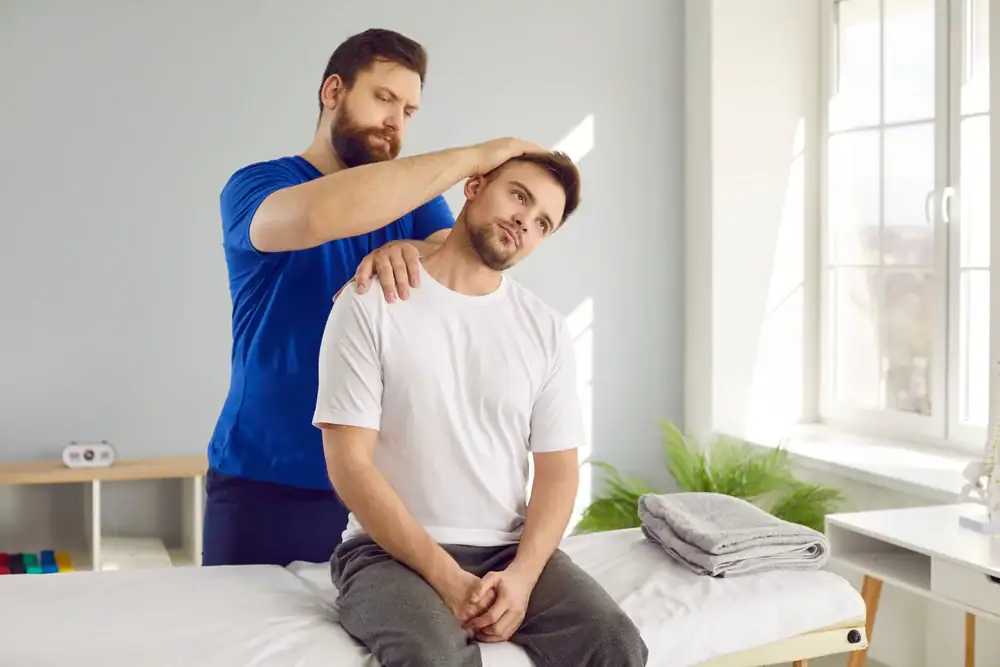
Yes. Medicare Part B covers outpatient physical therapy when it’s medically necessary and provided by a licensed therapist. That includes in-home care if you’re homebound or have difficulty leaving your home due to mobility, medical, or safety reasons.
Medcare Therapy Services accepts Medicare and handles the billing directly. You’ll still have your standard copay or coinsurance depending on your plan, but you won’t need to pay upfront and file for reimbursement. We verify your coverage before starting treatment so there are no surprises.
If you’re unsure whether you qualify as homebound, here’s the general rule: if leaving home requires considerable effort, assistance, or medical support—or if doing so could worsen your condition—you likely meet the criteria. Your doctor will need to certify the need for home care, but that’s a standard part of the process.
Fall prevention starts with identifying why you’re at risk. Your physical therapist will assess your balance, leg strength, gait pattern, and reaction time. They’ll also look at environmental factors—loose rugs, poor lighting, stairs without railings—that increase fall risk in your specific home.
From there, the program focuses on strengthening key muscle groups that help you stabilize and react when your balance shifts. That includes resistance training for your legs and core, proprioceptive exercises that improve your body’s sense of position and movement, and gait training to help you walk more safely. These aren’t generic exercises—they’re tailored to your current ability and the specific risks you face.
The goal isn’t just to make you stronger. It’s to give you the confidence to move through your home without fear. Research shows that strength training and balance work significantly reduce fall risk in older adults, but only if it’s done consistently and correctly. That’s why having a therapist come to your home makes such a difference—you’re more likely to follow through, and the exercises are designed around your real environment.
Physical therapy focuses on improving your movement—strength, balance, mobility, and pain management. If you’re recovering from surgery, dealing with joint pain, or working on fall prevention, that’s typically physical therapy. The goal is to help you move better and more safely.
Occupational therapy focuses on helping you perform daily activities—getting dressed, cooking, bathing, managing household tasks. If you’re struggling with fine motor skills, need adaptive equipment, or are relearning how to do everyday tasks after a stroke or injury, that’s where occupational therapy comes in.
Many people benefit from both, and we provide both services in your home. Your doctor or therapist will recommend which type of therapy you need based on your specific condition and goals. Sometimes you’ll start with one and add the other as your needs change. The key is that both are covered by Medicare when medically necessary, and both can be delivered in your home if you qualify.
It depends entirely on your condition and goals. Post-surgical rehab might last six to twelve weeks. Stroke rehabilitation or neurological conditions often require longer—sometimes several months. Fall prevention and balance training can be shorter if you’re relatively healthy and just need targeted strengthening.
Your physical therapist will give you a clearer timeline after the initial evaluation. Medicare doesn’t set a strict limit on the number of sessions, but they do require that therapy be medically necessary and show measurable progress. That means your therapist will track your improvements and adjust the plan as you get stronger.
Most people see us two to three times per week at the start, then taper down as they improve. Some continue with maintenance visits once or twice a month to prevent regression. The important thing is that you’re not locked into a rigid schedule—your plan adjusts based on how you’re responding to treatment and what your goals are.
For Medicare coverage, yes—you’ll need a referral or certification from your doctor stating that you require home-based physical therapy. That’s standard for Medicare Part B, and it’s how we ensure your care is medically appropriate and covered by your insurance.
If you have private insurance, the rules vary. Some plans require a referral, others don’t. We can help you figure out what your specific plan requires before you start treatment. Either way, it’s usually a quick process—your doctor’s office can send the referral directly to us.
The referral isn’t just a formality. It helps us understand your medical history, current medications, and any precautions we need to take during treatment. It also ensures that your physical therapist and doctor are on the same page about your care plan. If your condition changes or you’re not progressing as expected, we communicate directly with your physician to adjust the approach.
We treat a wide range of conditions, but the most common are fall prevention and balance issues, post-surgical rehabilitation (especially joint replacements), stroke recovery, neurological conditions like Parkinson’s or MS, chronic joint pain, and general mobility limitations in older adults.
We also work with people recovering from injuries—fractures, sprains, orthopedic trauma—and those dealing with weakness or deconditioning after a hospital stay. If you’ve been told you need physical therapy but can’t easily get to a clinic, we can probably help.
Nassau County has a large aging population, and we see that reflected in the conditions we treat most often. Many of our patients are managing multiple issues at once—arthritis plus balance problems, or post-surgery recovery combined with chronic pain. That’s why the in-home model works so well here. We can address all of those factors in the context of your actual daily life, not just in a clinical setting. It’s more realistic, more effective, and a lot less stressful for you.
Other Services we provide in Port Washington North