


You’re dealing with pain that makes getting around harder than it used to be. Maybe it’s your knee after surgery, balance that’s gotten shakier, or lingering weakness from a stroke. The last thing you need is the hassle of driving to a clinic twice a week.
That’s where in-home physical therapy changes everything. Your therapist comes to your door in Plandome with the same equipment and expertise you’d find in any clinic. You get one-on-one attention in your own space, working on the movements that matter most to your daily life—walking to the mailbox, climbing your stairs, getting in and out of the shower.
The result isn’t just less pain. It’s confidence that you can move through your home safely. It’s strength that lets you do what you want without asking for help. It’s the kind of progress that happens when your therapy fits your life, not the other way around.
We’ve been bringing physical therapy and occupational therapy to Long Island homes since 2010. We’re licensed, Medicare-certified, and part of a network that includes Physical Therapy Associates of Smithtown and Speonk Physical Therapy—practices with roots going back to 2000.
In Plandome, where most residents are over 44 and value quality care without the runaround, we’ve built our reputation on showing up when we say we will and treating you like family. Our therapists are members of the American Physical Therapy Association, and every visit is backed by the kind of verification and professionalism that keeps your information secure and your care consistent.
You’re not a number here. You’re someone who deserves therapy that respects your time, your home, and your goals.

First, we verify your Medicare coverage and schedule a time that works for you. No waiting rooms, no rushing. Your physical therapist arrives at your home in Plandome with everything needed for your evaluation—measuring your strength, balance, range of motion, and any pain or limitations you’re experiencing.
From there, we build a treatment plan specific to what you need. If you’re recovering from knee replacement surgery, that means gait training and strength exercises to get you walking confidently again. If you’ve had a stroke, it’s neurological rehabilitation and neuromuscular re-education to retrain your movement patterns. If falls are a concern, we focus on balance training and fall prevention strategies that work in the actual environment where you live.
Each session is one-on-one. Your therapist guides you through therapeutic exercises, resistance training, joint mobilization, or whatever your plan calls for that day. You’ll get hands-on treatment, clear instructions, and homework you can do between visits. Progress gets tracked, plans get adjusted, and you stay in control of your recovery the whole way through.

Ready to get started?
You get the full scope of physical therapy services without stepping foot in a clinic. That includes injury rehabilitation for sprains, strains, and soft tissue damage. Pre and post surgery rehabilitation for joint replacements, rotator cuff repairs, and other procedures. Stroke rehabilitation and neurological rehabilitation for conditions affecting movement and coordination.
We also treat chronic joint pain—knees, hips, shoulders, backs—with therapeutic exercise and manual therapy techniques that reduce inflammation and restore function. If balance is the issue, proprioceptive training and gait training help you walk steadier and avoid falls, which is critical in a community like Plandome where maintaining independence matters.
Occupational therapy is available too, focusing on the tasks you need to do every day—dressing, cooking, bathing—so you can keep living on your own terms. All services are delivered by licensed professionals, covered by Medicare, and designed around what your life actually looks like. No cookie-cutter plans. No guessing if the exercises will work in your space. Just real therapy that fits your home and your goals.
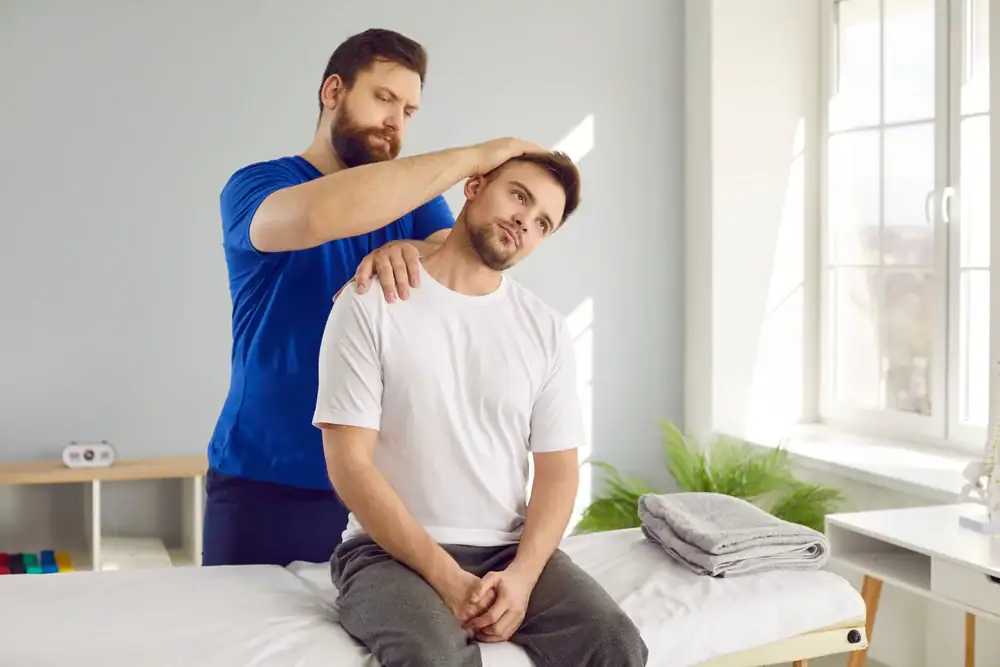
Yes, Medicare Part B covers in-home physical therapy when it’s medically necessary and prescribed by your doctor. That means if you’re recovering from surgery, dealing with a condition that limits your mobility, or at risk for falls, your therapy sessions are typically covered.
You’ll need to meet Medicare’s homebound criteria, which doesn’t mean you can never leave your house—it just means leaving is a real challenge due to your condition. Most people recovering from joint replacement, stroke, or dealing with severe arthritis or balance issues qualify without any problem.
We handle the verification and billing directly with Medicare, so you’re not stuck figuring out paperwork on your own. You’ll know what’s covered before we start, and there are no surprise bills down the road.
We treat anything that’s affecting your ability to move safely and independently. That includes post-surgical recovery from knee replacements, hip replacements, shoulder repairs, and spinal procedures. You’ll get gait training, strength building, and range of motion work to get you back on your feet.
Stroke and neurological conditions are another big focus. If you’ve had a stroke, Parkinson’s, or another condition affecting coordination and movement, neurological rehabilitation helps retrain your brain and body to work together again. We also treat chronic joint pain—arthritis in the knees or hips, lower back pain, shoulder impingement—using therapeutic exercise and manual therapy.
Balance issues and fall risk are huge in Plandome’s older population, so we spend a lot of time on fall prevention, proprioceptive training, and exercises that improve stability in your actual home environment. If you’re struggling with any of these, in-home therapy gets you the help you need without the trip.
Most people start noticing improvement within two to three weeks, but the timeline depends on what you’re treating and how consistent you are with your exercises. If you’re recovering from surgery, you might feel stronger and move better after just a few sessions. Chronic conditions like arthritis or balance issues take longer—usually six to eight weeks to see significant change.
The key is consistency. Your therapist will come to your home two to three times a week, depending on your plan, and you’ll have exercises to do on your own between visits. The people who do their homework see faster results, plain and simple.
We track your progress at every session—measuring strength, range of motion, pain levels, and functional goals like walking distance or stair climbing. If something’s not working, we adjust. You’re not locked into a plan that isn’t helping.
Physical therapy focuses on movement—strength, balance, walking, pain relief. If you’re recovering from surgery, dealing with joint pain, or at risk for falls, that’s physical therapy. Your therapist works on exercises, stretches, and manual techniques to get your body moving better and hurting less.
Occupational therapy focuses on daily tasks—getting dressed, cooking, bathing, using the bathroom safely. If your condition is making it hard to do the things you need to do to live independently, occupational therapy teaches you strategies and adaptive techniques to make those tasks easier and safer.
A lot of people benefit from both, especially after a stroke or major surgery. We offer both services in your Plandome home, and your therapist will recommend what makes the most sense based on your goals. Sometimes it’s one or the other. Sometimes it’s both working together.
No. Your therapist brings whatever’s needed for your treatment—resistance bands, weights, balance tools, measuring devices. We design your program around what you already have at home, so you’re not buying equipment you’ll never use again.
A lot of effective therapy happens with just your body weight, a sturdy chair, and the stairs or hallways you use every day. If your goal is to walk to your mailbox without losing balance, we practice that. If it’s getting in and out of your shower safely, we work on that exact movement in your actual bathroom.
That’s one of the biggest advantages of in-home therapy in Plandome. We’re not guessing how your house is set up or what obstacles you’re dealing with. We see it, and we build your treatment around your real environment. You get stronger doing the things you actually need to do.
Call us or reach out through our website. We’ll ask a few questions about what you’re dealing with, verify your Medicare coverage, and get a prescription from your doctor if you don’t already have one. Most doctors are happy to send one over once they know you’re setting up therapy.
From there, we schedule your first visit at a time that works for you. Your physical therapist will come to your home, do a full evaluation, and talk through what’s realistic to accomplish based on your condition and goals. You’ll leave that first session with a clear plan and a schedule for your next visits.
The whole process takes a few days from your first call to your first session. No waiting lists. No runaround. Just straightforward care that starts when you’re ready.
Other Services we provide in Plandome