
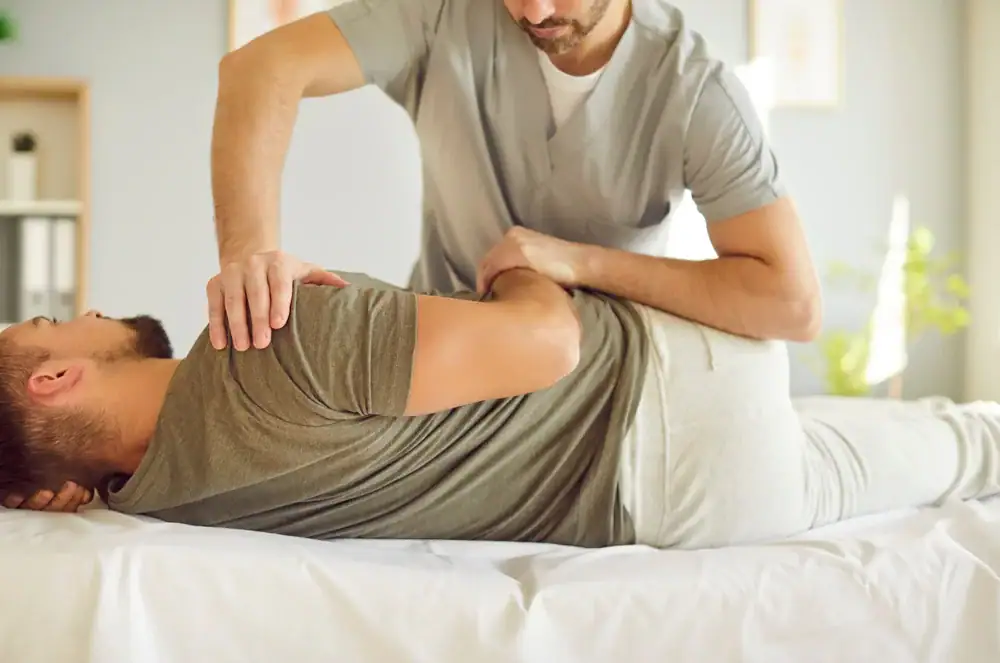
You stop worrying about falling every time you stand up. That’s what happens when balance training and strength work actually address what’s making you unsteady.
Most people in Plandome Manor don’t realize how much they’ve adjusted their lives around physical limitations until those limitations start lifting. You’re taking stairs again. Walking without that nagging hip pain. Getting through your day without exhaustion.
Falls send 88% of Nassau County adults over 65 to the hospital. But 30-40% of those falls are preventable with the right therapeutic exercise and gait training. You don’t have to be part of that statistic.
When your body moves the way it should, you’re not planning your life around what hurts or what’s too risky. You’re just living it.
We’ve been treating patients across Long Island for over 20 years. Our team includes New York State licensed physical and occupational therapists who specialize in geriatric care and neurological rehabilitation.
We come to your home in Plandome Manor because we know getting to appointments isn’t always easy. With a walkability score of just 26, this area isn’t built for people managing mobility issues. So we bring the equipment and expertise to you.
Every treatment plan starts with a real conversation about what’s limiting you and what you want to get back to doing. No cookie-cutter protocols. Just evidence-based care that fits your actual life.

First, we talk. You tell us what’s going on, what hurts, what’s gotten harder. We review your medical history and any physician recommendations. If you’re a good fit for in-home therapy, we schedule your initial evaluation at a time that works for you.
During that first visit, your physical therapist conducts a thorough assessment using tools like the Berg Balance Scale and Timed Up and Go test. These aren’t just checkboxes. They give us measurable baselines so we can track real progress. We also evaluate your home environment for fall risks.
Then we build your treatment plan. Maybe that’s balance and proprioceptive training twice a week. Maybe it’s post-surgery rehabilitation with resistance and strength training. Maybe it’s stroke rehabilitation focused on neuromuscular re-education. Whatever you need, we map it out clearly.
Each session builds on the last. We adjust based on how you’re responding. And because we accept Medicare Part B and most insurance plans, we handle the billing complexity so you don’t have to.
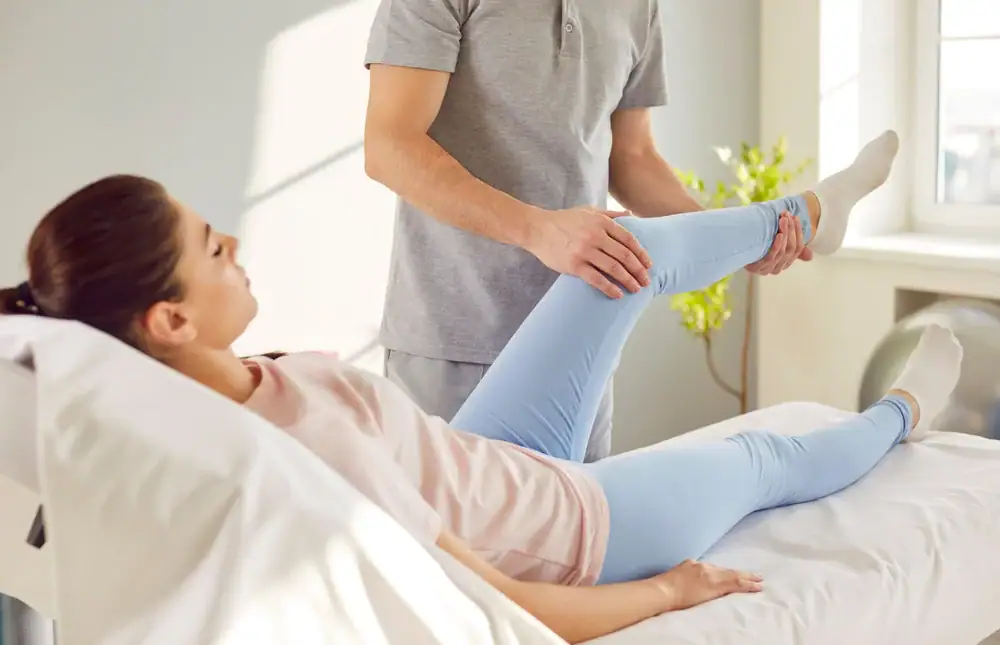
Ready to get started?
Fall prevention isn’t just about telling you to “be careful.” It’s targeted balance training, strength work for your legs and core, and gait training that retrains how you walk. Nassau County ranks 4th in New York for fall prevalence. We use proven protocols that reduce fall rates by 21% for older adults living at home.
If you’re recovering from a stroke, our neurological rehabilitation focuses on regaining movement patterns and rebuilding strength on affected sides. Same approach for other neurological conditions—Parkinson’s, MS, neuropathy. We work with what your body can do and expand from there.
Joint pain treatment combines manual therapy with therapeutic exercise. Pre and post surgery rehabilitation prepares your body for procedures and speeds recovery after. Injury rehabilitation gets you back to activities without compensation patterns that cause new problems.
Every service we offer comes to your home in Plandome Manor. You use your own stairs, your own bathroom, your own furniture during therapy. That means what you practice is exactly what you need in daily life.
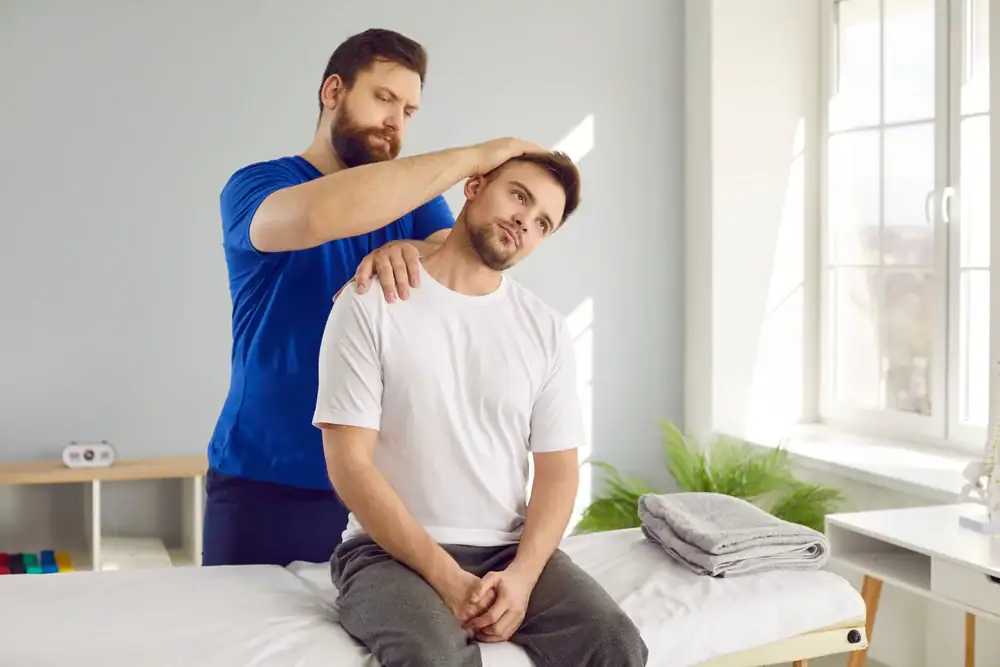
Yes. Medicare Part B covers in-home physical therapy when it’s medically necessary and ordered by your doctor. You don’t need to be homebound to qualify.
Here’s what that means practically: if your physician determines that physical therapy will help you recover from an injury, surgery, or medical condition, Medicare typically covers it. You’ll pay 20% of the Medicare-approved amount after you meet your Part B deductible. We handle all the Medicare billing and paperwork directly.
Most private insurance plans also cover physical therapy services. We participate with many major insurers in Nassau County. Call us with your insurance information and we’ll verify your coverage before your first appointment so there are no surprises.
Most patients notice improvements within 2-3 weeks. Full recovery timelines depend on what we’re treating and how severe it is.
For balance issues and fall prevention, you might feel steadier after just a few sessions of targeted training. Strength takes longer to build—usually 4-6 weeks of consistent work. Post-surgical rehabilitation varies widely. A knee replacement might need 8-12 weeks. A rotator cuff repair could take 3-4 months.
Stroke rehabilitation and neurological conditions often require longer treatment periods, sometimes several months, because we’re retraining complex movement patterns. But you should see measurable progress at regular intervals. We use standardized tests to track improvements objectively, so you’re not just guessing whether therapy is working.
Physical therapy focuses on movement, strength, and mobility. Occupational therapy focuses on daily activities and fine motor skills.
If you’re having trouble walking, getting up from a chair, or maintaining balance, that’s physical therapy. We work on gait training, strength building, and gross motor function. If you’re struggling to button shirts, prepare meals, or manage bathroom tasks, that’s where occupational therapy helps. It addresses hand function, coordination, and adaptive strategies for daily living.
Many patients benefit from both. Someone recovering from a stroke might need PT to regain leg strength and walking ability, plus OT to regain arm and hand function for dressing and eating. We offer both services, and your therapist will recommend the right combination based on your specific limitations and goals.
It’s not marketing. Evidence-based fall prevention programs reduce fall rates by 21% for community-dwelling older adults. But only if the program actually addresses your specific risk factors.
Here’s what works: balance training that challenges your stability systems, strength training focused on legs and core, and gait training that corrects unsafe walking patterns. We also assess your home for environmental hazards and recommend modifications. Some falls happen because of medication side effects or vision problems, which we can’t fix, but we can help you compensate for those factors.
Nassau County has high fall rates compared to the rest of New York. The risk is real here. Generic “balance exercises” you find online won’t cut it. You need assessment tools like the Berg Balance Scale to identify where your specific deficits are, then targeted interventions that address those deficits. That’s what evidence-based means.
New York allows direct access to physical therapy, which means you can see a PT without a physician referral. But insurance coverage often requires one.
Medicare specifically requires that a doctor certify your need for physical therapy and approve your treatment plan. Most private insurance plans have similar requirements. Even if they don’t technically require a referral, having physician involvement usually means smoother claims processing.
Practically speaking, it’s best to talk with your doctor first. They can provide medical history and context that helps us design better treatment. If you’re dealing with pain, mobility loss, or recovery from an injury or surgery, your physician can document medical necessity, which protects your insurance coverage. We’re happy to coordinate directly with your doctor’s office to get any needed paperwork handled quickly.
Because getting to a clinic three times a week is exhausting when you’re already dealing with pain or mobility issues. In-home therapy eliminates that burden entirely.
Plandome Manor has a walkability score of 26. You’re driving everywhere, which means getting in and out of a car multiple times per week when that’s exactly what hurts. Then you’re using your energy on transportation instead of on healing. Home-based care means your energy goes where it should—into your recovery.
There’s also a practical advantage to treating you in your actual environment. We see the stairs you struggle with, the bathroom layout that’s risky, the furniture arrangement that’s causing problems. We train you using your real-world challenges, not generic gym equipment. That means what you practice in therapy translates directly to what you need every day. Plus, many patients feel more comfortable and less self-conscious working out in their own space rather than in a clinic full of other people.
Other Services we provide in Plandome Manor