
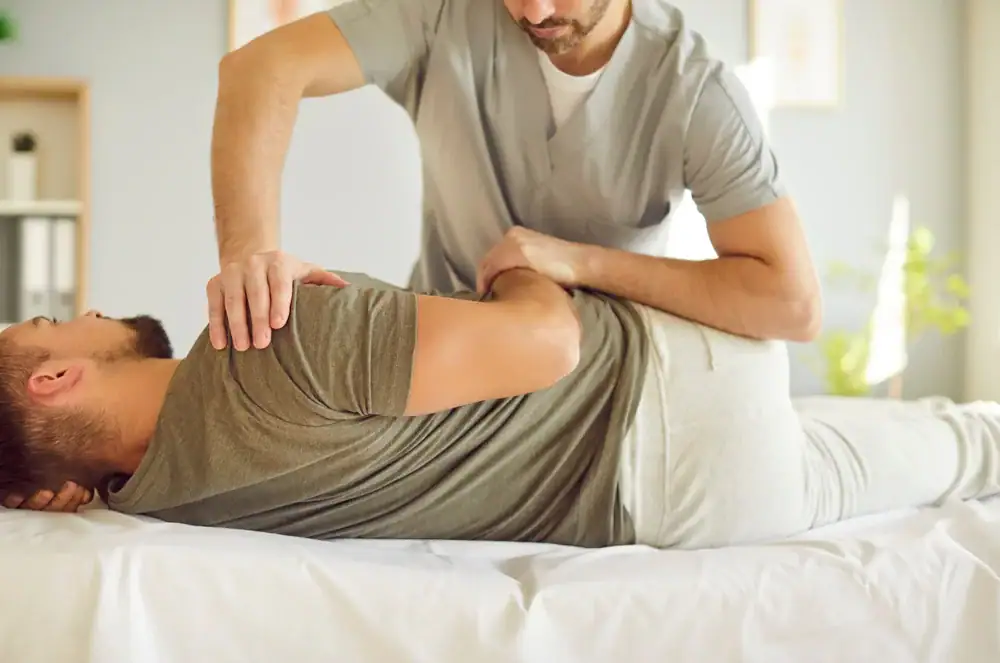
You stop planning your day around pain. Walking to your car doesn’t require a mental pep talk. You sleep through the night because your shoulder isn’t screaming at you.
That’s what physical therapy should do—not just reduce symptoms, but give you back the movement and confidence you’ve been missing. Whether you’re recovering from surgery, dealing with chronic joint pain, or trying to prevent another fall, the goal is the same: get you doing what you want without second-guessing your body.
Most people wait too long. They try to push through, hoping it’ll get better on its own. But the longer you wait, the more your body compensates in ways that create new problems. Gait changes to avoid knee pain. Posture shifts to protect a sore back. Weakness that turns into a balance issue.
Physical therapy interrupts that cycle. It addresses what’s actually broken—strength, stability, range of motion, neuromuscular control—so you’re not just managing symptoms. You’re fixing the root cause.
We’ve been treating patients across Long Island for years, including right here in Old Westbury and surrounding Nassau County communities. We’re not a franchise. We’re a local practice with physical therapists who actually know this area and the people in it.
Old Westbury residents tend to be active, educated, and expect a high standard of care. You’re not looking for cookie-cutter treatment or someone who rushes you out in 15 minutes. You want a physical therapist who takes the time to understand your specific situation and builds a plan that makes sense for your life.
That’s what we do. Every treatment plan is personalized. Every session is focused on your progress, not just filling a schedule. And if in-home physical therapy makes more sense for your recovery, we can do that too.

Your first visit starts with an evaluation—not a sales pitch. We ask about your pain, your limitations, what you’ve already tried, and what you’re hoping to get back to. Then we test your movement, strength, balance, and range of motion to see what’s actually going on.
From there, we build a treatment plan. That might include therapeutic exercise to rebuild strength, balance and proprioceptive training if stability is the issue, or gait training if walking has become difficult or painful. For post-surgery patients, we focus on pre and post surgery rehabilitation protocols that get you moving safely without setbacks.
Each session is hands-on. You’re not left alone with a sheet of exercises. We guide you through neuromuscular re-education, resistance and strength training, and movement patterns that retrain your body to work the way it should. If you’ve had a stroke or neurological condition, stroke rehabilitation and neurological rehabilitation become the focus—rebuilding coordination, balance, and functional movement.
Progress gets tracked. You’ll know if you’re improving because we measure it. And when you’re ready, we make sure you have a plan to keep the gains you’ve made—whether that’s a home exercise program or ongoing maintenance visits.
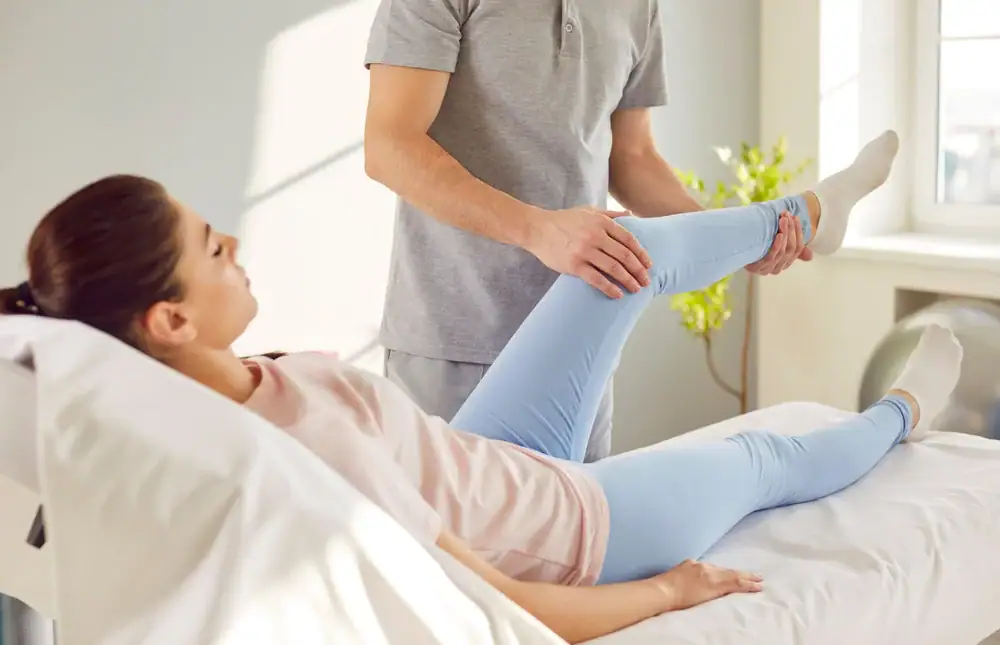
Ready to get started?
Every plan is different, but most include some combination of therapeutic exercise, manual therapy, and functional training. If fall prevention is the priority—and it should be if you’re over 65—we focus heavily on balance training, strength work, and gait mechanics. One in four older adults falls each year, and falling once doubles your chance of falling again. We take that seriously.
For joint pain treatment, whether it’s your knee, hip, shoulder, or back, the focus is on reducing inflammation, restoring range of motion, and strengthening the muscles that support the joint. You’re not just icing it and hoping. You’re actively rebuilding stability.
Injury rehabilitation works the same way. Whether it’s a sprain, strain, or something more serious, we progressively load the tissue so it heals stronger—not just pain-free. Occupational therapy and occupational rehabilitation come into play when the injury affects your ability to work or perform daily tasks. We don’t just get you “better.” We get you back to doing your job, your hobbies, your life.
Old Westbury has one of the highest median household incomes in Nassau County and a population that values quality and results. You’re not looking for the cheapest option. You’re looking for the one that works. That’s why our patients stick with us—and why so many come from referrals.
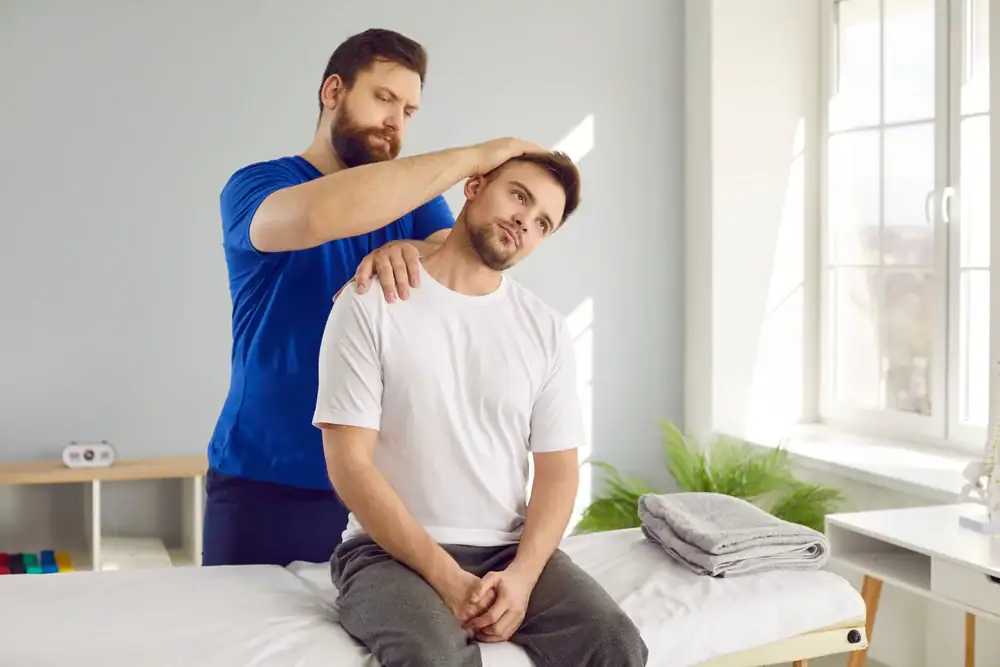
Most people notice some improvement within the first two to three weeks, but that depends entirely on what you’re treating and how long the problem has been there. If you’re recovering from surgery, the timeline is more predictable—you’ll follow a protocol that’s designed to get you moving safely in stages. If you’re dealing with chronic pain or a long-standing injury, it takes longer because your body has been compensating for months or even years.
The key is consistency. Physical therapy works when you show up and do the work between sessions. Skipping appointments or ignoring your home exercises will slow things down. But if you’re committed, you’ll start feeling stronger, moving better, and dealing with less pain faster than you think.
We track your progress at every visit, so you’re never guessing whether it’s working. If something isn’t improving the way it should, we adjust the plan. That’s the difference between real physical therapy and just going through the motions.
Most insurance plans cover physical therapy, including Medicare. But coverage varies depending on your plan, your deductible, and how many visits are approved. Some plans require a referral from your doctor. Others let you come directly to us.
We accept most major insurance carriers and handle the verification process for you. Before your first visit, we’ll check your benefits and let you know what your out-of-pocket cost will be. No surprises. If your plan has a copay or coinsurance, we’ll explain that upfront so you can make an informed decision.
If you don’t have insurance or your plan doesn’t cover enough visits, we can discuss private pay options. The goal is to make sure cost isn’t the reason you don’t get the care you need. Physical therapy is an investment, but it’s a lot cheaper than surgery, long-term pain management, or another fall that lands you in the hospital.
Yes, and it’s one of the most important things we do—especially for older adults. Balance problems don’t just happen. They’re usually caused by a combination of muscle weakness, poor proprioception, vision changes, or inner ear issues. Physical therapy addresses the parts we can control: strength, stability, and movement patterns.
Balance and proprioceptive training involves exercises that challenge your ability to stay stable on different surfaces, in different positions, and while moving. We also work on gait training to make sure you’re walking efficiently and safely. A lot of falls happen because of small missteps—catching your toe, losing your balance on uneven ground, or not reacting fast enough when something shifts.
More than 36 million falls are reported every year in the U.S. among older adults, and one in five of those falls causes a serious injury like a fracture or head trauma. If you’ve already fallen once, your risk of falling again doubles. That’s why fall prevention isn’t optional—it’s essential. And it works. The right exercises can significantly reduce your fall risk and give you the confidence to move without fear.
Yes. In-home physical therapy makes sense for patients who have trouble getting to the clinic—whether that’s because of mobility limitations, post-surgical restrictions, or just the logistics of getting out of the house. We bring the same level of care to you, in your own environment.
There’s actually an advantage to treating you at home. We see the real-world challenges you’re dealing with—stairs, bathroom layout, furniture placement—and we can address those directly. If getting in and out of your shower is a problem, we work on that. If navigating your front steps feels risky, we train for that.
In-home physical therapy is especially common for stroke rehabilitation, neurological rehabilitation, and post-surgery recovery when leaving the house isn’t realistic in the early stages. We coordinate with your doctor, follow the same treatment protocols, and track your progress just like we would in the clinic. It’s not a compromise. It’s just a different setting.
The difference is knowing what to do, how to do it, and when to progress. You can find exercises online, but without an evaluation, you’re guessing. You don’t know if you’re strengthening the right muscles, using the right form, or even addressing the actual problem. Most people either do too little and don’t improve, or they push too hard and make things worse.
A physical therapist evaluates your movement, identifies the weak links, and builds a plan that’s specific to your body and your goals. We teach you the exercises, watch you do them, and correct your form so you’re getting the benefit without the risk. Then we progress the difficulty as you get stronger—something you can’t do on your own without knowing what to look for.
Therapeutic exercise isn’t just about moving. It’s about moving correctly, with the right load, at the right time. That’s what leads to real recovery. Neuromuscular re-education, resistance and strength training, and functional movement patterns all require guidance to be effective. Once you’ve learned the system and built a foundation, you can maintain it on your own. But getting there requires expertise, not just effort.
If your pain has lasted more than a week or two, or if it’s affecting your ability to do normal activities, you should get it checked. Some injuries do heal on their own with rest. But most don’t—especially if you’re still using the injured area every day. What usually happens is the pain becomes manageable, so you ignore it. Then it gets worse, or it moves somewhere else because your body is compensating.
Physical therapy catches problems before they become chronic. If you’re limping to protect your knee, your hip and lower back are going to start hurting too. If your shoulder is stiff and you stop using it, you’ll lose range of motion and strength. The earlier you address it, the faster and easier the recovery.
You also don’t need to be in severe pain to benefit from physical therapy. A lot of people come in for injury rehabilitation, joint pain treatment, or pre and post surgery rehabilitation to make sure they heal correctly the first time. Prevention is smarter than waiting until something breaks. If you’re not sure whether you need treatment, call and talk to us. We’ll tell you honestly whether physical therapy makes sense for your situation or if you’re fine to wait and see.
Other Services we provide in Old Westbury