


You’re not looking for a gym membership. You need to walk without fear of falling, get up from a chair without wincing, or move through your day without constant pain slowing you down.
That’s what in-home physical therapy actually does. A licensed physical therapist comes to your home in Oceanside, evaluates what’s limiting you, and builds a treatment plan around your specific goals—whether that’s recovering from surgery, regaining balance after a stroke, or just being able to take your grandkids to the park again.
No waiting rooms. No fighting traffic on Merrick Road when your knee hurts. Just focused, one-on-one care that fits your schedule and your life. Most sessions are covered by Medicare, so you’re not choosing between treatment and paying bills.
You work with the same therapist each visit. They get to know your home setup, your routine, your limitations. Progress gets measured in real ways—steps taken, stairs climbed, pain reduced. The kind of improvements that actually matter when you’re trying to stay independent.
We’ve been providing in-home physical and occupational therapy across Long Island for over 14 years. We’re not a 50-location chain trying to fill appointment slots. We’re a local team that specializes in treating people at home—because that’s where recovery actually happens for many Oceanside residents.
Our physical therapists are licensed, Medicare-certified, and trained specifically in home-based care. That means we know how to work around your living room furniture, assess fall risks in your actual bathroom, and design exercises you can do in the space you have.
Oceanside has a significant population of older adults who need therapy but face real barriers getting to clinics. Transportation is hard. Parking on Long Beach Road is a nightmare. Some days, the pain or fatigue makes leaving the house nearly impossible. We built our entire practice around eliminating those barriers so you can focus on getting better instead of getting there.

First, we verify your Medicare or insurance coverage over the phone. No referral needed in most cases. If you’re eligible, we schedule an evaluation at your home—often same-day or next-day, depending on availability in Oceanside.
During that first visit, your physical therapist conducts a full assessment. They watch how you move, ask about your pain, test your strength and balance, and talk through what’s been difficult lately. Then they explain what they found in plain language and outline a treatment plan with specific goals. You’ll know exactly what you’re working toward.
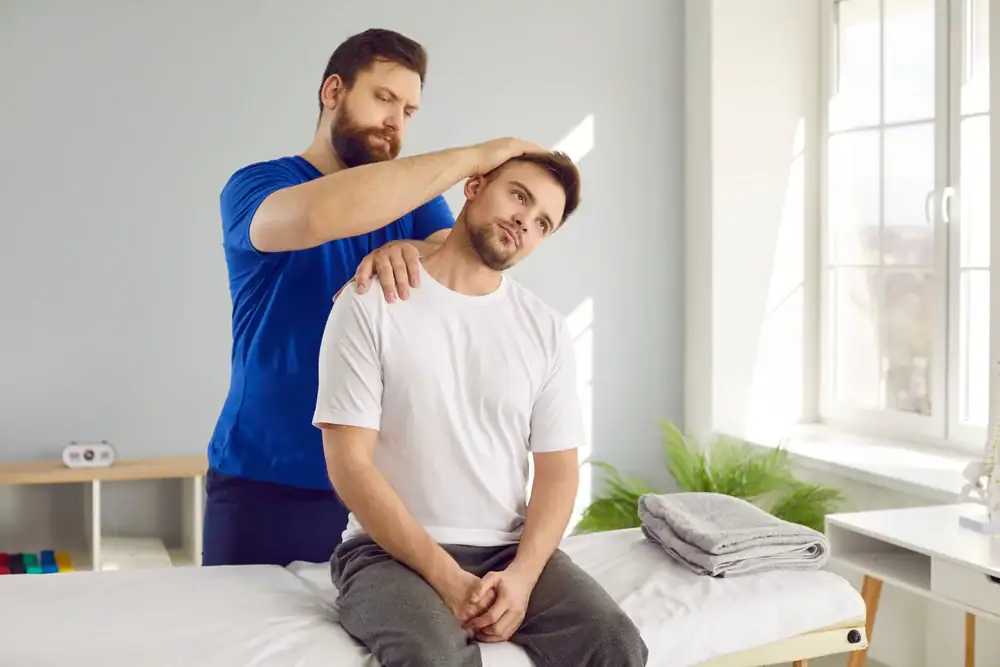
Treatment sessions happen in your home, typically two to three times per week depending on your condition. Your therapist brings any necessary equipment. Sessions last about 45 minutes to an hour. You’ll do therapeutic exercises, gait training if you’re working on walking, balance work if falls are a concern, or targeted treatment for joint pain and mobility issues.
Your therapist adjusts the plan as you improve. They’ll also teach you exercises to do between visits and give you strategies to prevent setbacks. The goal isn’t endless therapy—it’s getting you functional and keeping you that way. Most people see measurable improvement within a few weeks, though complex conditions like stroke rehabilitation or neurological issues may take longer.

Ready to get started?
We provide the full range of physical therapy services you’d get at a clinic, just delivered where you live. That includes therapeutic exercise programs designed for your specific condition, resistance and strength training to rebuild muscle, and neuromuscular re-education to retrain your body’s movement patterns after injury or illness.
If you’re recovering from a stroke, our therapists specialize in stroke rehabilitation—helping you regain coordination, strength, and independence through proven techniques. For neurological conditions like Parkinson’s or MS, we offer neurological rehabilitation focused on managing symptoms and maintaining function as long as possible.
Balance and fall prevention are critical for Oceanside’s aging population. Our therapists are trained in proprioceptive training and gait training to help you walk more steadily and confidently. We also provide pre and post surgery rehabilitation for joint replacements, fractures, and other procedures—starting therapy as soon as your doctor clears you.
Injury rehabilitation covers everything from sports injuries to overuse problems to accident recovery. And for people dealing with chronic joint pain, arthritis, or mobility limitations, we create ongoing treatment plans that reduce pain and keep you moving. Everything is personalized. Your therapist isn’t following a generic protocol—they’re treating you based on what your body needs and what your life requires.
Yes. Medicare Part B covers outpatient physical therapy services provided in your home if you’re homebound or have difficulty traveling to a clinic due to your medical condition. You don’t need to be completely unable to leave your house, but getting out must require considerable effort or assistance.
Medcare Therapy Services is Medicare-certified, which means our physical therapists meet all federal requirements and our services are billed directly to Medicare. You’ll typically pay 20% of the Medicare-approved amount after you’ve met your annual deductible. Many Medicare Supplement plans cover that 20%, so your out-of-pocket cost may be zero.
Coverage doesn’t require a referral from your doctor in most cases, though Medicare does require that therapy be deemed medically necessary. Your therapist documents your condition, progress, and treatment plan to satisfy Medicare’s requirements. If you have Medicare Advantage instead of Original Medicare, coverage works similarly but you’ll need to verify that we’re in your plan’s network.
We treat the full spectrum of conditions that benefit from physical therapy, with a focus on issues that make traveling to a clinic difficult. That includes post-surgical rehabilitation after knee or hip replacements, spinal surgery, or fracture repairs. Many Oceanside patients start therapy with us immediately after hospital discharge when they’re still too weak or in too much pain to sit in a car for appointments.
Stroke recovery is a major part of what we do. Our therapists work on regaining movement in affected limbs, relearning walking patterns, improving balance, and rebuilding the strength and coordination needed for daily activities. Neurological conditions like Parkinson’s disease, multiple sclerosis, and neuropathy also respond well to consistent home-based therapy focused on maintaining function and preventing decline.
Balance problems and fall risk are huge concerns for older adults in Oceanside. We assess your home environment, identify hazards, and provide targeted balance training and gait training to reduce fall risk. Chronic pain conditions—arthritis, back pain, joint pain—get treated through therapeutic exercise, manual therapy techniques, and movement retraining that you can continue independently. Basically, if a condition limits your mobility, causes pain, or puts you at risk of losing independence, we can probably help.
Most people notice some improvement within two to three weeks if they’re consistent with treatment and home exercises. That might mean less pain, better balance, or increased strength. Significant functional improvements—like walking without a cane or climbing stairs independently—typically take four to eight weeks depending on your starting point and condition.
Recovery timelines vary widely based on what you’re dealing with. Post-surgical rehab after a joint replacement might take eight to twelve weeks to regain full function. Stroke rehabilitation can take months, with the most dramatic improvements usually happening in the first three to six months after the stroke. Chronic conditions like arthritis don’t “heal,” but you can see meaningful pain reduction and improved mobility within a month of starting targeted therapy.
Your physical therapist sets realistic goals during your evaluation and gives you a timeframe based on your specific situation. They track measurable progress each visit—range of motion, strength tests, walking speed, balance scores—so you can see objectively whether treatment is working. If progress stalls, they adjust the approach. The advantage of home therapy is that your therapist sees how you actually move in your real environment, which often leads to faster, more practical improvements than clinic-based treatment.
Not in New York. Physical therapists can evaluate and treat patients without a physician referral under New York’s direct access law. You can call us directly and schedule an evaluation without seeing your doctor first.
That said, if you’re using Medicare or insurance to pay for therapy, the insurance company may have specific requirements. Medicare requires that a doctor certify your therapy plan, but that can happen after your initial evaluation. Your physical therapist will communicate with your physician to get the necessary approval and keep them updated on your progress.
If you’re recovering from surgery or a specific medical event like a stroke, your doctor has probably already recommended physical therapy. In those cases, bringing any discharge paperwork or therapy orders to your first appointment helps, but it’s not required to get started. The main thing is that therapy needs to be medically necessary—meaning you have a condition that physical therapy can reasonably improve.
For Oceanside residents who haven’t seen a doctor yet but know they need help with mobility, pain, or balance, starting with a physical therapy evaluation often makes sense. Your therapist can assess the problem, begin treatment, and refer you to a physician if they identify something that needs medical attention beyond therapy.
The treatment techniques are the same. The difference is where and how you receive care. In a clinic, you travel to the facility, often wait in a lobby, and work with a therapist who’s usually juggling multiple patients at once. Sessions might get cut short if the clinic is running behind. You’re doing exercises on equipment that dozens of other people use.
At home, your physical therapist comes to you at a scheduled time and focuses entirely on you for the full session. There’s no commute, no exposure to other people’s germs, and no navigating a building when you’re already in pain or unsteady. Your therapist sees your actual living environment—the stairs you struggle with, the bathroom where you feel unsafe, the chair you can’t get out of easily. That context leads to more practical, relevant treatment.
Home therapy makes sense for people who are homebound, recently discharged from the hospital, dealing with severe mobility limitations, or at high risk of falling. It’s also better for anyone who finds the logistics of getting to appointments overwhelming due to transportation issues, fatigue, or pain. Oceanside has plenty of good physical therapy clinics, but if getting there is half the battle, you’re better off bringing the therapist to you.
The trade-off is that home therapists can’t bring large equipment like treadmills or weight machines. But for most conditions—especially those affecting older adults—bodyweight exercises, resistance bands, and functional movement training are more effective anyway. You’re learning to move better in the environment where you actually live.
If leaving your house for medical appointments is difficult, painful, or risky, you’re probably a good candidate. That includes people who recently had surgery and aren’t cleared to drive yet, anyone with severe balance problems or fall risk, and individuals whose pain or fatigue makes travel exhausting.
You’re also a strong candidate if you’re homebound due to a medical condition—meaning you need assistance or considerable effort to leave home. Medicare specifically covers home health physical therapy for homebound patients, and that’s a significant portion of who we treat in Oceanside. You don’t have to be bedbound; you just need to have a legitimate medical reason why getting to a clinic is a burden.
Older adults living alone often benefit most from home therapy. Your therapist can assess your home for safety issues, work on the specific movements you need for daily life, and provide a level of personalized attention that’s hard to get in a busy clinic. If you’ve tried outpatient therapy before and found the travel or wait times discouraging, home therapy removes those barriers.
The best way to know for sure is to call and describe your situation. Our team can tell you within a few minutes whether home physical therapy is appropriate for your condition and covered by your insurance. If home therapy isn’t the right fit, we’ll point you toward options that are. But for most Oceanside residents dealing with mobility limitations, pain, or post-surgical recovery, bringing the physical therapist to your home is the most practical way to get the treatment you need.
Other Services we provide in Oceanside