
You stop worrying about falling every time you stand up. That’s what happens when balance training and gait training become part of your routine, not just something you think about doing someday.
The pain that’s been limiting your day doesn’t have to be permanent. Joint pain treatment and therapeutic exercise target what’s actually causing the problem, not just masking it temporarily.
If you’ve had a stroke or you’re recovering from surgery, you already know how frustrating it is when progress feels slow. Stroke rehabilitation and post-surgery rehabilitation give you a clear path forward with someone who knows what they’re doing. You work one-on-one with a licensed physical therapist who adjusts your treatment as you improve, not a rotating staff of assistants.
Most people who come to us have tried to push through on their own. They’ve waited, hoping things would get better. What changes isn’t just the pain or the mobility. It’s the confidence that you can actually do the things you want to do again.
We’ve been treating patients across Long Island for over two decades. We’re not new to this, and we’re not experimenting with your recovery.
You work directly with a doctor of physical therapy, not an aide or assistant. That matters when you’re dealing with neurological rehabilitation after a stroke, or when you need injury rehabilitation that actually addresses the root cause.
Noyack and the surrounding North Fork communities know us because we’ve been here, consistently, through multiple locations including our centers in Smithtown and Speonk. We accept Medicare Part B and most commercial insurance, and if getting to an office is the problem, we come to you. In-home physical therapy isn’t a luxury service here—it’s how we make sure you actually get the care you need.

You call or reach out, and we schedule an evaluation. If you qualify for in-home therapy and it makes sense for your situation, we come to you. If you’re more comfortable in our office, that works too.
During your first visit, your physical therapist assesses where you’re at—your pain levels, your mobility, your balance, what you can and can’t do right now. This isn’t a generic checklist. It’s a real conversation about what’s limiting you and what you want to be able to do again.
From there, you get a treatment plan. That might include resistance and strength training if you’ve lost muscle function. It might involve fall prevention exercises if balance is the main issue. For stroke patients, it often means neuromuscular re-education to help your brain reconnect with your body.
You don’t get handed a sheet of exercises and sent home. You work through each session with your therapist, adjusting as you go. They watch how you move, correct what needs correcting, and progress you when you’re ready. Between sessions, you’ll have exercises to do at home, but they’re specific to what you’re working on—not random stretches pulled from the internet.

Ready to get started?
Every session is one-on-one with your physical therapist. You’re not splitting time or waiting for someone to finish with another patient.
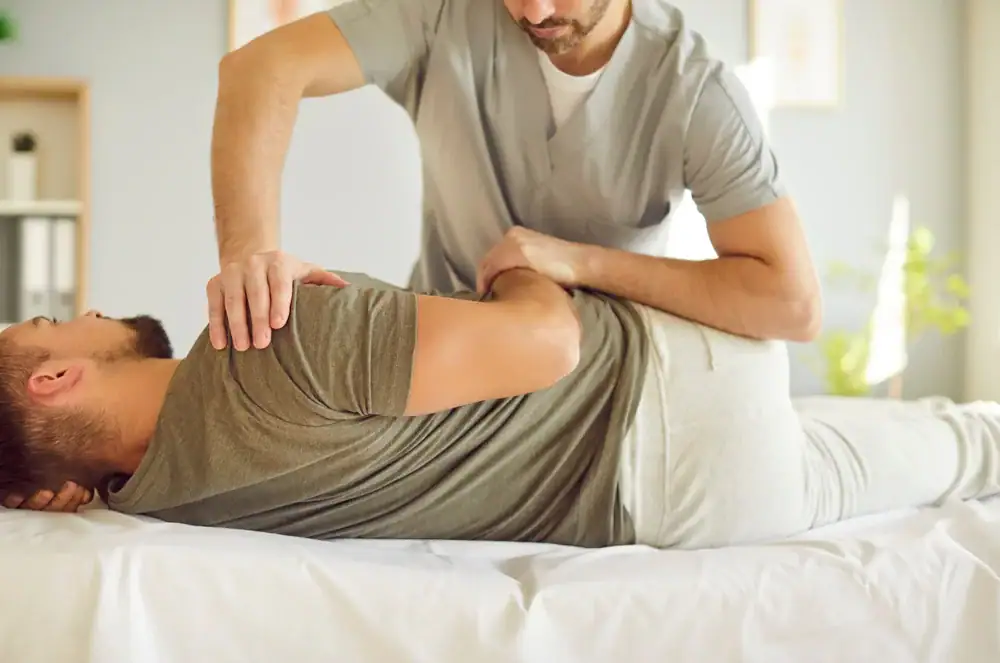
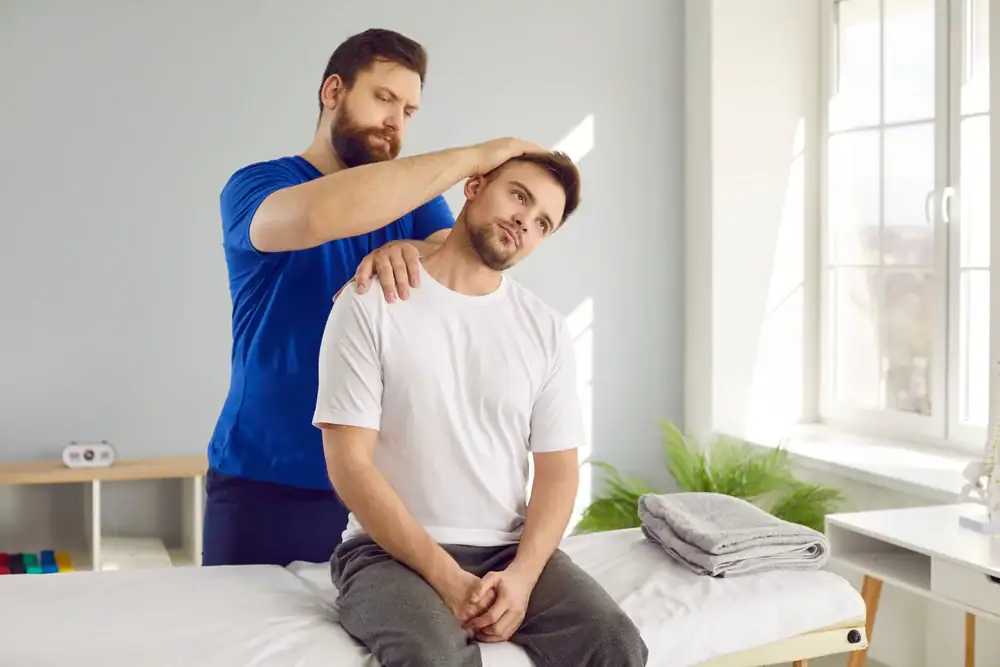
Treatment includes hands-on manual therapy when it’s needed—joint mobilization, soft tissue work, myofascial release. If your shoulder won’t move or your back is locked up, that’s often where we start.
For patients in Noyack, NY dealing with balance issues or dizziness, proprioceptive training is part of the plan. You practice the movements that feel unstable now until they don’t anymore. Same goes for gait training if walking has become difficult or painful.
Pre and post-surgery rehabilitation covers both sides of the process. If you’re scheduled for a knee or hip replacement, we start before the surgery to get you as strong as possible going in. After surgery, we’re there through the entire recovery, not just the first few weeks.
Occupational therapy is available when you need help with daily tasks—getting dressed, cooking, managing your home. And if you’ve had a stroke, our neurological rehabilitation program focuses on rebuilding the specific functions you’ve lost, whether that’s movement, coordination, or strength.
Yes. Medicare Part B covers in-home physical therapy if you meet the homebound criteria, which means leaving your home requires considerable effort due to illness, injury, or disability.
You don’t have to be completely bedridden. If getting to an office is difficult because of pain, balance problems, or mobility limitations, you likely qualify. Your doctor will need to order the therapy, and we handle the rest of the process with Medicare.
Most commercial insurance plans also cover in-home therapy, though the specifics depend on your plan. We verify your coverage before starting treatment so you know what to expect. There are no surprise bills or confusion about what’s covered after the fact.
Most patients notice some improvement within two to three weeks. That might be less pain, better balance, or easier movement. Real, lasting results usually take six to eight weeks, sometimes longer depending on what you’re recovering from.
If you’re recovering from a stroke, the timeline is different. Neurological rehabilitation can take months, and progress isn’t always linear. Some weeks you’ll see big improvements, other weeks it’s slower.
Post-surgery rehabilitation depends on the surgery. A knee replacement might take three months of consistent therapy. A rotator cuff repair could take four to six months before you’re back to normal activities. We give you realistic timelines based on what we’re treating, not generic estimates.
Exercise at home is helpful if you know exactly what to do and you’re doing it correctly. Most people don’t. They either do the wrong exercises for their condition, or they do the right exercises wrong, which can make things worse.
A physical therapist identifies the specific problem—weak glutes causing knee pain, tight hip flexors affecting your gait, poor core stability leading to falls. Then they give you exercises that target that problem, and they watch you do them to make sure you’re doing them right.
Therapeutic exercise in a session isn’t just movement. It’s corrected, progressed, and adjusted based on how your body responds. You’re also getting manual therapy, balance training, and gait work that you can’t do effectively on your own. The exercises you do at home between sessions are part of the plan, not the whole plan.
Fall prevention is one of the most effective things physical therapy does. If you’ve already fallen, we work on why it happened—weak legs, poor balance, dizziness, problems with depth perception. If you haven’t fallen but you’re afraid you will, we address that before it happens.
Balance and proprioceptive training teaches your body to react when you start to lose stability. Gait training corrects how you walk so you’re not shuffling or favoring one side. Strength training makes sure your legs can actually catch you if you stumble.
For older adults in Noyack, NY, falls are one of the biggest risks to independence. A fall can mean a broken hip, a hospital stay, and months of recovery. We’d rather spend a few weeks working on your balance now than see you after a fall that could have been prevented.
New York allows direct access to physical therapy, which means you don’t legally need a referral to start treatment. You can call us and schedule an evaluation on your own.
That said, your insurance might require a referral or prescription for coverage. Medicare usually wants a doctor’s order, especially for in-home therapy. Most commercial plans do too.
If you’re not sure, call us. We’ll check your insurance and let you know if you need a referral before your first visit. If you do need one, we can coordinate with your doctor to get it. It’s usually a quick process, and it doesn’t delay your treatment by more than a day or two.
Your first visit is an evaluation. Your physical therapist will ask about your medical history, what’s bothering you, when it started, and what makes it better or worse. Then they’ll assess your movement—how you walk, your range of motion, your strength, your balance.
If you’re coming in for joint pain, they’ll test the joint and the surrounding muscles. If it’s stroke rehabilitation, they’ll evaluate which functions are affected and to what degree. For fall prevention, they’ll put you through balance tests to see where the risk is.
After the evaluation, you’ll get a treatment plan. Sometimes treatment starts that same day with some manual therapy or a few exercises. Other times, especially if it’s complex, your therapist will design a program and start it at your next visit. Either way, you leave knowing what’s wrong, what the plan is, and how long it’s likely to take.
Other Services we provide in Noyack