


You’re not looking for temporary relief. You want to walk without worrying about losing your balance. You want to get through your day without that nagging joint pain slowing you down. You want to feel confident that your body can handle what you’re asking it to do.
That’s what physical therapy should give you. Not just exercises on a sheet of paper, but real progress you can feel in your daily routine.
Whether you’re recovering from surgery, dealing with chronic pain, or trying to prevent another fall, the goal is the same: get you moving better, feeling stronger, and living without constant limitation. In North Patchogue, where fall-related incidents are higher than almost anywhere else in New York, that kind of functional improvement isn’t just nice to have. It’s necessary.
You’ll know therapy is working when you stop planning your day around what hurts. When you can trust your legs on uneven ground. When you’re not second-guessing every movement because you’re afraid something will give out.
We’ve been treating patients across Long Island for years, including right here in North Patchogue. We’re not a new clinic trying to figure things out as we go.
Our team knows what works because we’ve seen it work. We manage multiple locations, including Physical Therapy Associates of Smithtown and Speonk, and we’ve built a reputation on getting people real results without the runaround.
What matters to you is whether we can help. And the honest answer is: if you’re willing to put in the work, we’ll meet you there with a plan that makes sense for your body and your schedule. No fluff, no overselling. Just solid physical therapy from people who know what they’re doing.

First, we talk. You tell us what’s going on, what hurts, what you can’t do anymore that you want to get back to. We listen, then we assess how your body is actually moving. Not just where it hurts, but why it hurts.
From there, we build a treatment plan specific to you. That might include manual therapy, therapeutic exercise, balance training, gait work, or neuromuscular re-education depending on what you need. If you’re recovering from a stroke or dealing with neurological issues, we adjust. If it’s joint pain or post-surgery rehab, same thing.
You’ll work directly with your physical therapist during each session. We don’t pass you off to an aide for half the appointment. The plan evolves as you improve, and we’re checking in regularly to make sure you’re progressing the way you should be.
Most people start seeing improvement within a few weeks, but the timeline depends on your condition and how consistent you are with the work. We’ll be straight with you about what to expect.

Ready to get started?
Your treatment plan might include fall prevention work, especially important here in Suffolk County where falls are a leading cause of injury for older adults. That means balance and proprioceptive training, gait training, and strength work that directly reduces your risk.
If you’re dealing with joint pain, we use a combination of manual therapy and resistance training to improve mobility and reduce discomfort. For stroke rehabilitation or other neurological conditions, the focus shifts to neuromuscular re-education and functional movement patterns that help you regain control.
Pre and post surgery rehabilitation is another major focus. Whether it’s a knee replacement, shoulder repair, or spinal procedure, we guide you through each phase of recovery with a clear plan. You’ll know what you should be able to do at each stage and what comes next.
Injury rehabilitation covers everything from sports injuries to workplace accidents. The goal is always the same: get you back to full function as safely and efficiently as possible. We also offer occupational rehabilitation if your injury is affecting your ability to work.
Every session is built around your specific needs. You’re not getting a cookie-cutter program. You’re getting a physical therapist who knows how to adjust based on what your body is telling us.
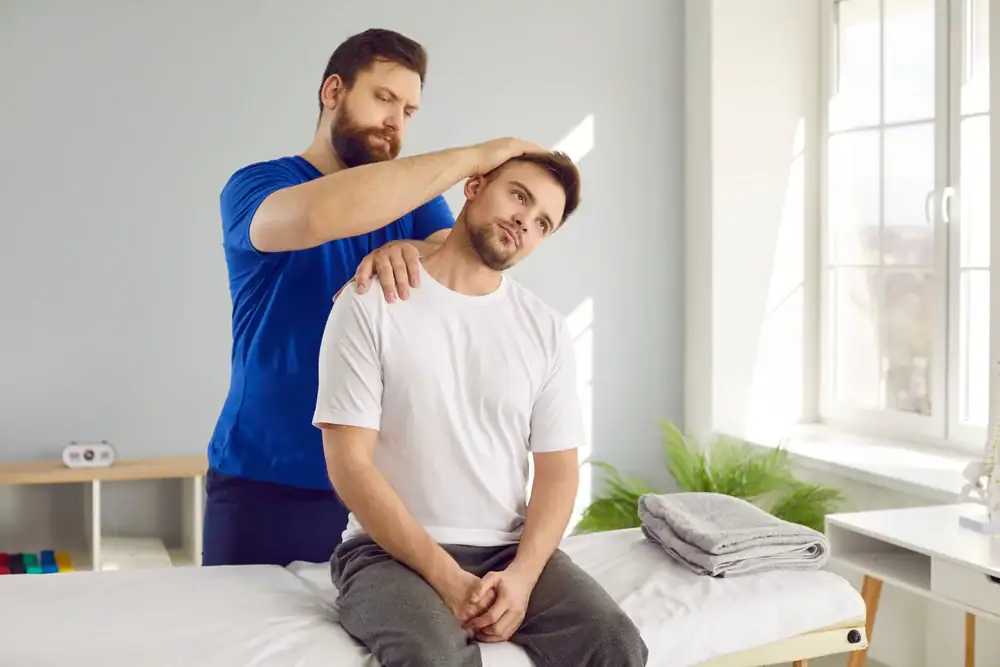
No, you don’t. New York has direct access laws, which means you can see a physical therapist without a prescription or referral from a doctor. You can call and schedule an appointment directly.
That said, if you’re using insurance, some plans still require a referral for coverage. It’s worth checking with your insurance provider before your first visit to avoid any surprise bills. We can help you navigate that if you’re not sure.
Direct access is helpful because it means you can start treatment sooner. If you’re dealing with pain or limited mobility, waiting weeks for a doctor’s appointment just to get a referral doesn’t make sense. You can start here and get evaluated right away.
It depends on what’s causing the pain and how long you’ve been dealing with it. Chronic pain doesn’t develop overnight, and it usually doesn’t disappear overnight either. Most people start noticing improvement within three to four weeks if they’re consistent with treatment and home exercises.
The first few sessions focus on reducing pain and inflammation while improving mobility. As that improves, we shift toward strengthening and functional movement. The goal isn’t just to make the pain go away temporarily—it’s to address the underlying issue so it doesn’t keep coming back.
Some conditions respond faster than others. Lower back pain, for example, often improves within a month or two with the right approach. Joint pain from arthritis may take longer and require ongoing management. We’ll give you a realistic timeline based on your specific situation during your evaluation.
Your first visit is mostly about assessment. We’ll talk through your medical history, what brought you in, and what your goals are. Then we’ll do a physical evaluation to see how you’re moving, where you’re limited, and what might be contributing to the problem.
This usually takes about an hour. We’ll test your strength, range of motion, balance, and functional movements depending on your condition. If you’re coming in for fall prevention, we’ll assess your gait and balance. If it’s post-surgery rehab, we’ll look at the surgical site and surrounding areas.
By the end of the first session, you’ll have a clear understanding of what’s going on and what the treatment plan will look like. We’ll also start some initial treatment if appropriate. You should leave with a sense of what to expect moving forward and what you need to do between sessions.
Yes, and it’s one of the most effective interventions available. Falls are the leading cause of injury for adults over 65 in Nassau and Suffolk counties, and most of those falls are preventable with the right training.
Physical therapy for fall prevention focuses on improving balance, strengthening the muscles that stabilize you, and training your body to react appropriately when you lose your footing. We also work on gait training to address any walking patterns that increase your risk.
The exercises are specific and progressive. You’re not just standing on one foot and hoping for the best. We’re challenging your balance in controlled ways that translate to real-world situations—uneven sidewalks, getting up from a chair, reaching for something on a high shelf. The goal is to build confidence and capability so you’re not constantly worried about falling.
It depends on the type of surgery, but in most cases, the sooner the better. For joint replacements, physical therapy often starts within a day or two of surgery, sometimes even in the hospital. For other procedures, your surgeon will give you specific guidance on when to begin.
Starting early helps prevent stiffness, reduces swelling, and gets you moving in ways that promote healing rather than hinder it. Waiting too long can lead to complications like scar tissue buildup, muscle atrophy, or reduced range of motion that’s harder to correct later.
Pre-surgery rehabilitation is also valuable if you have time before a scheduled procedure. Going into surgery stronger and more mobile often leads to faster recovery afterward. We work with patients in both phases—before and after—to make sure you’re set up for the best possible outcome.
Exercise is part of physical therapy, but it’s not the whole picture. A physical therapist evaluates your movement patterns, identifies compensations or weaknesses, and designs a program that addresses the root cause of your problem. You’re not just working out—you’re correcting dysfunction.
If you’re dealing with pain, injury, or limited mobility, exercising on your own can sometimes make things worse if you’re reinforcing poor movement patterns or overloading an area that’s already compromised. A physical therapist guides you through the right exercises at the right intensity and adjusts as you progress.
Manual therapy, neuromuscular re-education, and gait training are also components you can’t replicate on your own. These require hands-on assessment and intervention from someone who understands biomechanics and rehabilitation. Once you’ve made progress, maintaining it with independent exercise makes sense. But getting there usually requires professional guidance.
Other Services we provide in North Patchogue