


You’re dealing with something real. Maybe it’s a fear of falling that’s keeping you from doing what you used to do. Maybe you’re recovering from surgery and the drive to an office feels impossible right now. Or maybe your balance isn’t what it was, and you’ve noticed yourself grabbing walls or furniture more than you’d like to admit.
Physical therapy can reduce your fall risk by up to 35% when it’s done right. That means fewer close calls, less anxiety about getting around your own home, and more confidence doing everyday things. Most people who complete a course of treatment report significant pain reduction and better quality of life. Not someday—within weeks.
You don’t need a referral for most insurances. You don’t need to figure out transportation. The therapy comes to you, and it’s built around what you actually need to get better—not what fits into a 30-minute clinic slot.
Medcare Therapy Services has been serving Long Island communities like North Bellmore with in-home physical therapy that actually works. Our therapists are licensed doctors of physical therapy with specialized training in neurological rehabilitation, fall prevention, and post-surgical recovery.
We’re not a rotating door of different faces every visit. You get the same therapist who learns your home, your goals, and your limitations. That consistency matters when you’re trying to rebuild strength or relearn how to move safely after a stroke or injury.
North Bellmore has a population where over half of adults over 55 have used physical therapy. That’s not a coincidence. It’s because people here understand that waiting doesn’t make things better. We work with Medicare, most major insurances, and we handle the paperwork so you can focus on getting better.

You call or reach out online. We check your insurance and schedule an evaluation at your home—usually within a few days, sometimes same-day if it’s urgent.
During that first visit, your physical therapist does a full assessment. They watch how you move, test your balance and strength, ask about pain, and figure out what’s limiting you. Then they build a treatment plan based on your actual goals—not a template. If you want to walk to the mailbox without fear, that’s the goal. If you need to climb stairs again after knee surgery, that’s what we work toward.
Sessions typically happen two to three times a week. Your therapist brings any equipment needed and guides you through therapeutic exercises, gait training, balance work, or neuromuscular re-education depending on what you need. They also teach you what to do between visits so you’re progressing even when they’re not there.
You’re not locked into anything. As you improve, sessions spread out. Once you hit your goals and can maintain progress on your own, you’re done. Most people see measurable improvement within four to six weeks.

Ready to get started?
Every session is one-on-one. You’re not sharing your therapist with two other people in a clinic. You get a full hour of focused treatment in your own home.
We treat fall prevention with balance and proprioceptive training. That means exercises that retrain your body’s sense of where it is in space—critical for avoiding trips and catches. We do gait training if your walking pattern has changed or if you’re using a walker or cane and need to rebuild confidence. Strength training and resistance exercises help rebuild muscle that’s been lost from inactivity, surgery, or neurological issues.
If you’ve had a stroke, joint replacement, or injury, we handle post-surgery rehabilitation and injury recovery. For people dealing with Parkinson’s, MS, or other neurological conditions, we offer specialized neurological rehabilitation that’s designed around how those conditions affect movement and balance.
North Bellmore’s aging population means we see a lot of people dealing with arthritis, osteoporosis, and mobility impairments. These aren’t things you just live with. Therapeutic exercise and neuromuscular re-education can improve your function and reduce pain—often enough that people cut back or stop pain medications altogether. Studies show physical therapy can reduce the need for opioids by 87%.
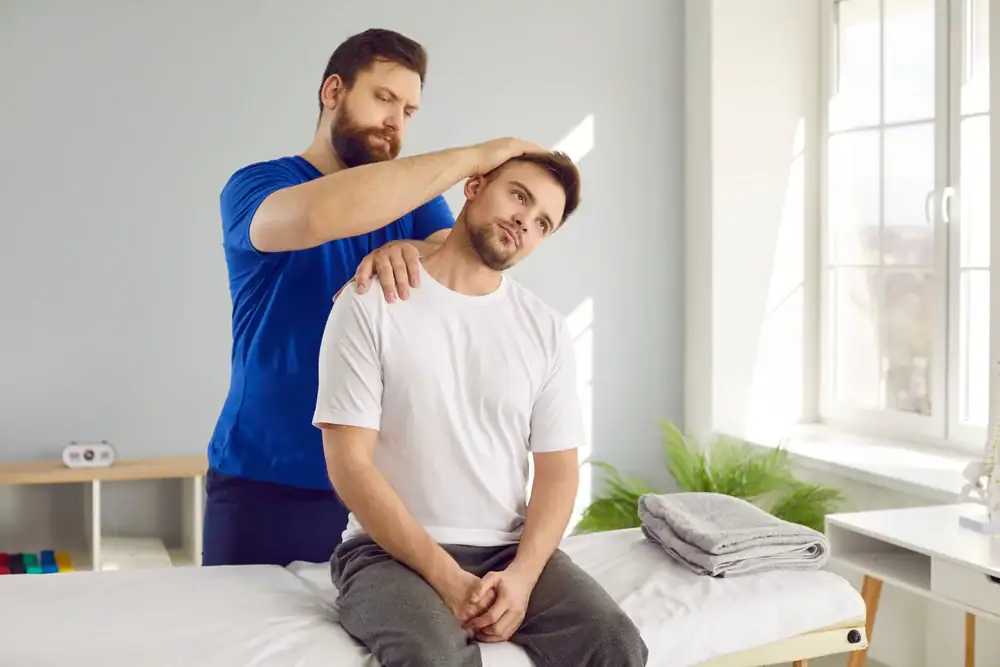
For most insurance plans, no. New York allows direct access to physical therapy, which means you can start treatment without seeing your doctor first. Medicare and some other plans do require a referral, but we’ll let you know what applies to your situation when you call.
If you’re unsure, reach out anyway. We verify your benefits and handle the insurance side so you know exactly what’s covered before the first visit. Most people are surprised how much is covered, especially for in-home therapy when mobility or transportation is an issue.
The goal is to remove barriers, not add them. If you’re dealing with pain, balance problems, or recovery challenges, waiting for a referral just delays progress.
Most people see noticeable improvement in balance and confidence within four to six weeks of consistent treatment. That’s typically eight to twelve sessions, depending on your starting point and how much you’re able to practice between visits.
Fall prevention isn’t just about strength. It’s about retraining your body’s reflexes, improving reaction time, and building stability in the movements you do every day—standing up from a chair, turning around, walking on uneven surfaces. Those adaptations take a few weeks, but they’re measurable.
Your therapist will track your progress with balance tests and functional assessments. You’ll feel the difference before the numbers show it. Less grabbing for support. Less hesitation on stairs. More confidence moving around your home without that constant low-level fear.
The treatment itself is the same quality. The difference is convenience, personalization, and context. At home, your therapist sees the actual environment where you’re struggling. They can assess the stairs you’re afraid of, the bathroom where you feel unsteady, the furniture layout that might be creating hazards.
That means the exercises and training are tailored to your real life, not a generic clinic setup. Your therapist can also make recommendations for home safety modifications, lighting, grab bar placement—things that directly reduce fall risk but wouldn’t come up in an outpatient setting.
For people recovering from surgery, dealing with chronic conditions, or managing mobility limitations, in-home therapy removes the barrier of transportation. You’re not exhausting yourself with a car ride before treatment even starts. You’re also getting one-on-one attention for the full session, which isn’t always the case in busy clinic environments.
Yes. Neurological rehabilitation is one of the most important applications of physical therapy, and it’s something our therapists are specifically trained in. After a stroke, your brain needs to relearn how to send signals to your muscles. That process is called neuroplasticity, and it responds to repetition and targeted exercise.
Gait training helps you relearn walking patterns. Neuromuscular re-education retrains your muscles to respond correctly. Balance and proprioceptive training address the spatial awareness issues that often come with neurological damage. These aren’t abstract concepts—they translate into being able to walk more normally, use your affected side better, and reduce fall risk.
For conditions like Parkinson’s or MS, physical therapy can’t stop progression, but it can significantly improve function and quality of life. You can maintain mobility longer, manage symptoms better, and stay independent in daily activities. The key is consistency and working with a therapist who understands how neurological conditions affect movement.
If you have Medicare or private insurance, most of the cost is typically covered. Medicare Part B covers physical therapy when it’s medically necessary, and in-home therapy often qualifies when mobility or transportation is a barrier. Your copay or coinsurance depends on your specific plan.
We verify your benefits before starting so you know what to expect. There are no surprise bills. For people without insurance or with high deductibles, we can discuss private pay options, but most of our patients in North Bellmore use insurance coverage.
The bigger cost is not getting treatment. Falls lead to fractures, hospitalizations, and loss of independence. Untreated pain leads to reduced activity, which leads to more pain and weaker muscles. Physical therapy is one of the most cost-effective interventions in healthcare—it can reduce overall healthcare costs by up to 72% compared to surgery or long-term medication use.
Your therapist will spend about an hour with you. They’ll start by asking about your medical history, current symptoms, and what you’re hoping to achieve. Be specific—if your goal is to garden again without knee pain, say that. If it’s to stop feeling scared walking to the bathroom at night, say that.
Then comes the physical assessment. They’ll watch you walk, test your balance, check your range of motion and strength, and see how you move through activities that are challenging for you. This isn’t pass/fail. It’s about understanding where you are so they can build a plan to get you where you want to be.
Before they leave, you’ll have a clear treatment plan with specific goals and a schedule. They’ll likely give you a few exercises to start with and explain what to expect over the next few weeks. Most people feel relieved after the first visit because they finally have a clear path forward instead of just hoping things get better on their own.
Other Services we provide in North Bellmore