


You’re not looking for someone to hand you a printout of exercises and send you on your way. You need a physical therapist who shows up, assesses what’s actually going on, and builds a plan around your body and your goals.
That’s what in-home physical therapy does. It removes the barrier of getting to an office when you’re already dealing with pain, balance issues, or post-surgery limitations. We come to you, work with you in the environment where you actually live, and adjust your program based on what’s happening in real time.
Whether you’re recovering from a fall, managing joint pain, or rebuilding strength after surgery, the focus is on measurable progress. Less pain. Better balance. More confidence moving through your day. That’s the outcome that matters—not how many reps you did, but whether you can walk to the mailbox, get up from a chair, or move without second-guessing every step.
We’ve been serving Long Island communities like Nissequogue for over 14 years. We’re Medicare-certified, licensed, and experienced in treating the kinds of conditions that affect people in this area—especially older adults dealing with mobility challenges, chronic pain, or neurological issues.
Nissequogue has a median age of 46.8, and nearly 15% of residents are on Medicare. That means a lot of people here are managing age-related conditions, recovering from surgery, or trying to stay independent at home. We get it. That’s why we offer in-home therapy services that meet you where you are.
Our team includes specialists in fall prevention, gait training, stroke rehabilitation, and post-surgical recovery. We don’t just treat symptoms. We look at the whole picture and help you rebuild strength, balance, and function in a way that actually fits your life.

First, we schedule an initial evaluation at your home. A licensed physical therapist will assess your mobility, strength, balance, and any pain or limitations you’re dealing with. This isn’t a quick look—it’s a full assessment that helps us understand what’s going on and what needs to change.
From there, we build a personalized treatment plan. That might include therapeutic exercise, gait training, balance work, resistance training, or neuromuscular re-education depending on your condition. If you’re recovering from a stroke, surgery, or injury, we’ll focus on the specific movements and functions you need to get back.
Each session happens in your home, so you’re working in the space where you actually move every day. Your therapist will guide you through exercises, monitor your form, adjust your program as you improve, and answer any questions along the way. You’re not guessing whether you’re doing it right—you’ve got a professional right there with you.
Progress gets tracked. Pain levels, range of motion, strength, balance—we measure what matters so you can see how far you’ve come. And if something’s not working, we adjust. The goal is always the same: help you move better, hurt less, and get back to doing what you need to do.

Ready to get started?
Our physical therapy services cover a wide range of conditions and recovery needs. We treat joint pain, whether it’s your knee, hip, shoulder, or back. We work with patients recovering from surgery—knee replacements, hip replacements, spinal procedures. We also specialize in stroke rehabilitation and neurological conditions that affect movement and coordination.
Fall prevention is a major focus, especially in Nissequogue where over 17% of residents are 64 or older. Falls are the leading cause of injury in that age group, and most are preventable with the right training. We use evidence-based programs like Otago fall prevention protocols to improve balance, strengthen legs, and reduce fall risk.
Gait training helps if you’re walking unevenly, using a walker or cane, or struggling with stairs. Balance and proprioceptive training rebuilds your body’s ability to sense where it is in space—critical after an injury or neurological event. Resistance and strength training rebuilds muscle that’s been lost due to inactivity, surgery, or aging.
We also provide occupational therapy for daily living skills, and pre- and post-surgery rehabilitation to prepare your body and speed recovery. Every service is Medicare-covered when medically necessary, and we handle the billing and paperwork so you don’t have to.
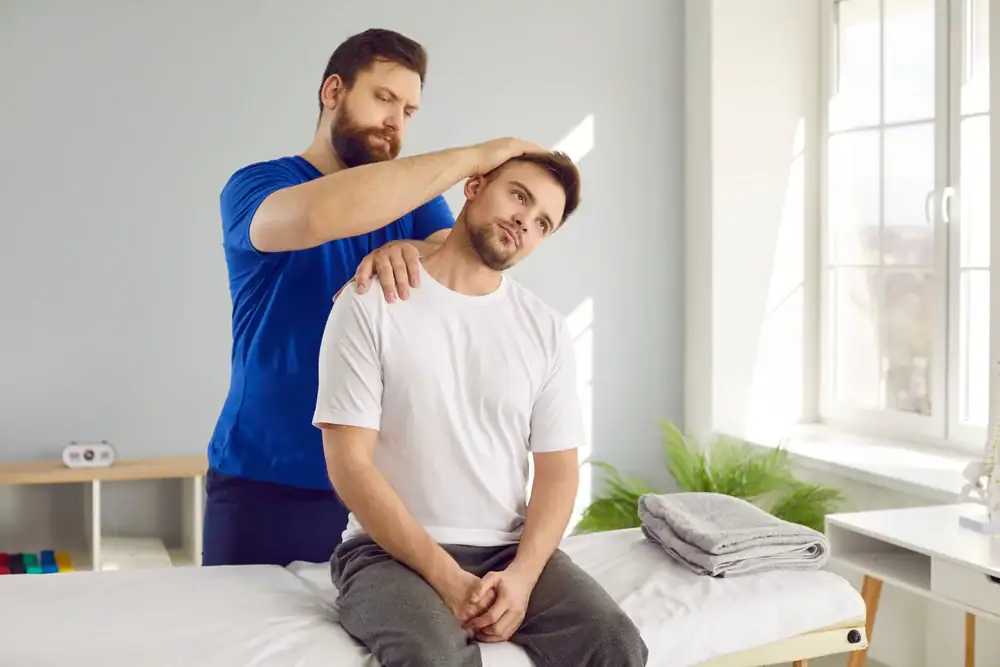
Yes. Medicare Part B covers outpatient physical therapy when it’s medically necessary and prescribed by a doctor. That includes in-home therapy if you’re homebound or have difficulty traveling to a clinic.
We’re Medicare-certified, which means we meet all federal standards for quality and safety. We bill Medicare directly, so you don’t have to file claims yourself. Your out-of-pocket cost depends on whether you’ve met your deductible and what your specific plan covers, but most patients pay 20% of the Medicare-approved amount after their deductible is met.
If you’re not sure whether your condition qualifies, we can help you figure that out. Common covered conditions include recovery from surgery, stroke, fractures, joint replacements, chronic pain, balance problems, and neurological disorders. The key is that therapy has to be restorative—meaning it’s helping you regain function, not just maintaining your current level.
Your first session is an evaluation. The physical therapist will ask about your medical history, current symptoms, medications, and what’s been limiting you. Then they’ll assess your movement—how you walk, stand, sit, reach, and balance. They’ll check your strength, flexibility, range of motion, and any areas of pain or weakness.
This usually takes about an hour. You won’t do a full workout on day one. The goal is to understand what’s going on so we can build a treatment plan that actually addresses your needs. After the evaluation, your therapist will explain what they found, what they recommend, and how many sessions you’ll likely need.
Starting with session two, you’ll begin hands-on treatment. That might include guided exercises, manual therapy, gait training, or balance work depending on your condition. Sessions typically last 45 to 60 minutes, and frequency depends on your needs—some patients come twice a week, others three times. Your therapist will let you know what makes sense for your situation.
In many cases, yes. Studies show that physical therapy can be as effective as surgery for certain conditions like meniscus tears, rotator cuff issues, and degenerative joint disease. It’s also a first-line treatment for chronic back pain, knee pain, and arthritis.
The idea is to strengthen the muscles around the joint, improve your movement patterns, and reduce inflammation through targeted exercise. A lot of joint pain comes from weakness, poor alignment, or compensatory movement—things that therapy can fix without going under the knife. Even if you do eventually need surgery, doing PT beforehand often leads to better outcomes and faster recovery.
That said, some conditions do require surgery. A physical therapist can’t replace a torn ligament or repair a severely damaged joint. But if your doctor says surgery is an option, not an emergency, it’s worth trying a few months of therapy first. Worst case, you’re stronger going into surgery. Best case, you avoid it entirely.
Most patients start noticing improvement within two to four weeks if they’re consistent with their exercises. That might mean less pain, better range of motion, or feeling steadier on your feet. Significant functional improvement—like walking without a cane or returning to normal activities—usually takes six to twelve weeks depending on the condition.
Recovery timelines vary. A sprained ankle might resolve in a few weeks. A total knee replacement might take three months of therapy to fully recover. Chronic conditions like arthritis or neuropathy require ongoing management, so therapy becomes more about maintaining function and preventing decline.
The biggest factor is consistency. Patients who do their home exercises between sessions recover faster than those who only work during appointments. Your therapist will give you a realistic timeline based on your specific situation, and we’ll track your progress so you know whether you’re on track.
Physical therapy focuses on movement—walking, balance, strength, flexibility, and pain management. If you’re recovering from an injury, surgery, or stroke and need to rebuild your ability to move safely and effectively, that’s PT.
Occupational therapy focuses on daily living skills—getting dressed, cooking, bathing, using the bathroom, managing household tasks. OT helps you adapt to limitations and find new ways to do things if your old way isn’t working anymore. It’s more about function in everyday life than pure movement.
There’s overlap. Both might work on strength or coordination, but the goal is different. A physical therapist helps you walk up stairs. An occupational therapist helps you carry laundry up those stairs. Many patients benefit from both, especially after a stroke or major surgery. We offer both services, and we’ll recommend what makes sense based on your needs.
Yes. Research shows that in-home therapy produces outcomes comparable to outpatient clinic-based therapy, and in some cases, it’s more effective because you’re training in the environment where you actually live. You’re practicing the stairs you use every day, navigating the layout of your own home, and working around the furniture and obstacles that matter.
In-home therapy also removes barriers. No transportation issues, no exposure to germs in a waiting room, no energy wasted getting to and from appointments. For older adults, people with mobility limitations, or anyone recovering from surgery, that makes a huge difference in compliance and consistency.
The equipment concern is real but overblown. Most effective therapy doesn’t require fancy machines. Resistance bands, body weight, household items—your therapist brings what’s needed and uses what you have. If you need something specific, we’ll tell you. But the majority of recovery happens through movement, repetition, and proper technique, not equipment.
Other Services we provide in Nissequogue