


You’re not looking for another appointment to stress about. You need your strength back, your balance steadier, and the confidence to move through your day without second-guessing every step.
That’s what in-home physical therapy actually delivers. Your therapist comes to you with the same equipment used in clinics—resistance bands, balance boards, therapeutic tools—and builds a plan around your space, your schedule, and your specific goals. Whether you’re recovering from surgery, managing joint pain, or working to prevent falls, the focus stays on you for the full session.
No splitting attention between multiple patients. No rushing to make it to an appointment across town. Just one-on-one care that fits into your life and gets you moving the way you want to again.
We’ve been providing in-home physical therapy and occupational therapy across Suffolk County for over a decade. Our licensed therapists work with patients throughout New Suffolk and the surrounding areas, bringing professional care directly to your home.
We accept Medicare and most commercial insurance plans. In New York State, you can start therapy without a prescription for up to 30 days or 10 visits, which means faster access when you need it most.
New Suffolk residents face real challenges getting to clinic appointments—limited public transit, distance from medical centers, mobility concerns that make travel difficult. We remove those barriers entirely so your energy goes toward recovery, not logistics.

Your therapist contacts you to schedule an initial evaluation at a time that works for your routine. During that first visit, they assess your current mobility, strength, balance, and any pain or limitations you’re experiencing. They also look at your home environment to identify fall risks or areas where small changes could make daily movement easier.
From there, they build a personalized treatment plan. That might include therapeutic exercise to rebuild strength, gait training to improve how you walk, balance and proprioceptive training to prevent falls, or neuromuscular re-education after a stroke or neurological condition. If you’re recovering from surgery or an injury, the plan focuses on restoring function and reducing pain through targeted rehabilitation.
Each session happens in your home, typically lasting 45 minutes to an hour. Your therapist tracks your progress and adjusts exercises as you improve. You’re not working around a clinic’s schedule or equipment availability—everything revolves around what gets you the best results in the shortest time.

Ready to get started?
You get the full scope of outpatient physical therapy without stepping into a clinic. That includes fall prevention programs—critical in New Suffolk where many residents are over 65 and face higher fall risk. We use evidence-based approaches like the Otago program, which has been shown to reduce falls by 35-40% in older adults.
For stroke survivors or those managing neurological conditions like Parkinson’s, stroke rehabilitation and neurological rehabilitation focus on regaining movement patterns, improving coordination, and rebuilding independence. Post-surgery rehabilitation helps you recover from joint replacements, fractures, or other procedures with exercises designed for your specific surgery and timeline.
Chronic joint pain, arthritis, and mobility limitations get addressed through resistance and strength training, therapeutic exercise, and manual techniques that reduce discomfort and improve range of motion. If balance is a concern—and for many New Suffolk residents, it is—your therapist incorporates balance and proprioceptive training into every session to make you steadier on your feet.
Occupational therapy is also available when you need help with daily tasks like dressing, cooking, or bathing. The goal is always the same: keep you safe, functional, and living life on your terms.
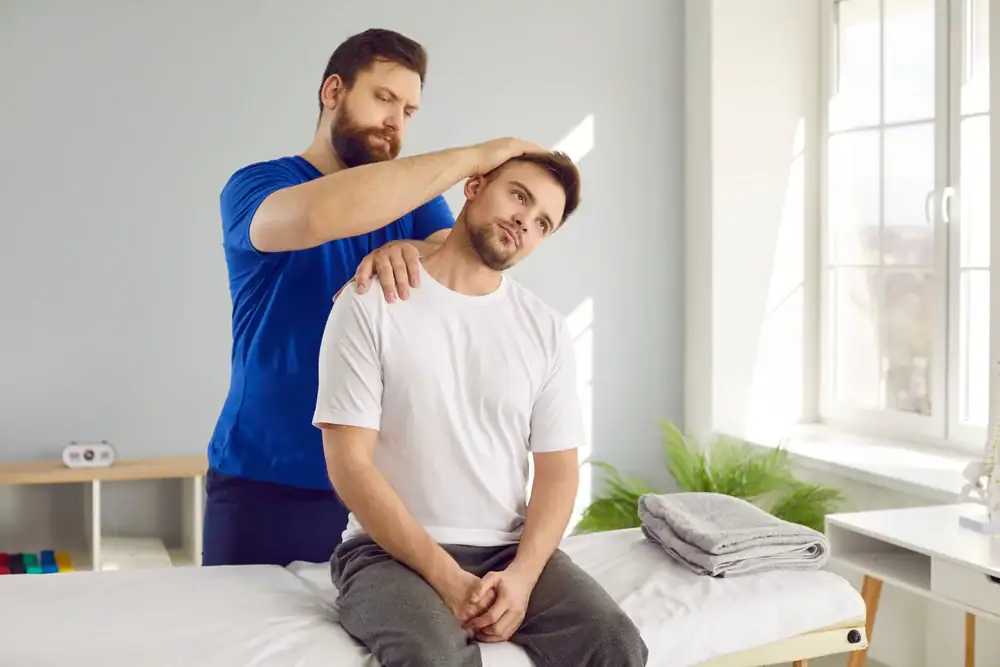
Yes, Medicare Part B covers in-home physical therapy when it’s considered medically necessary and you meet the homebound criteria. Homebound doesn’t mean you can never leave your house—it means leaving requires considerable effort due to illness, injury, or disability.
If you qualify, Medicare typically covers 80% of the approved amount after you’ve met your Part B deductible. You’re responsible for the remaining 20%. Most supplemental insurance plans (Medigap) cover that portion, so your out-of-pocket cost may be minimal or nothing.
We accept Medicare and handle the billing process directly. During your initial call, we verify your coverage and explain any costs upfront so there are no surprises. If you have a Medicare Advantage plan, coverage works similarly, though we confirm your specific plan’s requirements before starting treatment.
Not right away. New York State allows direct access to physical therapy, meaning you can start treatment without a physician’s referral for up to 30 days or 10 visits—whichever comes first.
After that initial period, you’ll need a referral or prescription to continue if further treatment is necessary. Most patients find this timeline gives them enough sessions to see significant improvement, and if ongoing care is needed, we coordinate with your doctor to keep things moving smoothly.
This direct access is especially helpful when you’re dealing with sudden pain, mobility loss after a fall, or post-surgery recovery where waiting weeks for a doctor’s appointment delays your progress. You can start therapy quickly and get the care you need without unnecessary delays.
The biggest difference is environment and attention. In a clinic, therapists often manage multiple patients at once, which means less one-on-one time and more time spent on equipment between exercises. At home, your therapist focuses entirely on you for the full session.
Your home also provides a real-world setting for therapy. Your therapist can assess the layout, identify trip hazards, recommend modifications, and practice movements in the exact spaces where you need to function—your bathroom, bedroom, kitchen, stairs. That makes the therapy more practical and the results more transferable to daily life.
For New Suffolk residents, eliminating the commute is a major factor. Getting to a clinic might mean a 20-30 minute drive each way, arranging transportation, or relying on family. That’s exhausting when you’re already dealing with pain or limited mobility. In-home therapy removes all of that so your energy goes toward getting better, not getting to an appointment.
It depends on your condition and goals. Post-surgery rehabilitation might take 6-8 weeks as you regain strength and range of motion. Chronic conditions like arthritis or balance issues may require longer-term care, with sessions tapering off as you improve and transition to a home exercise program.
Most patients start with 2-3 sessions per week, then reduce frequency as they progress. Your therapist evaluates your improvement regularly and adjusts the treatment plan based on how you’re responding. Some people reach their goals in a few weeks; others benefit from ongoing maintenance visits to prevent decline.
The key is that therapy continues as long as you’re making measurable progress and it’s medically necessary. Once you’ve hit your goals and can maintain your improvements independently, therapy ends. You’re never locked into a set number of visits—it’s based entirely on your needs and results.
Absolutely. Fall prevention is one of the most important services we provide, especially in New Suffolk where a significant portion of the population is over 65. Each year, more than 25% of older adults experience a fall, and many of those falls lead to serious injuries, hospitalizations, or long-term mobility loss.
We use evidence-based programs like Otago, which combines strength and balance exercises proven to reduce fall risk by 35-40%. Your therapist assesses your gait, balance, muscle strength, and home environment to identify specific risk factors. Then they build a plan that addresses those risks through targeted exercises, balance training, and practical modifications to your living space.
This isn’t generic advice—it’s personalized intervention based on your specific fall risk profile. If you’ve already had a fall or near-miss, therapy helps rebuild your confidence and physical ability so you can move through your home safely. Prevention is always easier than recovery, and starting therapy before a fall happens is one of the smartest decisions you can make for long-term independence.
We serve all of New Suffolk and the surrounding areas throughout Suffolk County and parts of Nassau County. Our therapists travel to patients across the North Fork, including Cutchogue, Mattituck, Southold, and Greenport, as well as communities throughout the broader Long Island region.
If you’re unsure whether we cover your specific address, just call. We’ll confirm service availability and get you scheduled quickly. Our goal is to make in-home therapy accessible to as many Long Island residents as possible, so we work hard to accommodate patients across a wide geographic area.
Since 2010, we’ve built a strong presence across multiple locations, and our therapists are familiar with the unique needs of North Fork and Suffolk County residents—whether that’s limited access to medical facilities, transportation challenges, or the specific health concerns common in the area’s aging population.
Other Services we provide in New Suffolk