


You shouldn’t have to choose between getting the care you need and staying comfortable. If getting to a clinic feels like a barrier—because of mobility issues, transportation challenges, or post-surgery limitations—in-home physical therapy removes that obstacle entirely.
We evaluate you in the environment where you actually live. That means addressing the real risks: the stairs you climb daily, the bathroom layout that’s tricky to navigate, the uneven flooring that makes balance harder. Treatment happens where it matters most.
Fall prevention isn’t theoretical when we see your home setup firsthand. Gait training becomes practical when you’re walking the hallways you use every day. Strength training targets the movements you need to stay independent—not generic exercises that don’t translate to your routine.
Recovery should fit your life, not the other way around. You get personalized care that respects your schedule, your space, and your goals. No waiting rooms. No commute. Just focused, one-on-one therapy designed to get you moving with confidence again.
We’ve been providing in-home physical and occupational therapy across Nassau County for over a decade. We’re not a new operation testing the waters—we’ve built our reputation on showing up, doing the work, and helping Long Island residents regain mobility in their own homes.
New Hyde Park families know how hard it can be to coordinate care when mobility is limited. That’s why our licensed therapists bring the clinic to you. We accept Medicare and nearly all commercial insurances, so access to quality care doesn’t hinge on your ability to drive across town.
Our team treats you like family because that’s how healthcare should work. You’re not a number on a schedule. You’re someone working hard to recover, and we’re here to make that process as straightforward and effective as possible.

First, we schedule an initial evaluation at your home. Your physical therapist assesses your current mobility, strength, balance, and any pain or limitations you’re dealing with. This isn’t a quick look—it’s a thorough review of what’s keeping you from moving the way you want to.
From there, we build a treatment plan based on what you need. If you’re recovering from surgery, that might mean post-surgery rehabilitation focused on regaining range of motion and strength. If falls are a concern, we incorporate balance training and proprioceptive exercises that address your specific risk factors.
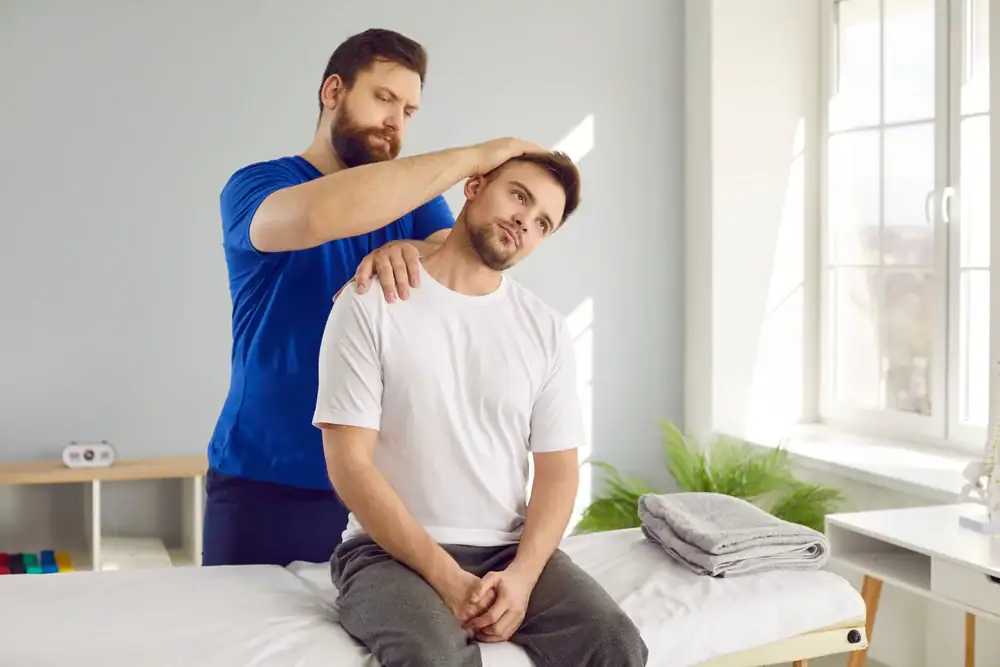
Each session is one-on-one. Your therapist guides you through therapeutic exercises, manual therapy, and functional training tailored to your goals. Between visits, you’ll have a home exercise program to keep progress moving forward.
We track your improvements and adjust the plan as you get stronger. The goal isn’t just to complete a set number of sessions—it’s to get you back to doing what matters to you, safely and independently.

Ready to get started?
You get comprehensive physical therapy that covers the full spectrum of rehabilitation needs. That includes injury rehabilitation for sprains, strains, and musculoskeletal issues. It includes neurological rehabilitation for stroke recovery or conditions affecting movement and coordination. It includes joint pain treatment using manual techniques and targeted exercises to reduce discomfort and restore function.
For New Hyde Park residents managing chronic conditions or age-related mobility decline, fall prevention is a major focus. Nassau County sees thousands of fall-related injuries each year, many of which are preventable with proper gait training and strength work. We evaluate your walking pattern, balance, and home environment to reduce that risk.
We also provide occupational therapy services when daily tasks—dressing, cooking, bathing—become difficult due to injury or illness. The combination of physical and occupational therapy means you get complete support for independent living, all under one roof (yours).
Resistance and strength training, neuromuscular re-education, and pre-surgery conditioning are also part of what we offer. If you’re preparing for a procedure or working through recovery afterward, we meet you where you are and move forward from there.
Yes. Medicare Part B covers outpatient physical therapy services provided in your home if you meet specific criteria. You need to be homebound, meaning leaving your home requires considerable effort due to illness, injury, or a medical condition. You also need a doctor’s referral stating that physical therapy is medically necessary.
We’re Medicare-certified, and our therapists are licensed to provide covered services throughout Nassau County. We handle the documentation and coordination with Medicare so you’re not navigating the paperwork alone.
Most patients with Medicare pay 20% of the approved amount after meeting their deductible. If you have a supplemental plan, that often covers the remaining balance. We also accept nearly all commercial insurances, so if you’re not on Medicare, we can still work with your coverage.
Your first visit is an evaluation. The therapist reviews your medical history, current symptoms, and what’s limiting your movement or causing pain. They’ll assess your strength, flexibility, balance, and how you move through your home. This isn’t a passive appointment—you’ll be asked to demonstrate certain movements so the therapist can see exactly what’s happening.
After the evaluation, each session typically lasts 45 to 60 minutes. The therapist guides you through exercises targeting your specific needs—maybe resistance training to rebuild strength after surgery, or balance drills if you’ve had a fall. Manual therapy techniques like joint mobilization or soft tissue work might be used to reduce pain and improve mobility.
You’ll also get a home exercise program. These are movements you can do between sessions to keep progress going. The therapist adjusts the plan as you improve, adding challenge when you’re ready and modifying exercises if something isn’t working. Every session is one-on-one, so you’re getting full attention the entire time.
It depends entirely on what you’re recovering from and how your body responds to treatment. Post-surgery rehabilitation might take 6 to 12 weeks if you’re progressing well. Chronic conditions like arthritis or neurological issues may require longer-term care to manage symptoms and maintain function.
Your therapist will give you a realistic timeline after the initial evaluation. That estimate can shift based on how you’re healing, how consistently you’re doing your home exercises, and whether any complications arise. Some people see significant improvement in a few weeks. Others need a few months to regain full mobility.
Medicare and most insurance plans approve a certain number of visits based on medical necessity. If you need more sessions, your therapist will work with your doctor to request continued coverage. The goal is always to get you to a point where you can manage independently, not to keep you in therapy indefinitely.
Absolutely. Falls don’t just happen randomly—they’re usually the result of specific risk factors like weak legs, poor balance, or environmental hazards. We identify those factors and address them directly.
Gait training improves how you walk, making your steps more stable and controlled. Balance exercises challenge your proprioception—your body’s ability to sense where it is in space—so you’re less likely to stumble when you hit an uneven surface. Strength training targets the muscles that keep you upright and help you catch yourself if you start to fall.
We also evaluate your home for hazards. Loose rugs, poor lighting, clutter in walkways—these are fixable problems that significantly reduce fall risk. In Nassau County, falls are one of the leading causes of injury for older adults. The right therapy program can cut that risk substantially, and doing it in your home means the interventions are practical and immediately applicable.
Physical therapy focuses on movement—strength, balance, mobility, pain reduction. If you’re struggling to walk, climb stairs, or move without discomfort, that’s where a physical therapist steps in. The goal is to restore your ability to move functionally and safely.
Occupational therapy focuses on daily activities—dressing, bathing, cooking, managing household tasks. If an injury or condition is making it hard to do the things you need to do every day, an occupational therapist helps you adapt or regain those skills. They might recommend assistive devices, teach energy conservation techniques, or work on fine motor skills.
We provide both services, and often they overlap. If you’ve had a stroke, you might need physical therapy to improve your walking and balance, plus occupational therapy to relearn how to use your affected arm for daily tasks. Having both available in your home means you get complete rehabilitation without coordinating multiple providers or locations.
You qualify if leaving your home is difficult due to a medical condition, injury, or surgery, and if a doctor determines that physical therapy is medically necessary. Homebound doesn’t mean you can never leave—it means that leaving requires considerable effort, assistance, or creates a risk to your health.
Common situations that qualify include recent joint replacement surgery, stroke recovery, severe arthritis limiting mobility, chronic obstructive pulmonary disease (COPD) making exertion difficult, or balance issues that make traveling unsafe. If you’re using a walker, wheelchair, or need someone to help you get around, you likely meet the criteria.
Your doctor provides the referral, and we handle the rest. We verify your insurance coverage, schedule the evaluation, and coordinate with your physician throughout your care. If you’re unsure whether you qualify, call us. We’ll walk through your situation and let you know what’s possible before you commit to anything.
Other Services we provide in New Hyde Park