


You shouldn’t have to choose between getting the care you need and dealing with the pain of getting there. If getting in and out of a car hurts, if walking into a building feels risky, or if your mobility just isn’t what it used to be, in-home therapy removes those barriers completely.
Your physical therapist comes to you. That means you get one-on-one attention in your own space, where you’re most comfortable. No waiting rooms, no rushing through appointments because the next patient is already there.
The goal is simple: help you move with less pain, reduce your fall risk, and get back to doing what matters. Whether that’s walking to the mailbox without worry, cooking dinner standing up, or playing with your grandkids on the floor. Real improvements that show up in your daily life, not just during a therapy session.
We’ve been providing in-home physical therapy and occupational therapy across Nassau County since 2010. We’re part of a network that includes Physical Therapy Associates of Smithtown and Speonk Physical Therapy, so you’re working with licensed professionals who’ve been doing this for years.
New Cassel has a strong, diverse community where people take care of each other. We see that every day in the families we work with. Many of our patients are older adults who want to stay in their homes, stay active, and avoid becoming a burden on their loved ones. We get it, and we’re here to help make that happen.
Our therapists are members of the American Physical Therapy Association. We accept Medicare and most commercial insurance. And we show up ready to work, with the tools and experience to help you make real progress.

First, we talk. Your therapist will ask about your pain, your mobility, what’s hard right now, and what you want to be able to do again. They’ll also look at how you move, check your balance, test your strength, and identify any fall risks in your home.
From there, we build a plan. It’s not generic. It’s based on your body, your goals, and your living situation. Maybe you need gait training to walk more confidently. Maybe it’s therapeutic exercise to rebuild strength after surgery. Or balance training to prevent another fall.
Each session is hands-on. Your therapist will guide you through exercises, watch your form, adjust as needed, and track your progress. If something isn’t working, we change it. If you’re improving faster than expected, we push a little harder. You’re not just going through the motions. You’re working toward something specific.
Most patients see us one to three times a week, depending on the plan. Sessions typically last 45 minutes to an hour. And because we’re in your home, we can also help you navigate your actual environment—like getting in and out of the shower safely or managing stairs.

Ready to get started?
You’ll get a full evaluation on day one. That includes a movement assessment, strength testing, balance and proprioceptive training evaluation, and a review of any medications or conditions that might affect your recovery. We also assess your home for fall risks, which is especially important in New Cassel where many homes have stairs, older layouts, or tight spaces.
Treatment can include fall prevention programs, joint pain treatment, resistance and strength training, neuromuscular re-education, and pre or post surgery rehabilitation. If you’ve had a stroke or live with Parkinson’s, we offer stroke rehabilitation and neurological rehabilitation designed to help you regain function and confidence.
For patients recovering from an injury, our injury rehabilitation programs focus on getting you back to your normal routine as quickly and safely as possible. And if your doctor recommends occupational therapy, we provide that too—helping you relearn daily tasks like dressing, cooking, or bathing.
Every session is personalized. You’re not one of eight patients your therapist sees that day. You’re the only one. That means more attention, better results, and a plan that actually fits your life. All services are Medicare-covered when you qualify, and we work with most major insurance providers across Long Island.
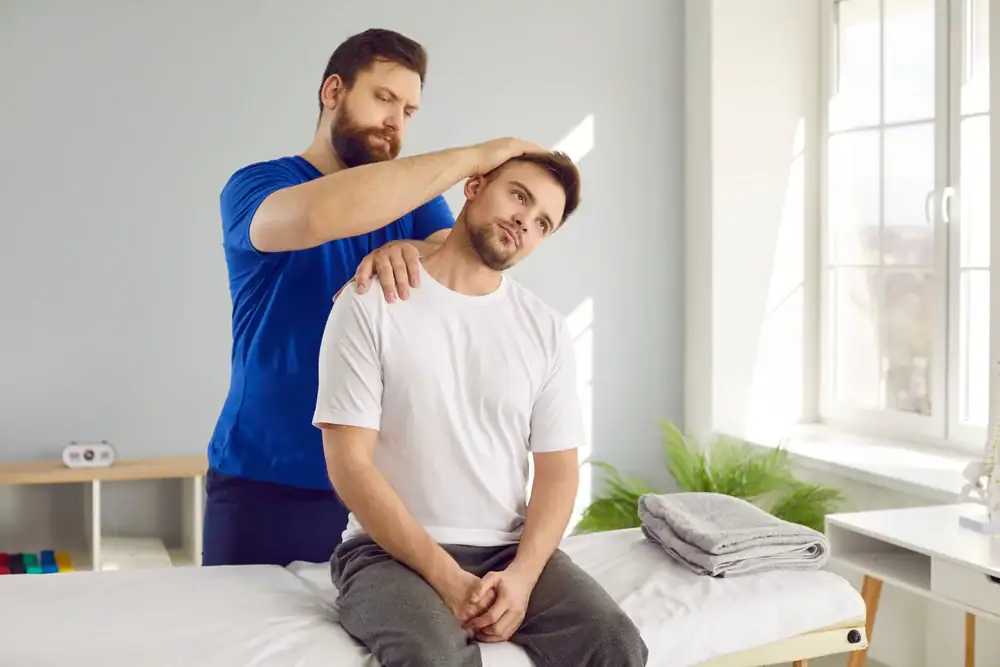
Not right away. In New York State, you can see a physical therapist without a prescription for up to 30 days or 10 visits, whichever comes first. That’s called direct access, and it means you can get started faster if you’re dealing with pain, mobility issues, or balance problems.
After that initial period, you’ll need a prescription from your doctor to continue. Most of the time, your therapist will coordinate that for you. They’ll send over their evaluation and treatment plan, and your doctor can approve continued care.
If you’re using Medicare or insurance, check your plan. Some require a referral upfront even though New York law doesn’t. We can help you figure that out during your first call so there are no surprises.
The treatment itself is the same. You’re getting the same level of care, the same licensed professionals, and the same evidence-based techniques. The difference is where it happens and how much attention you get.
In a clinic, therapists often see eight or more patients in a day. That can mean shared attention, rushed sessions, or exercises you do on your own while they work with someone else. At home, it’s just you and your therapist for the full session.
There’s also the practical side. If getting to a clinic means asking someone to drive you, struggling to get in and out of a car, or sitting in a waiting room when you’re already in pain, that adds stress. In-home therapy removes all of that. Your therapist brings the equipment, and you stay comfortable in your own space.
That’s one of the most common reasons people call us. More than one in four older adults falls each year, and once it happens, the fear of falling again can be just as limiting as the injury itself. You start moving less, avoiding stairs, holding onto walls. That fear makes sense, but it also makes you weaker over time.
Fall prevention programs work. Physical therapy has been shown to improve balance, increase lower extremity strength, and reduce fall risk significantly. We start by figuring out why you’re unsteady—whether it’s muscle weakness, poor balance, vision issues, or something in your environment like loose rugs or bad lighting.
Then we work on it. That might mean balance and proprioceptive training, gait training to improve how you walk, and strength exercises to stabilize your legs and core. We also walk through your home with you and point out hazards you might not notice anymore. The goal is to help you feel steady and confident again, not just careful.
Yes, if you meet the requirements. Medicare Part B covers outpatient physical therapy, including in-home services, as long as it’s medically necessary and provided by a licensed therapist. You’ll need a doctor’s prescription after your initial visits, and the therapy has to be part of a treatment plan aimed at improving or maintaining your condition.
There’s no requirement that you be homebound, which is different from Medicare home health services. You just need to have a condition that physical therapy can help—like recovering from surgery, managing chronic pain, improving mobility after a stroke, or reducing fall risk.
You may have a copay depending on your plan, and there are annual caps on therapy services, though exceptions exist if you need more. We handle the billing and work directly with Medicare, so you don’t have to figure it out on your own. If you’re not sure what your plan covers, we can check before your first visit.
It depends on what you’re recovering from and what your goals are. Some people see improvement in a few weeks. Others need a few months, especially if they’re recovering from surgery or managing a chronic condition like arthritis or Parkinson’s.
Your therapist will give you a clearer timeline after your evaluation. They’ll also reassess your progress regularly and adjust the plan as you improve. If something isn’t working, we don’t just keep doing it. We change the approach.
Most patients come in expecting a long, slow process and are surprised by how quickly they start feeling better. That’s usually because in-home therapy allows for more focused, consistent care. You’re not skipping sessions because it’s too hard to get there. You’re not worn out from the trip before therapy even starts. You’re just working on getting better, and that makes a difference.
Your therapist will start by asking questions. They’ll want to know what’s bothering you, how long it’s been going on, what makes it better or worse, and what you’re hoping to get back to doing. They’ll also ask about your medical history, any surgeries, medications, and other conditions that might affect your treatment.
Then comes the physical assessment. They’ll watch you move, test your strength and flexibility, check your balance, and see how you walk. If you’ve had a stroke or injury, they’ll evaluate the affected areas closely. This isn’t uncomfortable, but it is thorough. The goal is to understand exactly what’s going on so the treatment plan actually works.
Before they leave, you’ll know what the plan is. How often you’ll meet, what you’ll be working on, and what kind of progress to expect. They’ll also give you exercises to do between sessions if appropriate. Most first visits take about an hour, and by the end, you should feel like someone finally understands what you’re dealing with.
Other Services we provide in New Cassel