


You stop planning your day around what hurts. That’s what happens when pain isn’t dictating every move you make.
Balance issues keep a lot of people home when they’d rather be out. One in three adults over 65 falls each year, and the fear of falling again often does more damage than the fall itself. Gait training and balance work aren’t just exercises – they’re how you rebuild confidence in your own body.
Strength comes back faster than most people expect when the program fits your actual condition. Resistance training and therapeutic exercise target what’s weak or compensating, not just what’s sore. You start moving better because your body is finally getting the right kind of work.
If you’ve had a stroke or you’re dealing with a neurological condition, rehab looks different. Neuromuscular re-education retrains your nervous system to control movement again. It’s slow, specific work – but it’s also how people regain function they thought was gone for good.
Post-surgical rehab determines whether you heal right or just heal. There’s a difference. The right physical therapist in Melville, NY knows how to push progress without setting you back.
We’ve been treating patients across Long Island for years, with affiliated locations in Smithtown and Speonk. We’re not new to Melville, and we’re not trying to be everything to everyone.
What we do is physical therapy – in-home and in-clinic – with licensed therapists who actually specialize in what you’re dealing with. Whether that’s fall prevention, joint pain treatment, or occupational rehabilitation, you’re working with someone who’s seen your condition before and knows what works.
We accept Medicare and most major insurance plans. Our team verifies coverage upfront so you know what you’re paying before treatment starts. We also handle workers’ compensation cases and coordinate with your doctor to make sure everyone’s on the same page about your care plan.

You call or reach out online. We verify your insurance and schedule an evaluation – either at our clinic or at your home if that’s easier.
During your first visit, a licensed physical therapist assesses your mobility, strength, balance, and pain levels. This isn’t a quick look – it’s a full evaluation of how your body moves and what’s limiting you. If you’ve had a fall, we test your gait and balance. If it’s joint pain, we check range of motion and strength. If you’re post-surgery, we review your surgical notes and restrictions.
From there, we build your treatment plan. It’s specific to your condition, your goals, and your living situation. Some people need twice-a-week sessions for a few months. Others need short-term intensive work before surgery or right after.
Sessions typically run 45 minutes to an hour. You’ll do hands-on work with your therapist – manual therapy, therapeutic exercise, resistance and strength training, or neuromuscular re-education depending on what you need. If you’re doing in-home physical therapy, we bring portable equipment like resistance bands, balance boards, weights, and even electric stimulators or ultrasound units when appropriate.
Progress gets tracked at every visit. You’ll know if you’re improving, plateauing, or if we need to adjust the plan. Most people see measurable gains within the first few weeks – better range of motion, less pain, improved balance, or more confidence moving around.

Ready to get started?
Fall prevention and balance training are big focuses here in Melville. The aging population on Long Island means more people are dealing with balance issues, muscle weakness, and fear of falling. We do proprioceptive training to improve your body’s sense of where it is in space, plus gait training to correct walking patterns that increase fall risk.
Stroke rehabilitation and neurological rehab require specialized skill. If you’ve had a stroke, brain injury, or you’re managing Parkinson’s or MS, your therapy plan includes neuromuscular re-education and task-specific training. The goal is to retrain your nervous system and rebuild functional movement – not just get you stronger, but help you relearn how to move.
Joint pain treatment covers everything from arthritis to rotator cuff issues to knee pain. We use manual therapy, therapeutic exercise, and modalities like ultrasound or electrical stimulation when they’ll actually help. The focus is reducing inflammation, restoring range of motion, and strengthening the muscles that support the joint.
Pre and post-surgery rehabilitation is time-sensitive. Before surgery, we work on strengthening and mobility to set you up for better recovery. After surgery, we follow your surgeon’s protocol while progressing you as fast as safely possible. This applies to joint replacements, rotator cuff repairs, spinal surgeries, and other orthopedic procedures.
Injury rehabilitation and sports injuries get treated with the same attention whether you’re 25 or 75. Sprains, strains, tendonitis, ligament tears – we assess the injury, reduce pain and swelling, then rebuild strength and function so you can get back to your activities without re-injury.
Occupational therapy is also available through our affiliated locations when your needs go beyond physical therapy. If you’re struggling with daily tasks like dressing, cooking, or managing your home, occupational therapy focuses on those functional skills.
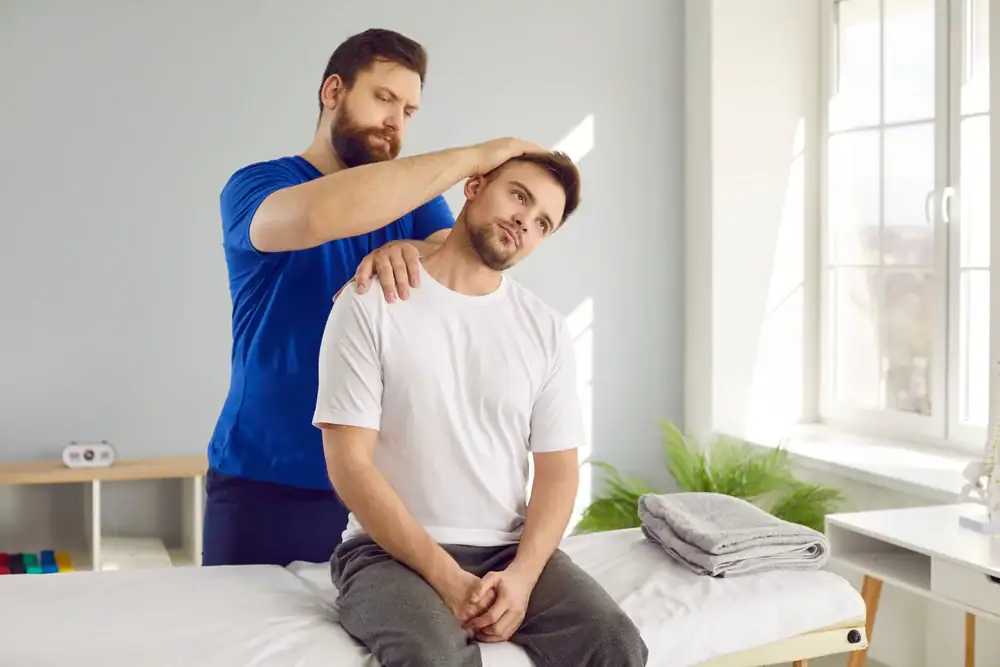
Most people notice some improvement within two to three weeks, but real, lasting change usually takes six to twelve weeks of consistent treatment. That’s not a sales line – it’s how long it takes for your body to build new strength, retrain movement patterns, and reduce chronic inflammation.
If you’re dealing with balance issues or fall risk, you might feel more stable after just a few sessions of gait training and proprioceptive work. But building the strength and coordination to maintain that balance long-term takes longer.
Chronic pain is trickier because it often involves multiple factors – weak muscles, poor posture, joint dysfunction, or compensatory movement patterns you’ve developed over time. Physical therapy addresses all of that, but it’s a process. You’re not just masking pain – you’re fixing what’s causing it.
The timeline also depends on how often you come in and whether you do your home exercises. Twice a week with home work gets better results than once a week with nothing in between.
Yes, Medicare Part B covers in-home physical therapy when it’s medically necessary and ordered by your doctor. You’ll pay 20% of the Medicare-approved amount after you meet your deductible, and Medicare covers the other 80%.
“Medically necessary” means you need skilled physical therapy services that only a licensed therapist can provide – not just exercise you could do on your own. It also typically means you have difficulty leaving your home due to your condition, which is why in-home care is appropriate.
We verify your Medicare coverage before starting treatment so you know exactly what you’ll owe. We also handle all the billing and documentation directly with Medicare so you’re not stuck dealing with paperwork.
If you have a Medicare Advantage plan instead of Original Medicare, coverage works a little differently depending on your plan. We check that too during your initial call.
A physical therapist evaluates why you’re having pain or mobility issues in the first place, then designs a treatment plan that targets those specific problems. You’re not just getting stronger – you’re correcting imbalances, retraining faulty movement patterns, and addressing the root cause of your symptoms.
For example, if your knee hurts, the problem might actually be weak hips or tight ankles that are forcing your knee to compensate. A generic exercise program won’t catch that. A physical therapist will assess your entire movement chain, identify what’s not working, and give you exercises that actually fix the issue.
Manual therapy is another big difference. Hands-on techniques like joint mobilization, soft tissue work, and stretching can reduce pain and improve mobility faster than exercise alone. Combined with the right therapeutic exercises, you get better results in less time.
There’s also the accountability and progression factor. Your therapist adjusts your plan as you improve, pushes you when you can handle more, and pulls back if something’s not responding well. That kind of customization is hard to do on your own, especially if you’re not sure what’s normal soreness versus a sign you’re overdoing it.
Maybe. It depends on why it didn’t work the first time. If the treatment plan wasn’t specific enough to your condition, if you didn’t go consistently, or if the therapist didn’t adjust the approach when you weren’t improving – those are all fixable problems.
Sometimes people try physical therapy too soon after an injury when inflammation is still high, or they stop too early before the real strength-building phase kicks in. Timing matters.
Other times, the diagnosis was incomplete. If you’re treating knee pain but the real issue is a hip problem or a nerve issue in your back, physical therapy on your knee won’t help much. A thorough evaluation catches those things.
We also see people who did physical therapy years ago for a different issue and assume it won’t work for their current problem. But stroke rehabilitation is completely different from treating a sprained ankle. Neurological rehab requires specialized training that not every clinic offers.
If you’ve tried PT before without results, tell us what you did and what happened. That information helps us figure out whether a different approach might work, or whether you need imaging or another type of specialist involved.
We do both. In-home physical therapy works well if you have trouble getting to a clinic due to mobility issues, transportation problems, or if you’re recovering from surgery and leaving the house isn’t realistic yet.
Treating you at home also lets us see your actual environment – where you’re walking, what stairs or obstacles you’re dealing with, how your furniture is arranged. That’s especially useful for fall prevention and gait training because we can address the real-world challenges you face every day.
We bring portable equipment with us – resistance bands, weights, balance boards, and even modalities like electrical stimulation or ultrasound units when appropriate. You don’t need a home gym. We work with what you have and bring what you need.
Clinic-based therapy makes sense if you need access to larger equipment, if your condition requires more intensive hands-on work, or if you just prefer getting out of the house for your sessions. Some people do better with the structure of coming to a clinic.
You can also switch between the two. Some patients start with in-home therapy right after surgery or a hospital stay, then transition to clinic visits as they get stronger and more mobile.
If pain or mobility issues last longer than a week or two, or if they’re getting worse instead of better, that’s a sign you need an evaluation. Acute injuries like a twisted ankle might heal on their own with rest, but chronic pain, balance problems, or weakness that’s affecting your daily life won’t fix themselves.
You should also get evaluated if you’ve fallen recently or if you’re afraid of falling. Even if you didn’t get hurt, a fall means something’s off with your balance, strength, or gait. Those things get worse over time if you don’t address them – and the next fall could be more serious.
Post-surgical rehab isn’t optional. If you’ve had joint replacement, spinal surgery, or any orthopedic procedure, physical therapy is part of your recovery. Skipping it increases your risk of complications, stiffness, and poor outcomes.
If you’re dealing with a neurological condition like stroke, Parkinson’s, or MS, physical therapy helps you maintain function and independence longer. Waiting until you’ve lost significant mobility makes it much harder to regain.
When in doubt, get evaluated. A one-time assessment tells you whether you need ongoing treatment or if you’re fine to manage things on your own. You’re not locked into anything just by getting checked out.
Other Services we provide in Melville