


You stop planning your day around what hurts. That’s the difference between managing pain and actually fixing what’s causing it.
Most people in Lynbrook dealing with joint pain, balance issues, or recovery from surgery don’t need another prescription. You need someone who understands why your knee gives out on stairs, why your back locks up after sitting, or why you’re afraid of falling when you walk to the mailbox.
Our physical therapists work with you to rebuild strength, restore balance, and retrain movement patterns that have been compensating for injury or age. You’ll notice the difference in how you move, not just how you feel. That means getting back to activities you’ve been avoiding—whether that’s playing with grandkids, returning to tennis, or just walking through town without worry.
The goal isn’t temporary relief. It’s getting you back to the life you had before pain started making decisions for you.
We’ve built our reputation across Long Island for one reason: we actually listen before we treat. Our team includes experienced physical therapists who specialize in everything from stroke rehabilitation to post-surgical recovery to fall prevention.
We know Lynbrook’s demographics. With a median age over 42 and nearly 20% of residents over 65, we see a lot of patients dealing with arthritis, balance concerns, and mobility challenges that come with aging. We also treat younger adults recovering from sports injuries or surgery.
Every treatment plan here is built around your specific condition, your goals, and your schedule. We offer in-home therapy if getting to our office is difficult. We accept most insurance plans and explain costs upfront. And we don’t waste your time with cookie-cutter exercises that don’t address what’s actually wrong.

Your first visit starts with a full evaluation. We assess your pain, your range of motion, your strength, and your balance. We also talk about what you’re trying to get back to doing. This isn’t a quick screening—it’s a detailed look at what’s limiting you and why.
From there, we design a personalized treatment plan. That might include therapeutic exercise to rebuild strength, gait training if your walking pattern needs correction, or neuromuscular re-education to retrain how your body moves after injury or surgery. If you’re at risk for falls, we incorporate balance and proprioceptive training based on proven interventions that reduce fall risk.
Each session builds on the last. You’re not doing the same stretches every week. We progress your treatment as you get stronger and more stable. You’ll also get exercises to do at home so you’re improving between visits, not just during them.
Most patients start seeing real improvement within a few weeks. How long you need therapy depends on your condition, but we’re transparent about timelines and what you should expect at each stage.

Ready to get started?
We treat the full range of conditions that bring people through our doors. That includes orthopedic issues like joint pain, arthritis, and lower back pain—which account for the majority of physical therapy cases. We also specialize in neurological rehabilitation for stroke recovery, Parkinson’s disease, and other conditions affecting movement and coordination.
If you’re recovering from surgery, we provide pre and post surgery rehabilitation to ensure you heal correctly and regain full function. For patients dealing with injury rehabilitation, we focus on restoring strength and preventing re-injury. And for older adults in Lynbrook concerned about falling, our fall prevention program addresses the specific risk factors that put you in danger.
Our therapists use resistance and strength training, manual therapy, and functional movement exercises tailored to your needs. If mobility is an issue, we offer in-home physical therapy so you can receive care where you’re most comfortable. With Lynbrook’s aging population and higher income levels, we see many patients who value quality care and want to maintain their independence as they age.
You’re not getting a generic program. You’re getting treatment designed around what your body needs to heal and what your life requires you to do.
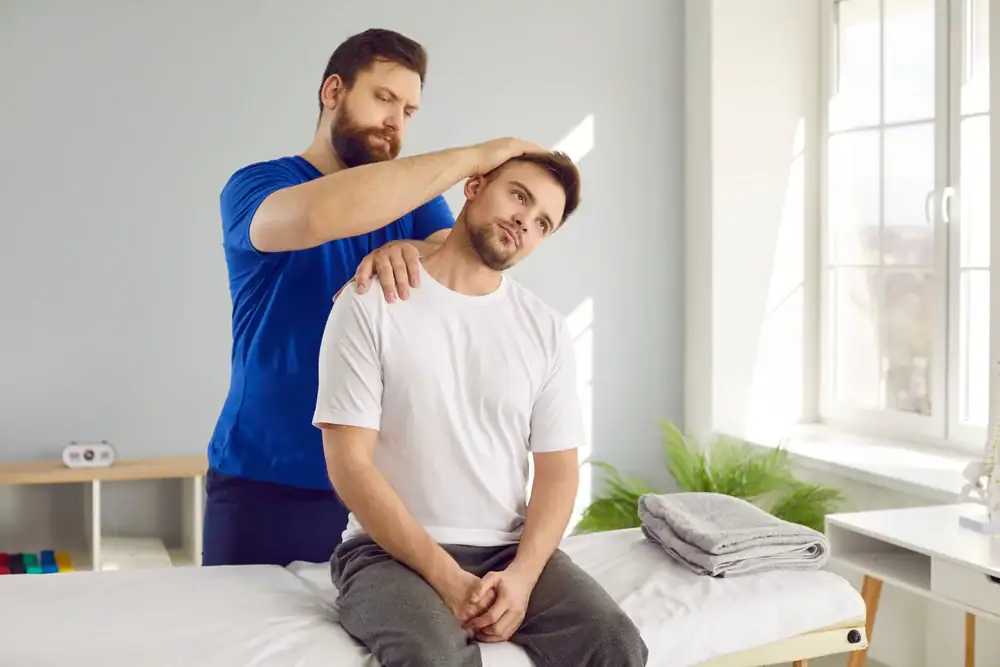
Most people start noticing improvement within two to three weeks, but that depends on what’s causing the pain and how long you’ve had it. Chronic pain that’s been building for months or years doesn’t disappear overnight.
The first few sessions focus on reducing inflammation and restoring basic movement. You might feel some relief right away, but real progress comes as we rebuild strength and correct the movement patterns that caused the problem in the first place. For conditions like lower back pain or knee pain, expect to commit to at least six to eight weeks of consistent therapy.
The difference between our approach and just masking pain with medication is that we’re fixing the root cause. That takes time, but it also means the results last. You’re not coming back in six months with the same problem.
Most insurance plans cover physical therapy, but your specific coverage depends on your plan’s terms. We accept most major insurance providers and will verify your benefits before you start treatment.
Typically, insurance requires a referral from your doctor, though some plans allow direct access to physical therapy without one. Copays and deductibles vary, so we’ll walk you through what you’ll owe per session during your first visit. If you haven’t met your deductible yet, you’ll pay more upfront, but once you hit that threshold, your copay usually drops.
We also offer transparent pricing for patients paying out of pocket. If cost is a concern, talk to us. We’d rather work out a payment plan than have you skip treatment and end up worse off.
Your first appointment is an evaluation, not a full treatment session. Plan for about 45 minutes to an hour. We’ll start by talking through your medical history, what’s bothering you, and what activities are limited by your pain or mobility issues.
Then we’ll do a physical assessment. That includes testing your range of motion, strength, balance, and how you move. If you’re dealing with joint pain, we’ll look at how that joint functions and what’s causing the problem. If it’s a neurological issue, we’ll assess coordination and gait.
By the end of the evaluation, you’ll have a clear picture of what’s wrong and what we’re going to do about it. We’ll outline a treatment plan, explain how many sessions you’ll likely need, and start some initial exercises or manual therapy if time allows. You won’t leave confused about next steps.
In many cases, yes. Physical therapy is often the first line of treatment for joint pain, and research shows it can be just as effective as surgery for certain conditions like meniscus tears, rotator cuff issues, and degenerative joint disease.
Surgery should be a last resort, not the default. If your joint pain is caused by weakness, instability, or poor movement mechanics, we can address those issues through targeted exercise and manual therapy. Strengthening the muscles around a joint takes pressure off the joint itself, which reduces pain and improves function.
That said, some conditions do require surgery—like a completely torn ligament or severe arthritis where the joint is bone-on-bone. But even in those cases, doing physical therapy before surgery improves your outcomes and speeds up recovery afterward. If you’re on the fence about surgery, it’s worth trying a few months of therapy first.
Yes. If getting to our office is difficult because of mobility issues, recent surgery, or other health concerns, we can bring therapy to you. In-home physical therapy is especially helpful for older adults at risk of falling or patients recovering from major surgery who aren’t cleared to drive yet.
During in-home sessions, we work with the space and equipment you have available. We’ll assess your home environment for fall risks and teach you how to move safely in your own space. The treatment itself is the same quality you’d get in our office—personalized exercises, manual therapy, and gait training tailored to your condition.
In-home therapy also lets us see how you’re actually moving in your daily environment, which can reveal issues we wouldn’t catch in a clinic setting. If this is something you need, let us know when you schedule your first appointment.
Physical therapy focuses on improving movement, strength, balance, and mobility. If you’re dealing with pain, recovering from surgery, or having trouble walking or standing, that’s physical therapy. We work on getting your body to move the way it should.
Occupational therapy focuses on helping you perform daily activities—things like getting dressed, cooking, bathing, or using your hands for fine motor tasks. If a stroke or injury has affected your ability to do everyday tasks, occupational therapy retrains those skills.
There’s overlap, and sometimes patients benefit from both. For example, someone recovering from a stroke might need physical therapy to regain walking ability and occupational therapy to relearn how to use their affected arm. We offer both services, and if we think you’d benefit from occupational therapy in addition to physical therapy, we’ll let you know.
Other Services we provide in Lynbrook