


You’re dealing with pain, balance issues, or recovery from surgery. Getting to appointments is hard. Parking is a hassle. The waiting room takes forever.
What if your physical therapist came to you instead?
That’s what in-home therapy does. You get one-on-one attention in your own space, where you actually live and move every day. Your therapist sees the real challenges – your stairs, your bathroom, your kitchen layout. Treatment gets built around your life, not a clinic schedule.
Most people start noticing improvements within four to six weeks. Better balance. Less pain. More confidence moving around your house. For seniors at risk of falling, structured physical therapy can reduce fall incidents by up to 37%. That’s not just a statistic – that’s fewer trips to the emergency room, less fear, and more independence.
Medicare covers this. If you’ve had two or more falls in the past year, you likely qualify for fall prevention therapy. If you’re recovering from surgery or dealing with chronic joint pain, you’re probably covered too.
We’ve been helping Nassau County residents recover at home for over a decade. We’re not a corporate chain. We’re a local team of licensed physical and occupational therapists who treat you like family, not a number.
Levittown has one of the highest concentrations of seniors on Long Island. We know the community. We understand the housing stock – the split-levels, the narrow hallways, the front steps that become obstacles after surgery or injury.
We handle the Medicare paperwork. We coordinate with your doctor. We show up on time. And we build treatment plans that actually fit your goals – whether that’s getting back to gardening, playing with grandkids, or just walking to the mailbox without worry.

First, we talk. You tell us what’s going on – the pain, the limitations, what you’re trying to get back to doing. We verify your insurance and explain what’s covered. Most Medicare and commercial plans cover in-home therapy if you meet medical necessity criteria.
Then we come to your home for an initial evaluation. Your therapist assesses your strength, balance, range of motion, and how you move through your actual living space. They watch you navigate your home. They identify fall risks. They ask about your goals.
From there, we build your treatment plan. Maybe it’s gait training to improve how you walk. Balance exercises to prevent falls. Strength training to support an arthritic knee. Therapeutic exercises after a hip replacement. Whatever you need, we map it out with clear milestones.
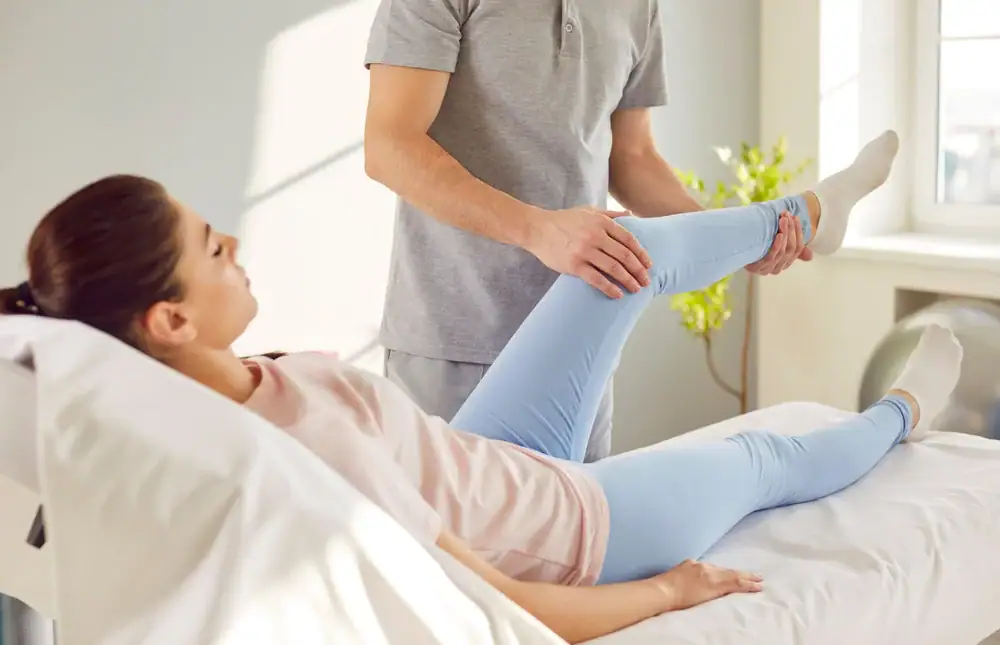
Sessions typically happen two to three times per week, right in your home. Each visit is one-on-one. No distractions, no other patients. Just focused work on your recovery. We also give you exercises to do between sessions – simple movements that keep progress going.
You’ll see measurable improvements tracked over weeks, not guessed at. Most people hit their maximum benefit around eight to twelve weeks, but some need more time. Some need less. We adjust based on how you’re responding.
Ready to get started?
You get a licensed physical therapist who specializes in the type of care you need. Fall prevention and balance training for seniors. Gait training to improve walking patterns. Joint pain treatment for knees, hips, shoulders, and backs. Pre and post-surgery rehabilitation to speed recovery and restore function.
If you’ve had a stroke, we provide neurological rehabilitation to help you regain movement and coordination. Occupational therapy is available too, focusing on daily activities like dressing, cooking, and bathing. Resistance and strength training rebuilds muscle. Neuromuscular re-education retrains your body to move correctly after injury.
Every session is customized. In Levittown, many of our patients are managing multiple conditions at once – arthritis plus balance issues, or post-surgical recovery plus chronic pain. We address all of it in a coordinated plan.
Medicare covers these services when medically necessary. That means your doctor has documented that you need skilled therapy, and that you have difficulty leaving your home for treatment. Commercial insurance often covers in-home therapy as well, especially after hospitalization or surgery.
We also conduct home safety assessments. Your therapist identifies trip hazards, lighting issues, and layout problems that increase fall risk. Small changes – removing a rug, adding a grab bar – can make a huge difference.
Yes, Medicare Part B covers in-home physical therapy when it’s medically necessary and you’re considered homebound. Homebound doesn’t mean you can never leave your house – it means leaving requires considerable effort due to illness, injury, or disability.
If you’ve had two or more falls in the past year, Medicare now covers physical therapy specifically for fall prevention. You don’t need to be homebound for this benefit – just at risk. Your doctor will need to document your fall history and refer you for therapy.
For post-surgical rehab, stroke recovery, or chronic conditions like arthritis, Medicare covers therapy as long as your doctor orders it and a licensed therapist provides the care. You’ll typically pay 20% of the Medicare-approved amount after you’ve met your Part B deductible. Most supplemental insurance plans cover that 20%.
We handle the Medicare paperwork and verification. You don’t need to figure out coverage on your own – we’ll tell you upfront what’s covered and what your responsibility is.
Most people start seeing improvements in balance and confidence within four to six weeks of consistent therapy. That means attending sessions two to three times per week and doing your home exercises between visits.
Maximum benefits usually show up around eight to twelve weeks. At that point, your strength has improved, your balance is steadier, and you’ve practiced enough that safer movement patterns become automatic.
Research shows that combining balance exercises with strength training gives the best results for fall prevention. Your therapist will work on both – exercises that challenge your stability and movements that build leg and core strength. The goal isn’t just to keep you from falling. It’s to give you the confidence to move around your home without fear.
Some people need longer programs, especially if they’re recovering from a fall-related injury or managing multiple health conditions. Others improve faster. We track your progress with objective measurements – how long you can stand on one foot, how steady your gait is, how much strength you’ve gained. You’ll know where you stand.
In-home therapy happens in your actual environment. Your therapist sees the stairs you struggle with, the bathroom layout that’s hard to navigate, the furniture arrangement that creates obstacles. Treatment gets designed around the real challenges you face every day.
Clinic-based therapy happens in a controlled space with professional equipment. That’s great for some situations – athletes rehabbing injuries, people who need specialized machines. But if you’re a senior dealing with balance issues or recovering from surgery, your home is where you need to function safely.
In-home sessions are also one-on-one for the entire visit. No sharing your therapist’s attention with other patients. No waiting for equipment. No commuting when you’re in pain or unsteady. Your therapist brings what’s needed and focuses entirely on you.
The outcomes are comparable. Studies show that in-home therapy is just as effective as clinic-based care for most conditions – and sometimes more effective because treatment happens in the environment where you actually need to improve. Plus, if transportation is difficult, in-home therapy means you’re far more likely to complete your full program instead of missing sessions.
Yes, especially when the pain is related to arthritis, past injuries, or wear and tear from aging. Physical therapy won’t cure arthritis, but it can significantly reduce pain and improve function.
Here’s how it works. Your therapist strengthens the muscles around the painful joint. Stronger muscles provide better support, which takes pressure off the joint itself. They also improve your range of motion through targeted stretching and movement exercises. Stiff joints hurt more – keeping them mobile reduces pain.
You’ll learn proper body mechanics too. A lot of joint pain gets worse because of how you move – compensating for weakness, favoring one side, using poor posture. Your therapist corrects those patterns so you’re not constantly aggravating the problem.
For many people, consistent physical therapy means less reliance on pain medication. That’s a big deal if you’re trying to avoid long-term use of NSAIDs or opioids. Therapy also helps you stay active, which prevents the downward spiral of pain leading to inactivity leading to more pain. Movement, done correctly, is medicine for joint pain.
The first visit is an evaluation. Your therapist will spend about an hour getting to know you, your condition, and your home environment. Wear comfortable clothes you can move in – nothing restrictive.
You’ll talk through your medical history, current symptoms, and what you’re hoping to achieve. Be specific. “I want to walk to the mailbox without holding onto things” is more useful than “I want to feel better.” Your therapist needs to understand your real-world goals.
Then comes the physical assessment. They’ll test your strength, balance, flexibility, and range of motion. They’ll watch how you walk, how you get up from a chair, how you navigate stairs if you have them. If you’re recovering from surgery, they’ll assess the surgical site and surrounding areas.
Your therapist will also look around your home for safety issues. Loose rugs, poor lighting, clutter in walkways, lack of grab bars – anything that increases fall risk or makes movement harder. They’ll give you recommendations, some of which are simple fixes you can do right away.
By the end of that first visit, you’ll have a clear treatment plan. How many sessions per week, what types of exercises, what goals you’re working toward, and how long the program will likely take. You’ll also start some initial exercises so you leave with something to work on right away.
Yes, we provide neurological rehabilitation for stroke survivors in Levittown and throughout Nassau County. Stroke recovery requires specialized therapy that addresses both movement and coordination challenges.
Your therapist will work on regaining strength in affected limbs, improving balance and walking ability, and retraining your nervous system to control movement. This is called neuromuscular re-education – exercises that help your brain and muscles reconnect after stroke damage.
We also focus on functional activities. Getting dressed. Using the bathroom. Moving safely around your home. Stroke recovery isn’t just about exercise – it’s about rebuilding independence in daily life. That’s why in-home therapy works so well for stroke patients. We practice the actual tasks you need to do in the actual place you need to do them.
Timing matters with stroke rehab. The sooner you start therapy after a stroke, the better your outcomes tend to be. But even if it’s been months or years, therapy can still help. Your brain has remarkable ability to adapt and recover, especially with consistent, targeted work.
Medicare covers stroke rehabilitation when it’s medically necessary and prescribed by your doctor. We coordinate with your care team to make sure therapy aligns with your overall recovery plan.
Other Services we provide in Levittown