


You’re not looking for temporary relief. You want to walk without worrying about balance, reach for things without wincing, or get back to your workout routine without setbacks.
That’s what physical therapy should do. At Medcare Therapy Services, our focus is on functional outcomes—meaning you leave treatment able to do the things that matter in your daily life. Whether you’re recovering from a stroke, managing joint pain, or dealing with balance issues that make you second-guess every step, the goal is measurable improvement.
Treatment here isn’t one-size-fits-all. Your evaluation looks at your movement patterns, your pain triggers, your goals, and what’s realistic given your condition. From there, you get a plan that includes therapeutic exercise, gait training, neuromuscular re-education, or resistance and strength training—whatever your body actually needs to function better.
You’ll know if it’s working because you’ll feel the difference. Less pain. More stability. Confidence in your movement. That’s the outcome that matters.
Medcare Therapy Services has been treating patients across Long Island for years, including right here in Lake Success. We understand what it’s like to work with a community where people expect results, not excuses.
Lake Success has a median age of 46 and a population that’s active, busy, and not interested in dragging out recovery. You need a physical therapist who respects your time and gets you back to normal as efficiently as possible. That’s what you get here—licensed therapists with specialized training in neurological rehabilitation, orthopedic care, fall prevention, and post-surgical recovery.
Every Google Business Profile is verified. Every staff member is vetted. Every treatment plan is built around what you need, not what’s easiest to bill. You’re working with a practice that takes operational security and patient trust seriously, which means your information stays protected and your care stays consistent.

Your first visit starts with an evaluation. You’ll talk through your pain, your limitations, and what you’re hoping to get back to. Then your therapist assesses your movement—how you walk, how you balance, where you compensate, and what’s causing the problem.
From there, you get a treatment plan. It might include balance and proprioceptive training if you’re at risk for falls. It could involve gait training to correct how you walk. If you’re recovering from surgery or an injury, expect therapeutic exercise and resistance training to rebuild strength and range of motion. Stroke rehabilitation and neurological rehab patients often work on neuromuscular re-education to retrain the brain-body connection.
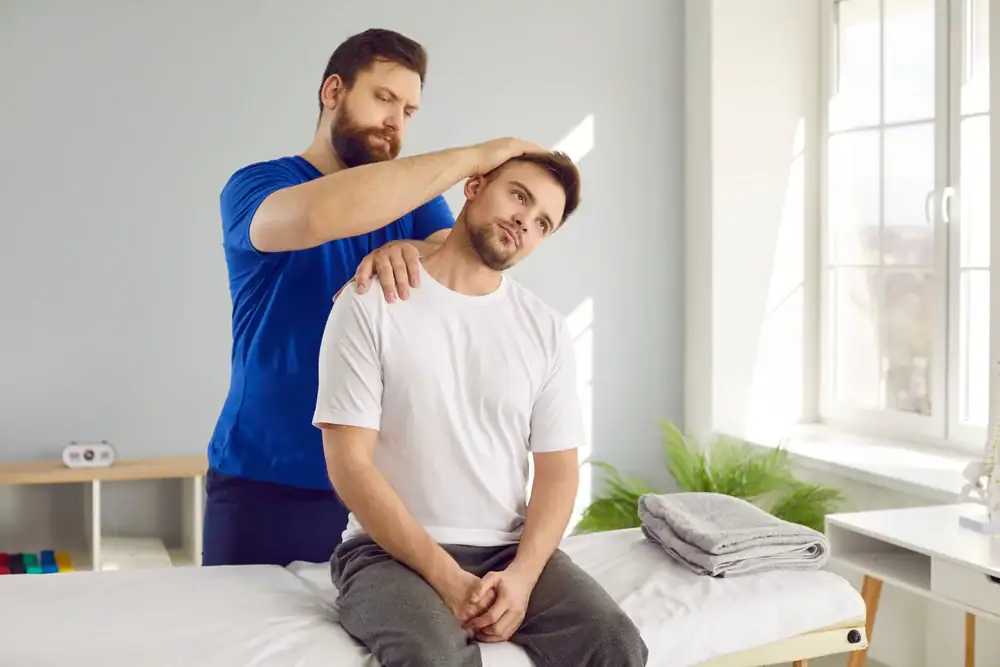
Sessions are hands-on. You’re not left alone with a sheet of exercises. Your therapist works with you, adjusts techniques in real time, and tracks your progress week to week. You’ll also get a home exercise program so you’re not starting from scratch between visits.
As you improve, the plan evolves. The goal is always to get you functioning independently again—whether that means walking without assistance, returning to sports, or just getting through your day without pain.

Ready to get started?
We offer a full range of therapy services depending on what you’re dealing with. Our fall prevention programs focus on strengthening the muscles that keep you upright—your quads, tibialis, and core—plus balance training to reduce your risk of injury. If you’ve had a stroke, you’ll work on neurological rehabilitation that targets coordination, mobility, and independence.
Joint pain treatment addresses issues like frozen shoulder, rotator cuff injuries, knee osteoarthritis, and chronic low back or neck pain. Pre and post surgery rehabilitation helps you go into surgery stronger and recover faster afterward. Injury rehabilitation gets athletes and active adults back to their routines without reinjury.
You also have access to occupational therapy if your limitations affect daily tasks like dressing, cooking, or working. In-home physical therapy is available if getting to a clinic isn’t realistic for you right now.
Lake Success residents deal with the same challenges as the rest of Long Island—long commutes, desk jobs, active lifestyles, and an aging population that wants to stay independent. Our approach reflects that. You’re not getting a generic protocol. You’re getting a plan that fits your schedule, your body, and your goals.
Most people start noticing improvements within two to three weeks, but that depends on your condition and how consistently you follow the plan. If you’re recovering from surgery, it might take six to eight weeks to regain full function. Chronic pain or balance issues may improve faster with the right exercises.
The key is showing up and doing the work between sessions. Physical therapy isn’t passive. Your therapist guides the process, but your body does the healing. If you’re only doing exercises during your appointments, progress will be slower.
You’ll have check-ins throughout treatment to measure improvement. If something isn’t working, the plan gets adjusted. The goal is steady, measurable progress—not dragging out treatment longer than necessary.
In New York, you can see a physical therapist without a referral for up to 10 visits or 30 days, whichever comes first. After that, you’ll need a physician’s referral to continue treatment if it’s medically necessary.
That said, if you’re using insurance, some plans require a referral upfront. It’s worth calling your insurance company before your first visit to confirm what’s covered and whether you need a doctor’s note.
If you’re paying out of pocket, you can start treatment right away. We can also help coordinate with your doctor if a referral becomes necessary down the line. The goal is to make access as straightforward as possible so you’re not waiting weeks to start feeling better.
Wear comfortable clothing that lets you move freely. Athletic wear works well—shorts, leggings, a t-shirt, or a tank top. Your therapist needs to see and assess your movement, so avoid anything too restrictive or bulky.
If your issue is related to your lower body, wear shorts so your therapist can observe your knees, hips, and ankles. If it’s your shoulder or neck, a tank top or loose-fitting shirt makes it easier to assess your range of motion.
Bring supportive sneakers, especially if you’re working on gait training or balance exercises. Flip-flops and sandals don’t provide the stability you need during treatment. If you’re coming from work, just bring a change of clothes.
You might feel some discomfort during treatment, especially if you’re working through stiffness or rebuilding strength. That’s different from sharp or worsening pain. Your therapist will push you to progress, but not to the point of injury.
If something hurts in a way that doesn’t feel right, speak up. Good physical therapy challenges your body without damaging it. Some soreness after a session is normal—it means your muscles are working. But if pain spikes or lingers for days, that’s a sign the plan needs adjustment.
The goal is to reduce pain over time, not create more of it. Your therapist will modify exercises, adjust intensity, and work within your tolerance. You should leave each session feeling like you worked hard, not like you got hurt.
Most insurance plans cover physical therapy, but coverage varies depending on your plan, deductible, and whether you’ve met your out-of-pocket maximum. Some plans cover a set number of visits per year. Others require a copay for each session.
We work with most major insurance providers. Before your first visit, call your insurance company and ask about your physical therapy benefits. Find out if you need a referral, how many visits are covered, and what your copay will be.
If you don’t have insurance or your plan doesn’t cover therapy, ask about self-pay rates. Some people find that paying out of pocket is more affordable than they expected, especially if it means avoiding surgery or long-term medication use. Our front desk can walk you through your options and help you figure out what makes sense financially.
Yes. Balance problems are one of the most common reasons people seek physical therapy, especially as they get older. Falls are often caused by weak muscles, poor coordination, or issues with your vestibular system—the part of your inner ear that controls balance.
Physical therapy for fall prevention focuses on strengthening your legs, improving your reaction time, and training your body to recover when you lose your balance. You’ll do exercises that challenge your stability in a controlled environment, so you’re better prepared when you’re walking on uneven surfaces or reaching for something.
We offer specific fall prevention programs that include balance and proprioceptive training, gait training, and strengthening exercises. The goal is to reduce your fall risk and give you confidence in your movement again. If you’ve already fallen or you’re afraid you might, this kind of therapy can make a real difference in your independence and quality of life.
Other Services we provide in Lake Success