


You’re dealing with limited mobility, pain that won’t quit, or the fear of falling again. Getting to a clinic feels like another obstacle when you’re already struggling just to move around your own house.
In-home physical therapy removes that barrier completely. A licensed therapist comes to your door, evaluates your actual living environment, and builds a treatment plan around your real life. Not a generic protocol, but exercises and strategies that work with your furniture, your stairs, your daily routine.
The difference shows up fast. Better balance means you can walk to the kitchen without holding onto walls. Stronger legs mean getting up from your chair doesn’t require three attempts. Reduced joint pain means you’re not wincing every time you reach for something. You start doing things you’d given up on, and your family stops worrying every time you stand up.
Most patients see measurable improvements within the first few weeks. That’s not hype. That’s what happens when therapy fits into your life instead of forcing you to rearrange everything around appointments.
We’ve been providing in-home physical therapy across Long Island for over a decade. We’re a Medicare-approved provider, which means our therapists meet strict licensing requirements and our services are covered under your benefits.
Every therapist on our team is state-licensed and trained in the specific challenges that come with treating patients at home. We’re not a revolving door of different faces each visit. You get the same therapist who learns your goals, tracks your progress, and adjusts your plan as you improve.
Kensington residents face real risks when it comes to mobility and falls. In 2023 alone, falls caused over 1,800 deaths and 78,000 hospitalizations among older New York State residents. We’ve built our practice around preventing those outcomes through targeted balance training, gait work, and strength building that actually reduces fall risk instead of just talking about it.

First, we schedule an initial evaluation at your home. A licensed physical therapist assesses your current mobility, strength, balance, and any pain or limitations you’re experiencing. They also look at your home environment to identify fall risks or obstacles that might be slowing your recovery.
From there, we build a personalized treatment plan with specific, measurable goals. Maybe it’s walking without a cane, climbing stairs safely, or reducing knee pain enough to get back to gardening. Whatever matters to you becomes the target.
Sessions typically run 45 to 60 minutes and happen one to three times per week depending on your needs and what Medicare approves. Your therapist brings any necessary equipment and guides you through exercises, manual therapy, balance work, or gait training right in your living room or bedroom.
Progress gets tracked at every visit. You’ll see improvements in strength, range of motion, and function documented clearly so you know exactly where you stand. As you get stronger and more independent, the frequency adjusts until you’re ready to maintain results on your own.
If you’re recovering from surgery, a stroke, or dealing with chronic conditions like arthritis or neuropathy, the approach stays the same: meet you where you are and move you toward where you want to be.

Ready to get started?
Fall prevention is one of the biggest reasons Kensington residents call us. We focus on balance training, proprioceptive exercises, and strength work that directly lowers your fall risk. Given that 28% of older adults report falling each year, and falls remain the leading cause of injury deaths for people over 60 in New York, this isn’t optional care. It’s essential.
Stroke rehabilitation is another core service. Early, task-specific therapy leads to meaningful improvements in motor function, mobility, and independence. We work on neuromuscular re-education, gait training, and functional movement patterns that help you regain skills you thought were gone for good. Research shows that patients receiving more than 40 therapy sessions within six months see a 26% reduction in mortality rates.
Post-surgery rehab covers everything from joint replacements to spinal procedures. We guide you through the healing process with therapeutic exercise, resistance training, and range-of-motion work designed to get you back to normal activity safely. Pre-surgery prep is available too, strengthening you ahead of time so recovery goes smoother.
Joint pain treatment, occupational therapy for daily tasks, and injury rehabilitation round out what we offer. Whether it’s arthritis in your knees, a rotator cuff issue, or general deconditioning, the goal stays the same: less pain, better movement, more independence.
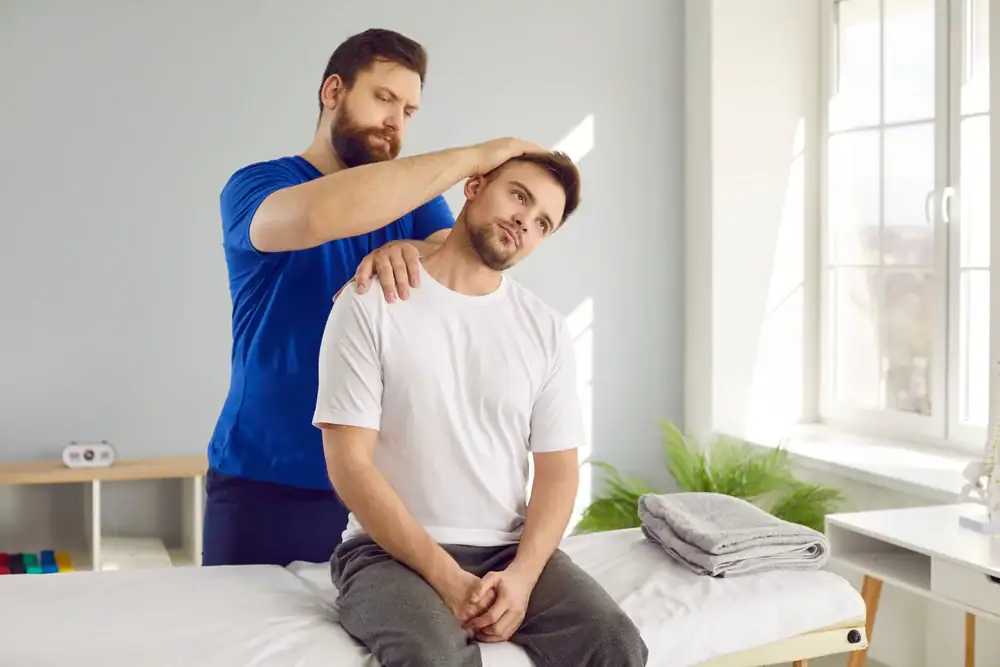
Yes. Medicare Part B covers outpatient physical therapy when it’s medically necessary and provided by a licensed, Medicare-approved therapist like the ones on our team.
You’ll need a referral or prescription from your doctor stating that you require physical therapy. Medicare typically covers 80% of the approved amount after you meet your Part B deductible, and you’re responsible for the remaining 20% co-insurance.
There are annual caps on therapy services, but exceptions exist if your condition requires continued treatment. We handle the billing and authorization process directly with Medicare, so you’re not stuck navigating paperwork on your own. If you have a Medicare Advantage plan, coverage works similarly but may have different co-pay structures depending on your specific plan.
Most patients notice improvements within two to four weeks if they’re consistent with their exercises and follow the treatment plan. That doesn’t mean you’re fully recovered in a month, but you’ll see measurable progress like better balance, less pain, or improved strength.
The total length of treatment depends entirely on your condition and goals. Post-surgery rehab might run eight to twelve weeks. Stroke recovery could take several months of regular sessions. Chronic pain management or fall prevention might involve shorter-term intensive therapy followed by periodic check-ins.
What matters more than timeline is whether you’re hitting functional milestones. Can you walk further without fatigue? Are you climbing stairs more easily? Is your pain decreasing? Those markers tell us if therapy is working, and we adjust frequency or intensity based on your progress. Rushing through therapy to meet some arbitrary endpoint usually backfires. Taking the time to build real strength and stability keeps you independent longer.
The biggest advantage is that your therapist sees exactly where you live and move every day. They can spot fall hazards, recommend modifications, and teach you exercises using your actual furniture and space. That’s impossible in a clinic setting where everything is designed for therapy, not real life.
Transportation becomes a non-issue. If getting to appointments is painful, exhausting, or requires coordinating rides with family, in-home therapy eliminates that entire problem. You save energy for the actual work of recovery instead of burning it just to show up.
You also get more focused attention. Clinics often run multiple patients simultaneously, so your therapist is splitting time between people. At home, it’s one-on-one for the full session. Your therapist isn’t distracted by other patients or rushing to stay on schedule.
For people recovering from strokes, surgeries, or dealing with severe mobility limitations, staying home reduces infection risk and stress. You’re in a familiar environment where you feel comfortable, which often leads to better engagement and faster progress.
It’s not overstated. Falls are preventable, and physical therapy is one of the most effective interventions. Balance training, strength work, and gait training directly address the physical reasons people fall: weak legs, poor balance, slow reaction time, and unsafe movement patterns.
Research backs this up consistently. Targeted exercise programs reduce fall risk significantly, especially when combined with home safety assessments. The problem is that many people don’t start therapy until after they’ve already fallen, when prevention would have been far more effective.
Here’s what actually happens in fall prevention therapy: we assess your balance using standardized tests, identify specific weaknesses, and build exercises that address those gaps. Maybe your ankles are unstable, or your hip strength is asymmetrical, or you’re not using your vision and inner ear effectively to stay upright. We work on those exact issues.
We also teach you how to recover if you do start to lose balance, and we make sure your home setup isn’t working against you. Loose rugs, poor lighting, and clutter are fixable problems. Combine physical improvements with environmental changes, and your fall risk drops substantially. That’s not a sales pitch. That’s what the data shows and what we see with patients every week.
The first visit is an evaluation, not a full treatment session, though we’ll often start some gentle exercises if appropriate. Your therapist will ask about your medical history, current symptoms, medications, and what you’re hoping to accomplish through therapy.
Then comes the physical assessment. We’ll test your strength, range of motion, balance, and how you move through basic tasks like standing up, walking, and climbing stairs if you have them. This isn’t about passing or failing. It’s about establishing a baseline so we can measure progress later.
Your therapist will also walk through your home looking for fall risks or barriers to movement. Things like lighting, furniture placement, bathroom setup, and how you’re currently getting around all factor into your treatment plan.
Before leaving, we’ll explain what we found, what we recommend for treatment frequency and duration, and what your goals should realistically look like. You’ll get a few exercises to start practicing before the next visit. The whole evaluation usually takes about an hour, and by the end, you’ll have a clear picture of what therapy will involve and what outcomes to expect.
Yes. Stroke rehabilitation is a major part of what we do, and in-home therapy is often the best option for stroke survivors, especially in the early months after discharge.
Stroke rehab focuses on neurological rehabilitation and neuromuscular re-education. That means retraining your brain and muscles to work together after a stroke has disrupted those connections. We work on movement patterns, balance, coordination, and functional tasks like dressing, walking, and using your affected arm or leg.
The research is clear: early, intensive, task-specific therapy leads to better outcomes. Patients who start therapy soon after a stroke and receive consistent treatment show meaningful improvements in motor function and independence. The problem is that 35% of stroke patients receive no physical therapy within three months of their stroke, often because they’re discharged home without clear follow-up.
We step into that gap. Your therapist will work with you on exercises designed specifically for stroke recovery, adjusting as you regain function. Progress might be slow at first, but consistency matters more than speed. Family members are encouraged to participate so they understand how to support your recovery between sessions. Stroke rehab isn’t quick, but it’s effective when done right, and doing it at home means you’re practicing skills in the environment where you actually need them.
Other Services we provide in Kensington