


You stop planning your day around pain. Getting out of bed doesn’t require a strategy. Walking to the mailbox or playing with grandkids becomes something you do, not something you think about doing.
That’s what happens when a licensed physical therapist works with you at home, in Jamesport, on your schedule. No commute to a clinic when you’re already hurting. No waiting rooms. Just focused, one-on-one treatment that addresses what’s actually limiting you—whether that’s chronic joint pain, balance issues, or recovery from surgery.
Most of our patients are dealing with one of three things: they’re afraid of falling, they’re managing pain that won’t quit, or they’re trying to get back to normal after an injury or procedure. The good news is that physical therapy reduces fall risk by 35-40% in older adults. It also helps you avoid or reduce reliance on pain medications, including opioids. And when it’s done in your home, you’re more likely to stick with it—which is the whole point.
We’ve been serving Long Island communities like Jamesport since 2010. We’re locally based, Medicare-certified, and our therapists are licensed professionals who specialize in treating older adults in their homes.
Jamesport has a median age over 60, and most of the people we work with here are managing similar concerns—mobility, balance, pain, or post-surgical recovery. We get it. You’ve worked hard your whole life. You want to stay in your home, stay active, and not become a burden. That’s exactly who we built this service for.
Our team includes physical therapists and occupational therapists who understand how to assess your home environment, your movement patterns, and your goals—then build a plan that fits your life, not a generic protocol.

First, we schedule an in-home evaluation at a time that works for you. A licensed physical therapist comes to your house in Jamesport, sits down with you, and asks about what’s been going on—your pain, your limitations, your goals. Then they assess how you move, where you’re weak or stiff, and what’s contributing to the problem.
From there, we build a treatment plan. That might include manual therapy to relieve pain and improve joint mobility, therapeutic exercises to rebuild strength, balance and proprioceptive training to prevent falls, or gait training if walking has become unstable. Everything is tailored to you, and it all happens in your home.
Sessions typically run 45-60 minutes, and most people see us one to three times a week depending on the severity of the issue. We also give you exercises to do between visits—simple, practical stuff that doesn’t require equipment. And because we’re Medicare-certified, most of our patients pay little to nothing out of pocket.
You’re not locked into anything. If it’s helping, you keep going. If it’s not, we adjust. The goal is measurable progress, not endless appointments.

Ready to get started?
We treat a wide range of conditions, but the most common in Jamesport are fall prevention, joint pain, post-surgical rehabilitation, stroke recovery, and general weakness or instability that comes with aging. If you’ve had a knee or hip replacement, we help you regain strength and range of motion. If you’ve had a stroke, we work on neuromuscular re-education and functional movement. If you’re just noticing that balance isn’t what it used to be, we address that before a fall happens.
Our approach combines hands-on manual therapy, strength and resistance training, and movement retraining. We also assess your home for fall hazards and make recommendations that actually make sense for your space. This isn’t about turning your house into a hospital—it’s about small changes that reduce risk.
Jamesport’s older population means we see a lot of people who are still active but starting to notice limitations. Maybe gardening hurts your back now. Maybe you’re gripping the railing harder than you used to. Those are signs that something’s off, and catching it early makes a big difference. Physical therapy isn’t just for after something breaks—it’s for preventing that break in the first place.
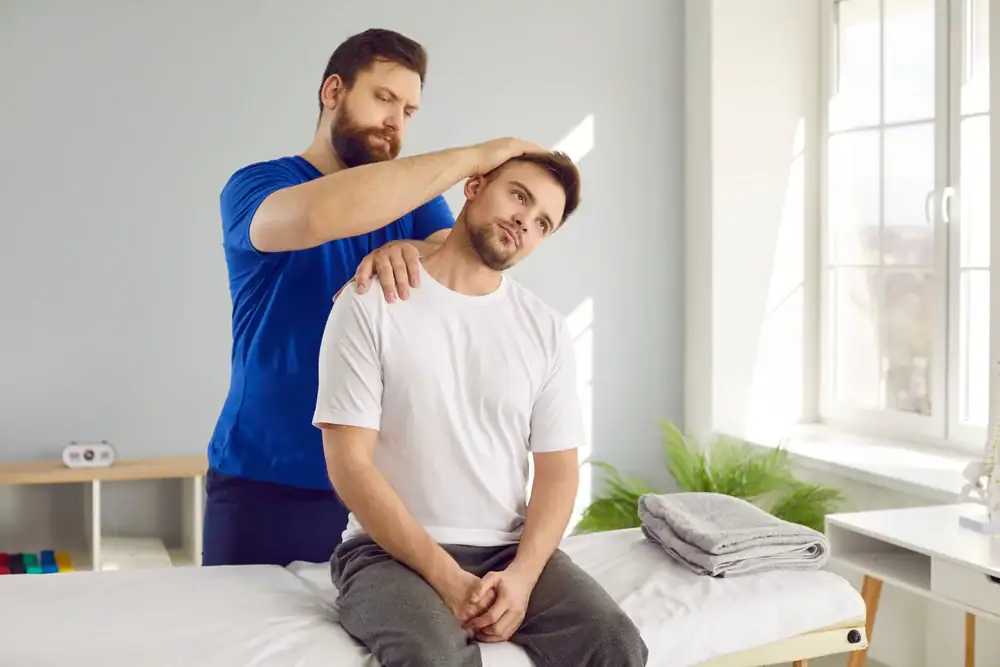
Yes. Medicare Part B covers outpatient physical therapy when it’s medically necessary and prescribed by a doctor. That includes therapy delivered in your home.
You’ll need a referral or prescription from your physician, but once that’s in place, Medicare typically covers 80% of the approved amount after you’ve met your deductible. Most of our Jamesport patients have supplemental insurance that covers the remaining 20%, which means they pay little to nothing out of pocket.
There are annual caps on therapy services, but those limits are fairly high, and exceptions can be made if continued treatment is justified. We handle the billing and work directly with Medicare, so you’re not stuck dealing with paperwork or surprise bills.
It depends on what’s causing the pain and how long you’ve had it. Some people feel relief after a few sessions. Others need several weeks of consistent treatment to see real change.
Chronic pain usually involves more than one issue—tight muscles, weak stabilizers, faulty movement patterns, maybe some arthritis or old injuries that never fully healed. We can’t fix all of that in one visit. But most people notice improvement within two to four weeks if they’re doing the exercises we give them between sessions.
The key is consistency. Physical therapy works when you show up and do the work. If you only do it when it’s convenient, progress stalls. That’s one reason in-home therapy helps—there’s no commute, no excuse. We come to you, and the exercises we assign are simple enough to do in your living room.
Physical therapy focuses on movement—strength, balance, mobility, pain relief. Occupational therapy focuses on function—getting dressed, cooking, bathing, the activities of daily living.
There’s overlap, and sometimes people need both. If you’re recovering from a stroke, a physical therapist might work on your gait and leg strength, while an occupational therapist helps you relearn how to button a shirt or use utensils. If you’ve had a hip replacement, PT gets you walking again, and OT makes sure you can get in and out of the shower safely.
We offer both services, and during your initial evaluation, we’ll recommend what makes sense. Some people only need PT. Others benefit from a combined approach. It’s not about upselling—it’s about addressing the full picture so you can actually do the things you want to do.
It’s not marketing. Studies show that structured exercise programs—specifically balance training, strength training, and gait training—reduce falls by 35-40% in older adults.
Falls happen for a lot of reasons. Weak legs. Poor balance. Slow reaction time. Vision issues. Medications. Environmental hazards. We can’t fix your vision or change your meds, but we can absolutely improve your strength, balance, and coordination. And we can walk through your home and point out the rug that’s going to trip you or the lighting that’s too dim.
The most effective fall prevention programs are multi-component, meaning they address more than one risk factor. That’s exactly what we do. We assess your balance and proprioception, strengthen your legs and core, work on how you walk, and make practical recommendations for your home. It’s not a guarantee—nothing is—but it’s one of the most effective interventions available.
The first visit is mostly assessment. We’re not going to push you through a hard workout on day one. We need to understand what’s going on first.
Your therapist will ask about your medical history, current symptoms, medications, and what you’re hoping to accomplish. Then they’ll watch you move—how you stand up from a chair, how you walk, how far you can reach or bend. They’ll test your strength, flexibility, and balance. They might also check your home setup to see if anything’s contributing to the problem.
From there, we’ll talk through what we found and what the treatment plan would look like. How often we’d meet, what kinds of exercises or manual therapy we’d use, and what you’d need to do on your own. The whole visit usually takes about an hour. By the end, you’ll know whether this is something that can help and what the next steps are.
In New York, you can see a physical therapist without a referral for up to 10 visits or 30 days, whichever comes first. After that, you need a prescription from a physician to continue.
That said, if you’re using Medicare or most insurance plans, they require a doctor’s prescription from the start. So while you technically don’t need one under state law, you’ll likely need one to get coverage.
If you don’t have a referral yet, we can help. Reach out to your primary care doctor and let them know you’d like to try physical therapy. Most physicians are happy to write the script, especially if you’re dealing with pain, mobility issues, or recovering from surgery. Once we have that, we can get started.
Other Services we provide in Jamesport