


You’re not looking for temporary relief. You want to bend down without wincing, sleep through the night, or get back to the gym without setbacks.
That’s what physical therapy should do. Not just reduce pain for a week, but help you rebuild strength, improve how your body moves, and prevent the same issue from coming back. Whether it’s joint pain that’s been nagging you for months, balance issues that make you second-guess every step, or post-surgery stiffness that’s limiting your independence—treatment here is about function, not just feeling better for a day.
Most patients see measurable progress within the first few weeks. That means less reliance on medication, more confidence in daily movement, and a clear path toward doing the things that matter to you. You’re not working around the problem anymore. You’re fixing it.
We’ve been serving Hempstead and the surrounding Nassau County area with hands-on, personalized physical therapy for years. Every therapist on our team is licensed, experienced, and focused on one thing: helping you recover the right way.
We’re not a high-volume clinic where you get passed off to an assistant after five minutes. You work with the same therapist every session, and that therapist actually spends time with you—60 minutes per visit, which is significantly more one-on-one care than most practices offer. That consistency matters when you’re trying to heal.
Our locations are easy to access, we accept most major insurance plans, and we handle the verification and scheduling process so you’re not stuck on hold or filling out the same forms twice. Hempstead residents deal with enough—getting quality care shouldn’t add to the list.

Your first visit starts with an evaluation. Your therapist asks about your pain, your limitations, and what you’re trying to get back to doing. They’ll assess your movement, strength, and range of motion to figure out what’s actually causing the problem—not just where it hurts.
From there, you get a treatment plan that’s specific to your condition. That might include manual therapy to release tight tissue, therapeutic exercise to rebuild strength, gait training if your walking pattern is off, or balance work if falls are a concern. Every session builds on the last one. You’re not repeating the same stretches every week and hoping something changes.
We track your progress. If something isn’t working, the plan adjusts. If you’re improving faster than expected, we push forward. The goal is always the same: get you functional, keep you safe, and make sure the issue doesn’t come back the moment you stop coming in. Most people need anywhere from a few weeks to a couple months depending on the severity, but you’ll know where you stand after that first evaluation.

Ready to get started?
Treatment here covers a wide range of conditions. If you’re recovering from surgery—knee replacement, rotator cuff repair, spinal fusion—post-surgery rehabilitation focuses on regaining mobility and strength without reinjuring tissue. If you’ve had a stroke or deal with neurological issues like Parkinson’s or MS, stroke rehabilitation and neurological rehabilitation help retrain movement patterns and improve coordination.
For older adults in Hempstead, fall prevention is a major focus. Falls are the leading cause of injury-related deaths among seniors, and most are preventable with the right balance and proprioceptive training. We also treat chronic joint pain, whether it’s your knee, hip, shoulder, or back. That includes hands-on manual therapy, resistance and strength training, and neuromuscular re-education to help your body move correctly again.
Athletes and active individuals come in for injury rehabilitation—ACL tears, ankle sprains, tendonitis, you name it. And if getting to the clinic is difficult, in-home physical therapy is available for patients who need care but can’t easily travel. Everything is designed around what you need to get better, not what’s easiest to bill.
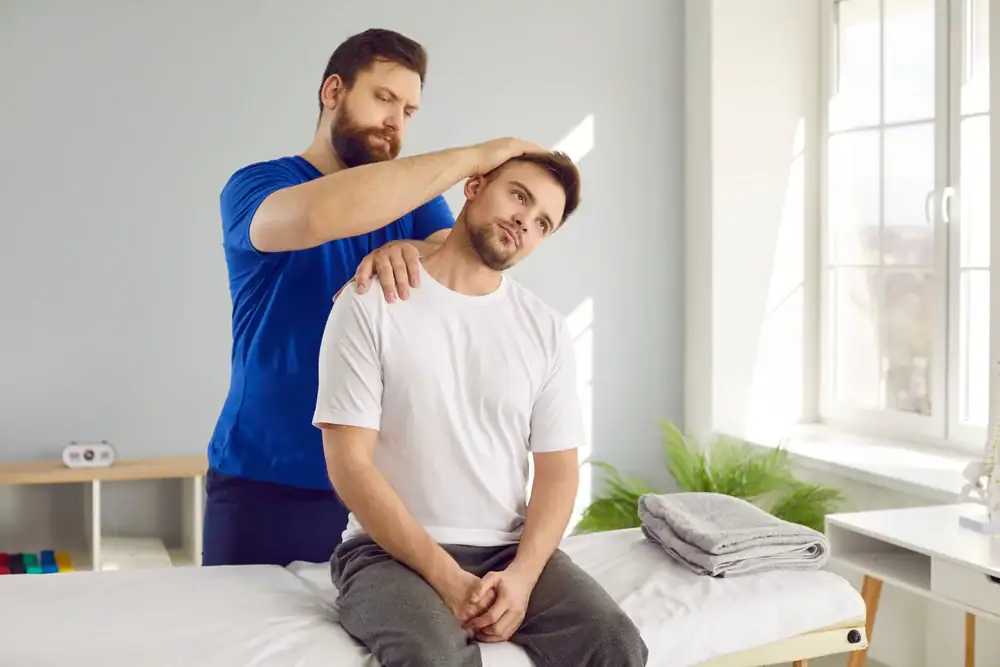
In New York, you can see a physical therapist without a referral for up to 10 visits or 30 days, whichever comes first. After that, you’ll need a prescription from a doctor to continue treatment if it’s necessary.
That said, many insurance plans still require a referral for coverage, even if the state doesn’t. It’s worth calling your insurance company before your first visit to confirm what they need. If you’re paying out of pocket, no referral is needed at all.
If you’re unsure, our front desk can walk you through it when you call to schedule. We deal with this every day and can usually tell you in two minutes whether you need to loop in your doctor or not.
It depends on what you’re treating and how long the problem’s been there. Acute injuries—like a sprained ankle or post-surgery recovery—usually show improvement within a few weeks. Chronic issues that have been building for months or years take longer, sometimes two to three months of consistent work.
Most people start feeling some relief after the first few sessions, but real, lasting improvement comes from sticking with the full plan. Skipping sessions or stopping early because you “feel fine” is one of the fastest ways to end up back where you started.
Your therapist will give you a timeline after the evaluation. If progress stalls or something isn’t working, the plan adjusts. The goal is always to get you better as efficiently as possible, not to keep you coming in longer than necessary.
Wear something comfortable that lets you move freely. Athletic clothes—shorts, sweatpants, a t-shirt—work best. If your issue is with your knee, hip, or lower back, avoid jeans or anything restrictive that makes it hard for your therapist to see how you’re moving.
For shoulder or upper body issues, a tank top or loose shirt is ideal. You want your therapist to be able to assess your movement and work on the area without fabric getting in the way.
If you’re coming straight from work and can’t change beforehand, we have a space where you can swap into something more practical. Just bring a change of clothes with you. Footwear matters too—wear sneakers or supportive shoes, not sandals or dress shoes.
Sometimes, yes—but not in the way you might think. You shouldn’t feel sharp, stabbing pain during treatment. If you do, that’s a sign something’s wrong and your therapist will adjust immediately.
What you might feel is discomfort, especially during manual therapy or when you’re stretching tight tissue or strengthening weak muscles. That’s normal. It’s the difference between “this is challenging” and “this is damaging.” Your therapist will check in throughout the session to make sure you’re in the right zone.
After your first few sessions, you might feel sore—similar to how you’d feel after a tough workout. That usually fades within a day or two. If soreness lasts longer or gets worse, let your therapist know. The goal is to push your body toward healing, not break it down further.
Most major insurance plans cover physical therapy, but the specifics vary. Some plans cover a set number of visits per year, others require a copay for each session, and a few need prior authorization before you start treatment.
We work with most insurance providers in the Hempstead area. When you call to schedule, our team will verify your coverage and let you know what your out-of-pocket cost will be before your first visit. No surprises.
If your plan doesn’t cover physical therapy or you’ve hit your visit limit, self-pay options are available. Our front desk can walk you through pricing and help you figure out what makes sense for your situation. The goal is to make treatment accessible, not to pile on financial stress while you’re trying to heal.
Physical therapy focuses on improving movement, strength, and mobility—things like walking, balance, joint function, and pain reduction. If you’re recovering from an injury, dealing with chronic pain, or trying to prevent falls, physical therapy is usually the right fit.
Occupational therapy focuses on helping you perform daily activities—getting dressed, cooking, bathing, or returning to work. It’s more about adapting to limitations and building skills for independent living. If a stroke or neurological condition has affected your ability to do everyday tasks, occupational therapy can help.
There’s overlap, and sometimes people benefit from both. We offer both physical therapy and occupational therapy services, so if your situation calls for a combination approach, our team can coordinate that. After your evaluation, your therapist will recommend the best path forward based on what you’re dealing with.
Other Services we provide in Hempstead