


You’re not looking for therapy sessions. You’re looking for the ability to walk to your mailbox without fear, stand up from your chair without wincing, or recover from surgery without the stress of driving to appointments three times a week.
That’s what in-home physical therapy actually delivers. A licensed therapist shows up at your door with a plan built around your specific condition—whether that’s balance issues, stroke rehabilitation, neurological conditions, or post-surgical recovery. You work through gait training, therapeutic exercise, and strength training in the space where you actually live.
The outcome isn’t just “better mobility.” It’s independence. It’s the confidence to move through your day without second-guessing every step. It’s your family knowing you’re safer at home because someone’s actively working to reduce your fall risk—which matters in Nassau County, where one in four adults over 65 falls each year.
We’ve been serving Long Island communities since 2010. We’re not a new operation testing out home-based care—we’ve built our entire practice around it.
Our therapists are licensed, Medicare-certified, and trained in fall prevention, stroke rehabilitation, neurological rehab, occupational therapy, and pre- and post-surgery recovery. We also operate affiliated centers in Smithtown and Speonk, so our approach is consistent and our standards are high.
Garden City South families trust us because we show up on time, we treat you like an actual person, and we don’t disappear after three sessions. We’re here as long as your recovery takes.

First, we schedule an in-home evaluation. A licensed physical therapist comes to your Garden City South home, assesses your mobility, reviews your medical history, and talks through what’s limiting you right now—whether that’s balance, strength, pain, or post-surgical restrictions.
From there, we build a treatment plan. That might include gait training to improve how you walk, balance and proprioceptive training to reduce fall risk, therapeutic exercise to rebuild strength, or neuromuscular re-education if you’re recovering from a stroke or neurological condition. Every plan is different because every patient is different.
Then we start treatment. Sessions happen in your home, usually two to three times per week depending on your needs and your insurance coverage. We bring the equipment. We adjust the plan as you progress. And we communicate with your doctor so everyone’s on the same page.
Most patients see measurable improvement within the first few weeks—better balance, less pain, more confidence moving around. The timeline depends on your condition, but the process is straightforward: assess, treat, progress, and get you back to doing what you need to do.

Ready to get started?
You’re getting a licensed physical therapist who specializes in the exact issue you’re dealing with. If it’s fall prevention, we focus on balance training, gait training, and strength work that directly reduces your risk. If it’s stroke rehabilitation or neurological rehab, we’re working on neuromuscular re-education and functional movement patterns.
For joint pain or injury rehabilitation, we use therapeutic exercise, resistance training, and manual techniques to reduce pain and restore range of motion. Pre- and post-surgery patients get structured rehab plans that follow your surgeon’s protocol while keeping you comfortable at home.
Nassau County has a large aging population—over 300,000 residents are 60 or older—and many are managing chronic conditions like arthritis, diabetes, or heart disease that affect mobility. In-home therapy removes the transportation barrier, which is often the biggest obstacle to consistent care. You don’t need to arrange rides, navigate parking, or sit in a waiting room. The therapist comes to you, and the work happens in the environment where you actually need to function.
We also coordinate with your physician and work within Medicare guidelines, so there’s no confusion about coverage or approval. Most of our patients qualify for Medicare-covered outpatient physical therapy and occupational therapy at home.
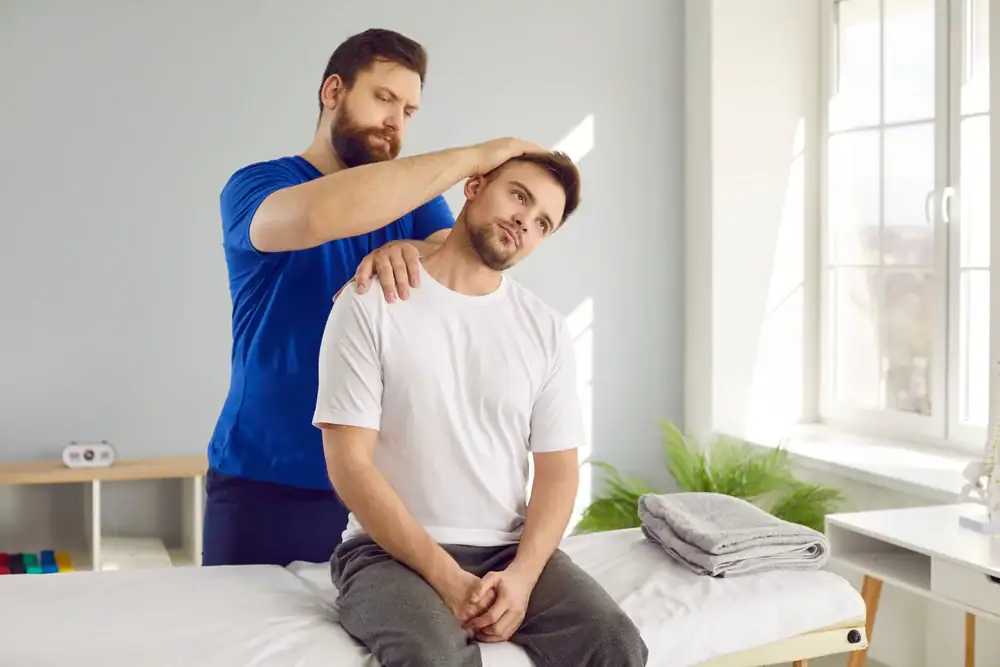
Yes. Medicare Part B covers outpatient physical therapy when it’s medically necessary and provided by a licensed therapist. That includes therapy delivered in your home.
You’ll need a physician’s referral or prescription, and the therapy has to be part of a treatment plan aimed at improving a specific condition—like recovering from surgery, managing a neurological condition, or reducing fall risk. Medicare doesn’t cover maintenance therapy, but if you’re working toward measurable functional improvement, you’re likely covered.
There are annual caps on therapy services, but exceptions exist for patients who need extended care. We handle the Medicare paperwork and communicate directly with your doctor to make sure everything’s documented correctly. Most of our Garden City South patients don’t pay out of pocket as long as they’re within their coverage limits.
The treatment is the same. The location is different. And for a lot of people, that location makes all the difference.
In a clinic, you’re working in a generic space with equipment that’s shared by dozens of other patients. At home, your therapist is treating you in the environment where you actually need to function—your bathroom, your stairs, your kitchen. That means the exercises and training are more relevant to your daily life.
Home therapy also removes the transportation barrier. If you have mobility issues, chronic pain, or you’re recovering from surgery, getting to a clinic two or three times a week is exhausting. Some people stop going because it’s too hard. At home, you’re more likely to stick with the full treatment plan because there’s no logistical friction.
The other advantage is focus. You’re not sharing your therapist’s attention with other patients in a busy clinic. It’s one-on-one care for the full session.
We treat anything that affects your mobility, balance, strength, or ability to move through your day safely. That includes fall prevention for seniors with balance issues, stroke rehabilitation for patients recovering from a cerebrovascular event, and neurological rehabilitation for conditions like Parkinson’s or multiple sclerosis.
We also work with patients recovering from orthopedic surgery—hip replacements, knee replacements, spinal procedures—and people managing chronic joint pain from arthritis or degenerative conditions. Injury rehabilitation is another big area, whether that’s a fracture, sprain, or soft tissue injury that’s limiting your movement.
Occupational therapy is available for patients who need help with daily activities like dressing, bathing, or cooking. And we provide pre-surgery conditioning for patients who want to go into a procedure as strong as possible, which often leads to faster recovery.
If your condition is affecting your ability to move safely or independently, there’s a good chance we can help. The best way to know for sure is to schedule an evaluation so we can assess your specific situation.
It depends entirely on your condition and your goals. Some patients need four to six weeks of therapy after a minor injury or surgery. Others need three to six months for stroke recovery or neurological rehab.
Fall prevention programs usually run six to eight weeks, with a focus on balance training, gait training, and strength work. Post-surgical rehab timelines are often dictated by your surgeon’s protocol—most joint replacements involve eight to twelve weeks of structured therapy.
We don’t stretch treatment out longer than necessary, but we also don’t rush you through a program before you’re ready. Progress is measured by functional outcomes: Can you walk without assistance? Can you climb stairs safely? Can you get in and out of your car without pain? When you hit those markers, we’re done.
Medicare and most insurance plans approve therapy in blocks, and we reassess every few weeks to make sure you’re improving. If you’re not progressing, we adjust the plan. If you’re ahead of schedule, we don’t keep you in therapy just to fill sessions.
The first visit is an evaluation. Your therapist will spend about an hour going through your medical history, current symptoms, and what’s limiting you right now. They’ll ask about falls, pain, surgeries, medications, and any assistive devices you’re using.
Then they’ll assess your movement. That includes watching you walk, checking your balance, testing your strength and range of motion, and identifying any areas of instability or weakness. If you’ve had a stroke or neurological condition, they’ll evaluate coordination and motor control.
Based on that evaluation, your therapist will explain what they found and outline a treatment plan. That plan will include specific goals—like improving your walking speed, reducing fall risk, or eliminating pain during certain movements—and the types of therapy we’ll use to get there.
You might do some light exercise during that first visit, but the main goal is assessment and education. By the end of the session, you should understand what’s causing your limitations and what the path forward looks like. Then we schedule your regular treatment sessions and get to work.
No. We bring everything we need. That includes resistance bands, weights, balance tools, and any other equipment required for your specific treatment plan.
Most of the work we do uses your body weight, your furniture, and the layout of your home. If your goal is to walk more safely, we’re practicing in your hallway and on your stairs—not on a treadmill in a clinic. If you need to improve your ability to get in and out of a chair, we’re using your actual chair.
That’s one of the advantages of in-home therapy. The training happens in the real environment where you need to function, so the improvements translate immediately to your daily life. You’re not learning exercises in a clinic and then trying to replicate them at home. You’re building strength and mobility in the exact space where it matters.
If there’s something specific we need that you don’t have—like a particular type of resistance band or a balance pad—we bring it with us. You don’t need to buy anything or set up a home gym. Just clear a little space and we’ll handle the rest.
Other Services we provide in Garden City South