


You shouldn’t have to choose between getting better and dealing with the hassle of getting there. Driving across town when you’re in pain, navigating parking lots with a walker, sitting in crowded waiting rooms—it’s exhausting before treatment even starts.
In-home physical therapy removes all of that. Your therapist comes to you, works with you in the environment where you actually live, and builds a plan around your real routine. No rushing. No comparing yourself to the person on the next table. Just focused, one-on-one care that fits your life.
Whether you’re recovering from surgery, managing chronic joint pain, or working to prevent falls, the goal is the same: help you move better, feel stronger, and stay independent. That happens faster when you’re comfortable, and nothing beats being at home.
We’ve been providing in-home physical therapy across Suffolk County and parts of Nassau County for over a decade. Our therapists are licensed, experienced, and members of the American Physical Therapy Association.
We work with Medicare and most commercial insurance plans, so you can focus on recovery instead of paperwork. Fort Salonga residents know how spread out Long Island can be—getting to appointments isn’t always simple, especially when mobility is already limited. That’s exactly why we built our model around coming to you.
You’re not a number here. You’re someone who deserves care that actually fits your schedule, your home, and your goals.

It starts with a call. You tell us what’s going on, what’s been hard, and what you’re hoping to improve. We’ll confirm your insurance coverage and schedule your first visit at a time that works for you.
During that first session, your physical therapist evaluates your movement, strength, balance, and pain levels. They’ll ask about your daily routine—what you need to do, what hurts, and what you’re avoiding because it feels risky. From there, they build a treatment plan specific to you.
Each session happens in your home. Your therapist brings any equipment needed and guides you through exercises, manual therapy, gait training, or balance work depending on your plan. They’ll also prescribe exercises you can do between visits to keep progress moving.
You’re in control of the schedule. Sessions typically last 45 minutes to an hour, and frequency depends on your condition and goals. Some people need twice a week. Others start there and taper down as they improve. In New York, you can begin treatment without a prescription for up to 30 days or 10 visits, though many people do come with a referral from their doctor.
Progress gets tracked. You’ll know what’s improving, what needs more attention, and when you’re ready to maintain results on your own.

Ready to get started?
Your treatment plan might include fall prevention and balance training—critical for Fort Salonga residents dealing with uneven terrain, stairs, or mobility concerns common in older homes. Proprioceptive training helps your body relearn where it is in space, which directly reduces fall risk.
Gait training improves how you walk. If you’re favoring one side, shuffling, or relying too heavily on assistive devices, we work on restoring a safer, more efficient stride. Joint pain treatment addresses hips, knees, shoulders, and ankles through targeted therapeutic exercise and manual techniques.
Stroke rehabilitation and neurological rehab help you regain function after a brain injury, Parkinson’s diagnosis, or other neurological conditions. This includes neuromuscular re-education, which retrains your nervous system to control movement more effectively.
Pre and post-surgery rehabilitation gets you ready for a procedure or helps you recover afterward. Whether it’s a knee replacement, rotator cuff repair, or spinal surgery, structured rehab makes a measurable difference in outcomes. Injury rehabilitation covers everything from sprains and strains to chronic overuse injuries.
Resistance and strength training rebuilds the muscle you’ve lost from inactivity or aging. Occupational rehabilitation gets you back to work safely if you’ve been injured on the job. Every session is personalized, and every exercise has a reason.
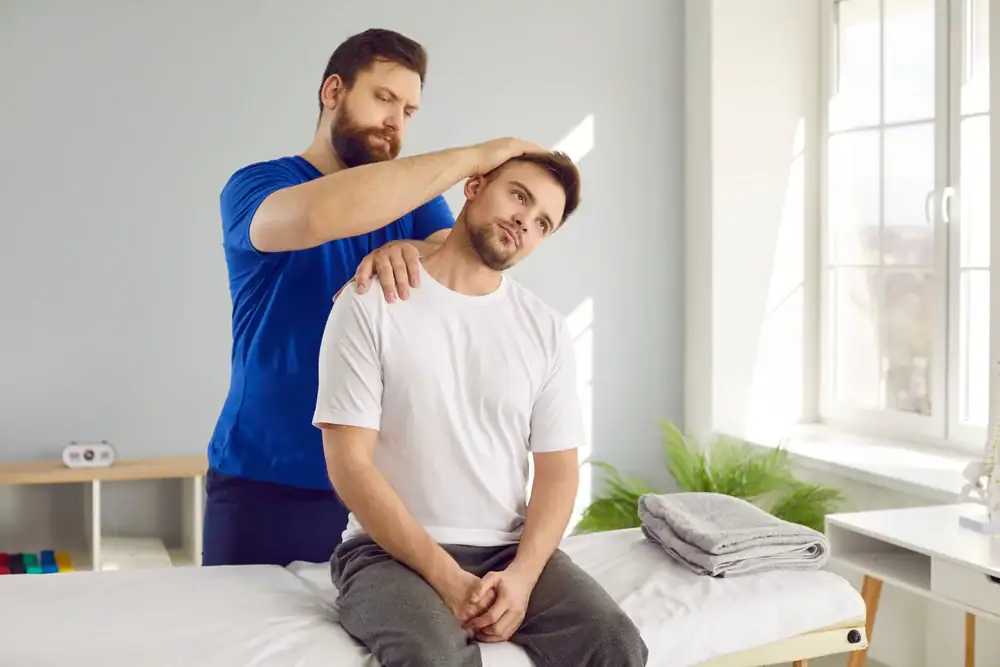
Yes. Medicare Part B covers outpatient physical therapy when it’s medically necessary, and that includes in-home services if you’re homebound or have difficulty leaving your home.
You’ll typically pay 20% of the Medicare-approved amount after you’ve met your deductible. If you have a Medicare Supplement plan, that may cover the remaining balance. We accept Medicare and work directly with most plans to minimize your out-of-pocket costs.
It’s worth noting that “homebound” doesn’t mean you can never leave the house. It means leaving requires considerable effort due to illness, injury, or medical condition. If getting to a clinic is a real barrier—physically or logistically—you likely qualify. We help verify eligibility during your first call so there are no surprises.
It depends on what you’re recovering from and how your body responds. Some people see significant improvement in four to six weeks. Others need a few months, especially after surgery or a neurological event like a stroke.
Frequency matters too. If you’re doing therapy twice a week and following through with home exercises, you’ll progress faster than someone who only shows up once a week and doesn’t practice in between. Your therapist will give you a realistic timeline after the initial evaluation.
The goal isn’t to keep you in therapy forever. It’s to get you strong and stable enough to manage on your own. Once you hit that point, we’ll transition you to a maintenance plan or discharge you with a home program you can continue independently.
Not right away. In New York State, you can receive physical therapy through direct access for up to 30 days or 10 visits without a prescription. After that, you’ll need a referral from a physician to continue.
Most people do come to us with a referral, especially if they’re post-surgery or managing a chronic condition. But if you’re dealing with new pain, balance issues, or mobility concerns and haven’t seen a doctor yet, you can still start treatment.
Direct access is helpful when you know something’s wrong but don’t want to wait weeks for a doctor’s appointment before getting care. Your physical therapist will evaluate you, start treatment, and communicate with your physician as needed to keep everyone on the same page.
Your therapist will start by asking about your medical history, current symptoms, and what’s been limiting you. They’ll want to know what activities are hard, what movements cause pain, and what your goals are—whether that’s walking without a cane, getting up the stairs, or returning to gardening.
Then comes the physical evaluation. They’ll assess your strength, range of motion, balance, posture, and how you move through basic tasks. If you’ve had surgery, they’ll check the surgical site and surrounding areas. If you’re dealing with neurological issues, they’ll test coordination and reflexes.
From there, they’ll explain what they found, what the treatment plan will involve, and how often you’ll need to meet. You’ll usually start some light exercises or manual therapy during that first visit. The whole session takes about an hour, and you’ll leave with a clear understanding of what comes next.
Absolutely. Falls don’t just happen because you’re older or unlucky—they happen because of measurable factors like weak legs, poor balance, slow reflexes, or unsafe movement patterns. Physical therapy addresses all of those.
Balance and proprioceptive training teaches your body to react faster when you start to tip or step on uneven ground. Strength training builds the leg and core muscles you need to catch yourself. Gait training corrects how you walk so you’re not shuffling or dragging your feet, both of which increase fall risk.
Your therapist will also assess your home environment. Are there loose rugs? Poor lighting? Clutter in walkways? They’ll point out hazards and suggest modifications. Combine that with a structured exercise program, and your fall risk drops significantly. For Fort Salonga residents living in older homes with stairs and uneven flooring, that kind of targeted prevention makes a real difference.
That’s more common than you’d think, and it usually comes down to one of a few things: the program wasn’t specific enough, you didn’t do it long enough, or the setting wasn’t right for you.
In-home therapy changes the equation. You’re not distracted by a busy clinic. You’re not cutting sessions short because of transportation issues. Your therapist sees how you actually move in your real environment and can tailor exercises to the exact tasks you struggle with at home.
Consistency matters too. If past therapy didn’t work because you couldn’t get there regularly or didn’t have support between sessions, that’s less likely to be an issue when your therapist comes to you. And if the exercises themselves weren’t effective, a fresh evaluation might reveal something that was missed before—a compensation pattern, a strength imbalance, or a mobility restriction that needs a different approach. You deserve a plan that actually fits your life.
Other Services we provide in Fort Salonga