


You stop planning your day around pain. That’s the difference between managing symptoms and actually recovering.
When balance training and gait training are done right, you’re not just steadier on your feet—you’re confident walking into the grocery store, playing with your grandkids, or getting back on the golf course. Falls become less of a fear. Independence stops feeling fragile.
Joint pain treatment through therapeutic exercise means you’re strengthening what’s weak and fixing what’s compensating. You’re not masking the problem. You’re addressing why it hurts in the first place. Most people who commit to the process see real improvement within weeks, not months.
Stroke rehabilitation and neurological rehabilitation require precision. Early intervention makes the biggest difference. We know how to retrain your nervous system, rebuild coordination, and help you regain function you thought was gone for good.
If you’re recovering from surgery or trying to avoid one, the goal is the same: restore what’s been lost and protect what’s still working. That’s what injury rehabilitation and pre-surgery rehab are built for.
We’ve been treating patients across Long Island for over two decades. We’re not new to Farmingdale, NY, and we’re not figuring it out as we go.
Our team includes licensed physical therapists with advanced certifications, including specialists trained through the Hospital for Special Surgery Rehabilitation Network. We’ve earned the “Best of Long Island” award from Bethpage Federal Credit Union five times—not because we asked for it, but because patients kept voting for us.
We also offer in-home physical therapy for patients who can’t easily get to a clinic. You shouldn’t have to choose between getting care and getting there. Farmingdale’s demographics skew older, and we know transportation can be a real barrier. So we come to you when it makes sense.

You start with an evaluation. We’re looking at how you move, where it hurts, what you can’t do anymore, and why. This isn’t a quick chat—it’s a full assessment that tells us what’s actually going on.
From there, we build a treatment plan based on your goals. If you’re recovering from a stroke, that’s neurological rehabilitation with neuromuscular re-education. If you’re unsteady and scared of falling, we’re doing balance and proprioceptive training. If your knee is bone-on-bone and you’re trying to avoid replacement surgery, we’re using resistance and strength training to support the joint and reduce pain.
Sessions are one-on-one. You’re not rotating between assistants or sharing your therapist with three other people. You get hands-on care from a licensed professional who’s tracking your progress and adjusting your plan as you improve.
Most patients see us for around seven to eight visits, though that depends on your condition. Neurological cases tend to take longer. Musculoskeletal issues often resolve faster. We’ll tell you upfront what to expect, and we’ll keep you updated as things change.

Ready to get started?
Every treatment plan is different, but most include some combination of therapeutic exercise, manual therapy, and functional training. We’re not handing you a sheet of exercises and walking away. We’re working with you, adjusting resistance, correcting form, and making sure you’re doing it right.
Fall prevention is a major focus in Farmingdale, NY. With over 20% of the local population aged 65 or older, falls are one of the leading causes of ER visits and loss of independence. Balance training can reduce your fall risk by 86% when started within three months of a diagnosis. That’s not a small number—that’s life-changing.
If you’ve had a stroke or deal with a neurological condition like Parkinson’s or MS, we offer specialized stroke rehabilitation and occupational rehabilitation to help you relearn movement patterns, improve coordination, and regain as much independence as possible. Early intervention matters. The sooner you start, the better your outcomes.
For joint pain, injury recovery, or post-surgery rehab, we use a combination of strength training, range-of-motion work, and pain management techniques that don’t involve drugs. You’re building resilience, not dependence.
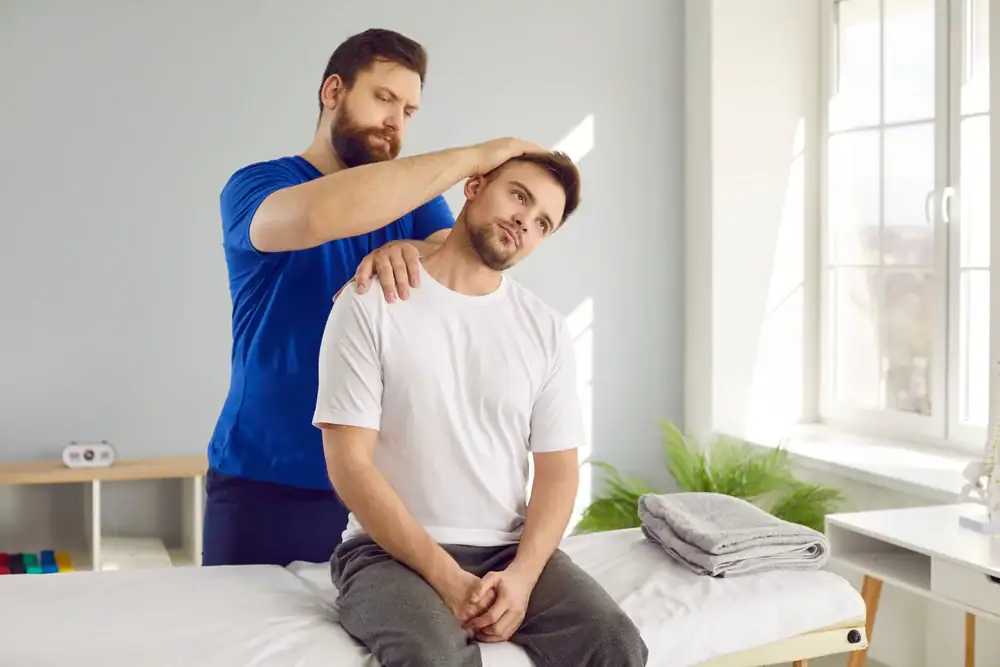
Most patients average seven to eight visits, but it depends on what you’re treating. If you’re recovering from a sprained ankle or dealing with general joint pain, you might be done in six weeks. If you’ve had a stroke or you’re managing a chronic neurological condition, expect closer to 10 or 12 sessions—sometimes more.
We don’t drag things out. The goal is to get you better and teach you how to stay that way. After the first evaluation, we’ll give you a realistic timeline based on your condition and how your body responds. Some people progress faster than expected. Others need more time. We adjust as we go.
If you’re doing in-home physical therapy, the schedule is similar. The setting changes, but the quality of care doesn’t.
In a lot of cases, yes. If you’re dealing with a torn meniscus, rotator cuff strain, or degenerative joint pain, physical therapy can often reduce pain and restore function enough that surgery becomes unnecessary. It’s not magic—it’s strengthening the muscles around the joint, improving alignment, and taking pressure off damaged tissue.
That said, some injuries do require surgery. If you’ve completely ruptured a tendon or you have severe structural damage, PT alone won’t fix it. But even in those cases, pre-surgery rehabilitation improves your outcomes. You go into surgery stronger, recover faster, and regain function more completely.
We’ll be honest with you. If we think you need to see a surgeon, we’ll tell you. But if there’s a good chance we can help you avoid it, we’ll do everything we can to get you there.
Your first visit is an evaluation. We’ll talk through your medical history, what’s been bothering you, and what you’re hoping to get back to. Then we’ll assess how you move—your range of motion, strength, balance, and any compensations your body is making.
This usually takes about 45 minutes to an hour. We’re not rushing. We need to understand the full picture before we start treating anything.
By the end of that first session, you’ll know what we think is going on, what the treatment plan looks like, and how long it’ll probably take. We’ll also start some light treatment if it makes sense—maybe some manual therapy or a few exercises to get things moving. You won’t leave without a clear next step.
Most insurance plans cover physical therapy, but your specific coverage depends on your plan. Some require a referral from your doctor. Others let you come in directly. Some cover 20 visits per year, others cover fewer.
We recommend calling your insurance company before your first visit and asking about your PT benefits. Find out if you need a referral, what your copay is, and how many visits are covered. That way, there are no surprises.
We’ll also verify your insurance on our end and let you know what to expect. If you don’t have insurance or your plan doesn’t cover enough visits, we can discuss payment options. The goal is to make sure cost doesn’t keep you from getting the care you need.
Physical therapy focuses on movement—strength, balance, mobility, pain relief. If you’re recovering from an injury, dealing with chronic pain, or trying to walk more steadily, that’s PT.
Occupational therapy focuses on daily activities—getting dressed, cooking, bathing, writing. If a stroke or neurological condition has affected your ability to do those things, that’s OT.
There’s overlap. Both help you regain independence. Both involve exercises and functional training. But the focus is different. PT is about how your body moves. OT is about how you use your body to live your life.
We offer both. If you need one or the other—or both—we’ll figure that out during your evaluation and make sure you’re seeing the right therapist for your goals.
Yes. If getting to a clinic is difficult—whether because of mobility issues, transportation challenges, or recovery limitations—we can bring physical therapy to your home.
In-home therapy works the same way as clinic-based care. You get one-on-one time with a licensed physical therapist who evaluates your condition, creates a treatment plan, and works with you through each session. The only difference is location.
This is especially helpful for stroke rehabilitation, post-surgery recovery, or fall prevention when leaving the house feels risky or exhausting. You’re still getting the same quality care, just in a setting that’s more comfortable and accessible for you. If you’re in Farmingdale, NY and think in-home therapy might be a better fit, just let us know when you call.
Other Services we provide in Farmingdale