
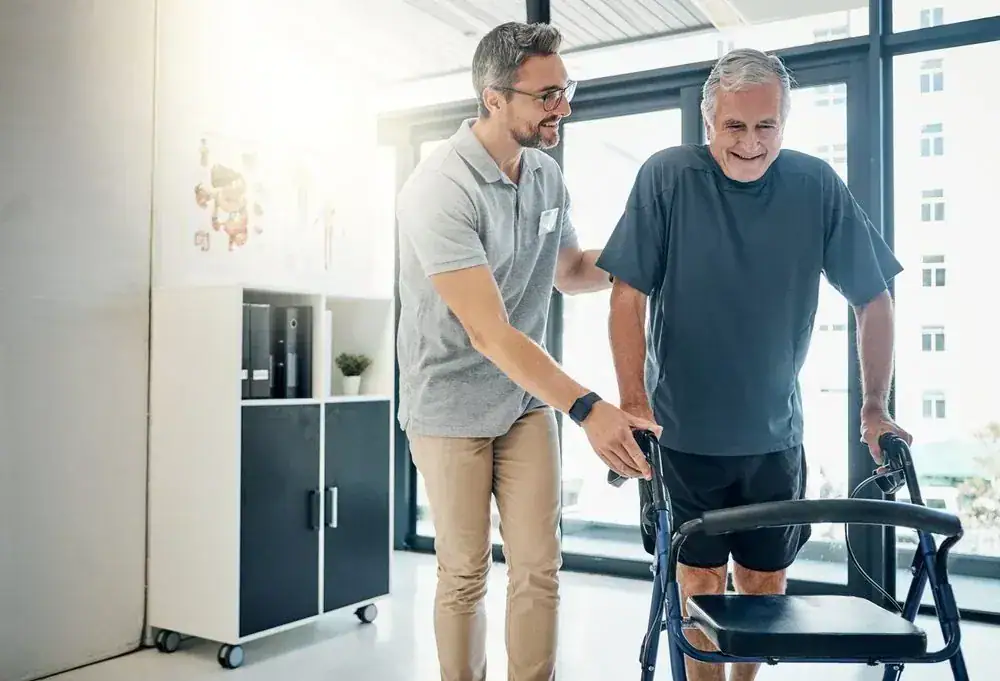
You stop second-guessing every step. Getting up from a chair doesn’t require a mental checklist. Walking to the mailbox or navigating your bathroom at night becomes automatic again, not something you plan around.
That shift matters because fear of falling often does more damage than the fall itself. It keeps you from doing things you enjoy, limits where you go, and slowly shrinks your world. When your balance improves through targeted physical therapy, you’re not just preventing falls—you’re reclaiming the freedom to move through your day without hesitation.
The right program addresses what’s actually causing the instability. Weak ankles, reduced core strength, slower reflexes, vision changes, medication side effects—these all play a role. A licensed therapist evaluates your specific risk factors in your actual home environment, then builds a plan around what your body needs to feel stable again. That’s how you get results that stick.
We’ve been providing in-home physical and occupational therapy across Long Island since 2010. We’re Medicare-certified, locally operated, and focused on one thing: helping older adults stay safe in their own homes.
Our therapists are trained in evidence-based fall prevention programs, including the Otago Exercise Program—a proven approach that reduces fall risk by up to 35%. We don’t use a one-size-fits-all protocol. Every plan is built around your specific needs, your home layout, and your goals.
Williston Park residents know how walkable this village is, but uneven sidewalks, stairs, and weather can create real challenges if your balance isn’t what it used to be. We meet you where you are—literally—and work with you in the environment where falls are most likely to happen. That’s how you build real-world confidence, not just clinic-based strength.

It starts with a phone call or referral. We schedule an in-home evaluation where a licensed therapist assesses your balance, strength, gait, and fall risk factors. They’ll also look at your home environment—lighting, rugs, furniture placement, bathroom setup—to identify hazards you might not notice.
From there, we build a personalized treatment plan. That usually includes balance exercises for seniors, strength training, gait retraining, and functional movements that mirror your daily routine. Sessions happen in your home, typically two to three times per week. You’re not driving anywhere or worrying about getting to a clinic.
As you progress, exercises get more challenging. We’re not just improving your balance—we’re teaching your body to recover when you lose it. That’s the difference between a stumble and a fall. Most people see measurable improvement within a few weeks, and the program is covered by Medicare when medically necessary.

Ready to get started?
Every fall prevention program includes a comprehensive risk assessment, personalized exercise plan, and ongoing progress tracking. Your therapist will work with you on strength training, balance drills, coordination exercises, and mobility work—all designed to reduce fall risk in real-world situations.
We also provide education on home safety modifications, proper footwear, medication management, and how to get up safely if a fall does happen. Family members are encouraged to participate so they understand what you’re working on and how to support your progress.
In Williston Park and surrounding Nassau County communities, we see a lot of older adults living independently in multi-level homes. Stairs are a common concern. We incorporate stair training, handrail use, and weight-shifting techniques that make navigating your home safer. If you’ve already fallen once, we take that seriously—falling once doubles your chance of falling again, and early intervention makes a significant difference.

If you’ve fallen in the past year, feel unsteady when walking, grab onto furniture for support, or avoid certain activities because you’re worried about falling—those are signs you could benefit from fall prevention therapy. Even if you haven’t fallen yet, changes in balance, strength, or coordination are worth addressing before they become a bigger problem.
Your doctor may recommend therapy after a hospital stay, surgery, or if they notice you’re at increased risk during a routine visit. But you don’t need to wait for a referral to reach out. Many people contact us directly because they’ve noticed changes and want to be proactive.
Medicare covers fall prevention therapy when it’s medically necessary and prescribed by a physician. A licensed therapist will evaluate your specific situation during the initial visit and determine if you qualify. The goal is to catch issues early, before a fall leads to an emergency room visit or worse.
In-home therapy addresses the environment where most falls actually happen—your home. A clinic can improve your strength and balance in a controlled setting, but it doesn’t account for the uneven floor in your hallway, the lighting in your bathroom, or the rug in your living room. When therapy happens in your home, we’re training your body to handle the real obstacles you face every day.
There’s also the practical side. If you’re already at risk for falling, getting to and from a clinic introduces additional risk. Transportation, parking, walking through unfamiliar spaces—it all adds stress. In-home therapy eliminates that. You get the same quality care without the logistical challenges.
And frankly, people tend to stick with in-home programs longer because they’re more convenient. Consistency matters when you’re retraining your body. The easier it is to show up, the better your results will be.
Yes, Medicare Part B covers outpatient physical therapy and occupational therapy for fall prevention when it’s medically necessary and ordered by a doctor. That includes in-home therapy. You’ll be responsible for your standard copay or coinsurance, but the service itself is covered as long as you meet Medicare’s criteria.
Medical necessity usually means you have a documented fall risk—whether that’s a history of falls, balance issues, muscle weakness, gait problems, or other factors that increase your likelihood of falling. Your therapist will work with your physician to ensure proper documentation and billing.
If you’re unsure about your coverage, we can help you navigate that during the initial consultation. We’ve been billing Medicare since 2010 and understand how to structure treatment plans that meet their requirements while actually addressing your needs. The key is starting with a proper evaluation so we can justify the medical necessity and get you the care you need.
Most fall prevention programs run between six and twelve weeks, depending on your starting point and goals. Sessions typically happen two to three times per week, with each visit lasting about an hour. That timeline gives your body enough time to build strength, retrain balance reflexes, and develop new movement patterns that reduce fall risk.
Some people see noticeable improvement within the first few weeks—better stability, more confidence, less hesitation when moving around. But lasting change takes consistency. We’re not just teaching you exercises; we’re retraining your neuromuscular system to respond differently when you lose your balance.
After the formal program ends, you’ll have a home exercise plan to maintain your progress. Many people continue with a modified routine to keep their strength and balance sharp. The goal isn’t to keep you in therapy forever—it’s to give you the tools to stay safe and independent long after we’re gone.
The Otago Exercise Program is an evidence-based fall prevention protocol developed in New Zealand and tested in multiple clinical trials. It’s one of the most researched and effective fall prevention programs in the world, proven to reduce falls by up to 35% in older adults living at home. That’s not marketing talk—that’s peer-reviewed data.
The program focuses on strength and balance exercises that get progressively more challenging as you improve. It’s individualized based on your abilities and risk factors, and it’s designed to be done at home with minimal equipment. The exercises target the specific muscle groups and movement patterns that prevent falls in real-world situations.
We use Otago as a foundation because it works, and because it’s been validated across different populations and settings. But we don’t follow it blindly. Your therapist will adapt the program based on your specific needs, limitations, and home environment. The goal is to give you a structured, proven approach while still personalizing it to your situation.
Absolutely. In fact, falling once is one of the strongest indicators that you need fall prevention therapy. Research shows that falling once doubles your risk of falling again, and each subsequent fall increases the likelihood of serious injury. Early intervention after a fall can break that cycle.
Therapy after a fall focuses on rebuilding strength, restoring confidence, and identifying what caused the fall in the first place. Was it a balance issue? Muscle weakness? A hazard in your home? Medication side effects? We figure out the root cause and address it directly so you’re not just recovering—you’re actually reducing your risk going forward.
Many people develop a fear of falling after their first fall, which leads to reduced activity, which leads to further weakness and higher fall risk. It’s a vicious cycle. A structured fall prevention program helps you regain confidence in a controlled, supportive way. You’ll learn how to move safely, how to catch yourself if you start to lose balance, and how to get up if you do fall. That knowledge alone can be life-changing.
Other Services we provide in Williston Park