
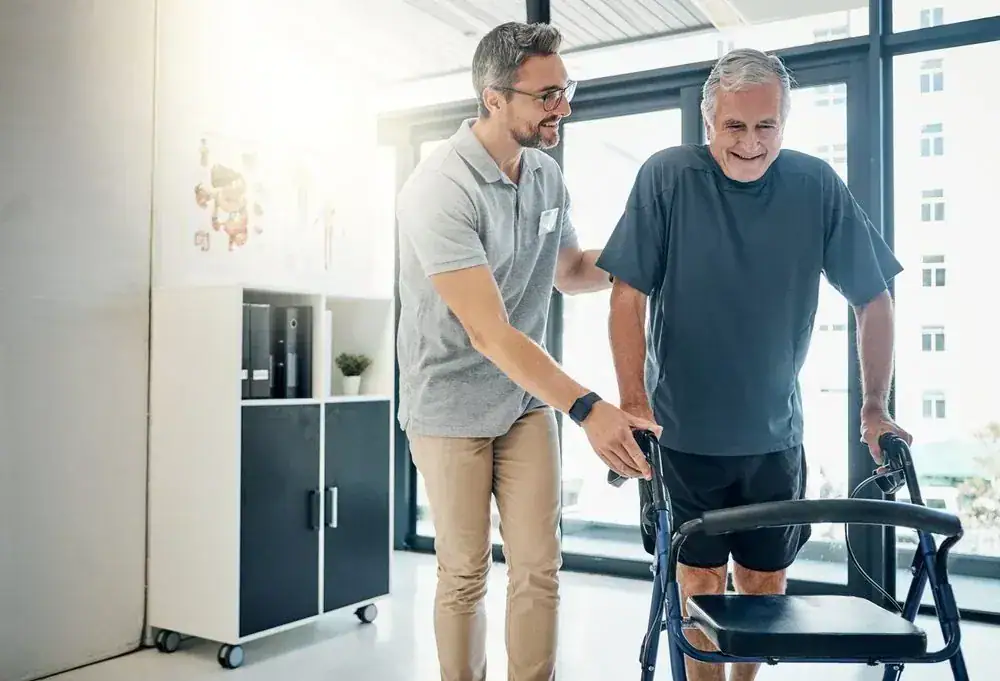
You stop planning your day around what feels safe. The bathroom at night, the front steps, reaching for something on a shelf—these stop being calculated risks.
Balance exercises for seniors work because they retrain how your body responds when you shift weight or lose footing. Your muscles get stronger, your reactions get faster, and your brain relearns how to keep you upright. That’s not motivational talk—it’s what happens when you work with a physical therapist who knows how to address fall risk.
Most people who fall once will fall again within six months. Not because they’re careless, but because the underlying issues—weak legs, poor coordination, medication side effects—don’t fix themselves. Physical therapy for balance addresses those issues directly, in your home, where the actual risks are.
We’ve been providing in-home physical therapy across Long Island since 2010. That includes Westhampton Beach, where getting to appointments can mean navigating stairs, parking, or relying on family schedules.
We bring the same equipment and expertise you’d find in a clinic directly to your living room. Our therapists are licensed, Medicare-certified, and trained specifically in elderly fall prevention. Every treatment plan is built around your home environment—the layout, the flooring, the furniture—because that’s where you need to feel steady.
Long Island has higher fall rates than the rest of New York State. Suffolk County ranks fifth statewide for fall-related incidents among older adults. We’ve seen it firsthand, and we know what works to reduce that risk.

Your first session starts with a fall risk assessment. We look at your strength, your gait, your balance, and any medications or health conditions that might increase your risk. We also walk through your home to identify hazards—loose rugs, poor lighting, awkward transitions between rooms.
From there, we build a treatment plan. That usually means senior balance exercises two to three times per week, done in your home with our supervision. These aren’t generic stretches. They’re targeted movements designed to strengthen your legs, activate your core, and improve your reaction time when you start to lose balance.
As you progress, we adjust the exercises to match your improvement. The goal isn’t just to get stronger—it’s to move through your daily routine without second-guessing every step. Most patients see measurable improvement within four to six weeks, and we track that progress at every visit.

Ready to get started?
You get one-on-one sessions with a licensed physical therapist, in your home, for the full appointment. No assistants, no rotating staff. Just consistent care from someone who knows your history and your goals.
Each session includes balance training exercises tailored to your ability level. We also work on strength, flexibility, and coordination—all of which play a role in preventing falls. If you use a walker or cane, we’ll make sure you’re using it correctly. If you’ve had a stroke or joint replacement, we’ll adapt the exercises accordingly.
Westhampton Beach has an older housing stock, and many homes weren’t designed with aging in place in mind. Narrow hallways, steep stairs, bathtubs without grab bars—we see it constantly. Part of our service is helping you modify your space in practical, affordable ways. Sometimes that’s as simple as rearranging furniture or adding a nightlight. Other times, we’ll recommend specific equipment or refer you to a contractor.
We accept Medicare and most commercial insurance plans. If you’re eligible for home health services, your therapy is likely covered in full. We handle the paperwork and verification so you’re not stuck navigating insurance requirements on your own.
If you’ve fallen in the past year, your risk of falling again is twice as high as someone who hasn’t. That’s the clearest indicator. But there are others: difficulty getting up from a chair, feeling unsteady when you walk, avoiding certain activities because you’re worried about balance, or taking four or more medications daily.
On Long Island, we also see higher fall rates during winter months when driveways and walkways get icy. But most falls happen indoors, in familiar spaces, during routine activities. Tripping over a rug, missing a step, losing your footing in the bathroom—these aren’t freak accidents. They’re predictable outcomes of declining strength and balance.
A physical therapist can assess your fall risk in one session. We test your balance, your gait, your leg strength, and your ability to recover when you start to tip. If you’re at risk, we’ll tell you exactly why and what needs to improve.
Yes, if you meet Medicare’s requirements for home health services. That typically means you’re homebound—leaving home takes considerable effort, you need assistance, or it happens infrequently. You also need a doctor’s order for physical therapy.
Medicare Part B covers outpatient physical therapy, which includes fall prevention and balance training. There’s no limit on the number of sessions as long as you’re making progress and the therapy is medically necessary. Most of our patients pay little to nothing out of pocket once they’ve met their deductible.
If you’re not homebound but still want in-home therapy, some Medicare Advantage plans and commercial insurances cover it differently. We verify your benefits before the first session so there are no surprises. And if you’re paying out of pocket, we’ll discuss costs upfront.
Balance exercises for seniors focus on the specific systems that prevent falls: your vestibular system (inner ear), your vision, and your proprioception (your body’s sense of where it is in space). As you age, all three decline. Regular exercise might keep you strong, but it doesn’t necessarily retrain those systems.
Senior balance exercises challenge your stability in controlled ways. Standing on one foot, shifting your weight side to side, walking heel to toe, practicing how to catch yourself when you start to fall—these movements force your brain and body to work together. Over time, your reactions get faster and your confidence improves.
We also adjust exercises based on your current ability. If you’re using a walker, we’re not going to ask you to stand on one foot unsupported. We’ll start with seated exercises or use a countertop for support, then progress as you get stronger. The key is consistency—two to three sessions per week, done correctly, with someone monitoring your form.
Most patients notice a difference within four to six weeks. That might mean feeling steadier on your feet, moving around your home with less hesitation, or getting through the day without grabbing onto furniture for support.
Measurable improvement—like better scores on balance tests or increased leg strength—usually shows up around the same timeframe. But everyone’s different. If you’ve had a recent fall or surgery, it might take longer. If you’re starting from a higher baseline, you might improve faster.
The bigger question is whether the improvement sticks. That’s why we don’t just run you through exercises—we teach you how to continue them on your own. By the time you’re discharged from therapy, you should have a routine you can maintain independently. We also schedule follow-ups to make sure you’re staying on track.
That fear is common, and it’s not irrational. Falling once doubles your risk of falling again. But the fear itself can make things worse—you start moving less, your muscles weaken, and your balance declines further.
Physical therapy for balance helps rebuild both your physical stability and your confidence. We start slow, in a controlled environment, with exercises that feel manageable. As you get stronger and see progress, the fear usually lessens. It’s not about pretending the risk doesn’t exist—it’s about reducing that risk to the point where you can move through your day without constant worry.
We also address the psychological side. If you’re avoiding certain rooms or activities because of fear, we’ll work on those specific scenarios. If you’re hesitant to go outside, we’ll practice on different surfaces and inclines. The goal is to expand what feels safe, not just maintain the status quo.
Not usually. Most balance exercises use your body weight and things you already have—a sturdy chair, a countertop, a wall for support. We bring any specialized equipment needed for your sessions, and if something would help you practice between visits, we’ll either provide it or tell you where to get it.
Some patients benefit from a gait belt, resistance bands, or a balance pad, but those are inexpensive and optional. The exercises themselves don’t require a gym setup. That’s the advantage of in-home therapy—we design the program around your space and what’s realistic for you to continue on your own.
If your home has specific hazards—like a bathroom without grab bars or stairs without a railing—we’ll recommend modifications. But those are safety improvements, not requirements for therapy. You can start balance training immediately, regardless of your current setup.
Other Services we provide in Westhampton Beach