

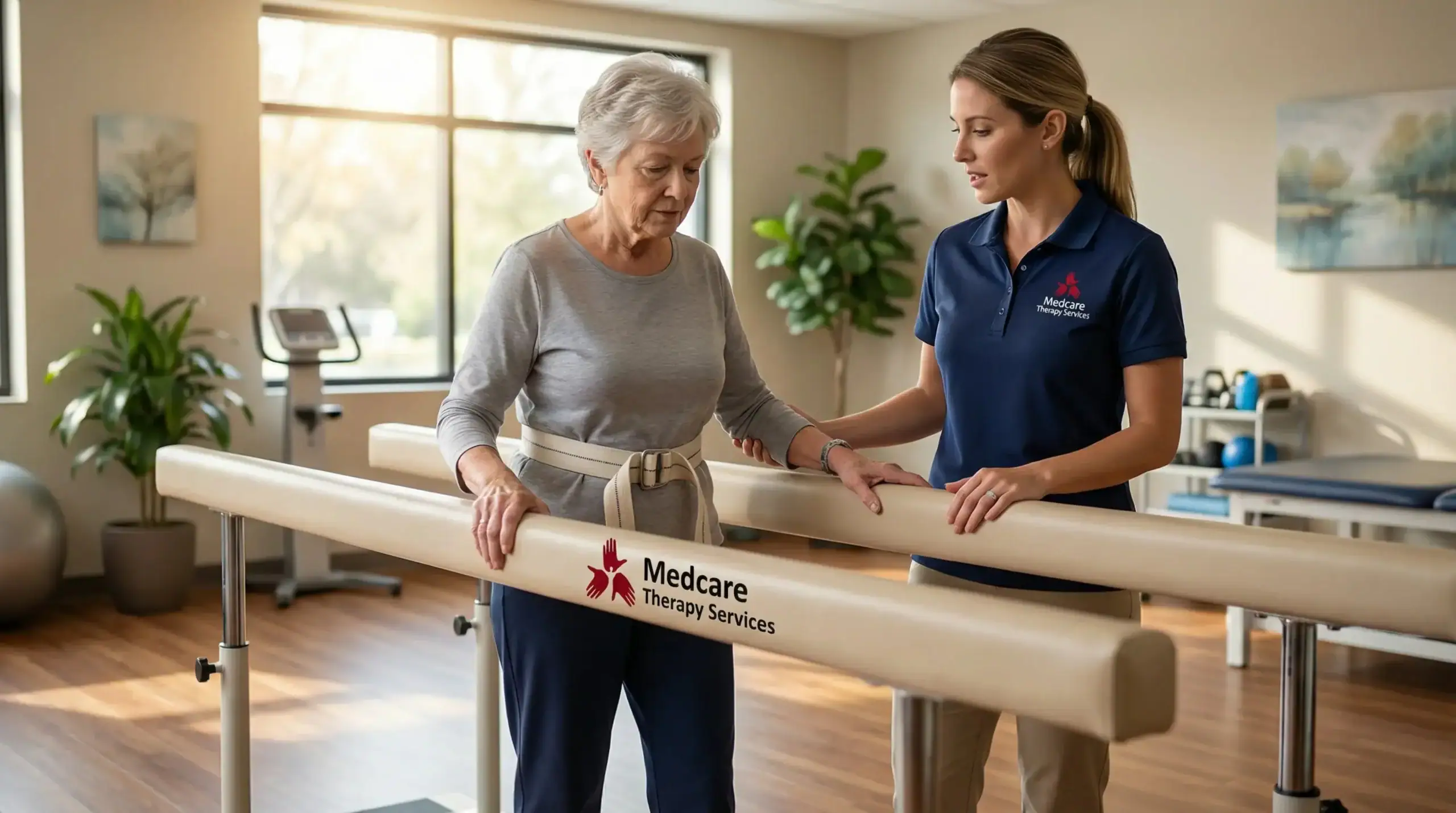
You stop planning your day around what feels safe. That’s what happens when your legs get stronger and your balance becomes something you trust again instead of worry about.
The stairs in your home stop feeling like a risk assessment. You walk into the grocery store without scanning for things to grab onto. You visit friends without that background hum of anxiety about uneven driveways or unfamiliar bathrooms.
Long Island seniors face higher fall rates than almost anywhere else in New York. Nassau County alone sees 88% of injury hospitalizations in adults over 65 tied directly to falls. But here’s what the research actually shows: balance training and leg strengthening cut fall risk by 30 to 50% when done consistently with a licensed physical therapist.
This isn’t about bubble-wrapping your life. It’s about building enough strength and stability that you can live it without constant calculation. You get your confidence back because your body earns it.
We’ve worked with Long Island seniors for over a decade. We’re Medicare-certified, which means your fall risk assessment and therapy sessions are typically covered under Part B with minimal out-of-pocket cost.
We come to your home in West Islip if getting to an office is part of the problem. We don’t make you fit into a generic program—we assess your specific risk factors, your home layout, your current strength and balance levels, and build a plan around what actually needs to improve.
We’re not the cheapest option, and we’re fine with that. You’re working with licensed professionals who understand that fall prevention isn’t just exercises—it’s about whether you can keep living independently in your own home. That’s worth doing right.

You start with a comprehensive fall risk assessment. One of our physical therapists evaluates your balance, gait, strength, home environment, and medical history to identify exactly what’s increasing your fall risk. This isn’t a questionnaire—it’s a functional evaluation of how you actually move.
From there, you get a personalized program. That typically means progressive strength training focused on your legs and core, balance exercises that challenge your stability in controlled ways, and functional movement work that translates directly to daily activities like getting in and out of the shower or navigating stairs.
Sessions happen one-on-one, either at our clinic or in your West Islip home. Most patients see measurable improvements in strength and balance within 6 to 8 weeks. The goal isn’t just to complete a program—it’s to build enough capacity that you maintain these gains long-term.
You’ll also get education on environmental modifications, proper footwear, and how to integrate these exercises into your routine after formal therapy ends. Research shows that seniors who receive physical therapy within three months of a fall risk diagnosis report significantly lower fall rates up to 12 months later.

Ready to get started?
Balance exercises for seniors form the foundation of what we do. These aren’t generic stretches—they’re evidence-based progressions that challenge your vestibular system, strengthen stabilizer muscles, and retrain your body’s automatic balance responses. You might start with supported standing exercises and progress to dynamic movements that mimic real-world challenges.
Strength training targets the muscle groups that matter most for fall prevention. Your quads, glutes, and core get the most attention because they’re what keep you upright when you hit an uneven surface or need to catch yourself. We use resistance bands, body weight, and functional movements—not gym equipment you’ll never use at home.
Gait training improves how you walk. Many falls happen during transitions—standing up, turning around, stepping over something. We work on those specific movement patterns until they feel automatic again.
You also get a home safety assessment if you’re doing in-home therapy. We identify trip hazards, recommend grab bar placements, evaluate lighting, and suggest modifications that reduce environmental fall risk. West Islip homes, especially older construction, often have features that increase fall risk without homeowners realizing it.
Medicare covers these services when medically necessary, and we handle the documentation and billing. Most patients pay little to nothing out of pocket for fall prevention therapy under Part B coverage.

If you’ve fallen in the past year, you need an assessment. That’s the clearest indicator. But you should also consider therapy if you feel unsteady when walking, if you grab onto furniture or walls for support, or if you’ve started avoiding activities because you’re worried about falling.
More than 25% of adults over 65 fall each year, but most don’t tell their doctor. They assume it’s just part of aging or that being “more careful” will solve it. The research doesn’t support that. Being more careful doesn’t address weak leg muscles, poor balance reflexes, or gait abnormalities that increase fall risk.
Medicare covers a fall risk assessment during your annual wellness visit. If your doctor identifies risk factors—previous falls, balance problems, mobility issues, certain medications—they can refer you for physical therapy. That’s typically covered under Part B with minimal cost to you.
The assessment itself is straightforward. One of our physical therapists watches how you walk, tests your balance in different positions, measures your leg strength, and evaluates how well you can perform functional movements like standing from a chair or stepping over objects. Based on that, we’ll tell you whether therapy would actually reduce your fall risk or if you’re fine as is.
A physical therapist identifies the specific deficits increasing your fall risk. Most people don’t know whether their problem is leg weakness, inner ear issues, poor proprioception, gait abnormalities, or some combination. You can’t fix what you haven’t accurately diagnosed.
The exercises themselves are also different. Balance training for fall prevention follows evidence-based progressions that systematically challenge your stability without putting you at risk. A therapist knows when to progress you to harder variations and when you’re compensating with poor form that won’t actually improve your balance.
You also get accountability and correction. Many seniors start exercise programs at home but stop within a few weeks, or they do the exercises incorrectly and don’t get results. A therapist adjusts your program based on your progress, catches compensatory movement patterns, and keeps you consistent.
The data backs this up. Studies show that supervised physical therapy programs reduce falls by 37%, while general exercise programs without professional guidance show much smaller effects. The difference is specificity and progression—you’re not just moving more, you’re systematically addressing the biomechanical and neuromuscular factors that cause falls.
Yes, but with specific conditions. Medicare Part B covers fall risk assessments during your annual wellness visit at no cost to you. If that assessment identifies fall risk, your doctor can refer you for physical therapy, which is also covered under Part B.
You’ll typically pay 20% of the Medicare-approved amount after you’ve met your deductible, but many supplemental insurance plans cover that remaining 20%. The key is that the therapy must be medically necessary—meaning a doctor has documented your fall risk or you’ve had a recent fall.
Medicare also covers certain home safety modifications through specific programs, though that varies by plan. We handle all the documentation and prior authorization requirements, so you’re not navigating the billing process alone.
What Medicare doesn’t cover well is ongoing preventive therapy if you’re not currently at documented risk. That’s one reason why getting assessed early matters—if you wait until after a serious fall, you’re dealing with injury recovery on top of fall prevention. The goal is to intervene before a fall happens, and Medicare does cover that when properly documented by your physician.
Most patients see measurable improvements in balance and strength within 6 to 8 weeks of consistent therapy. That typically means two to three sessions per week, plus home exercises on the other days. You’re not going to reverse years of deconditioning in two weeks, but you also don’t need six months to see real change.
The timeline depends on your starting point. If you’re dealing with significant leg weakness or you’ve had multiple recent falls, you might need 10 to 12 weeks to build enough capacity that your fall risk drops meaningfully. If you’re catching problems early—maybe you’ve noticed some balance issues but haven’t fallen yet—you might see improvements faster.
What matters more than the timeline is whether the improvements stick. Research shows that seniors who complete a structured physical therapy program maintain lower fall rates for up to 12 months afterward. But that requires continuing some level of exercise after formal therapy ends.
We build that into your program from the start. You’re not just doing exercises with a therapist—you’re learning how to maintain your strength and balance long-term. By the end of therapy, you should have a clear routine you can do at home, plus the knowledge to recognize if you’re declining and need a refresher.
Yes. We’ve provided in-home physical therapy across Long Island since 2010, and West Islip is part of our regular service area. If getting to a clinic is difficult—whether that’s due to transportation, mobility limitations, or you just don’t feel safe leaving home—we bring the therapy to you.
In-home therapy has some advantages for fall prevention specifically. We can assess your actual living environment and identify hazards you might not notice—loose rugs, poor lighting, awkward bathroom layouts, stairs without railings. We can also practice the specific movements you do every day in the exact spaces where you do them.
The exercises themselves work just as well at home. You don’t need special equipment for effective balance and strength training. Most of what we do uses your body weight, household items, or simple resistance bands we provide.
Insurance coverage is the same whether you’re seen at home or in a clinic. Medicare Part B covers in-home physical therapy when it’s medically necessary, which fall prevention typically qualifies as if you’ve been assessed as at-risk. We handle all the scheduling and billing logistics—you just focus on the therapy itself.
It’s not too late, but the urgency is higher. Multiple falls mean your risk of serious injury is climbing fast, and each fall typically makes you more fearful and less active, which weakens you further. That’s a cycle that gets harder to break the longer it continues.
The good news is that physical therapy still works even after multiple falls. You’re not damaged beyond repair—you likely have specific, fixable problems with strength, balance, or gait that can be addressed with the right program. We’ve worked with plenty of West Islip seniors who came to us after two, three, or more falls and rebuilt enough stability to live independently again.
The approach is slightly different if you’ve already fallen multiple times. We’re more conservative with progressions, we spend more time on basic strength and balance foundations, and we’re more aggressive about environmental modifications in your home. You might also need a longer therapy timeline to build sufficient capacity.
What you can’t do is assume the problem will resolve on its own or that you’ll just “be more careful.” The research is clear—that doesn’t work. Falls happen because of physical deficits, not because you weren’t paying attention. Address the deficits, and your fall risk drops. Ignore them, and you’re likely to fall again, possibly with worse consequences next time.
Other Services we provide in West Islip