
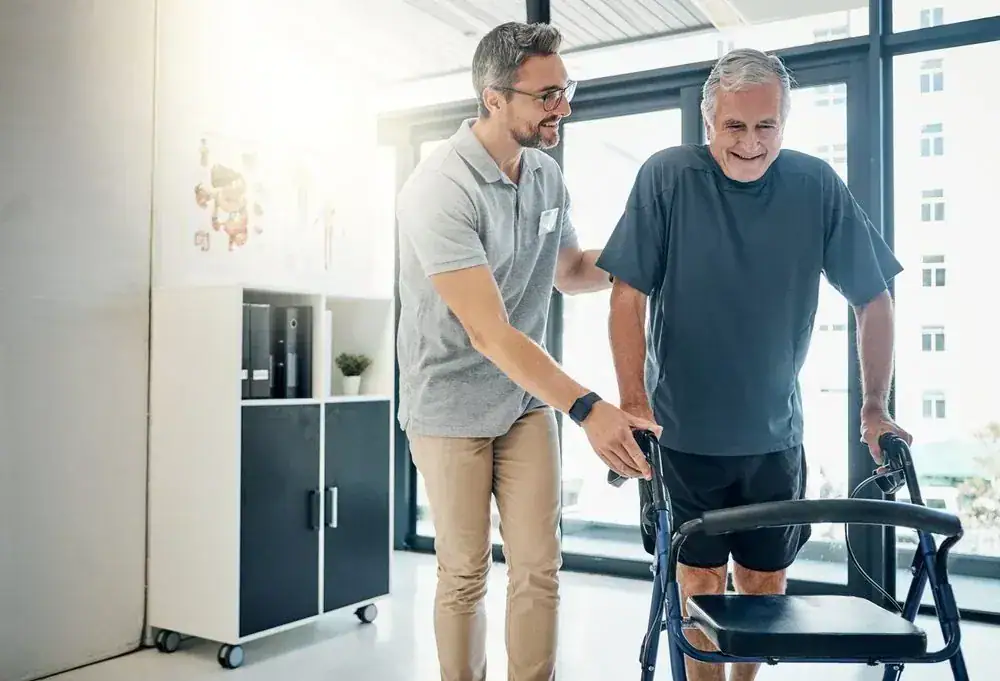
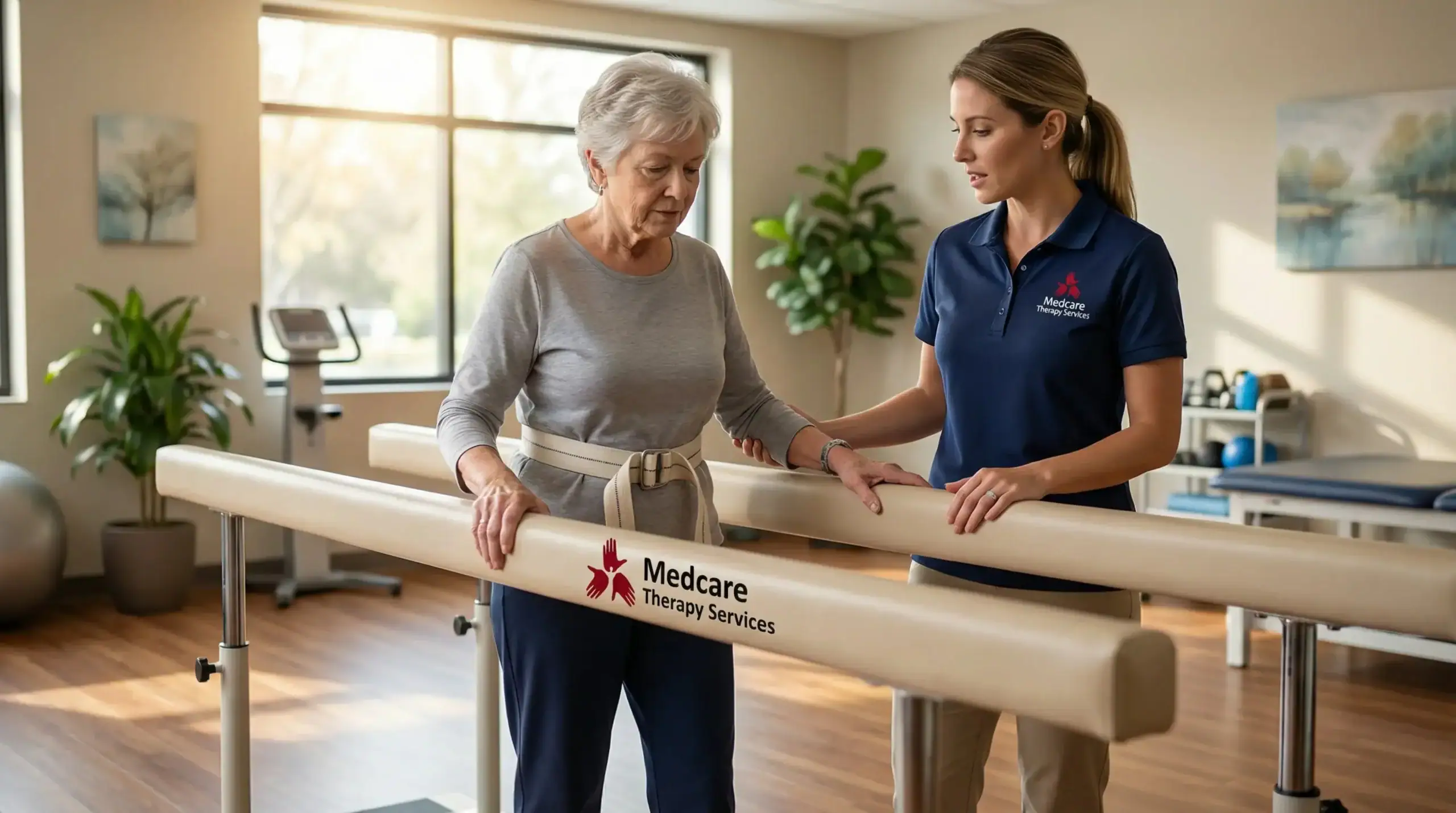
You shouldn’t have to choose between independence and safety. Every year, more than one in four adults over 65 falls—and many of those falls happen at home, doing everyday things like walking to the bathroom or reaching for something in the kitchen.
The fear that follows a fall can be just as limiting as the injury itself. You start second-guessing your movements. You avoid activities you used to enjoy. Your world gets smaller.
Physical therapy for balance works because it addresses what’s actually causing the instability—weak legs, poor coordination, slower reflexes, or environmental hazards you’ve stopped noticing. Research shows that targeted balance exercises for seniors can reduce fall risk by up to 37%. That’s not a small number. That’s the difference between living confidently and living cautiously.
Our therapists come to your home in West Hills, evaluate your specific risk factors, and build a program around your body and your space. You’re not just doing generic exercises. You’re training for the movements you actually do every day.
Medcare Therapy Services has been delivering in-home physical and occupational therapy across Long Island since 2010. We’re not a national chain. We’re local, licensed professionals who’ve worked with hundreds of seniors throughout West Hills, Huntington, Dix Hills, and across Nassau and Suffolk Counties.
Our therapists are trained in evidence-based fall prevention programs, including the Otago Exercise Program—a research-backed approach proven to reduce falls in older adults. We don’t just hand you a sheet of exercises. We assess your balance, strength, gait, and home environment, then design a program that fits your life.
We accept Medicare and work directly with your physician to coordinate care. You don’t need to figure out logistics or drive anywhere. We come to you, and we treat you like family—because in a community like West Hills, that’s how it should be.

It starts with a comprehensive evaluation in your home. A licensed physical or occupational therapist will assess your balance, leg strength, walking pattern, coordination, and reaction time. We’ll also walk through your home with you to identify environmental risks—loose rugs, poor lighting, uneven thresholds, clutter in walkways.
From there, we build a personalized exercise program. This typically includes strength training to improve how you stand up from a chair or get out of bed, balance exercises that challenge your stability in controlled ways, and gait training to help you walk more confidently. Sessions usually happen two to three times per week, depending on your needs and what Medicare approves.
You’ll also get practical recommendations for making your home safer—simple changes that can dramatically reduce risk, like adding grab bars, improving lighting, or rearranging furniture. As you get stronger and more stable, we adjust the program. The goal isn’t just to prevent falls. It’s to give you back the confidence to move freely in your own home without constantly worrying about what might happen.

Ready to get started?
Every fall prevention program includes one-on-one sessions with a licensed therapist, a personalized exercise plan, and a home safety evaluation. You’re not doing this alone or guessing what might help. You’re working with someone who knows exactly what to look for and how to address it.
The exercises focus on building leg strength, improving balance, and increasing coordination. Common movements include sit-to-stand exercises, heel-to-toe walking, single-leg stands, and controlled weight shifts. These aren’t complicated. They’re functional movements that translate directly to what you do every day—getting up, walking, turning, reaching.
In West Hills and surrounding Nassau County communities, many of our clients are managing multiple risk factors at once: arthritis, vision changes, medications that affect balance, or previous injuries. We account for all of it. If you’ve already fallen, we work on rebuilding your confidence alongside your physical strength. If you haven’t but you’re worried, we focus on prevention before anything happens.
Sessions are covered by Medicare when medically necessary and prescribed by your doctor. We handle the coordination and paperwork. You focus on getting stronger.
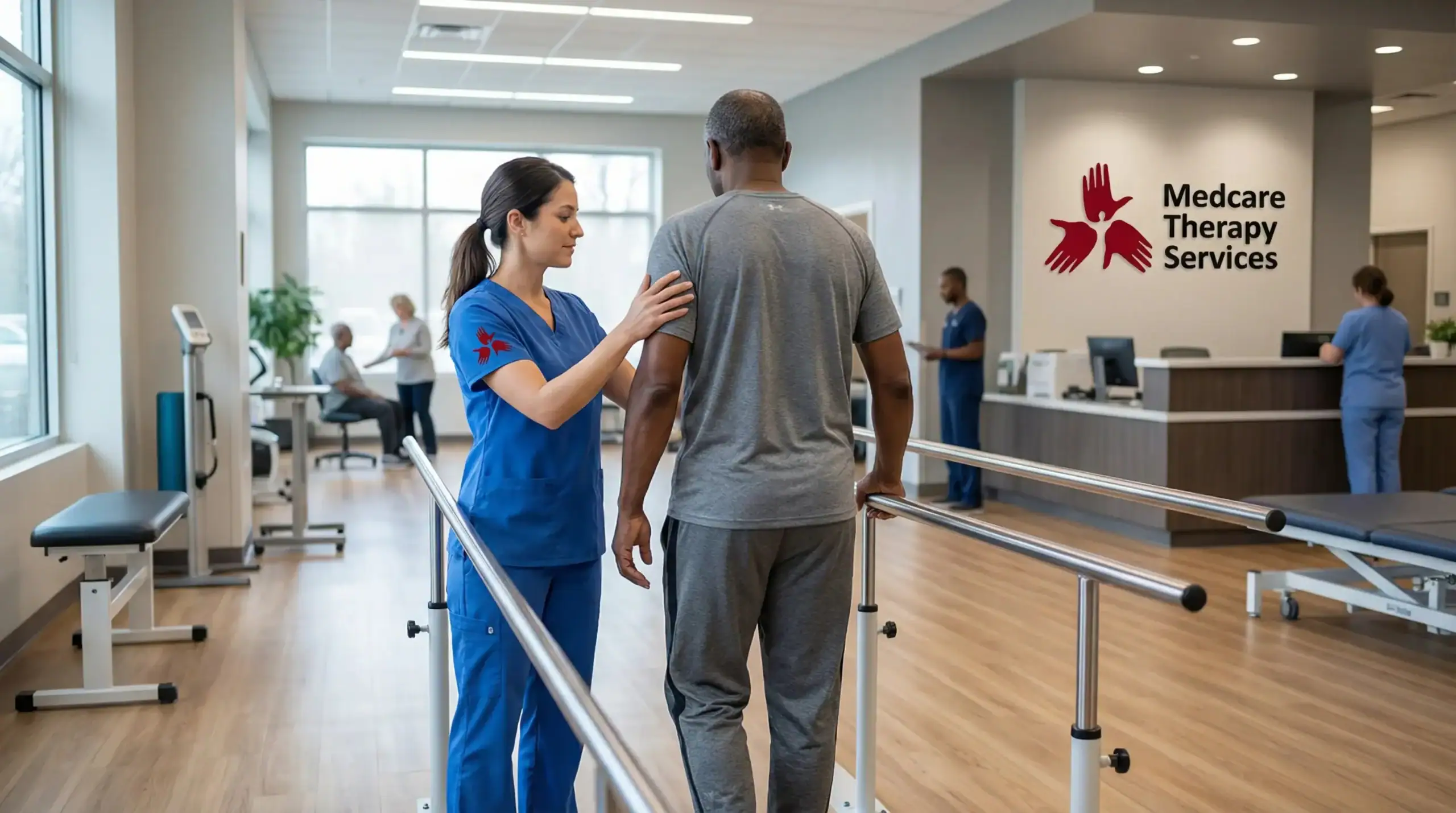
If you’ve fallen in the past year, you’re already at higher risk and would benefit from an evaluation. But you don’t have to wait until after a fall to start. Other signs include feeling unsteady when you walk, needing to hold onto furniture or walls for support, avoiding certain movements because you’re not sure you can do them safely, or noticing that your balance isn’t what it used to be.
Your doctor might also recommend fall prevention therapy if you have conditions that affect mobility—arthritis, neuropathy, Parkinson’s, stroke recovery, or general deconditioning from being less active. Even fear of falling is a valid reason to start. That fear often leads to reduced activity, which weakens your muscles and actually increases fall risk over time.
The evaluation itself is straightforward. A therapist will test your balance, strength, and walking pattern, then give you a clear picture of where you stand and what would help. If therapy isn’t necessary, we’ll tell you. If it is, you’ll know exactly why and what the plan is.
The exercises are tailored to your current ability and your specific risk factors, but most programs include three main categories: strength training, balance training, and functional movement practice. Strength exercises focus on your legs and core—things like sit-to-stand repetitions, heel raises, and controlled squats. These build the muscle power you need to catch yourself if you start to lose balance.
Balance exercises challenge your stability in safe, controlled ways. You might practice standing on one leg, walking heel-to-toe in a straight line, or shifting your weight from side to side. As you improve, we make them harder—closing your eyes, standing on an unstable surface, or adding head movements.
Functional exercises mimic real-life activities. Getting in and out of a chair. Walking and turning. Reaching for something on a shelf. Stepping over an obstacle. These are the movements that matter most in your daily life, so we train them directly. Everything is done at your pace, with support as needed. You’re never pushed beyond what’s safe, but you are challenged enough to see real improvement.
Yes, Medicare Part B covers outpatient physical therapy and occupational therapy for fall prevention when it’s medically necessary and prescribed by your doctor. Medical necessity typically means you have a documented fall risk—either you’ve fallen recently, you have a condition that affects balance and mobility, or an assessment shows you’re at significant risk.
Your doctor will need to refer you and provide a diagnosis that supports the need for therapy. Common qualifying diagnoses include history of falls, gait instability, muscle weakness, balance disorder, or conditions like arthritis, stroke, or Parkinson’s that affect mobility. Once we receive the referral, we verify your coverage and handle the billing directly with Medicare.
There are coverage limits—Medicare covers up to a certain dollar amount per year for physical therapy and a separate amount for occupational therapy, though exceptions can be made if medically necessary. We track your benefits and keep you informed. Most patients don’t hit the cap, especially when therapy is focused and time-limited like fall prevention programs typically are.
Most people start noticing improvements in strength and confidence within three to four weeks of consistent therapy. Balance and coordination take a bit longer—usually six to eight weeks—because you’re retraining neuromuscular patterns that have developed over years. The research-backed programs we use, like the Otago Exercise Program, are typically designed as eight to twelve-week interventions.
That said, everyone progresses differently. If you’re generally active and your main issue is mild balance decline, you might see results faster. If you’re recovering from a fall, dealing with multiple health conditions, or haven’t been active in a while, it may take longer to build strength and confidence.
The key is consistency. Therapy sessions two to three times per week, combined with exercises you do on your own between visits, produce the best outcomes. You’re not just working with us during appointments—you’re actively training your body throughout the week. Once you’ve completed the program and met your goals, many people continue with a maintenance exercise routine to keep the gains they’ve made.
The biggest difference is that we’re evaluating and treating you in the environment where you actually live. We see the stairs you use, the bathroom layout, the lighting, the flooring, the furniture arrangement—all the real-world factors that affect your safety. A clinic can’t replicate that. We can identify hazards you’ve stopped noticing and make specific recommendations that apply to your actual home.
In-home therapy also eliminates transportation barriers. If you’re already unsteady or worried about falling, getting to and from appointments can be stressful or even risky. You don’t have to arrange rides, navigate parking lots, or sit in a waiting room. We come to you, and we work in the space where you need to feel confident.
There’s also something to be said for comfort. You’re in your own home, wearing your own clothes, using your own furniture. The exercises we practice are the exact movements you’ll be doing every day—getting out of your bed, walking down your hallway, stepping into your shower. It’s practical, personalized, and directly applicable to your life in West Hills.
Yes. In fact, people who’ve fallen before are exactly who benefit most from structured fall prevention therapy. Each fall increases your risk of falling again—not just because of physical factors, but because of the fear and hesitation that develop afterward. You start moving differently, avoiding certain activities, and losing strength and balance in the process.
Therapy addresses both sides of that cycle. Physically, we rebuild the strength, balance, and coordination that may have declined. We also work on specific deficits that contributed to your falls—whether that’s weak legs, poor reaction time, or difficulty with certain movements. Psychologically, we help you regain confidence by practicing challenging movements in a safe, supported way.
We also investigate why the falls happened in the first place. Was it environmental—a rug, poor lighting, clutter? Was it medical—a new medication, a vision change, dizziness? Was it physical—muscle weakness, balance issues, foot problems? Understanding the cause lets us address the root problem, not just the symptoms. Many of our clients in West Hills come to us after multiple falls, and with the right program, they’re able to break that pattern and feel secure in their homes again.
Other Services we provide in West Hills