
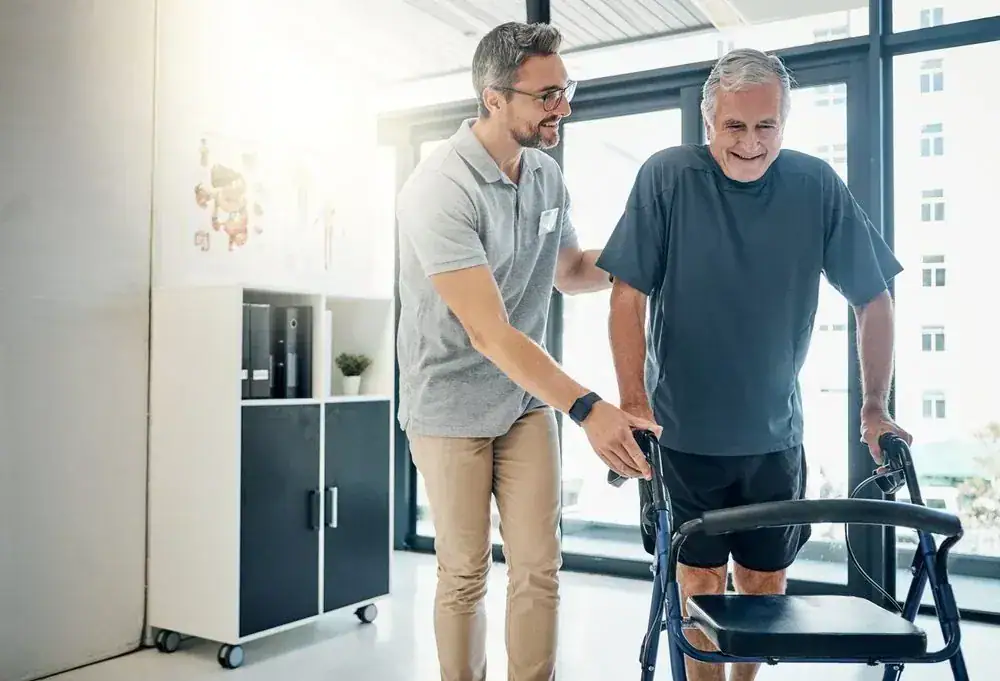
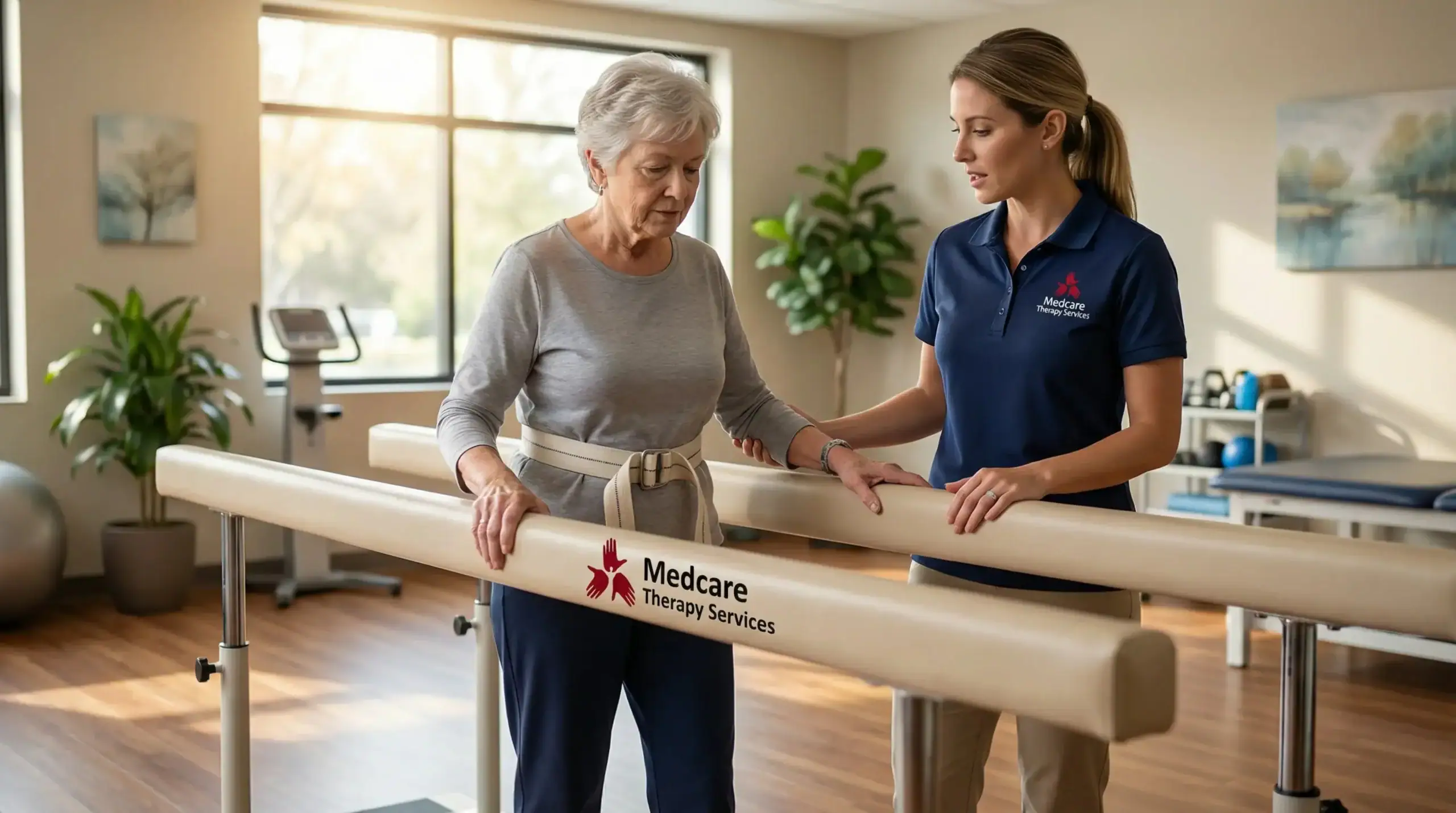
You stop second-guessing every step. Getting out of bed, walking to the bathroom at night, reaching for something in the kitchen—these everyday movements stop feeling like risks.
When your balance improves through targeted physical therapy, you’re not just preventing falls. You’re getting back the confidence to do what you want without constantly calculating whether it’s safe. That fear that’s been sitting in the back of your mind starts to fade.
The numbers back this up. Evidence-based fall prevention can reduce your risk by 30 to 35 percent. But what that really means is fewer close calls, less anxiety about being home alone, and more freedom to live without your adult children worrying every time the phone rings. You regain control over your daily routine instead of letting fall risk dictate what you can and can’t do.
We’ve been serving West Babylon and the greater Long Island area for over a decade. We specialize in fall prevention for older adults who want to stay in their homes safely.
Our therapists are trained in the Otago fall prevention program, which is one of the most researched and effective approaches available. We bring that expertise directly to your home because we know that’s where most falls happen—and where you need the most support.
We accept Medicare and work throughout Suffolk County and parts of Nassau County. Our clients in West Babylon appreciate that we show up on time, treat them with respect, and focus on real results instead of just checking boxes. You’re not a number in a busy clinic schedule. You get one-on-one attention in your own space.
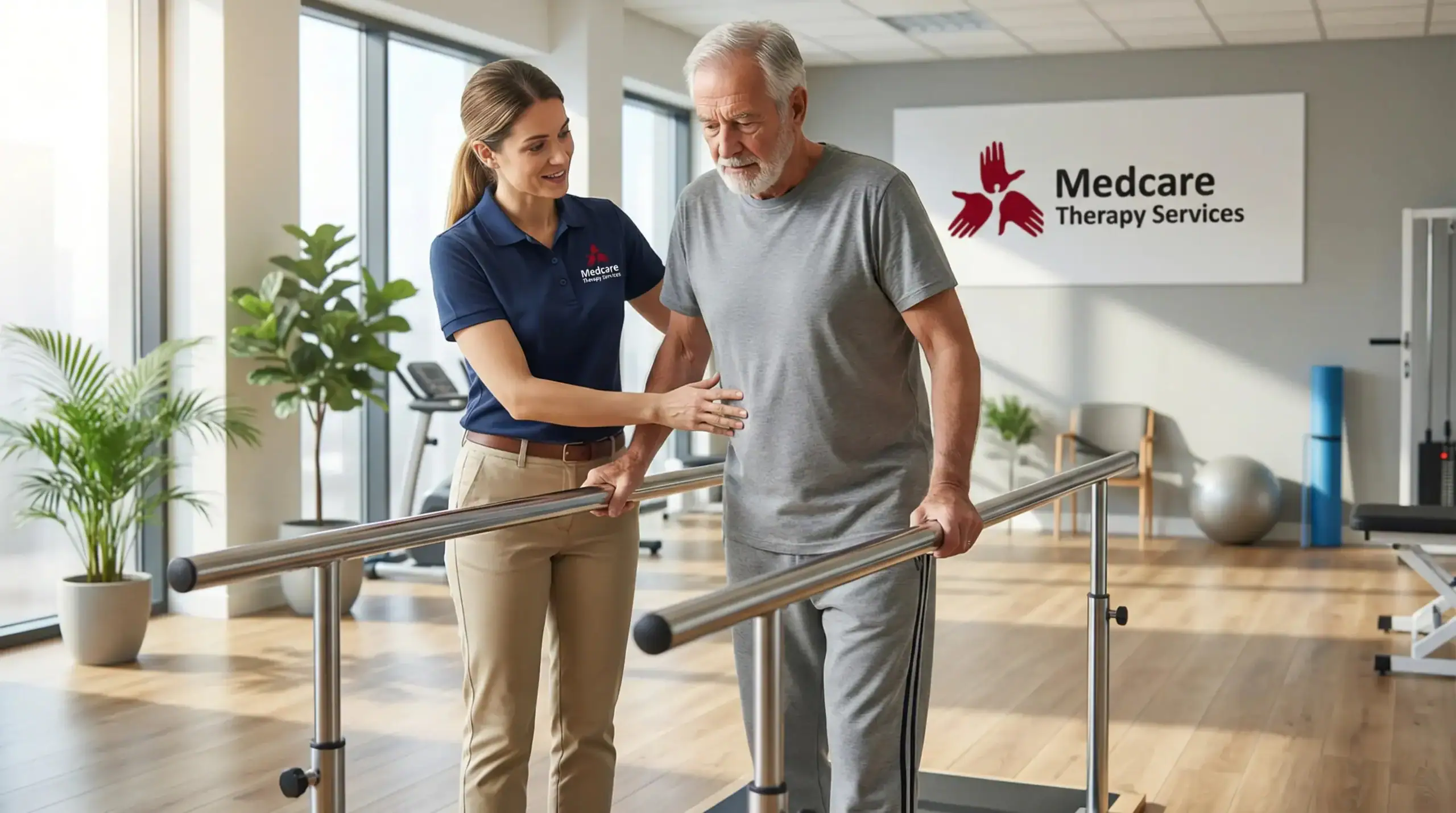
First, we come to your home and do a thorough fall risk assessment. We look at your strength, balance, gait, and how you move through your actual living space. We’re checking for things like how you get in and out of your shower, navigate stairs, or move from sitting to standing.
Then we build a personalized program based on what we find. This typically includes strength training exercises, balance exercises for seniors that are specific to your needs, and specialized gait training. We’re not handing you a generic sheet of exercises—we’re addressing your specific risk factors.
Each session is one-on-one. We work with you in your home, using your furniture, your stairs, your bathroom. We progress the exercises as you get stronger and more stable. Most importantly, we help you rebuild confidence through graded exercises in a controlled environment. You’re not just getting physically stronger—you’re replacing fear with capability.

Ready to get started?
Your program includes a complete fall risk evaluation, customized balance exercises, strength training specific to fall prevention, and gait training. We also assess your home environment and make practical recommendations about lighting, rugs, grab bars, and other modifications that can reduce risk.
For West Babylon residents, this matters because 60 percent of fall-related hospitalizations happen at home. Your living room, bathroom, and bedroom are where you’re most vulnerable. We address those specific spaces during our sessions.
We also work on the psychological side. Many seniors develop a fear of falling after one incident, and that fear can actually increase fall risk by making you move less. We help you work through that fear with exercises that rebuild your confidence gradually. You learn to trust your body again.
Medicare typically covers these services when you’re homebound or have difficulty getting to a clinic. We handle the paperwork and verification. Your focus stays on getting stronger and more stable, not on dealing with insurance forms.
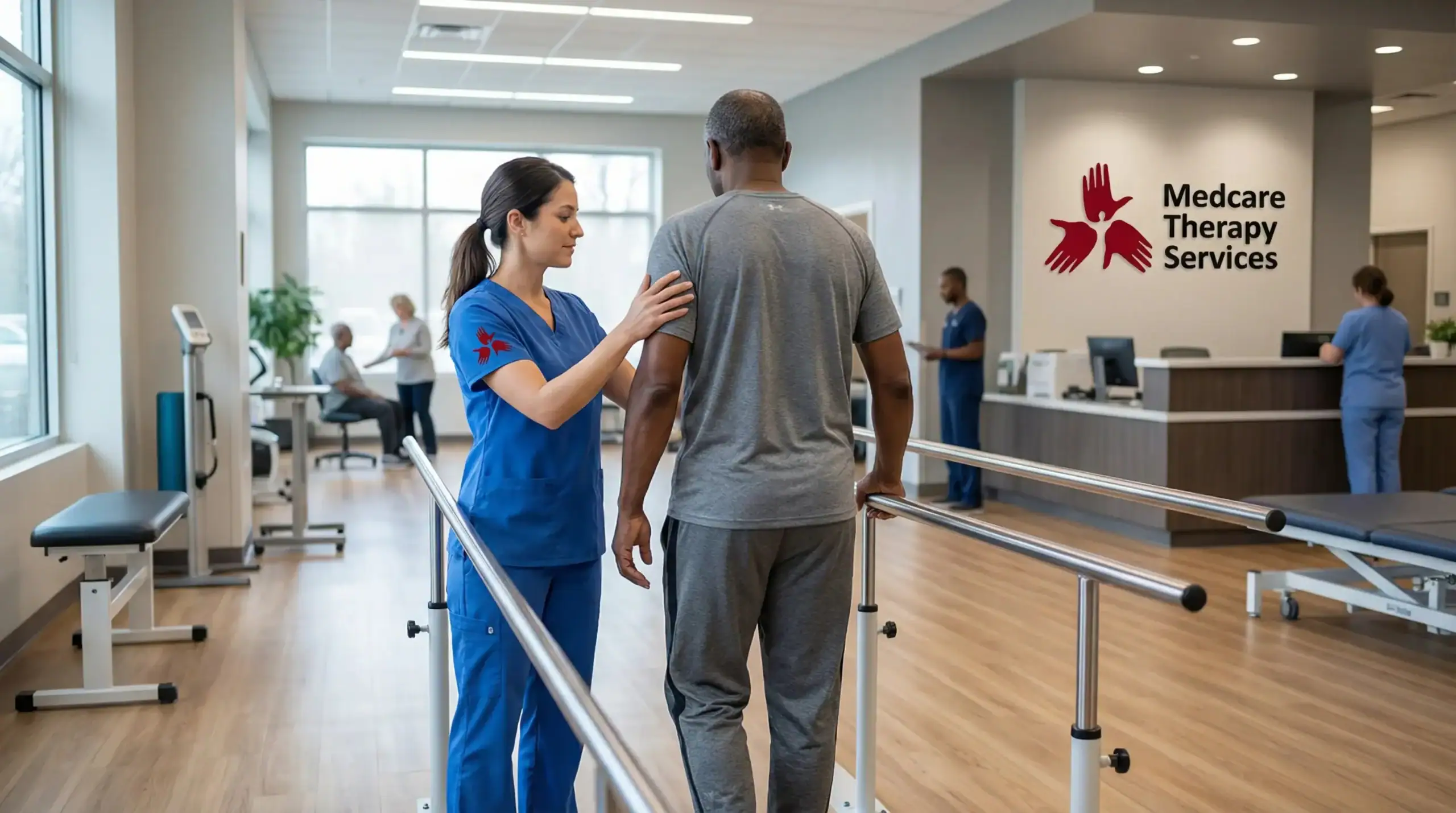
Most people start noticing improvements in balance and confidence within the first few weeks, but meaningful fall risk reduction takes about eight to twelve weeks of consistent work. This isn’t a quick fix—it’s a process of rebuilding strength and retraining your balance systems.
Research shows that fall prevention programs can reduce your risk by 30 to 35 percent, but you have to stick with it. We typically see clients twice a week initially, then taper to once a week as you get stronger. The exercises we teach you need to become part of your routine even after formal therapy ends.
The timeline also depends on your starting point. If you’ve already had a fall or you’re recovering from an injury, it may take longer. But even small improvements matter. Being able to catch yourself when you trip or feeling steady enough to shower without fear—those changes happen progressively as we work together.
Medicare Part B covers physical therapy for fall prevention when it’s medically necessary and prescribed by your doctor. The key requirement is that you need to be homebound or have significant difficulty leaving your home to access outpatient therapy.
Homebound doesn’t mean you can never leave your house. It means leaving requires considerable effort, like needing assistance, using a walker, or having a condition that makes trips exhausting or unsafe. If you meet that criteria and your doctor orders physical therapy for balance and fall prevention, Medicare typically covers it.
We handle the verification and work directly with Medicare, so you don’t have to navigate the paperwork yourself. There may be copays depending on your specific plan and whether you’ve met your deductible. We’ll go over your coverage during the initial assessment so there are no surprises. Most of our West Babylon clients find that their out-of-pocket costs are minimal compared to what they’d pay for a single emergency room visit after a fall.
In-home therapy addresses the actual environment where you’re at risk. Sixty percent of falls happen at home, so it makes sense to train in the space where you need to be safe. We work with your stairs, your bathroom layout, your furniture—the real obstacles you navigate every day.
Clinics are busy. You’re often one of several patients your therapist is juggling during your appointment time. At home, you get one-on-one attention for the full session. There’s no rushing, no waiting, and no splitting focus.
Transportation is the other major factor. Many older adults in West Babylon don’t go to clinic-based therapy because getting there is difficult or exhausting. If you’re already unsteady, the trip itself can be risky. In-home therapy eliminates that barrier completely. We come to you, which means you’re more likely to stick with the program and get the results you need.
Your exercises will be customized based on your assessment, but most fall prevention programs include some combination of weight shifting, single-leg stands, heel-to-toe walking, and sit-to-stand repetitions. We also incorporate exercises that challenge your balance in different directions and on different surfaces.
For example, we might have you practice standing on one foot while holding onto a counter, then progress to doing it without support as you get stronger. We’ll work on walking with proper gait patterns, turning safely, and recovering if you start to lose balance. These aren’t random exercises—they’re specifically designed to address the movements that cause falls.
We also include strength training because weak legs are a major fall risk factor. Exercises like chair squats, leg lifts, and resistance band work help build the muscle you need to catch yourself and move confidently. Everything is adapted to your current ability level. You’re never pushed beyond what’s safe, but you are consistently challenged to improve.
If you’ve already fallen once, you need it. Falling once doubles your chances of falling again. But you don’t have to wait for a fall to start prevention.
Warning signs include feeling unsteady when you walk, grabbing onto furniture or walls for support, avoiding certain activities because you’re worried about falling, or having close calls where you almost went down. If you’ve noticed your balance isn’t what it used to be, that’s enough reason to get evaluated.
Age is a factor too. Adults over 75 are at significantly higher risk, especially if you have vision problems, take multiple medications, or have conditions like arthritis or neuropathy. In West Babylon and across Long Island, we see a lot of seniors who wait until after a fall to get help. The smarter move is addressing the risk before you end up in the emergency room. A fall risk assessment takes about an hour and gives you a clear picture of where you stand and what needs work.
Fear of falling is incredibly common, and it’s actually one of the things we address directly in therapy. Excessive fear can make you move less, which weakens you further and increases fall risk. It’s a cycle we need to break.
We start where you are. If you’re afraid to stand without holding on, we work with that. You’ll have support, whether it’s holding onto a counter, using a walker, or having us right there to assist. We use graded exposure, which means gradually introducing challenges in a controlled way so you build confidence without feeling overwhelmed.
The goal isn’t to eliminate healthy caution—it’s to replace paralyzing fear with realistic confidence. As you get stronger and practice movements safely, your brain starts to trust your body again. Clients tell us all the time that the mental shift is just as important as the physical improvements. You stop living in constant worry and start moving through your home like you used to.
Other Services we provide in West Babylon