
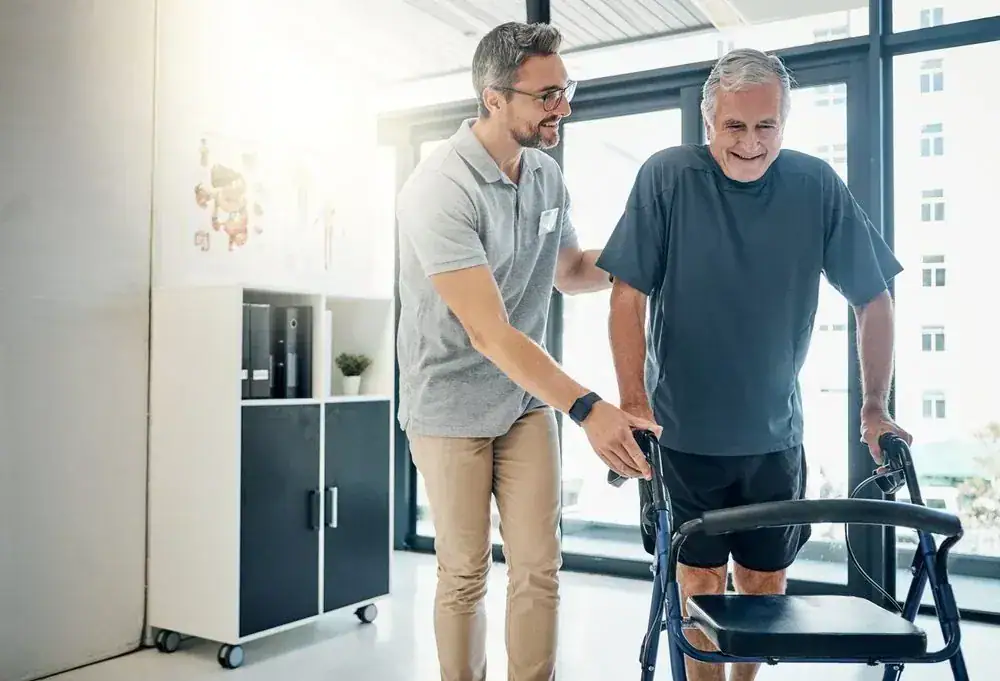
You stop second-guessing every step. Getting up from a chair doesn’t require a strategy. Walking to the mailbox or grabbing something from a high shelf becomes automatic again.
That’s what happens when balance exercises for seniors are built around your body, your home, and your goals. You’re not just avoiding falls—you’re rebuilding the strength and coordination that let you live without constantly calculating risk.
Falls don’t happen because you’re careless. They happen because something shifted—your vision, your inner ear, your leg strength, your medication, your flooring. Physical therapy for balance addresses those systems directly. Research shows that older adults who receive treatment within three months of a balance issue report significantly fewer falls up to a year later. Some studies put the risk reduction as high as 86%.
You’re not managing decline. You’re training your body to respond better, react faster, and hold you up when it matters most.
We’ve been serving Long Island families for over a decade. Our therapists specialize in geriatric care, balance rehabilitation, and elderly fall prevention—and many of them have been doing this work for more than 20 years.
We treat people in Wantagh, Seaford, Bellmore, Merrick, and across Nassau County. Most of our patients are Medicare recipients who prefer to receive care at home. We accept Medicare and most commercial insurance, and we make the billing process as simple as possible.
Wantagh has one of the highest median household incomes on Long Island and a large population of older adults who want to age in place. That means our patients expect quality, consistency, and respect. We show up on time, we listen, and we adjust your program as your body changes.

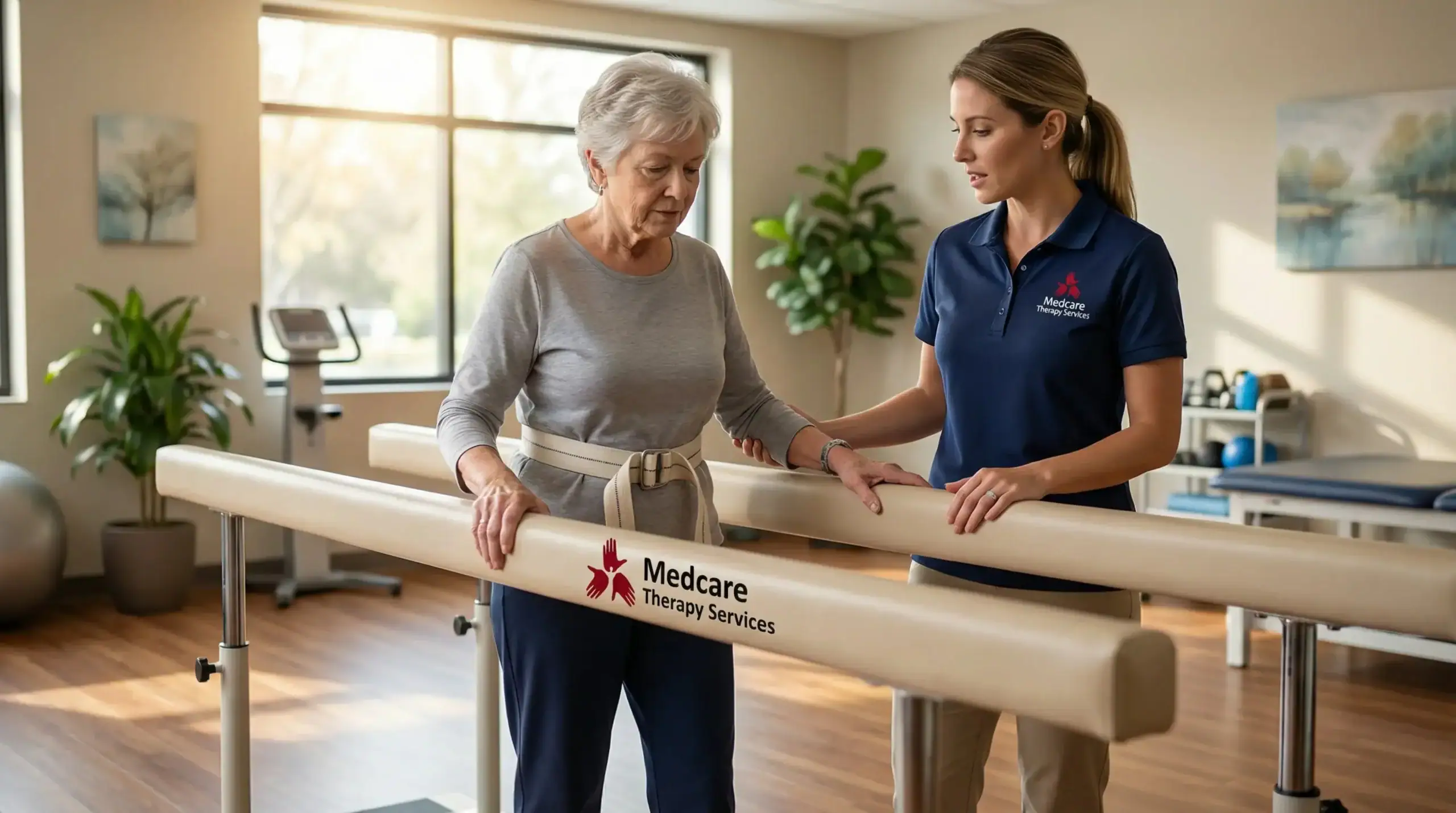
Your therapist starts with a full assessment. That includes checking your strength, range of motion, gait, posture, and balance. We also look at your home environment—lighting, rugs, furniture layout, bathroom setup—because falls don’t happen in a clinic.
From there, we build a program specific to what your body needs. That might include senior balance exercises like single-leg stands, heel-to-toe walking, or sit-to-stand drills. It might include strength training for your hips, ankles, and core. If dizziness or vertigo is part of the picture, we use vestibular therapy techniques to retrain your inner ear and visual tracking.
Everything is done at a pace that feels challenging but safe. You’re never pushed beyond what your body can handle, and you’re never left guessing what to do between sessions. We give you a clear plan, written instructions, and check-ins to make sure you’re progressing.
Most patients see measurable improvements within four to six weeks. That might mean better balance scores, faster walking speed, less fear of falling, or just feeling more confident moving around the house.

Ready to get started?
Every program includes one-on-one time with a licensed physical therapist, either in your home or at one of our outpatient locations. Sessions typically last 45 to 60 minutes and happen one to three times per week depending on your needs and insurance coverage.
You’ll receive a personalized exercise plan that targets the specific systems affecting your balance—whether that’s muscle weakness, joint stiffness, inner ear dysfunction, or poor coordination. We also provide education on footwear, lighting, assistive devices, and fall-proofing your home.
On Long Island, falls are more common than the state average. Nassau and Suffolk counties rank fourth and fifth in New York for fall-related incidents among older adults. Part of that is demographics—we have a large senior population. But part of it is preventable. New York State has made fall prevention a public health priority through 2030, and for good reason: one in four adults over 65 falls every year, and falling once doubles your chance of falling again.
The good news is that physical activity reduces fall risk by 13% to 40% in community-dwelling older adults. Consistent balance training improves gait, posture, stability, and confidence—even in adults over 80. You’re not too old to get stronger.
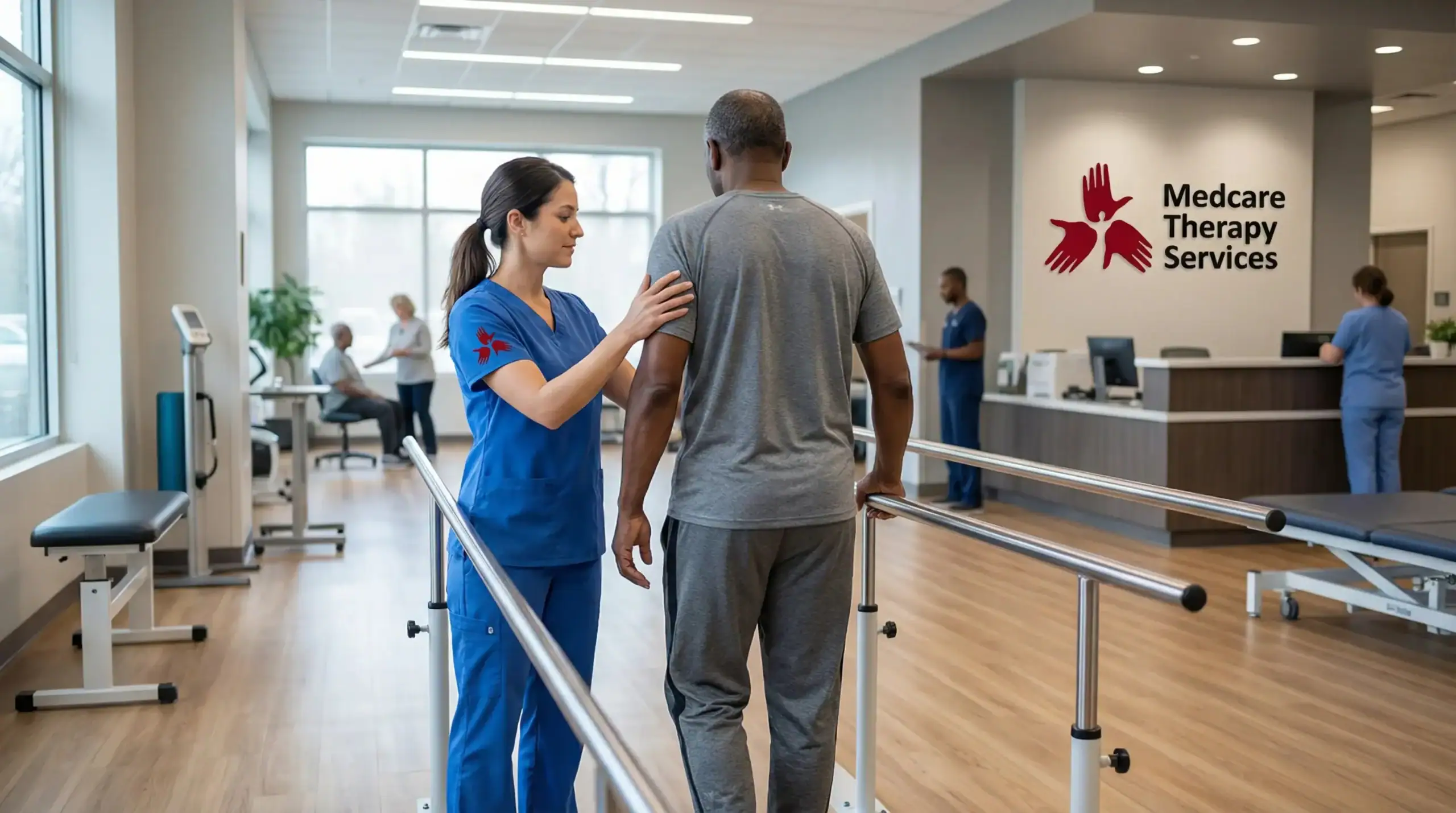
If you’ve fallen in the past year, you need an evaluation. If you feel unsteady when you walk, avoid certain activities because you’re afraid of falling, or if you’ve noticed your balance isn’t what it used to be—those are all reasons to get assessed.
Your doctor might refer you after a fall, a fracture, or a diagnosis like vertigo, neuropathy, or Parkinson’s. But you don’t need to wait for a fall to happen. Many people come to us because they want to stay active and independent, and they know their balance is starting to slip.
A physical therapist can measure your fall risk using standardized tests, then design a program to address the specific factors putting you at risk. Catching it early makes a huge difference. The average hospital cost for a fall injury is over $34,000, and 40% of people who are admitted to a nursing home after a fall never return to independent living.
Yes, if it’s medically necessary. Medicare Part B covers outpatient physical therapy when it’s prescribed by a doctor and delivered by a licensed therapist. That includes balance training, gait training, strengthening exercises, and vestibular rehabilitation.
You’ll need a referral or prescription from your physician. Once we have that, we handle the billing and work directly with Medicare. There may be a copay or coinsurance depending on your plan, but most of our patients find the out-of-pocket cost manageable.
We also accept most commercial insurance plans. If you’re unsure about your coverage, call us. We’ll verify your benefits before your first visit so there are no surprises. And if you qualify for home health services—meaning you have difficulty leaving your home due to mobility or medical issues—Medicare may cover in-home physical therapy at little to no cost.
It’s not just exercise. Physical therapists are trained to evaluate multiple body systems—your muscles, joints, inner ear, vision, circulation, reflexes, and nervous system. We identify which systems are contributing to your fall risk, then prescribe specific interventions to improve them.
For example, if your falls are related to dizziness, we use vestibular therapy techniques that retrain your brain’s balance center. If weakness in your hips is the issue, we target those muscles with progressive resistance training. If poor vision or depth perception is a factor, we teach compensatory strategies and refer you to the right specialist.
Studies show that physical therapy after a dizziness diagnosis lowers fall risk by up to 86%. Multifactorial programs—where we address strength, balance, gait, home safety, and medication review—reduce falls by 13% to 50% depending on the population. This isn’t guesswork. It’s evidence-based treatment that works when it’s done correctly and consistently.
It’s not too late. Falling once increases your risk of falling again, but that risk can be reduced with the right intervention. Even if you’ve fallen multiple times, physical therapy can help you regain strength, improve your balance, and rebuild your confidence.
We work with people at all levels of mobility. Some of our patients are highly active and want to stay that way. Others are recovering from a hip fracture or stroke and need help relearning basic movements. We meet you where you are.
One of the biggest barriers after a fall is fear. Many older adults become afraid to move, which leads to deconditioning, isolation, and even more falls. We address that fear directly by creating a safe environment where you can practice challenging movements under supervision. Over time, that builds both physical ability and mental confidence. Research shows that balance training programs improve fall-related self-efficacy, reduce fear of falling, and increase walking speed and physical function.
Most people notice improvements within four to six weeks if they’re consistent with their exercises. That might mean better balance during daily activities, less dizziness, stronger legs, or simply feeling more confident when you move.
The timeline depends on your starting point, your goals, and how often you’re able to do therapy. If you’re coming twice a week and doing your home exercises in between, you’ll progress faster than someone who only comes once a week. We typically recommend eight to twelve weeks of treatment, but some people need more time and others need less.
The key is consistency. Balance exercises for seniors work because they retrain your neuromuscular system—the connection between your brain and your muscles. That takes repetition. You can’t do it once and expect it to stick. But if you show up and put in the work, your body will respond. Even adults over 80 can improve their gait, posture, and stability with regular training.
Yes. If you have difficulty leaving your home due to mobility issues, medical conditions, or safety concerns, we can provide physical therapy in your home. That’s often the best option for fall prevention because we can assess your actual living environment and address the specific hazards you deal with every day.
In-home therapy is covered by Medicare if you meet the homebound criteria, which means leaving your home requires considerable effort due to illness, injury, or disability. We serve Wantagh and surrounding areas including Seaford, Bellmore, Merrick, Levittown, and other Nassau County communities.
Our therapists bring everything they need to your home. We’ll work with you in the spaces where you spend the most time—your bedroom, bathroom, kitchen, living room. We’ll also make recommendations for grab bars, lighting, rugs, furniture arrangement, and other modifications that can reduce your fall risk. Many of our patients prefer home therapy because it’s more convenient, more personalized, and less intimidating than going to a clinic.
Other Services we provide in Wantagh